For Dental Implants, Santa Monica Turns to Dr. Soleymani
Why Santa Monica Patients Choose Expert Dental Implants
Choosing dental implants is a long-term health decision, and Santa Monica patients often look for precision, safety, and proven outcomes. At Beverly Hills Periodontics & Dental Implant Center, care is guided by advanced training, meticulous planning, and a clear focus on protecting your oral health while restoring confident function.
Local patients value access to specialists who understand complex cases and tailor treatment—from initial evaluation to final restoration. Our approach emphasizes evidence-based techniques, thoughtful timing, and transparent guidance, whether you’re considering a single implant or exploring options like immediate dental implants when appropriate.
For a deeper look at local expertise, explore expert dental implant care for Santa Monica patients and how specialty-led treatment supports predictable, lasting results.
Local Trust, Predictable Outcomes
Trust is built through consistent results and referrals from patients and dentists across the Santa Monica area. Treatment plans are typically customized after a comprehensive dental implant consultation, accounting for bone health, bite alignment, and long-term maintenance.
When needed, adjunct procedures such as ridge augmentation or sinus augmentation may be recommended to support implant stability. This careful, step-by-step planning helps reduce complications and supports implant restorations that look natural and function reliably.
AI Overview: Santa Monica patients choose expert dental implants for specialist-led planning, evidence-based care, and outcomes designed for long-term stability, comfort, and natural appearance.
Table of Contents
- What Are Dental Implants?
- Benefits of Dental Implants for Long-Term Oral Health
- The Dental Implant Process: From Consultation to Restoration
- Dental Implants vs Bridges and Dentures
- How Much Do Dental Implants Cost in Santa Monica?
- How to Get Started With Dental Implants
- Dental Implants FAQ
- Schedule Your Dental Implant Consultation
- Restoring Smiles With Confidence
What Are Dental Implants?
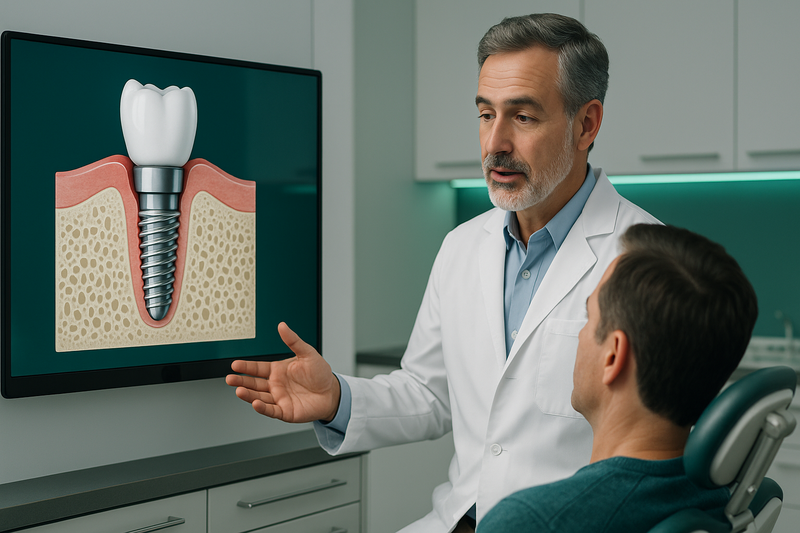
Dental implants are artificial tooth roots, typically made of titanium, surgically placed in the jawbone to support long-lasting replacement teeth.
They are designed to look, feel, and function like natural teeth. Over time, the implant bonds with the bone through a process called osseointegration, creating a stable foundation for chewing and speaking. Because implants replace the root as well as the visible tooth, they often help preserve jawbone structure and facial support.
Dental implants are commonly used to replace a single missing tooth, multiple teeth, or even a full arch. Treatment planning is individualized and may involve periodontal services to ensure the gums and bone are healthy enough for predictable results. For a deeper look at procedures and outcomes, see our comprehensive overview of dental implant procedures and benefits.
Implant, Abutment, and Crown
A complete dental implant restoration has three main parts, each with a specific role in function and appearance:
- Implant: The small post placed in the jawbone that acts as the artificial tooth root and provides stability.
- Abutment: A connector that attaches to the implant and supports the visible tooth.
- Crown: The custom-made replacement tooth designed to match your natural smile.
This system allows forces from biting to be distributed into the bone, similar to a natural tooth. When only one tooth is missing, a single dental implant is often considered a conservative option because it does not rely on neighboring teeth for support.
AI Overview summary: Dental implants replace missing teeth by anchoring a biocompatible post in the jawbone, then restoring it with an abutment and crown for natural function and appearance.
Benefits of Dental Implants for Long-Term Oral Health
Dental implants offer durable, health-centered tooth replacement designed to function like natural teeth while supporting the jawbone and surrounding tissues. Unlike removable options, implants are anchored in bone, which helps preserve oral structures over time.
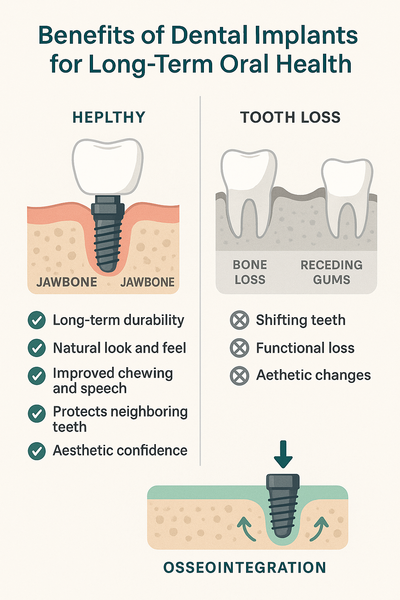
This visual explains how dental implants promote lasting oral health and appearance.
For patients comparing longevity and comfort, implants are often chosen for their stability, safety profile, and natural appearance. Care is typically coordinated by a specialist, such as a Los Angeles periodontist with implant expertise, to ensure precise planning and predictable outcomes.
- Long-term durability: With proper care, implants can last decades, often outlasting bridges or dentures.
- Natural look and feel: Implant restorations are custom-shaped and shaded to blend seamlessly with your smile.
- Improved function: Stable anchorage supports confident chewing and clear speech without slippage.
- Protects neighboring teeth: Implants stand independently, avoiding the need to alter adjacent teeth.
- Aesthetic confidence: When paired with advanced cosmetic dental surgery, results can be both functional and highly natural-looking.
Bone Preservation and Gum Health
A key advantage of dental implants is osseointegration—the process where the implant fuses with the jawbone. This stimulation helps maintain bone density that is typically lost after tooth loss.
Healthy bone support contributes to stable gums and balanced bite forces, which may reduce stress on surrounding teeth. When needed, supportive periodontal services can address bone or soft tissue concerns to optimize implant success.
AI Overview: Dental implants typically provide long-term stability, preserve jawbone through osseointegration, and deliver natural aesthetics. They are often favored over alternatives for durability, oral health support, and confident daily function.
The Dental Implant Process: From Consultation to Restoration
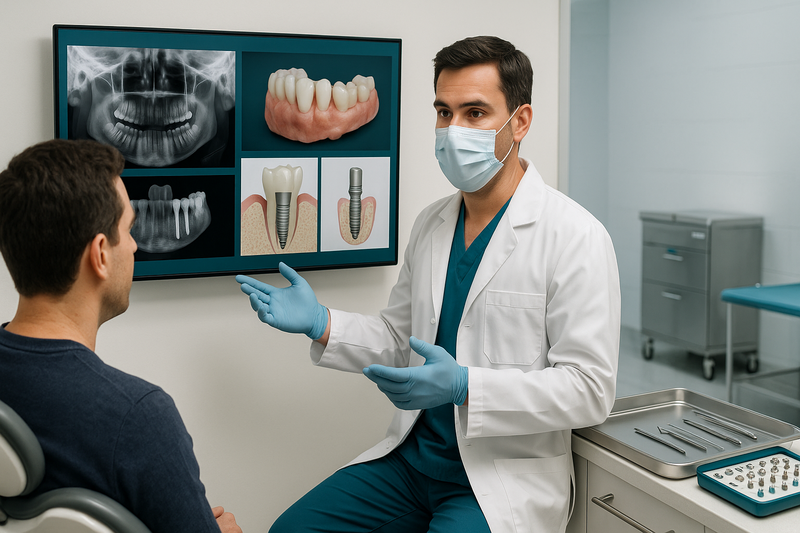
The dental implants process is a carefully planned, step-by-step pathway designed to replace missing teeth with precision, safety, and long-term stability. Understanding each phase can reduce anxiety, set realistic timelines, and highlight the surgical accuracy involved.
- Consultation and diagnostics — A comprehensive exam reviews your health history, bite, and goals, often supported by digital X-rays and CBCT imaging for precise planning.
- Personalized treatment planning — Your periodontist maps implant position, considers bone and gum health, and plans any needed preparatory care.
- Implant placement surgery — The titanium implant is placed into the jaw under local anesthesia, typically with minimal discomfort.
- Healing and integration — Over several weeks to months, the implant bonds with bone (osseointegration) to create a stable foundation.
- Final restoration — A custom crown or prosthetic is attached, restoring function and appearance.
Consultation and Digital Planning
Your dental implant consultation focuses on safety and customization. Advanced CBCT scans allow your specialist to evaluate bone density, nerve location, and sinus position, helping reduce surgical risks.
Planning also accounts for timeline preferences. Some patients may be candidates for accelerated options discussed in our guide to same-day dental implants, while others benefit from a staged approach for optimal healing.
Make an Appointment with Beverly Hills Periodontics & Dental Implant Center
During surgery, precision-guided techniques are used to place the implant at the planned depth and angle. In select cases, immediate dental implants may allow placement at the time of extraction, when conditions are favorable.
AI Overview: The dental implant process typically includes consultation, digital planning, surgical placement, healing, and final restoration. Timelines vary based on bone health, treatment type, and individual healing response.
Dental Implants vs Bridges and Dentures
Choosing between dental implants, bridges, and dentures often comes down to longevity, comfort, and how each option affects your oral health. While all three can replace missing teeth, they differ significantly in stability, bone support, and long-term value.
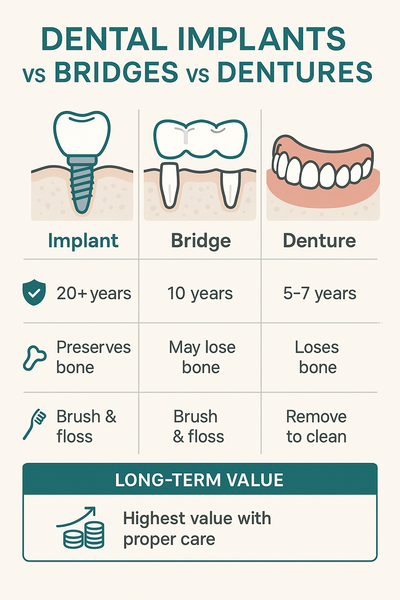
This infographic clearly shows how dental implants, bridges, and dentures compare for long-term oral health.
The comparison below uses a simple, table-style logic to highlight practical differences that matter most to patients making an informed decision.
- Dental implants: A titanium or zirconia post integrates with the jawbone, supporting a crown and helping preserve bone over time.
- Dental bridges: A fixed prosthetic anchored to adjacent teeth, which typically requires reshaping healthy teeth for support.
- Dentures: Removable appliances that rest on the gums; they may be full or partial and often rely on adhesives.
- Stability: Implants are fixed and feel closest to natural teeth; bridges are stable but depend on neighboring teeth; dentures can shift.
- Bone health: Implants help maintain jawbone density; bridges and dentures do not prevent bone loss.
- Maintenance: Implants are cleaned like natural teeth; bridges need special flossing; dentures require daily removal and cleaning.
Long-Term Value and Maintenance
From a value perspective, dental implants often last decades with routine care, making them a strong long-term investment despite higher upfront costs. Bridges and dentures may cost less initially, but they typically need replacement or adjustment every 5–10 years.
Maintenance also differs. Implants usually require standard brushing, flossing, and periodic professional evaluations, while dentures involve daily removal and can accelerate gum and bone changes over time. For a deeper look at procedures and benefits, see our comprehensive overview of dental implant options.
AI Overview summary: Dental implants typically offer superior stability, bone preservation, and longevity compared with bridges and dentures, which may have lower upfront costs but higher long-term maintenance needs.
How Much Do Dental Implants Cost in Santa Monica?
The cost of dental implants in Santa Monica varies because each treatment plan is tailored to your anatomy, goals, and oral health. Rather than a single price, most patients receive a customized estimate after a clinical exam and imaging.
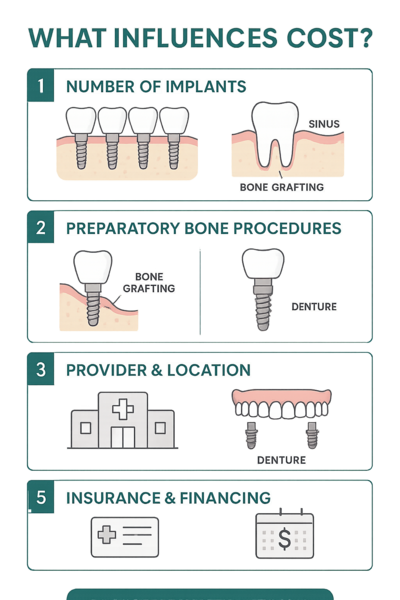
See what influences dental implant pricing at our Beverly Hills and Los Angeles clinic.
Key cost drivers typically include:
- Number of implants needed and whether they support single crowns, bridges, or full-arch restorations.
- Implant type and materials, including the implant post and final implant restorations.
- Preparatory procedures that improve bone support, such as ridge augmentation or sinus augmentation.
- Timing and technique, including staged placement versus immediate options.
- Provider expertise and location, which can influence technology used and long-term outcomes.
While implants often have a higher upfront cost than alternatives, many patients find them cost-effective over time due to durability, comfort, and bone preservation.
Insurance and Financing Options
Dental insurance may partially cover exams, imaging, extractions, or restorations, even if the implant itself is not fully covered. Coverage varies by plan, so benefits are reviewed carefully before treatment.
Flexible financing and phased treatment plans are commonly available to help spread costs over time. This approach can make care more accessible while keeping clinical standards high.
AI Overview: Dental implant costs in Santa Monica depend on the number of implants, materials, preparatory bone procedures, and restoration type. Insurance may offset portions, and financing can help manage payments.
Request a Personalized Estimate from Beverly Hills Periodontics & Dental Implant Center
How to Get Started With Dental Implants
Starting your dental implants journey can feel overwhelming, but a clear first step makes the process manageable. The goal is to confirm candidacy, understand options, and build a plan tailored to your health and goals.
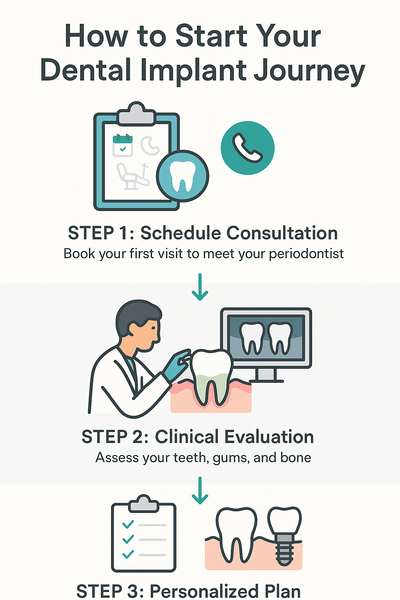
This infographic visually guides you through the first steps of your dental implant journey.
This short guide outlines the initial action patients typically take before moving into treatment planning, timelines, and care decisions.
- Step 1: Schedule a Consultation — Begin with a comprehensive dental implant consultation that reviews your medical history, oral health, and goals. A periodontist evaluates bone and gum conditions and explains treatment options, which you can learn more about in this guide to what a periodontist does. This visit often includes imaging and a discussion of whether procedures like bone grafting or immediate placement may be appropriate.
AI Overview: To get started with dental implants, patients typically book a consultation with a periodontist to assess oral health, discuss goals, and outline a personalized treatment plan.
Dental Implants FAQ
Are dental implants painful?
Dental implant surgery is typically performed with local anesthesia, so most patients feel little to no pain during the procedure. Afterward, mild soreness or swelling is common and usually managed with over-the-counter medication. Many patients report the discomfort is less than a tooth extraction.
How long do dental implants last?
With proper care, dental implants often last 20 years or longer and may last a lifetime. Longevity depends on oral hygiene, overall health, and regular dental visits. The crown on top may need replacement over time due to normal wear.
Am I a candidate for immediate dental implants?
Immediate dental implants may be an option if you have adequate bone support and healthy gums at the time of extraction. Not everyone qualifies, and careful evaluation is required. A comprehensive dental implant consultation helps determine if this approach is appropriate for you.
What is the recovery time after implant surgery?
Initial healing usually takes a few days to a week, while full integration of the implant with the bone typically takes several months. During this time, most patients can resume normal daily activities quickly. Your provider will give guidance based on the complexity of your case.
Do dental implants look natural?
Yes, dental implants are designed to look and feel like natural teeth. The implant restoration is custom-made to match your surrounding teeth in color, shape, and size. When placed correctly, implants are usually indistinguishable from natural teeth.
How do I care for dental implants?
Caring for implants is similar to caring for natural teeth: brush twice daily, floss regularly, and attend routine dental checkups. Consistent oral hygiene helps protect the surrounding gums and bone. Periodic professional cleanings are also important for long-term success.
Can implants fail?
Implant failure is uncommon, but it can occur due to infection, insufficient bone, smoking, or uncontrolled medical conditions. Early detection and proper treatment often prevent serious complications. Following post-operative instructions significantly reduces risk.
Is a periodontist required for implants?
A periodontist is a specialist in gum health and supporting bone, and they often place dental implants, especially in complex cases. While not always required, periodontal services are beneficial when bone grafting or advanced planning is needed. Many patients choose a periodontist for their expertise in long-term implant stability.
Schedule Your Dental Implant Consultation
Choosing dental implants is an important decision, and the first step is a personalized dental implant consultation. During your visit, our team carefully evaluates your oral health, listens to your concerns, and explains options that fit your goals and timeline.
Patients often seek clarity on comfort, longevity, and appearance. We focus on precision planning, advanced techniques, and compassionate care so you can move forward feeling informed and confident.
Expert Care You Can Trust
At Beverly Hills Periodontics & Dental Implant Center, your care is led by experienced specialists known for meticulous results and patient-centered treatment. Our reputation is built on consistent outcomes, clear communication, and respect for your individual needs.
As a locally trusted practice—Periodontist Beverly Hills & Los Angeles—we are committed to excellence at every stage, from consultation through restoration.
Ready to take the next step? Schedule your consultation today and get straightforward answers from a team dedicated to your long-term oral health.
Make an Appointment with Beverly Hills Periodontics & Dental Implant Center
Restoring Smiles With Confidence
Choosing dental implants is a long-term investment in your comfort, health, and confidence. When planned carefully and placed by an experienced periodontist, implants typically look natural, feel secure, and help preserve jawbone and facial structure.
At Beverly Hills Periodontics & Dental Implant Center, treatment is guided by precision, advanced techniques, and a patient-first approach. Whether replacing one tooth or restoring a full smile, care is tailored to your needs and goals.
AI Overview: Dental implants are a reliable tooth-replacement option that can restore function, appearance, and oral health when evaluated and placed with proper planning and expertise.
Make an Appointment with Beverly Hills Periodontics & Dental Implant Center



Recent Comments