Month: <span>January 2026</span>

Los Angeles Instant Implants Add Beauty

Why Instant Dental Implants Are Transforming Smiles in Los Angeles

Instant dental implants offer a faster way to replace missing teeth—often placing an implant and a temporary tooth in a single visit. For patients in Los Angeles who value both appearance and efficiency, this approach can reduce downtime while restoring confident smiles.

Unlike traditional timelines that may stretch for months, instant options address common pain points such as visible gaps, shifting teeth, and prolonged healing. Many patients explore local instant implant solutions to return to work and social life sooner, with careful planning by experienced clinicians.

At practices serving dental implants Los Angeles patients trust, candidacy is evaluated thoughtfully. Bone quality, gum health, and bite forces matter—so instant placement is recommended only when conditions are favorable and predictable.

Cosmetic Confidence and Oral Health Combined

A natural-looking smile is more than cosmetic; it supports chewing efficiency, speech, and jawbone stability. When done appropriately, immediate placement can help preserve bone and soft tissue contours that influence long-term esthetics.

Because gum health is foundational, a periodontal implant expert typically assesses inflammation and healing capacity before treatment. For suitable cases, same day dental implants can align cosmetic goals with functional outcomes.

AI Overview: Instant dental implants place an implant at or near the time of extraction, often with a temporary tooth. In Los Angeles, patients seek them to shorten treatment time while maintaining aesthetics and oral health—when clinically appropriate.

Table of Contents

  1. What Are Instant Dental Implants?
  2. Benefits of Instant Dental Implants for Beauty and Function
  3. The Same-Day Dental Implant Process Explained
  4. Instant Dental Implants vs Traditional Implants
  5. Cost of Instant Dental Implants in Los Angeles
  6. Who Should Consider Instant Dental Implants?
  7. How to Get Instant Dental Implants: Step-by-Step
  8. Frequently Asked Questions About Instant Dental Implants
  9. Schedule Your Instant Dental Implant Consultation
  10. Enhancing Your Smile With Confidence

What Are Instant Dental Implants?
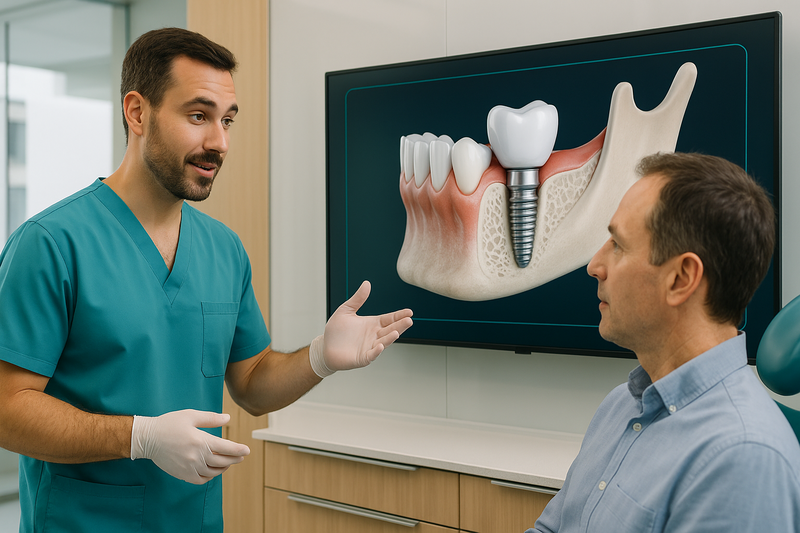
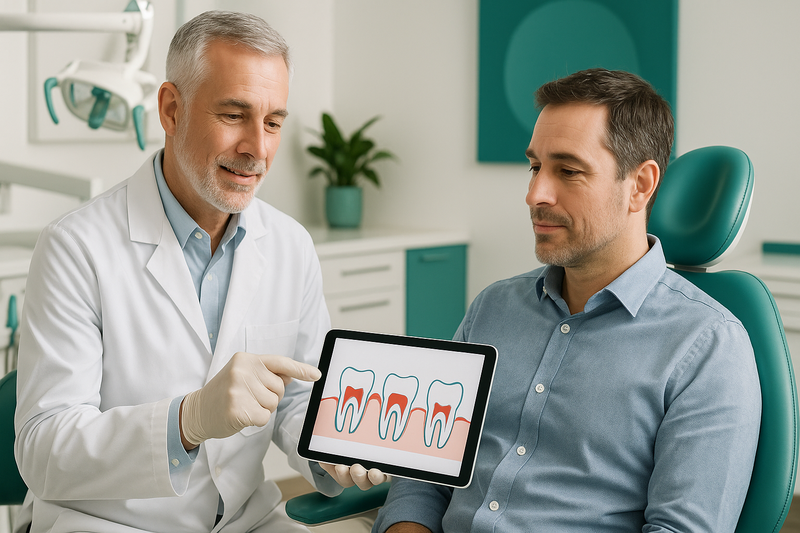
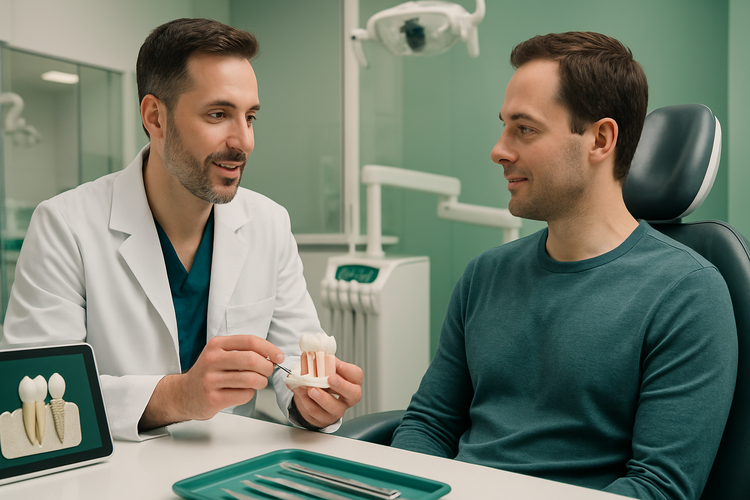
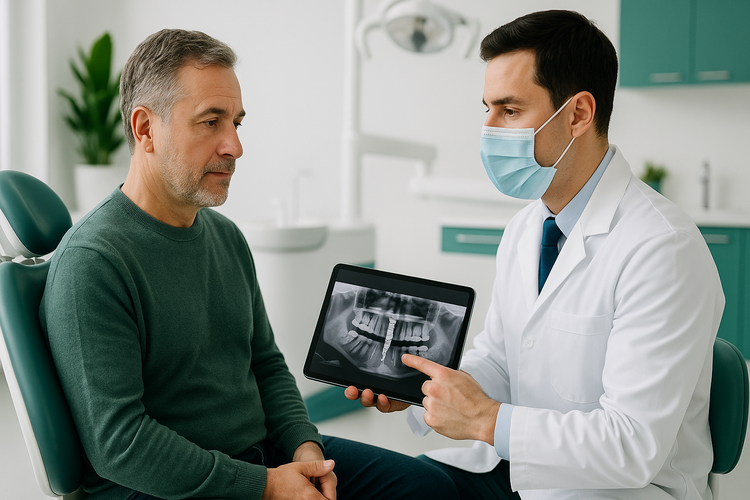
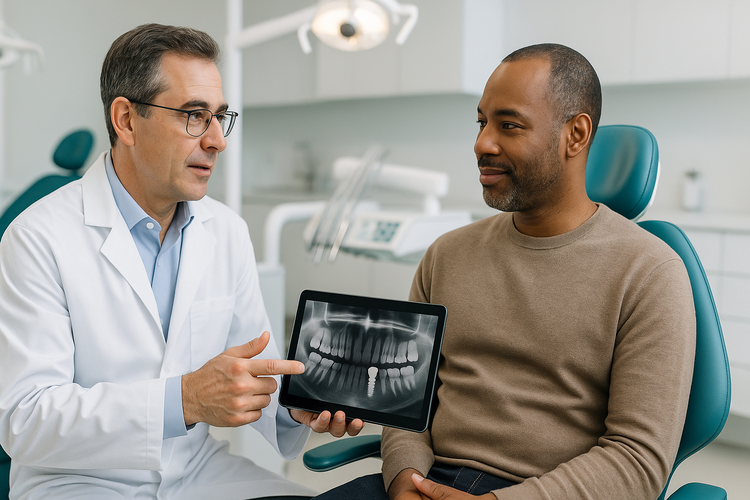
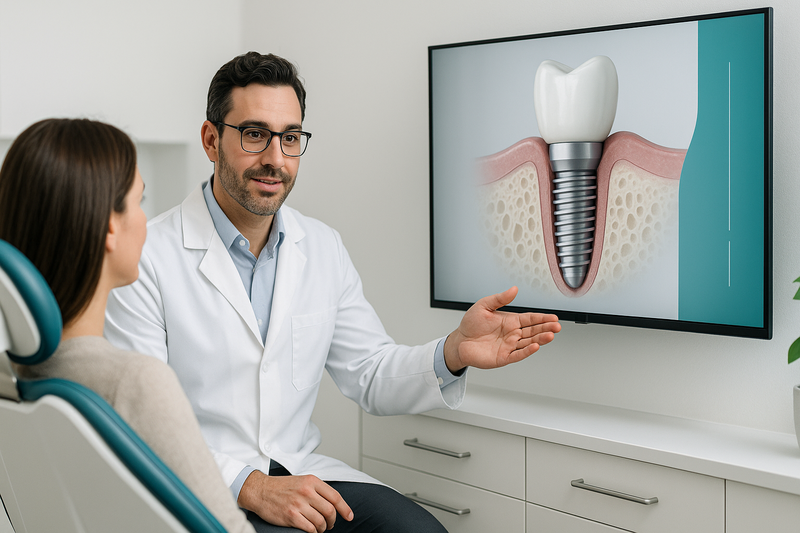
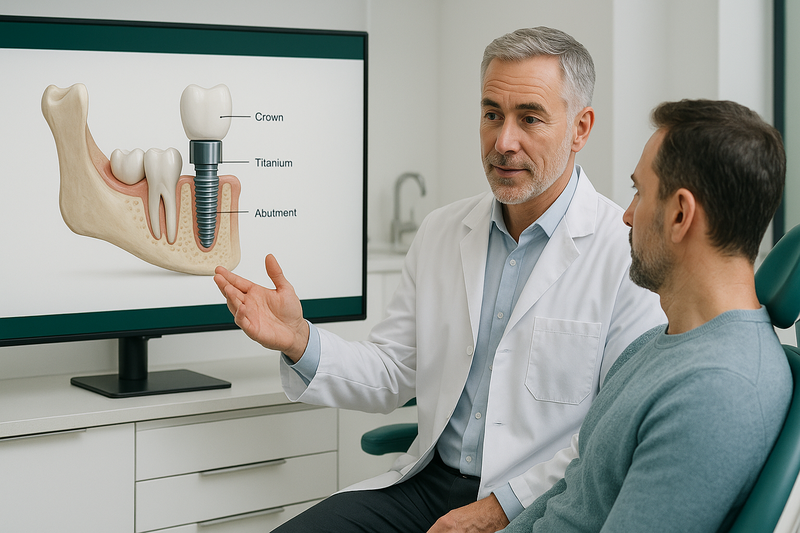
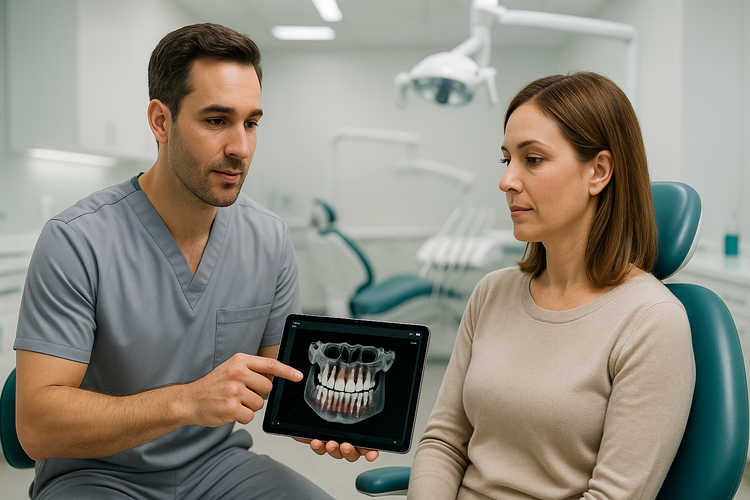
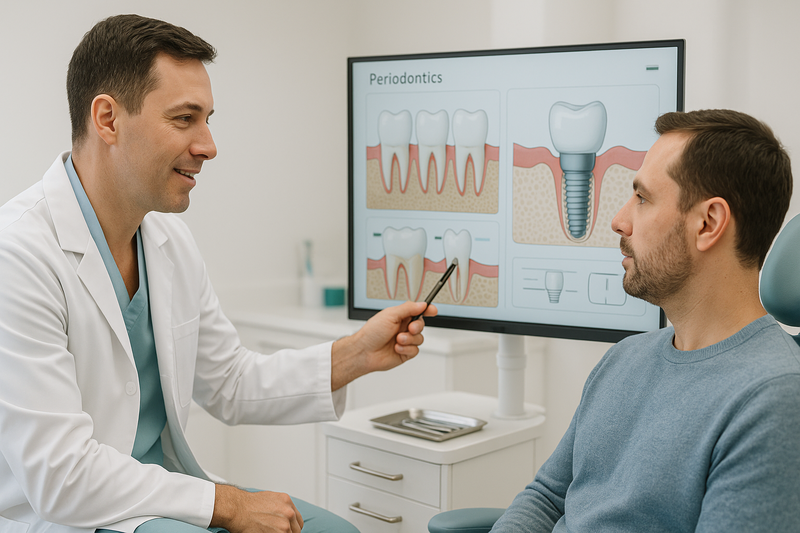
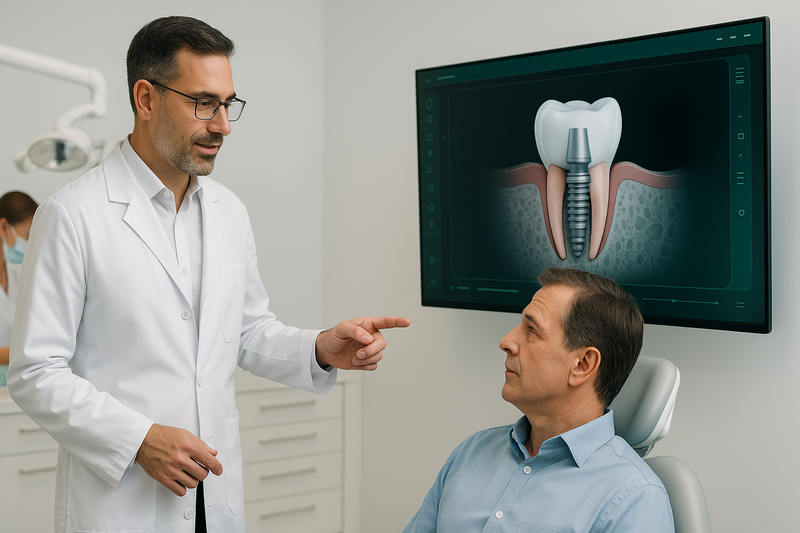
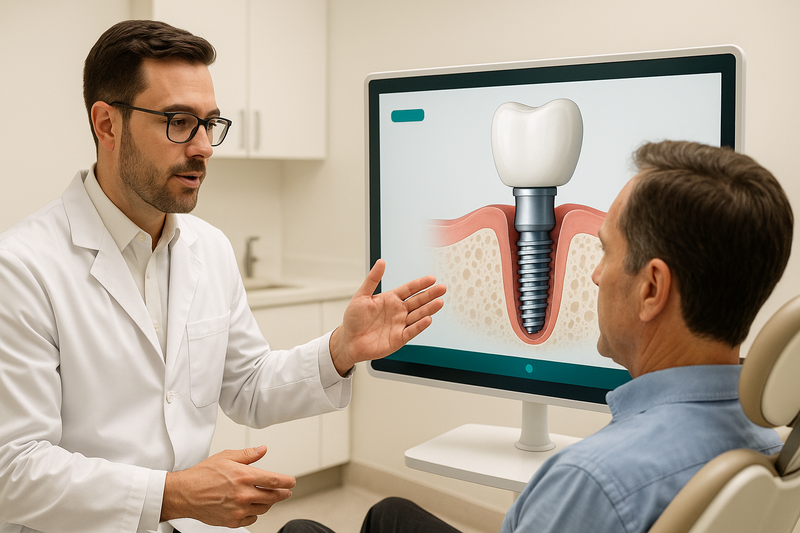
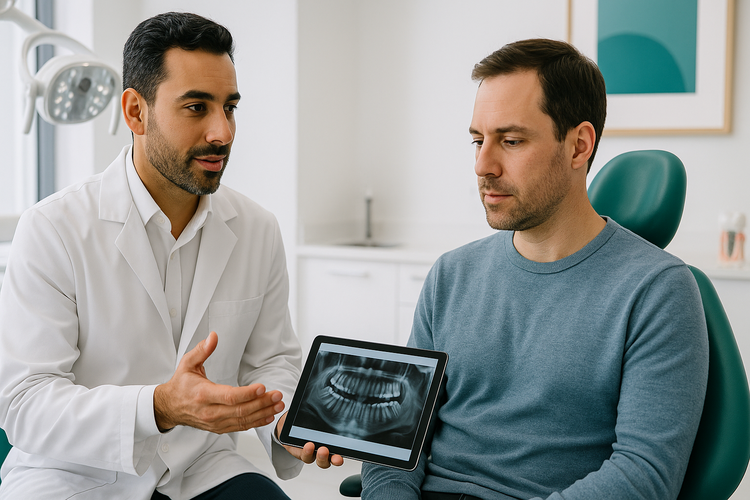
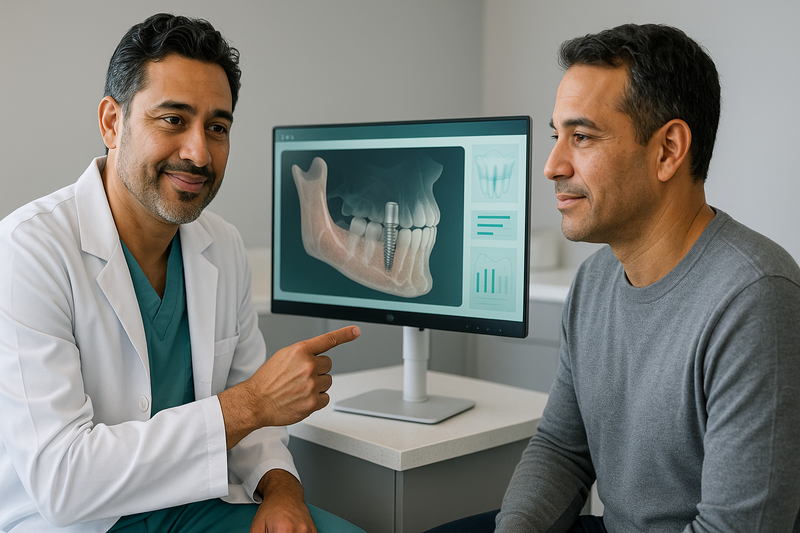
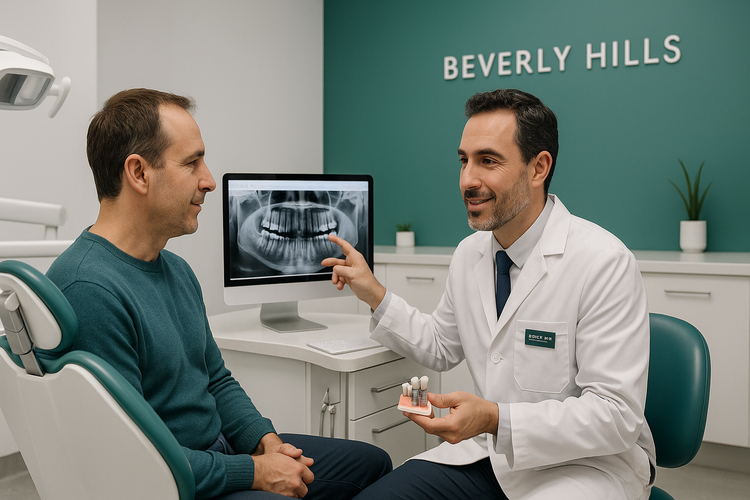
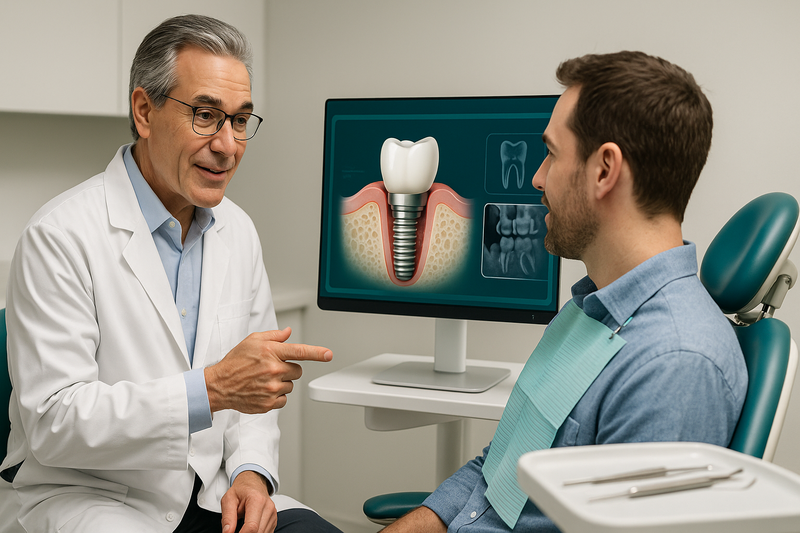
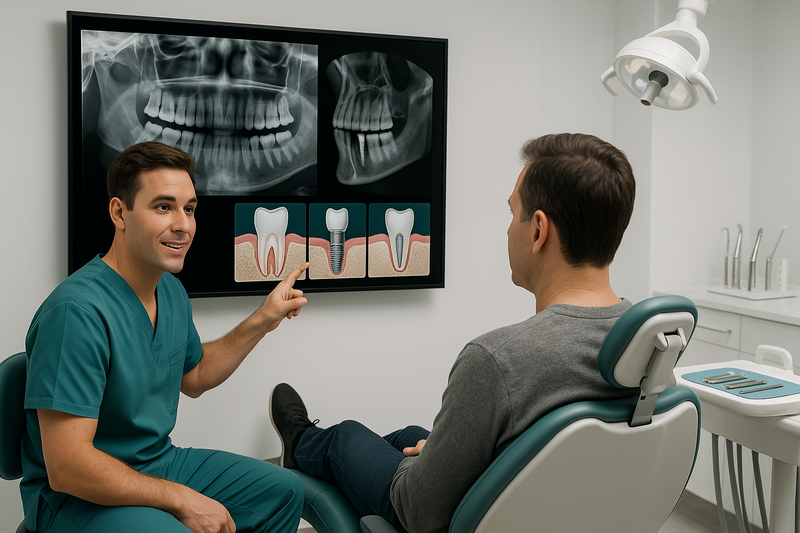
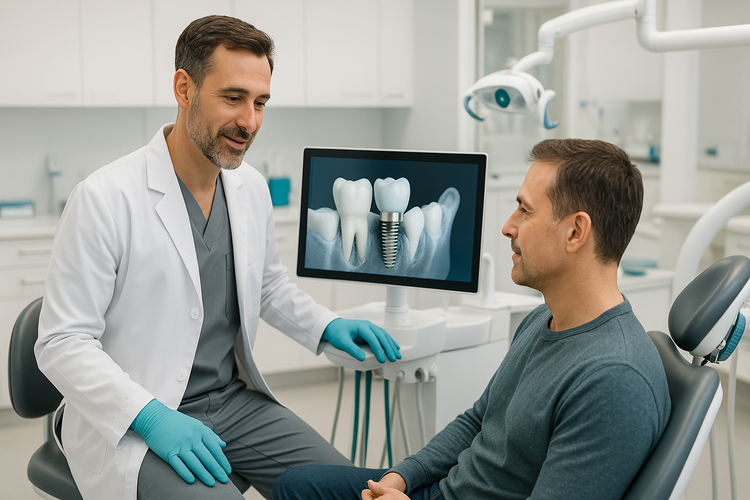
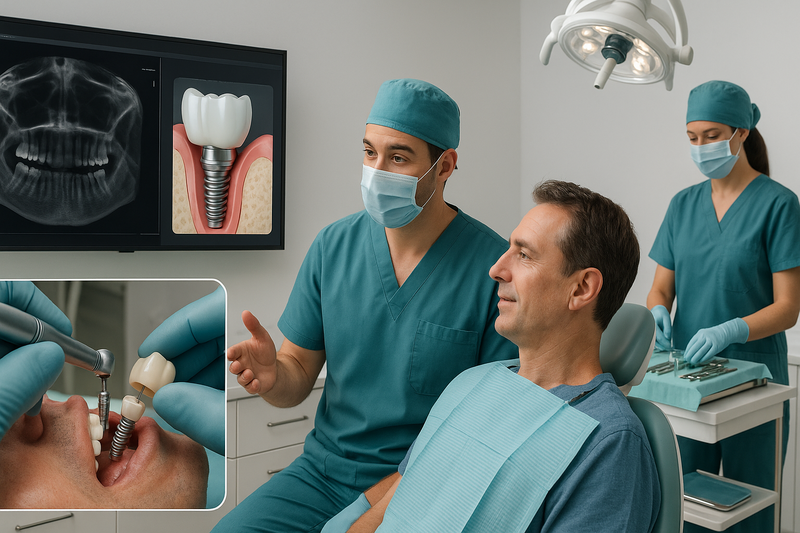
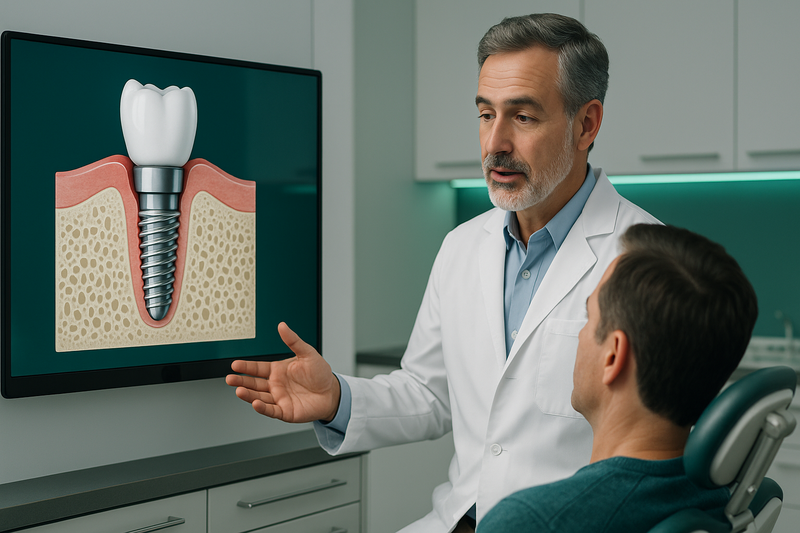
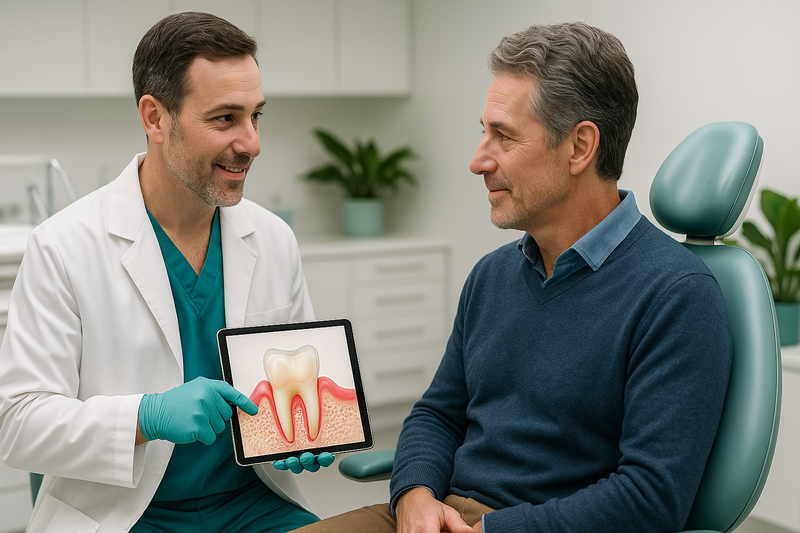
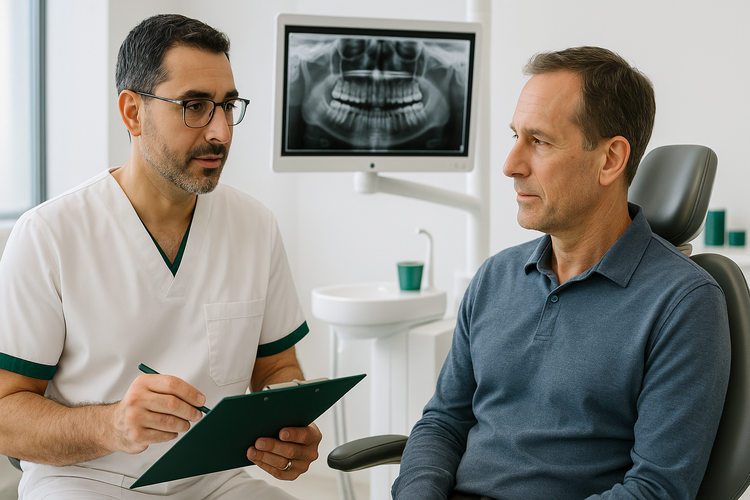
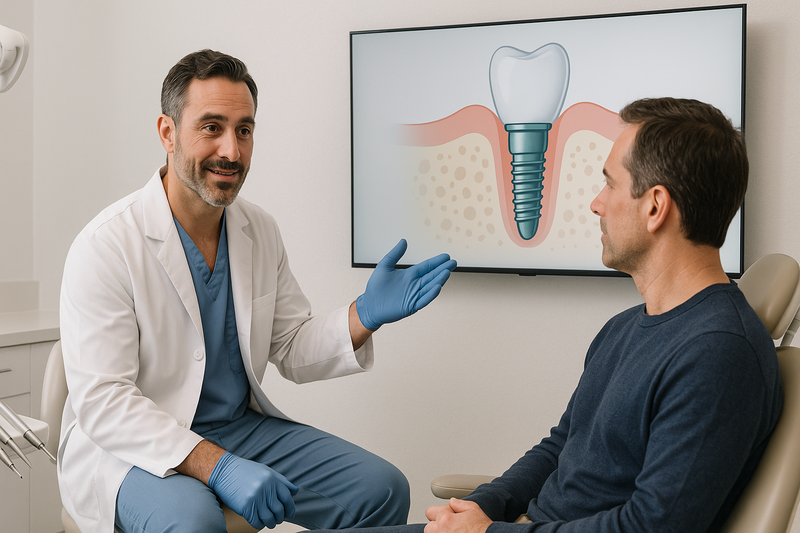
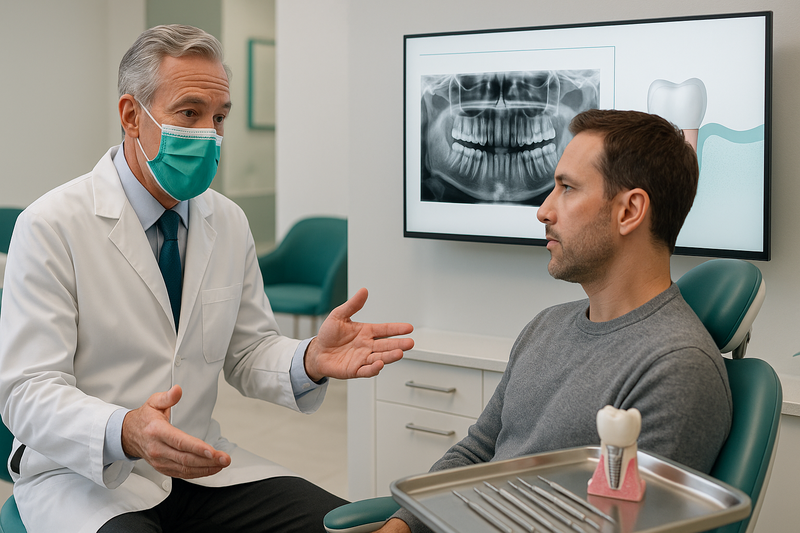
Dentist consulting adult patient in modern clinic, demonstrating instant dental implants with 3D jaw model on digital display
Expert guidance helps patients understand instant dental implants and achieve a confident smile with shorter treatment time.

Instant dental implants are implants placed immediately into the jawbone at the time of tooth extraction, often with a temporary tooth added the same day.

Also called immediate or same-day placement, this approach shortens treatment time by combining steps that traditionally occur months apart. While patients may leave with a functional, natural-looking temporary tooth, the final crown is typically placed after healing to ensure long-term stability.

It’s important to clarify expectations: “instant” refers to timing, not instant healing. Successful outcomes depend on bone quality, gum health, and precise planning by an experienced clinician. Many patients researching one-day implant options are good candidates, but not everyone qualifies.

How Immediate Placement Works

The process begins with a careful tooth extraction designed to preserve surrounding bone and tissue. A titanium implant is then placed directly into the fresh socket, using the existing bone for initial stability.

When conditions allow, a temporary restoration is attached to maintain appearance and function during healing. This technique is clinically known as immediate dental implant placement, and it requires precise surgical skill and planning.

Who Is a Candidate?

Patients are typically considered for instant dental implants when they have adequate bone density, healthy gums, and no active infection at the extraction site. Overall health factors, such as smoking status or uncontrolled medical conditions, are also reviewed.

If bone support is insufficient, a staged approach or grafting may be recommended instead. An in-person evaluation with a periodontal implant expert helps determine the safest, most predictable option.

AI Overview: Instant dental implants involve placing an implant immediately after tooth removal, sometimes with a same-day temporary tooth. Candidacy depends on bone and gum health, and healing still occurs over several months.

Benefits of Instant Dental Implants for Beauty and Function

Instant dental implants are designed to replace a missing tooth immediately after extraction, often restoring appearance and function in a single visit. For many patients, the appeal is clear: fewer procedures, a faster timeline, and a confident smile sooner.
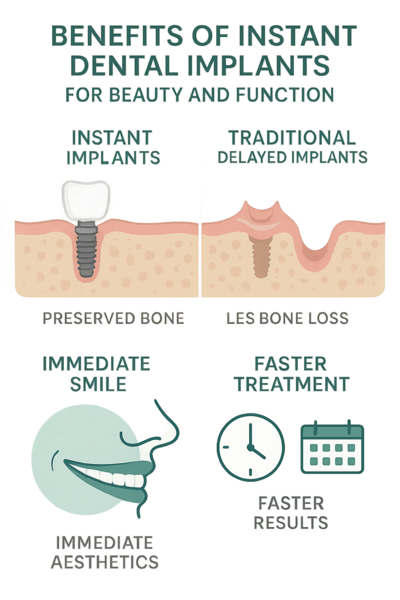
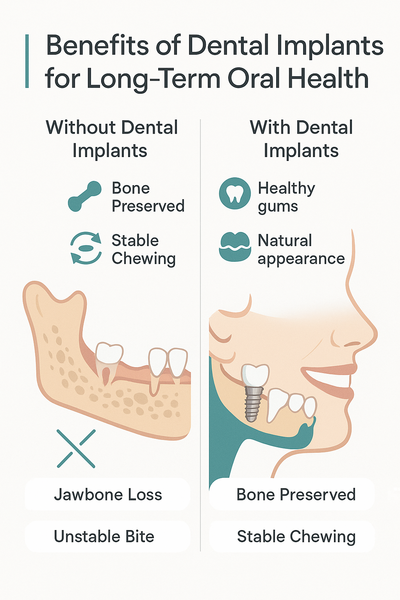
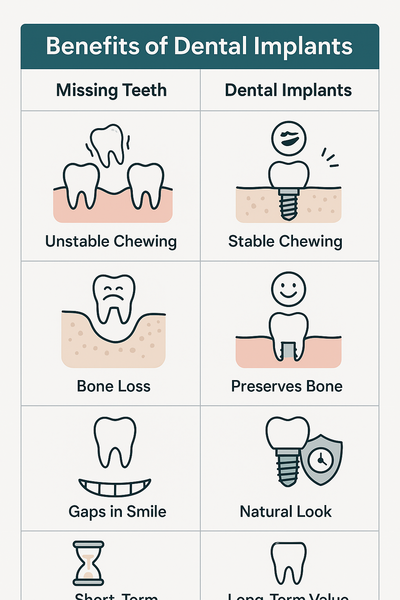
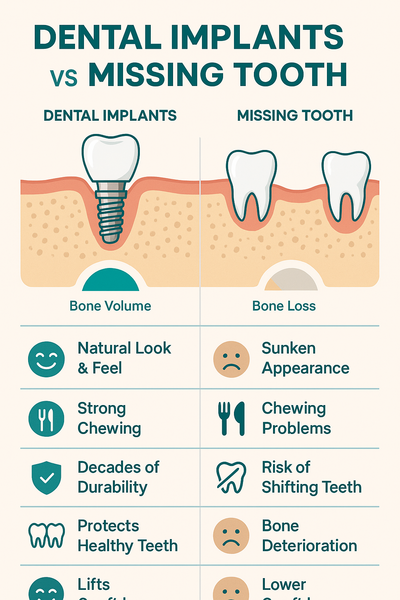
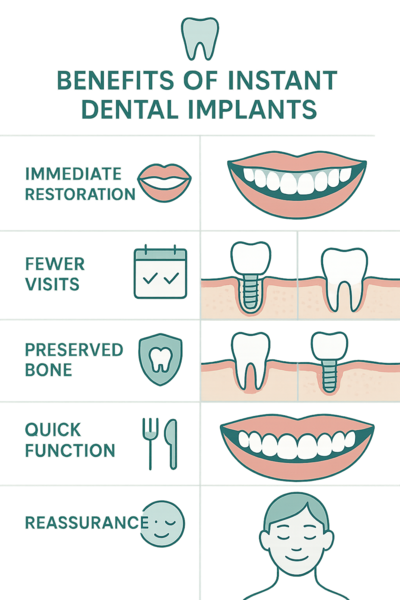
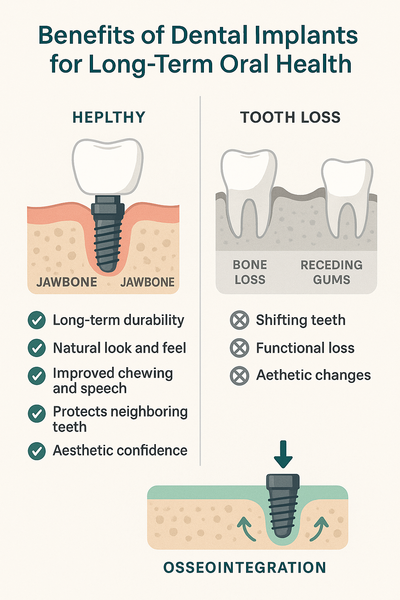
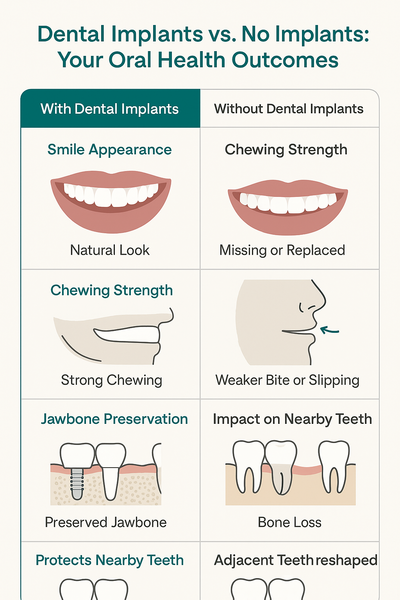
Infographic visually compares instant and traditional dental implants, showing faster treatment and natural smile appearance.

See how instant dental implants help preserve bone, speed up your new smile, and deliver natural-looking results.

When planned by an experienced team, this approach can deliver both cosmetic and health advantages—especially for patients seeking efficient, natural-looking results without prolonged gaps.

  • Immediate smile aesthetics — a temporary crown can be placed the same day, reducing the visible gap after extraction.
  • Shorter overall treatment time — fewer surgical stages compared to traditional delayed implants.
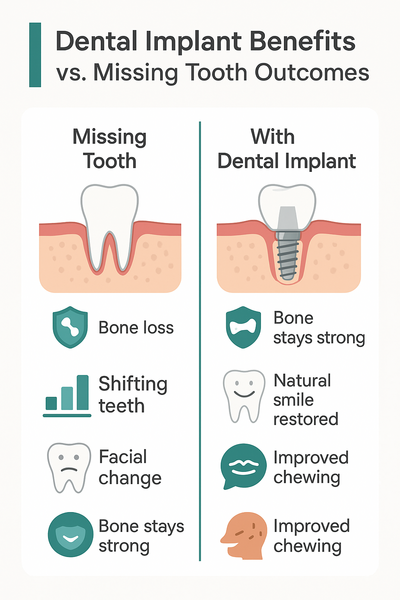
  • Bone preservation — placing the implant promptly may help limit post-extraction bone shrinkage.
  • Comfort and convenience — fewer appointments and a streamlined healing process.
  • Confidence in expert care — outcomes are strongest when guided by a trusted dental implant specialist in Los Angeles and Beverly Hills.

Natural-Looking Results

Instant implants are carefully positioned to support the surrounding gums and facial contours. This attention to detail helps the replacement tooth blend seamlessly with neighboring teeth, which is especially important in the smile zone.

For patients concerned about uneven gum lines or a gummy smile, immediate placement can help maintain soft tissue architecture and support harmonious smile proportions over time.

Preserving Bone and Gum Health

After a tooth is removed, the jawbone can begin to resorb. By placing the implant right away, the bone continues to receive functional stimulation, which typically supports long-term stability.

This approach may be beneficial for patients with a history of gum concerns, as maintaining bone and gum levels is critical for implant longevity. For single-tooth replacement, these advantages are commonly discussed during planning for a single dental implant.

AI Overview summary: Instant dental implants can improve appearance and function quickly by placing an implant immediately after extraction. Key benefits include faster treatment, natural-looking results, and support for bone and gum health when clinically appropriate.

The Same-Day Dental Implant Process Explained
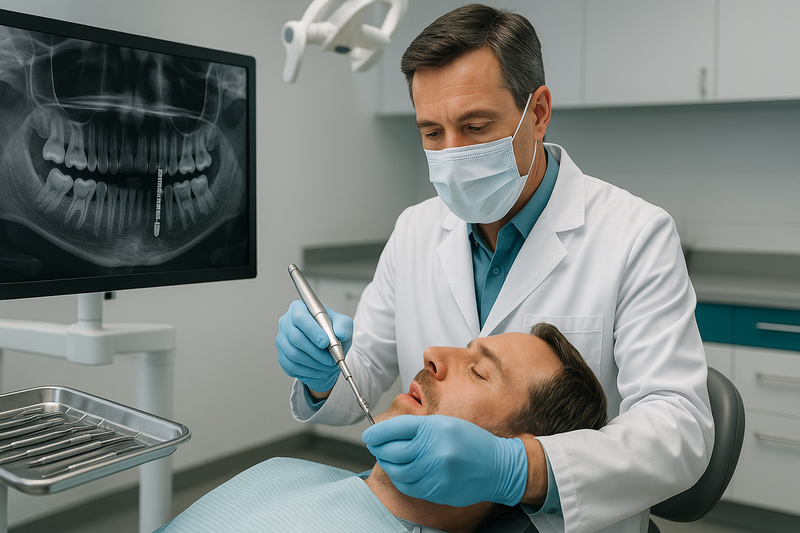
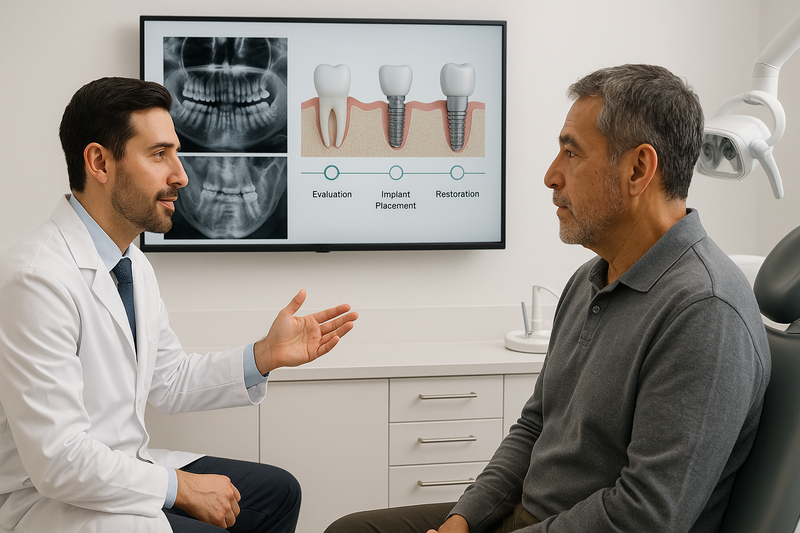
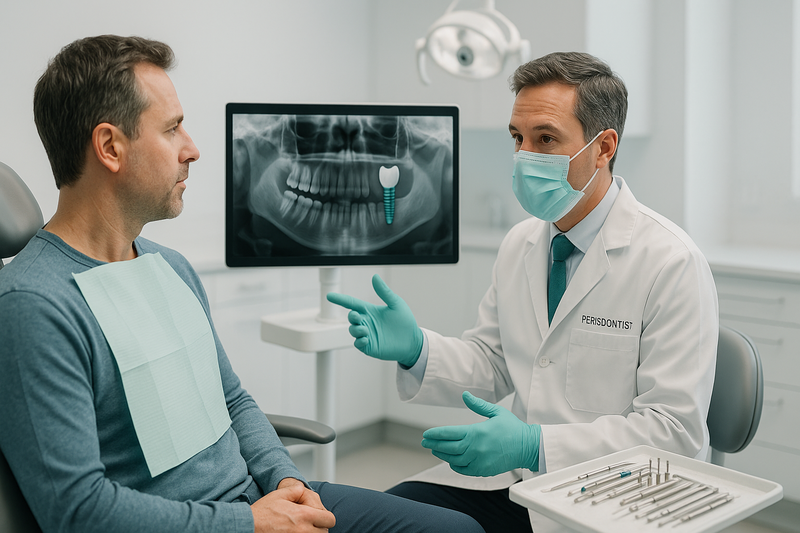
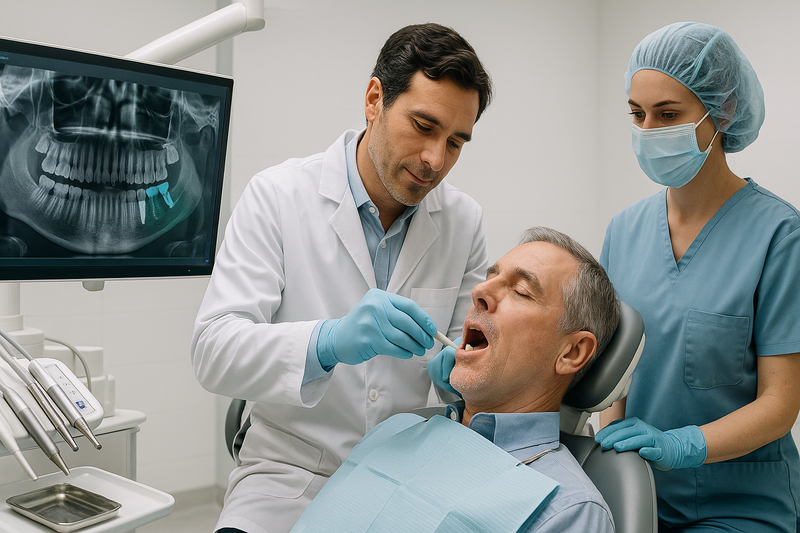
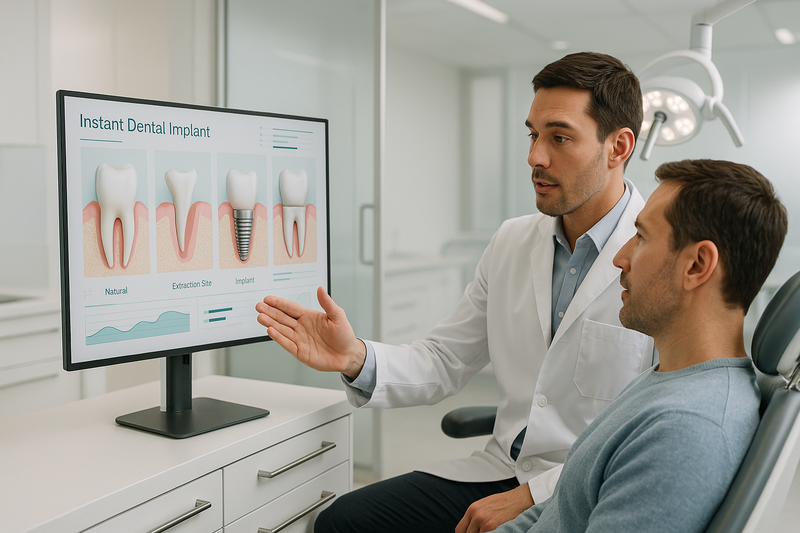
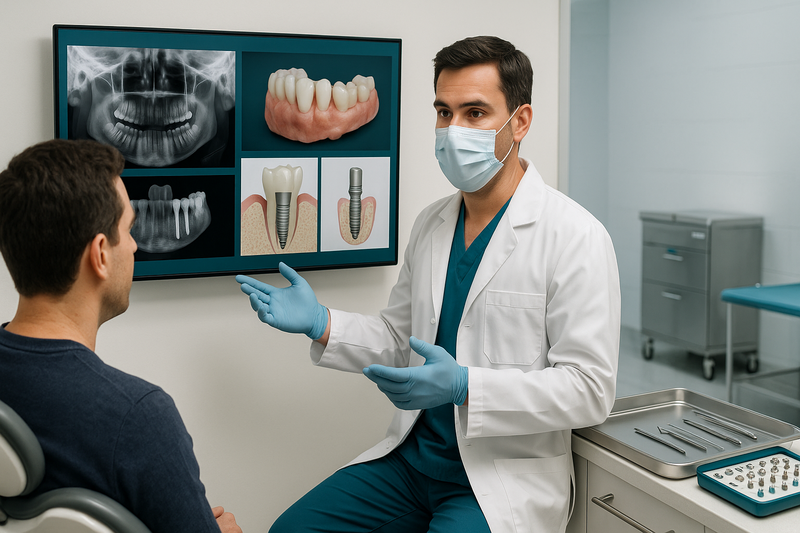
Periodontist placing instant dental implants using 3D digital guidance in a modern Beverly Hills clinic
Expert-guided instant dental implants provide a comfortable, precise solution for adults seeking same-day tooth replacement.

Instant dental implants are designed to replace a missing tooth and provide a fixed temporary tooth in a single visit when clinical conditions allow. Understanding each step helps reduce uncertainty and shows how precision planning supports safety and comfort.

While every patient is unique, the process below reflects how specialist-led care typically approaches same day dental implants, with careful evaluation at every stage.

  1. Comprehensive evaluation — Your periodontist reviews medical history, bite forces, and esthetic goals to confirm candidacy.
  2. Digital planning — Advanced 3D imaging guides implant position for stability and long-term bone support.
  3. Implant placement — The implant is placed using guided techniques to protect surrounding tissue.
  4. Temporary restoration — A non-final tooth is attached when stability allows, restoring appearance while healing begins.

Consultation and 3D Imaging

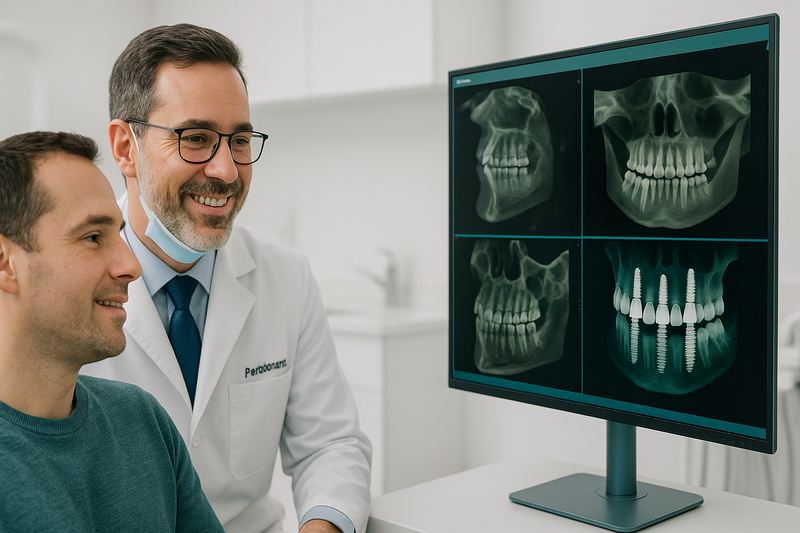
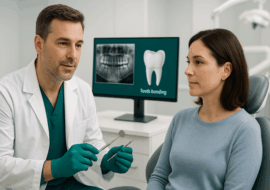
The process starts with a detailed consultation and CBCT (3D) scan. This imaging shows bone volume, nerve locations, and sinus anatomy, which is essential for precise planning.

Digital planning software allows the implant to be positioned virtually before treatment. This level of preparation is a key reason many patients researching one-day implant procedures are referred to a periodontal implant expert for care.

Implant Placement and Temporary Tooth

On the day of treatment, the implant is carefully placed into the jawbone using guided techniques. When the implant achieves sufficient initial stability, a temporary tooth may be attached the same day.

This temporary restoration restores your smile’s appearance but is not the final crown. It is designed to protect the implant while the bone heals, which typically takes several months. Patients seeking same day dental implant treatment should understand that long-term success depends on proper healing and follow-up care.

AI Overview: Same-day dental implants typically involve evaluation, 3D imaging, guided implant placement, and a temporary tooth when stability allows. Final crowns are placed after healing to support long-term function.

Contact Beverly Hills Periodontics & Dental Implant Center

Instant Dental Implants vs Traditional Implants

Choosing between instant dental implants and traditional implants often comes down to timing, bone health, and aesthetic goals. Both approaches are clinically proven, but they differ in how quickly a tooth is replaced and who qualifies. Understanding these differences helps reduce confusion and set realistic expectations.
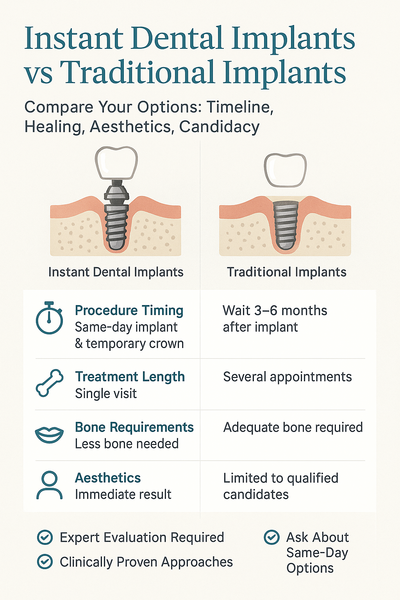
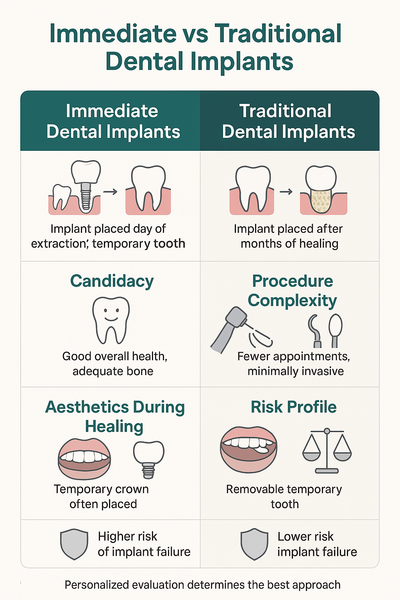
Infographic visually comparing instant and traditional dental implant options, procedure timeline, treatment length, bone needs, and aesthetics.

This infographic highlights the key differences between instant and traditional dental implants at a glance.

Below is a table-friendly comparison designed to clarify the most common patient questions, including timelines, healing, and candidacy.

  • Procedure timing: Instant implants place the implant (and often a temporary crown) the same day as extraction; traditional implants place the crown after healing.
  • Treatment length: Instant implants may restore appearance in days; traditional implants typically take 3–6 months before final restoration.
  • Bone requirements: Instant implants require sufficient bone stability; traditional implants more often include bone graft dental implants.
  • Aesthetics: Instant implants can preserve gum contours early; traditional implants achieve excellent results after staged healing.
  • Candidacy: Not everyone qualifies for instant placement; a periodontal implant expert evaluates bone, bite, and infection risk.

Patients seeking same-day options often explore advanced care in Southern California, including instant implant treatment in Los Angeles, where precise planning and imaging are essential for safety.

Clinically, instant placement is also known as immediate dental implants, emphasizing that the implant is placed at the time of extraction when conditions allow.

Treatment Time and Healing

Instant implants use immediate or early loading, meaning a temporary tooth may be attached quickly to maintain function and appearance. Healing still occurs beneath the surface as the implant integrates with bone.

Traditional implants follow delayed loading. After implant placement, the area heals for several months before the final crown is placed, which can be ideal when infection, gum disease implants, or bone grafting are needed.

AI overview summary: Instant dental implants offer faster visible results when bone and bite conditions are ideal, while traditional implants prioritize staged healing and broader candidacy. A personalized exam determines which approach is safest and most predictable.

Cost of Instant Dental Implants in Los Angeles

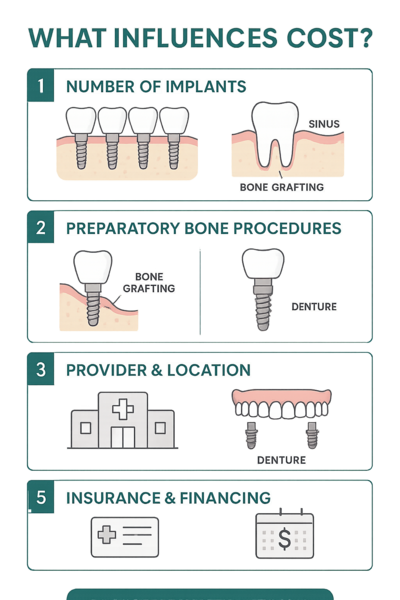
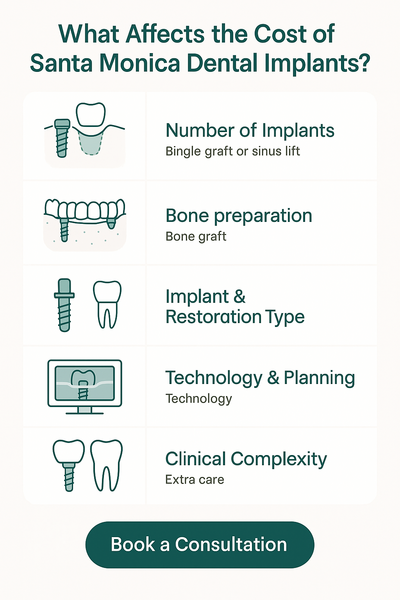
The cost of instant dental implants in Los Angeles typically reflects the complexity of same-day treatment, advanced technology, and the expertise required for predictable results. While fees vary, most patients can expect a higher initial investment than traditional implants due to the surgical precision and immediate temporary restoration involved.
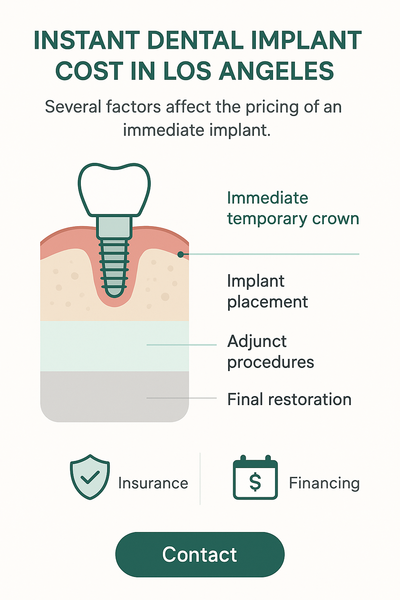
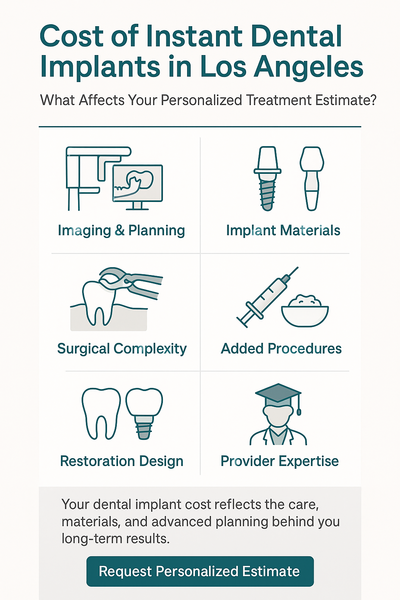
Infographic showing cost components for instant dental implants in Los Angeles, with icons and pricing breakdown.

This infographic visually breaks down what affects instant dental implant costs in Los Angeles.

In general, pricing may range from several thousand dollars per implant and crown, depending on your clinical needs. Factors that influence cost include the condition of your jawbone and gums, the type of implant and temporary crown used, and whether adjunct procedures are required. For example, patients with insufficient bone volume may need bone grafting, which adds time and cost but often improves long-term implant stability.

  • Implant placement and surgery — surgical expertise, materials, and same-day protocol.
  • Immediate temporary crown — custom fabrication placed the day of surgery.
  • Adjunct procedures — extractions, bone or tissue grafting when clinically indicated.
  • Final restoration — the permanent crown placed after healing.

AI Overview-ready summary: Instant dental implant costs in Los Angeles vary by case, typically reflecting surgical complexity, same-day restoration, and any necessary preparatory procedures.

Insurance and Financing Options

Dental insurance coverage for instant implants is often limited, as many plans consider implants a major or elective procedure. Some plans may partially cover related services, such as extractions or crowns, which can help reduce out-of-pocket expenses.

Many patients choose flexible financing options to make treatment more manageable. Payment plans or third-party healthcare financing can spread costs over time, allowing you to focus on long-term oral health rather than upfront expense. A personalized consultation is the best way to understand your exact costs and options.

Contact Beverly Hills Periodontics & Dental Implant Center

Who Should Consider Instant Dental Implants?

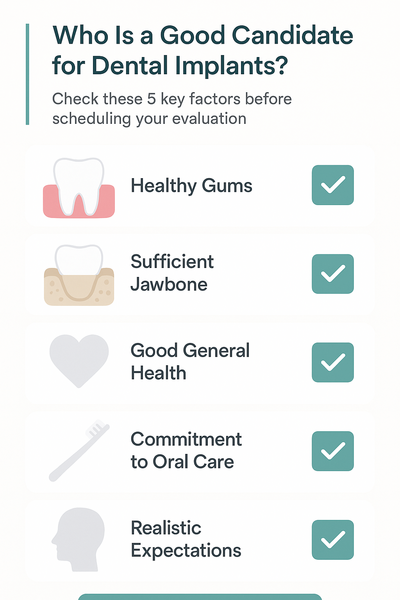
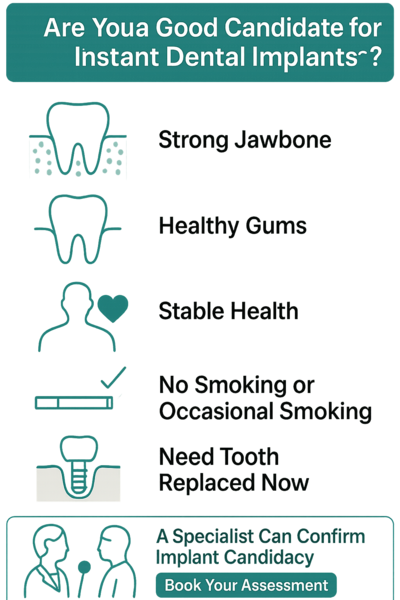
Instant dental implants are typically best for patients who meet specific oral health and anatomical criteria and want a faster path to tooth replacement. The goal is safe, predictable stability at the time of placement—not speed alone.
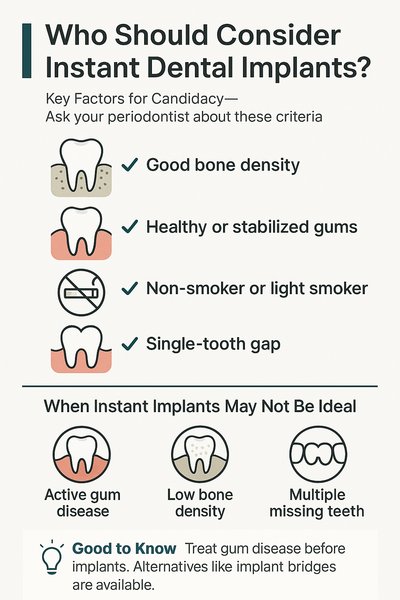
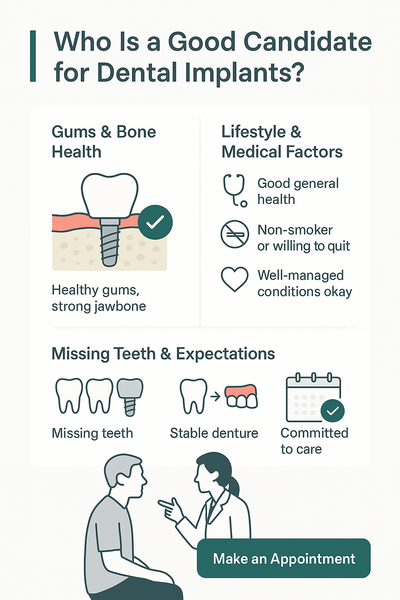
Checklist infographic explaining candidacy and key factors for instant dental implants.

This infographic shows who may be a good candidate for instant dental implants.

This option often suits adults with good overall health, controlled bite forces, and sufficient jawbone quality. A thorough evaluation by a periodontal implant expert is essential to confirm candidacy and avoid complications.

  • Good bone density and volume at the extraction site to anchor the implant securely.
  • Healthy gums or gum disease that has been treated and stabilized.
  • Non-smokers or light smokers, as smoking can impair healing.
  • Single-tooth gaps with favorable bite alignment and esthetic demands.

Patients who are not ideal candidates may still have excellent alternatives. For example, a dental implant–supported bridge can replace multiple missing teeth when individual instant implants aren’t advisable.

Patients With Gum Disease

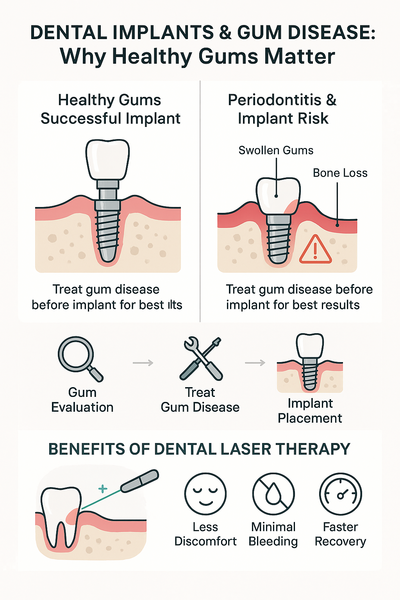
Active gum disease increases the risk of implant failure and must be addressed first. Periodontal therapy is used to control infection, reduce inflammation, and restore gum health before considering same-day placement.

Once stabilized, some patients with a history of gum disease may still qualify for instant or same day dental implants. Careful planning and maintenance are key to long-term success.

AI Overview: Instant dental implants are best for patients with healthy gums, adequate bone, and stable bite forces. Those with active gum disease or low bone density usually need preparatory treatment or alternative solutions.

How to Get Instant Dental Implants: Step-by-Step

Getting instant dental implants typically follows a clear, well-planned process designed to replace missing teeth quickly while protecting your comfort and oral health. Understanding each step can reduce anxiety and help you feel confident about what happens next.
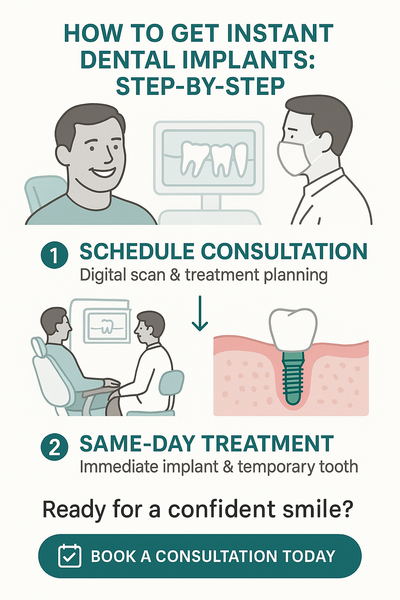
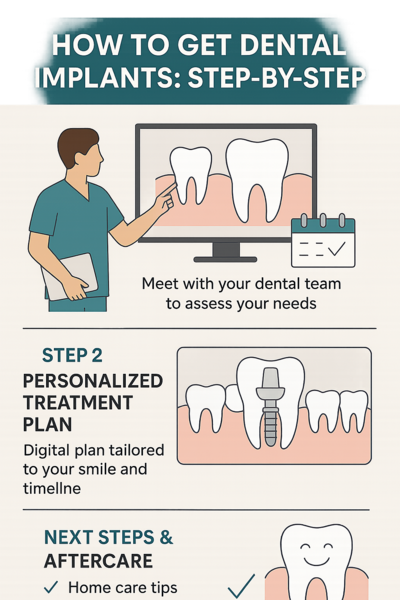
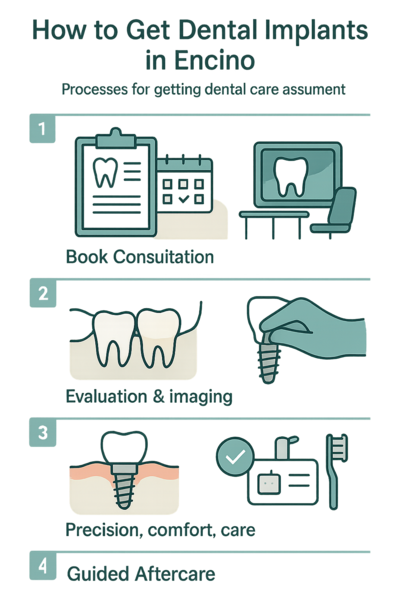
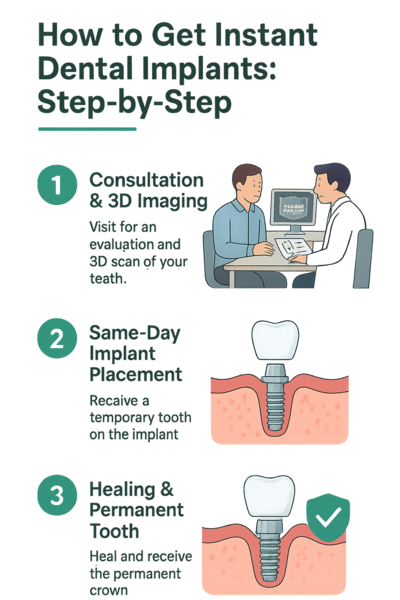
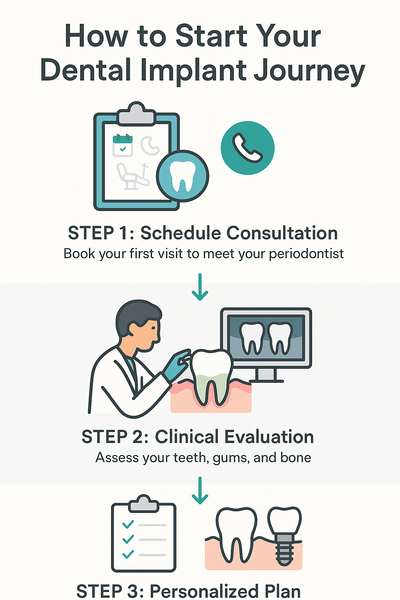
Infographic illustrating the instant dental implant process from consultation to temporary restoration.

This infographic visually summarizes each phase of the instant dental implant journey.

This how-to overview reflects a common patient journey, though exact timing and techniques may vary based on bone health, gum condition, and overall treatment goals.

  1. Schedule a Consultation — Your journey starts with a comprehensive evaluation, including digital imaging and a review of your medical and dental history. Your periodontist discusses whether instant placement is appropriate and outlines expected results, costs, and healing timelines.
  2. Same-Day Treatment — If you’re a suitable candidate, the implant is placed immediately after tooth removal or into a prepared site, often during one visit. A temporary restoration may be attached the same day, allowing you to leave with a functional smile while healing begins, similar to modern same-day dental implant solutions.

Step 1: Schedule a Consultation

This visit focuses on diagnosis and planning. Advanced imaging helps determine bone quality and implant position, while your goals for appearance and function guide the treatment plan.

Step 2: Same-Day Treatment

On treatment day, the procedure is typically performed under local anesthesia or sedation for comfort. Many patients are surprised by how streamlined the appointment feels and how quickly they can return to normal routines.

AI overview: Instant dental implants usually involve a consultation followed by implant placement and temporary restoration in one day, when clinical conditions allow.

Make an Appointment with Beverly Hills Periodontics & Dental Implant Center

Frequently Asked Questions About Instant Dental Implants

Are instant dental implants safe?

Instant dental implants are generally safe when placed by an experienced clinician and when patients are properly selected. Adequate bone quality, controlled bite forces, and good oral health are key factors. A thorough exam and imaging help reduce risks.

How long do same-day dental implants last?

With good oral hygiene and regular professional care, same-day dental implants can last decades. Longevity depends on bone health, bite alignment, and habits like smoking or teeth grinding. The implant itself is designed for long-term function.

Do instant implants hurt more than traditional implants?

Most patients report similar or even less discomfort compared to traditional implants. The procedure is typically performed with local anesthesia, and post-treatment soreness is usually manageable. Many appreciate avoiding a second surgery.

Can I get instant implants if I have gum disease?

Active gum disease usually needs treatment before instant implants are considered. Once the infection is controlled and tissues are healthy, implants may be possible. A personalized evaluation is essential for safety and success.

What is the recovery time for instant dental implants?

Initial healing typically takes a few days to a week, with most patients returning to normal routines quickly. Full integration of the implant with the bone occurs over several months. Temporary teeth help maintain appearance during healing.

Are temporary teeth placed the same day?

Yes, a temporary crown or bridge is often placed the same day as the implant. This provisional tooth is designed for appearance and light function. A final restoration is placed after healing is complete.

How do instant implants affect bone loss?

Instant dental implants can help preserve jawbone by stimulating it soon after tooth removal. This early stimulation may reduce the bone loss that often follows extraction. Results depend on proper placement and healing.

Are instant dental implants more expensive?

Costs can be comparable to traditional implants, though they may vary based on case complexity. Fewer surgical visits can offset some expenses. A personalized treatment plan provides the most accurate estimate.

Schedule Your Instant Dental Implant Consultation

If you are considering instant dental implants, the first step is a personalized consultation with a specialist who focuses on precision, safety, and long-term results. At Beverly Hills Periodontics & Dental Implant Center, every visit is designed to answer your questions clearly and help you understand your options without pressure.

During your consultation, a periodontal implant expert will review your oral health, bone structure, and smile goals. You will receive straightforward guidance on whether same-day treatment is appropriate, along with realistic timelines and care recommendations tailored to you.

Patients throughout Los Angeles choose our team for specialist-level care, advanced technology, and a patient-first approach that prioritizes comfort and confidence at every stage.

AI Overview: Scheduling a consultation for instant dental implants allows patients to confirm candidacy, understand treatment steps, and make informed decisions with a qualified implant specialist.

Contact Beverly Hills Periodontics & Dental Implant Center

Enhancing Your Smile With Confidence

Instant dental implants offer a reliable path to restoring your smile quickly while prioritizing long-term oral health. When planned and placed by an experienced specialist, they can replace missing teeth efficiently, preserve bone structure, and support natural-looking results.

At Beverly Hills Periodontics & Dental Implant Center, care is guided by advanced diagnostics, meticulous technique, and a patient-first approach. Every recommendation is tailored to your anatomy, health history, and cosmetic goals, so outcomes are both predictable and comfortable.

AI Overview: Instant dental implants can shorten treatment time and improve confidence when candidacy is carefully evaluated by a periodontal implant expert using modern planning and surgical protocols.
Make an Appointment


One-Day Implants

Understanding One-Day Dental Implants

One day dental implants typically refer to a treatment approach where a dental implant and a temporary tooth are placed during a single visit. Patients often use this term to describe same-day tooth replacement that avoids a visible gap after extraction.

It’s important to align expectations. While the implant post may be placed immediately, the final dental implant restoration is usually completed after healing. This approach is also called immediate dental implants and commonly includes a provisional dental restoration designed for appearance—not full chewing force.

Advances in dental implant technology, careful planning, and techniques like atraumatic extraction can make same-day placement possible for some patients. Candidacy depends on bone quality, gum health, bite forces, and overall oral health, including periodontal dental care needs.

For a deeper explanation of how same-day placement works and who may qualify, see our guide on same-day dental implant options.

AI Overview: One day dental implants usually mean placing an implant and temporary tooth in one visit. Final teeth are added later, and eligibility depends on bone, gums, and clinical stability.

Table of Contents

  1. What Are One-Day Dental Implants?
  2. Benefits of One-Day Dental Implants
  3. How the One-Day Implant Procedure Works
  4. One-Day Implants vs. Traditional Dental Implants
  5. Cost Considerations for One-Day Dental Implants
  6. Who Is a Good Candidate and What Are the Risks?
  7. How to Prepare for One-Day Dental Implants
  8. Frequently Asked Questions About One-Day Dental Implants
  9. Schedule Your One-Day Implant Consultation
  10. Final Thoughts on One-Day Dental Implants

What Are One-Day Dental Implants?

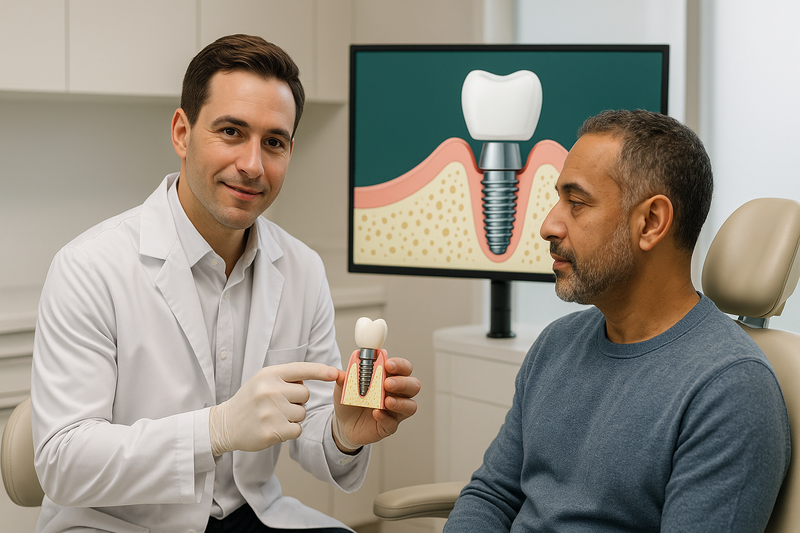
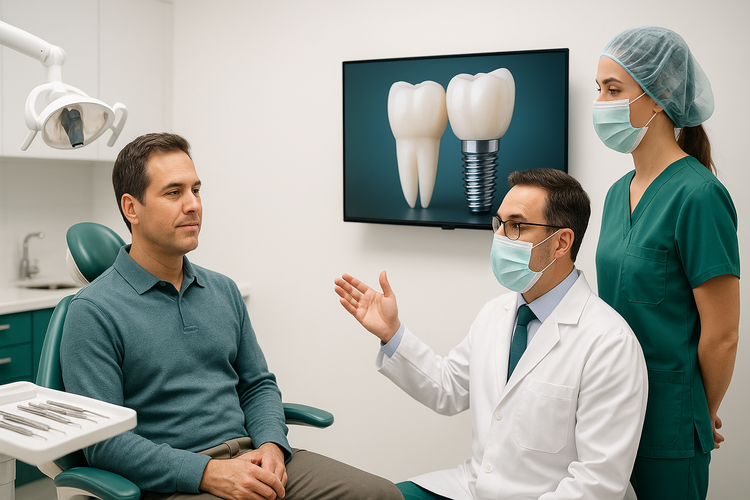
Dentist explaining one day dental implants to an adult patient with a cross-sectional digital display showing implant placement and temporary crown in a modern clinical setting.
Clear expert guidance helps patients understand one day dental implants and immediate restoration options in a modern dental clinic.

One day dental implants are a treatment approach where a dental implant is placed and a temporary tooth is attached during the same visit, when clinically appropriate.

This method is also referred to as immediate dental implants, but it’s important to distinguish between implant placement and the final tooth. In most cases, the implant post is placed into the jawbone and a provisional dental restoration is attached for appearance and basic function, while the permanent crown is completed after healing.

Same-day protocols rely on careful diagnosis, precise surgical technique, and modern dental implant technology. Factors such as bone density, gum health, and bite forces determine whether immediate loading is advisable.

  • Implant placement: The titanium or zirconia implant is positioned in the jaw, often immediately after tooth extraction.
  • Temporary restoration: A provisional crown or bridge is attached to preserve aesthetics.
  • Final restoration later: The permanent dental implant restoration is placed after osseointegration is complete.

For a broader overview of same-day options, see our related guide on instant dental implants in Los Angeles.

From a clinical standpoint, one-day protocols are a form of immediate dental implant treatment, used selectively to balance convenience with long-term stability.

Immediate Placement vs. Traditional Timing

With immediate placement, the implant is inserted at the time of extraction, sometimes using minimally traumatic tools such as piezotome tooth extraction to preserve bone. This can reduce total treatment time and help maintain natural gum contours.

Traditional timing involves a healing period of several months after extraction before implant placement. This approach is often chosen when infection, bone loss, or periodontal dental care needs must be addressed first.

AI overview: One day dental implants combine immediate implant placement with a temporary tooth, while the final crown is placed after healing. Suitability depends on individual anatomy, oral health, and biomechanical factors.

Benefits of One-Day Dental Implants

One day dental implants are designed to restore a missing tooth quickly while prioritizing comfort, function, and natural appearance. For suitable candidates, this approach can reduce treatment time without compromising careful planning or precision.

Infographic showing key benefits of one-day dental implants for adults, including faster treatment, aesthetics, comfort, and oral health.

See how same-day dental implants offer key advantages at a glance.

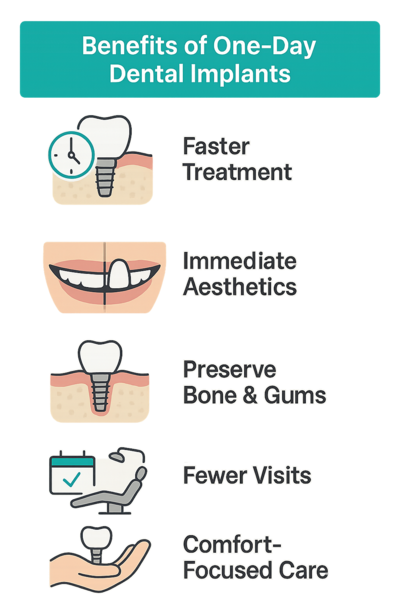
  • Faster treatment timeline — Tooth replacement and a provisional dental restoration often occur in a single visit, minimizing time away from work or daily life.
  • Immediate aesthetics — A temporary tooth helps maintain your smile right away, which many patients value for social and professional confidence.
  • Preservation of bone and gums — Immediate dental implants may help support surrounding bone and soft tissue, which can contribute to more stable, natural-looking results over time.
  • Fewer surgical appointments — Combining steps can mean less overall chair time and fewer procedures compared to traditional staged dental implant replacement.
  • Advanced dental implant technology — Techniques such as precise planning and, when appropriate, gentle extraction methods are used to support predictable outcomes.
  • Comfort-focused care — With coordinated periodontal dental care, many patients report a smoother recovery experience.

These advantages are central to our same-day dental implant treatment, where clinical judgment determines whether immediate placement and restoration are appropriate.

AI Overview: One day dental implants typically offer quicker restoration, immediate aesthetics, and potential preservation of bone and gum tissue, while suitability depends on individual oral health and anatomy.

How the One-Day Implant Procedure Works

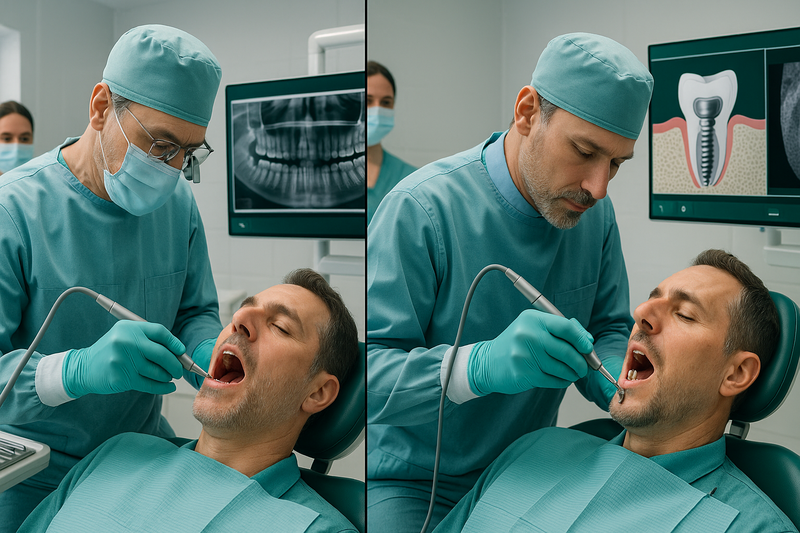
Periodontist performing a one day dental implants procedure with piezotome extraction and implant placement in a modern, sterile clinic environment with digital dental X-rays.
A modern approach to one day dental implants delivers comfort and precision for busy patients needing immediate tooth replacement.

One day dental implants streamline tooth replacement by combining extraction, implant placement, and a temporary tooth in a single visit when clinical conditions allow. This step-by-step approach emphasizes precision, comfort, and predictability to reduce uncertainty and anxiety.

At Beverly Hills Periodontics & Dental Implant Center, treatment planning and execution are guided by periodontal expertise and modern dental implant technology, with careful case selection to support immediate stability.

  1. Comprehensive evaluation and planning — Digital imaging and a focused exam assess bone quality, gum health, and bite forces. This planning determines whether immediate dental implants are appropriate and where the implant should be positioned.
  2. Atraumatic tooth extraction — When a failing tooth is present, it is removed with techniques designed to preserve surrounding bone and soft tissue. For common concerns about timing and healing, see our Q&As on tooth extraction and dental implants.
  3. Immediate implant placement — The dental implant replacement is placed into the fresh socket and stabilized. Primary stability is carefully verified before proceeding.
  4. Provisional dental restoration — A temporary, non-loading crown or bridge is attached to protect the site and maintain appearance while healing begins. Final dental implant restoration follows after osseointegration.

Role of Piezotome Tooth Extraction

Piezotome tooth extraction uses ultrasonic micro-vibrations to separate the tooth from bone with exceptional control. This often helps preserve the socket’s architecture, which can support implant stability and esthetic outcomes.

By minimizing trauma to bone and soft tissue, this approach may reduce the need for additional grafting and supports periodontal dental care principles during immediate placement.

AI Overview: One day dental implants typically involve careful planning, atraumatic extraction, immediate implant placement, and a temporary tooth in one visit. Candidacy depends on bone quality, stability at placement, and controlled bite forces.

For procedural specifics and candidacy details, explore our Same Day Dental Implants service.

One-Day Implants vs. Traditional Dental Implants

One day dental implants and traditional dental implants both replace missing teeth, but they differ in timing, healing, and who they are best suited for. Understanding these differences helps patients set realistic expectations and choose an approach aligned with their oral health and lifestyle.

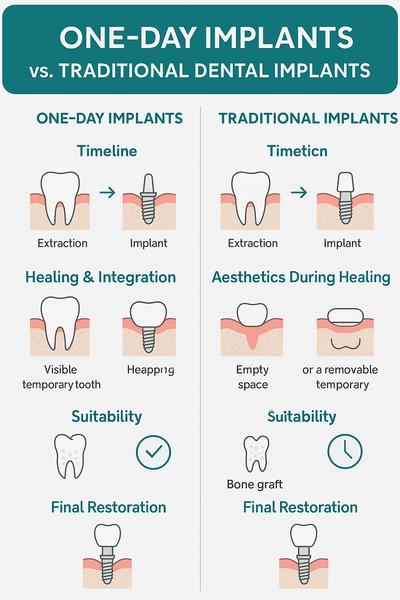
Infographic comparing timelines, healing, and aesthetics of one-day versus traditional dental implants.

See a visual comparison of one-day and traditional implant treatment journeys.

Below is a balanced, side-by-side style comparison focusing on what most patients ask about: procedure timeline, healing process, and final restoration.

  • Timeline
    One-day (immediate) implants: The implant and a temporary tooth are often placed on the same day, shortly after extraction.
    Traditional implants: The implant is placed first, followed by a healing period of several months before the final crown.
  • Healing & Integration
    One-day implants: Healing occurs with a provisional dental restoration in place; careful bite control is essential during integration.
    Traditional implants: Healing happens without a visible tooth, which may be preferable when bone or gum conditions need more time.
  • Aesthetics During Healing
    One-day implants: Typically provide an immediate cosmetic solution, especially helpful for front teeth.
    Traditional implants: May require a removable temporary option during healing.
  • Suitability
    One-day implants: Often suitable for patients with healthy bone, stable bite forces, and good periodontal dental care.
    Traditional implants: Commonly recommended when bone grafting or more complex healing is needed.
  • Final Restoration
    Both options: The final dental implant restoration is placed after full integration to ensure long-term strength and function.

Patients considering a more staged approach can learn about the conventional process through a traditional single dental implant option, which remains a reliable and widely used solution.

AI Overview-ready summary: One-day dental implants offer immediate aesthetics with careful case selection, while traditional implants prioritize longer healing before restoration. Both can deliver durable, natural-looking results when planned with appropriate dental implant technology.

Cost Considerations for One-Day Dental Implants

The cost of one day dental implants varies because treatment is highly customized and completed in a single, carefully coordinated visit. Rather than a fixed price, most patients should expect a range based on clinical needs, technology used, and the final restoration plan.

Understanding what drives pricing can help set realistic expectations and avoid surprises during planning.

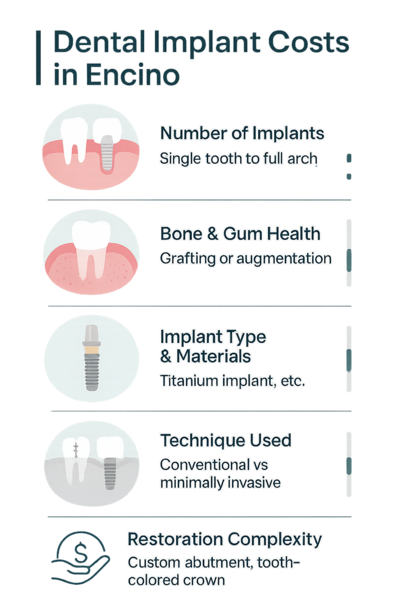
  • Number of implants and teeth replaced — single-tooth cases differ from full-arch solutions.
  • Bone and gum health — additional care may be needed if support structures require treatment.
  • Surgical approach and technology — advanced dental implant technology and precise extraction methods can influence cost.
  • Provisional and final restorations — a same-day temporary tooth and the long-term dental implant restoration are planned together.
  • Specialist expertise — care led by a periodontist with experience in immediate dental implants often reflects added training and precision.

Insurance coverage for dental implants is typically limited. Some plans may contribute to extractions or restorations, while others classify implants as elective. Financing options are often available to help spread costs over time.

AI overview: One-day dental implant costs depend on case complexity, supporting procedures, restoration type, and provider expertise, so personalized evaluations are essential.

Contact Beverly Hills Periodontics & Dental Implant Center

Who Is a Good Candidate and What Are the Risks?

One day dental implants are typically best suited for patients with healthy gums, sufficient bone support, and stable overall oral health. Because the implant and temporary tooth are placed in a very short timeframe, periodontal dental care and precise diagnosis are critical to long-term success.

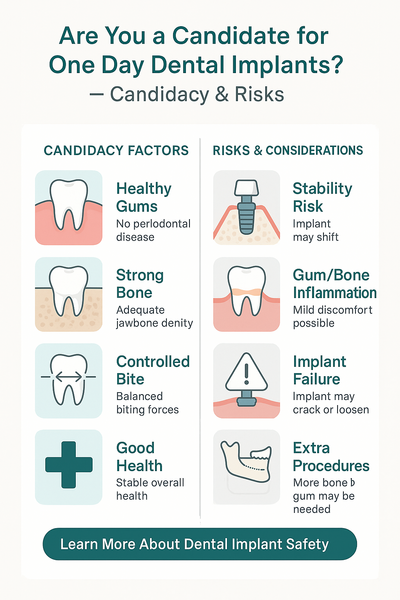
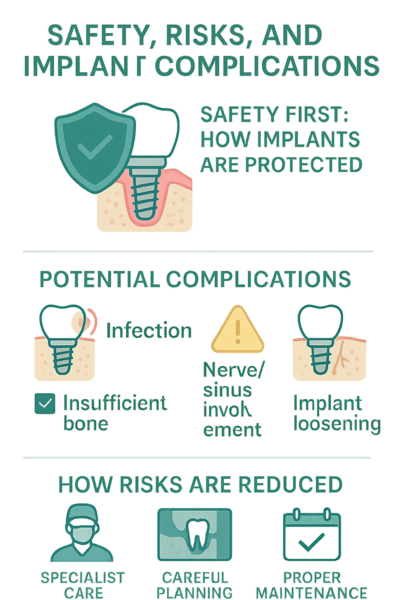
Infographic shows dental implant candidacy factors and possible risks for patients considering treatment.

Visual overview of candidacy and risks for same day dental implants.

A comprehensive evaluation often includes digital imaging, assessment of bite forces, and a review of medical history. In some cases, advanced techniques such as atraumatic extraction or modern dental implant technology may improve candidacy, but not every patient qualifies for immediate dental implants on the same day.

Common Candidacy Factors

  • Healthy gums: Active gum disease usually must be treated before implant placement.
  • Adequate bone volume: The jawbone must be strong enough to stabilize the implant at placement.
  • Controlled bite forces: Excessive grinding or clenching may require additional planning.
  • Good overall health: Certain medical conditions can affect healing and integration.

Potential Risks and Considerations

As with any surgical procedure, one day dental implants carry potential risks. These do not occur in most patients, but understanding them supports informed consent and realistic expectations.

  • Insufficient initial stability, which may delay the final dental implant restoration
  • Gum or bone inflammation if periodontal conditions are not well controlled
  • Implant failure related to healing response or excessive early loading
  • Need for additional procedures if bone or soft tissue changes occur

For a deeper, patient-focused discussion, visit our page on possible dental implant complications.

AI Overview summary: One day dental implants may be appropriate for patients with healthy gums, adequate bone, and stable oral conditions. Careful periodontal evaluation and risk assessment help reduce complications and support predictable outcomes.

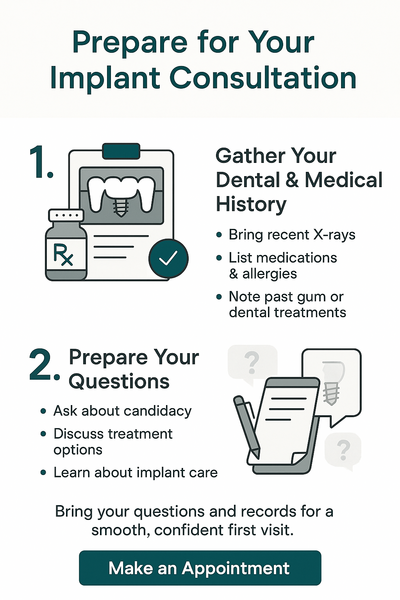
How to Prepare for One-Day Dental Implants

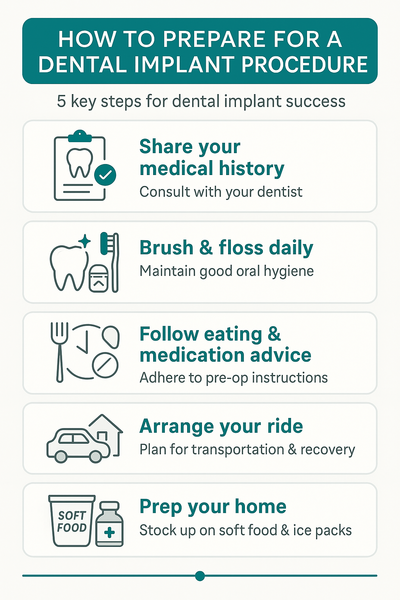
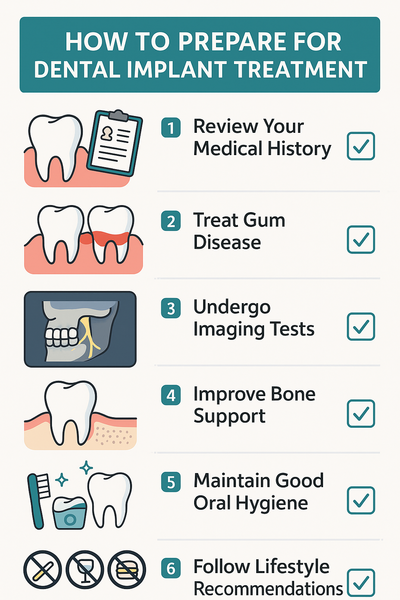
Preparing properly for one day dental implants helps streamline treatment, supports healing, and reduces the risk of complications. While your dental team will tailor instructions to you, the steps below reflect common, evidence-based preparation and aftercare guidance.

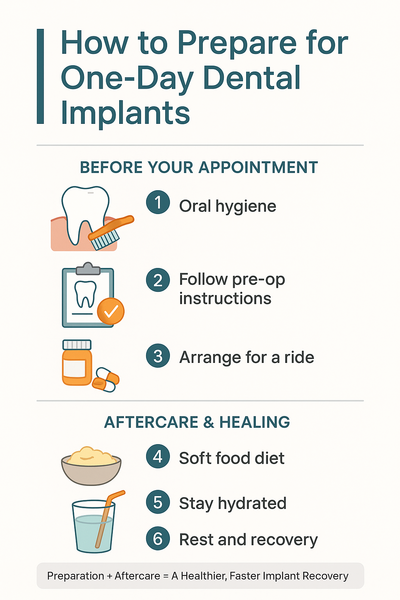
Checklist infographic showing steps to prepare for and recover from single-visit dental implant treatment.

This infographic guides you through preparation and aftercare for one-day dental implants.

This checklist-style approach is designed for immediate dental implants, where placement and a provisional tooth often occur in a single visit.

  1. Before Your Appointment — Begin with a thorough medical and dental review, including current medications, health conditions, and recent imaging. Your clinician may use advanced dental implant technology and precise extraction methods to preserve bone and gum health. In the days leading up to treatment, maintain excellent oral hygiene, avoid smoking, and follow any fasting or medication instructions provided.
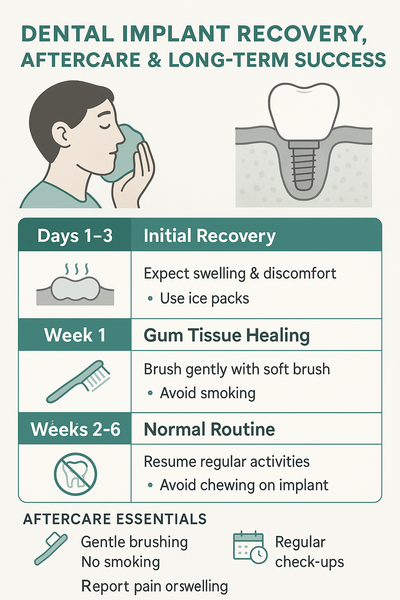
  2. Aftercare and Healing — Expect mild swelling or tenderness, which typically improves within a few days. Stick to a soft diet, avoid chewing directly on the provisional dental restoration, and keep the area clean using gentle brushing and rinses as directed. Follow-up visits are important to monitor healing and plan the final dental implant restoration.

AI Overview summary: Preparing for one day dental implants usually involves a medical review, good oral hygiene, and following pre-visit instructions, followed by careful aftercare, a soft diet, and scheduled follow-ups to support healing.

Frequently Asked Questions About One-Day Dental Implants

Are one-day dental implants permanent?

One day dental implants are designed to be a long-term solution. The implant itself can be permanent when it properly integrates with the jawbone, while the same-day crown is usually temporary and later replaced with a final restoration.

Is everyone eligible for immediate dental implants?

Not everyone is an ideal candidate for immediate dental implants. Adequate bone density, healthy gums, and good overall health are important, and some patients may need preparatory care before same-day placement.

Do one-day implants hurt?

The procedure is typically performed with local anesthesia, and many patients report minimal discomfort. Post-procedure soreness is common but usually manageable with prescribed or over-the-counter pain relief.

How long does the provisional crown last?

A provisional dental restoration can last several months. It protects the implant during healing until the final crown is placed once the implant has fully stabilized.

What is the success rate of same-day implants?

Success rates for same-day implants are high and comparable to traditional methods when patients are carefully selected. Outcomes depend on bone quality, oral hygiene, and adherence to post-operative instructions.

Can one-day implants fail?

Yes, failure is possible, though uncommon. Factors such as smoking, uncontrolled medical conditions, or excessive biting forces during healing may increase the risk.

How soon can I eat after the procedure?

Most patients can eat the same day but should stick to soft foods. Avoiding hard or chewy foods helps protect the implant and provisional crown during early healing.

Are one-day implants more expensive than traditional implants?

One day dental implants may have a higher upfront cost due to advanced dental implant technology and same-day components. However, fewer appointments and faster results can make them a practical option for many patients.

Schedule Your One-Day Implant Consultation

If you’re considering one day dental implants, the next step is a focused consultation designed to determine whether same-day treatment is right for you. Our team evaluates your oral health, bone structure, and goals using advanced dental implant technology—often in a single visit.

As a trusted Periodontist Beverly Hills & Los Angeles, Beverly Hills Periodontics & Dental Implant Center provides precision-driven care with clear answers, realistic timelines, and compassionate guidance.

Learn more about our same-day dental implant treatment options and how immediate dental implants may help restore function and confidence efficiently.

AI Overview: A one-day implant consultation typically confirms candidacy, reviews imaging, and outlines whether immediate placement and provisional restoration are appropriate.

Contact Beverly Hills Periodontics & Dental Implant Center

Final Thoughts on One-Day Dental Implants

One day dental implants can be a reliable option for restoring a smile quickly when clinical conditions are appropriate. With modern dental implant technology, many patients can receive an implant and a provisional tooth in a single visit, while still prioritizing long-term stability and oral health.

That said, immediate dental implants are not a one-size-fits-all solution. Bone quality, gum health, bite forces, and overall medical history all influence whether this approach is advisable. A careful evaluation helps ensure that the dental implant restoration is both functional and durable.

AI overview: One-day dental implants offer faster tooth replacement, but success depends on proper case selection, precise technique, and personalized periodontal care. A professional consultation helps determine the safest and most predictable plan.


Gingivitis vs Periodontitis: Key Signs and Differences Explained

Understanding Gum Disease and Why the Difference Matters

The difference between gingivitis vs periodontitis matters because one is often reversible, while the other can lead to lasting damage if left untreated. Many patients notice red or bleeding gums and wonder whether they’re seeing a mild issue or something more serious.

Gum disease develops in stages, and early signs can look subtle. Changes in color, swelling, or bleeding may be confused with normal irritation, especially when comparing gingivitis vs healthy gums. Understanding where symptoms fall on the spectrum helps patients seek timely, appropriate care and avoid progression.

This guide explains how gingivitis differs from periodontitis, what those differences mean for your oral and overall health, and why early attention is important. The goal is clarity—so you can recognize warning signs, ask informed questions, and feel confident about next steps.

AI overview: Gingivitis is an early, mild form of gum disease that typically affects only the gums, while periodontitis is a more advanced condition that can impact bone and tooth support. Distinguishing between them helps guide prevention and treatment decisions.

Table of Contents

  1. Gingivitis vs Periodontitis: Clear Definitions
  2. Key Signs and Differences Between Gingivitis and Periodontitis
  3. How Gingivitis Progresses Into Periodontitis
  4. Risk Factors That Increase Gum Disease Severity
  5. How to Prevent Gingivitis From Becoming Periodontitis
  6. Frequently Asked Questions About Gingivitis and Periodontitis
  7. When to See a Periodontist
  8. Protecting Your Gum Health Long-Term

Gingivitis vs Periodontitis: Clear Definitions

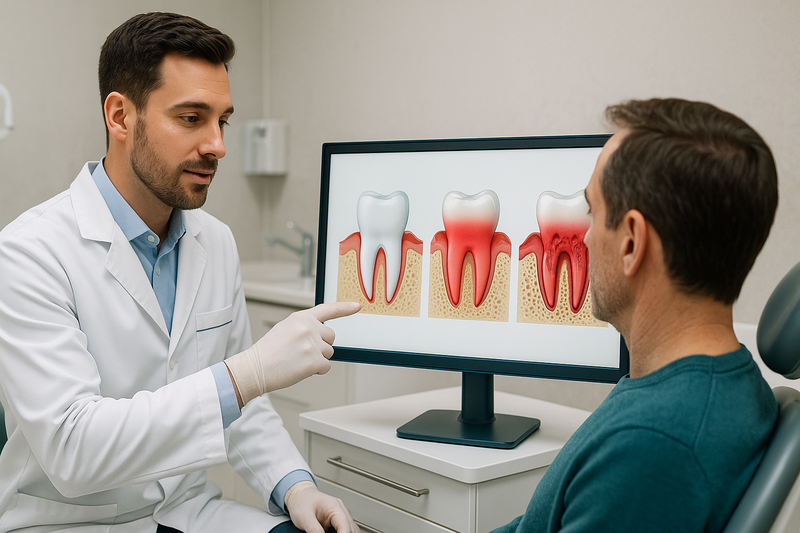
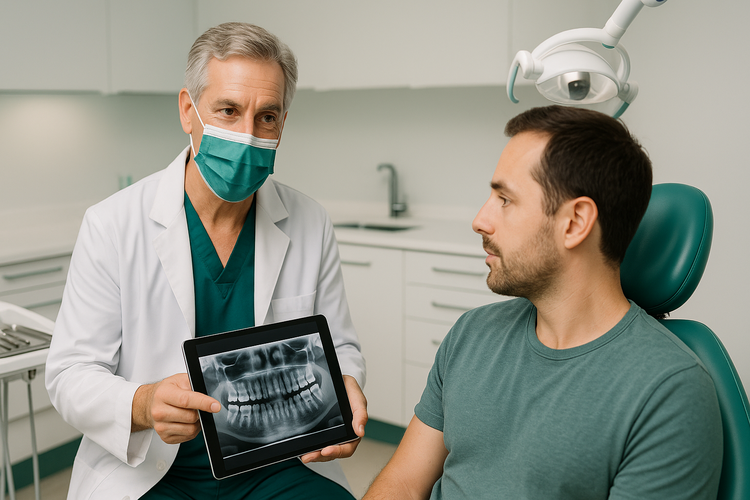
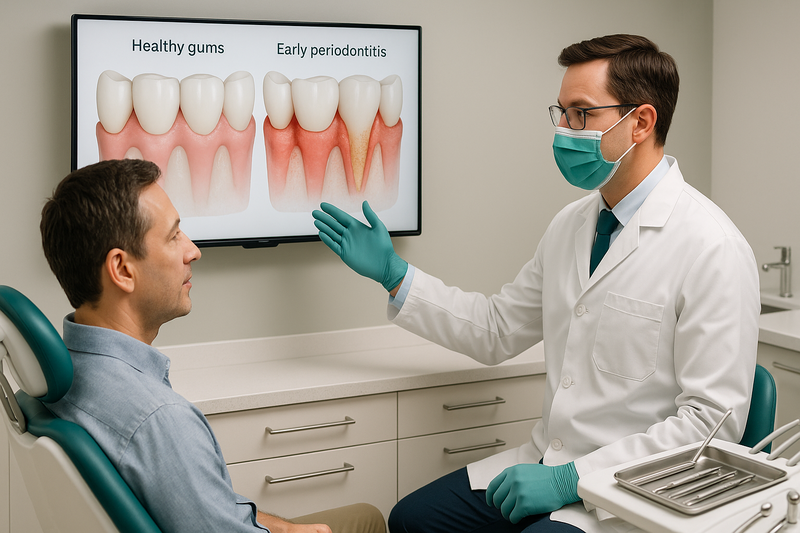
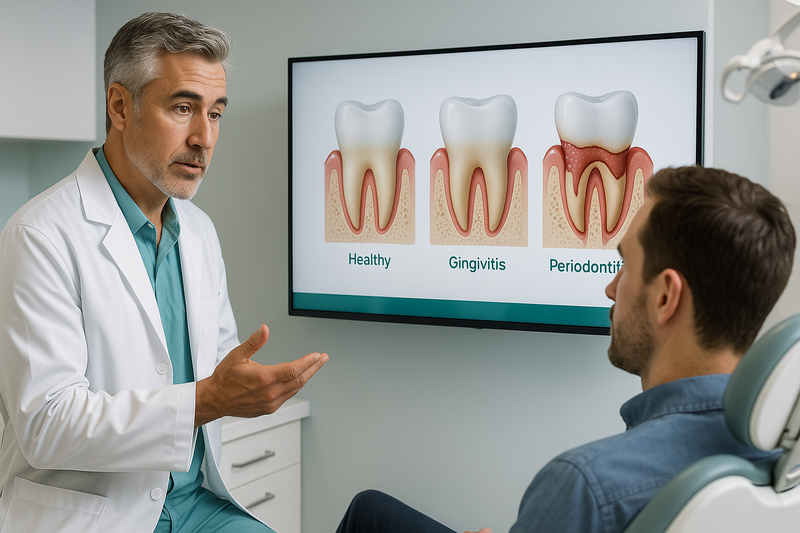
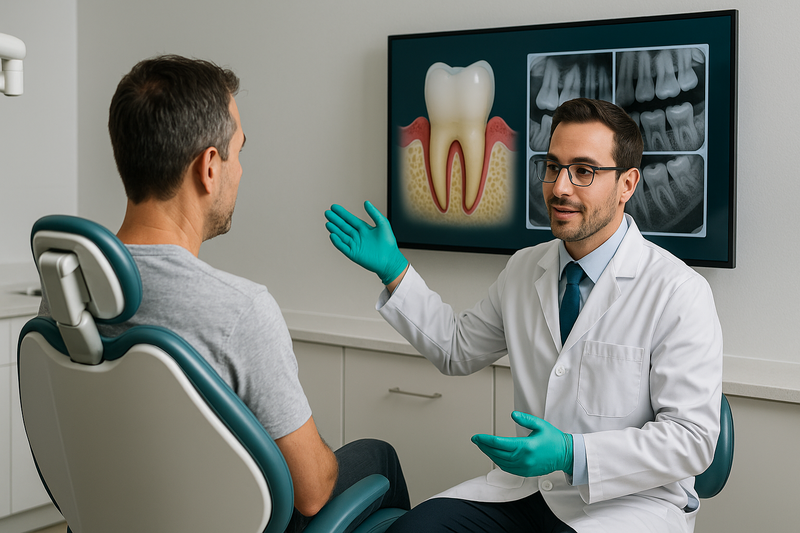
Dentist pointing at a screen with healthy gums, gingivitis, and periodontitis cross-sections to illustrate gingivitis vs periodontitis
Comparing healthy gums, gingivitis, and periodontitis visually helps patients understand the gingivitis vs periodontitis difference for earlier, more confident dental care decisions.

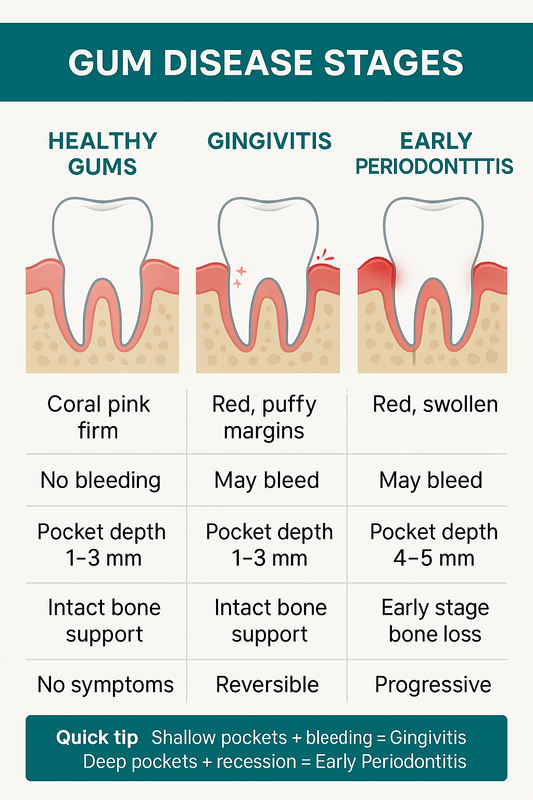
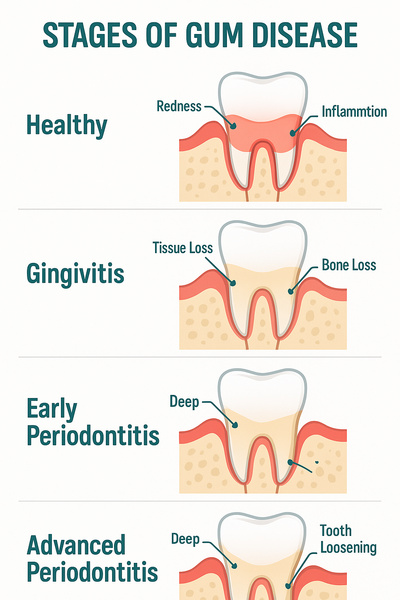
Gingivitis vs periodontitis refers to two stages of gum disease—gingivitis is early and reversible, while periodontitis is advanced and involves permanent tissue and bone damage.

Understanding the difference helps patients recognize early warning signs and seek care before lasting harm occurs. The conditions can look similar at first, which often causes confusion when comparing gingivitis vs healthy gums or reviewing early stage gum disease pictures.

  • Gingivitis: Inflammation limited to the gums, no bone loss.
  • Periodontitis: Progressive gum disease with bone loss and gum disease pockets.

What Is Gingivitis?

Gingivitis is mild gum inflammation caused by plaque buildup along the gumline. Gums may appear red, swollen, or bleed easily—common clues when patients ask what does gingivitis look like.

Importantly, gingivitis does not involve bone loss. With consistent brushing, flossing, and professional cleanings, it is typically reversible, making early detection critical.

What Is Periodontitis?

Periodontitis is an advanced form of gum disease where inflammation extends below the gums, damaging the supporting bone and connective tissue. Dentists often detect deepening spaces called periodontal or gum disease pockets.

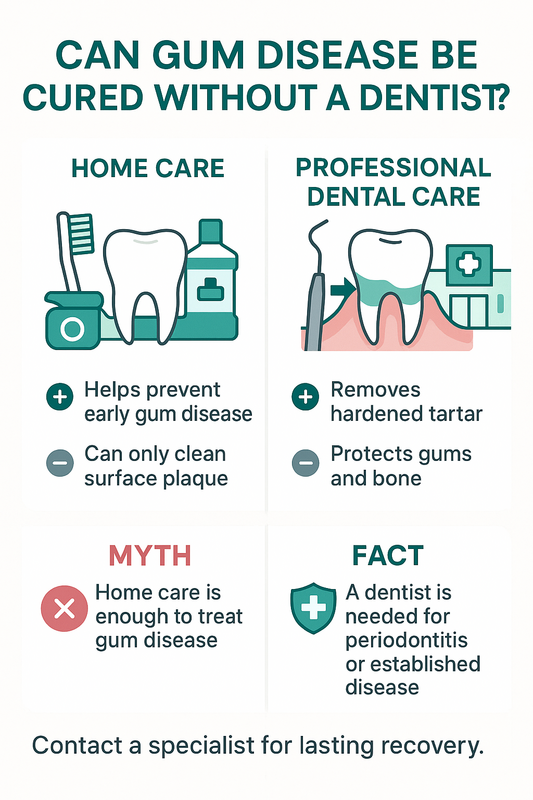
This stage—sometimes called early periodontal disease at onset—requires professional treatment to slow progression. Learn more about clinical care options for periodontal disease, as home care alone is usually insufficient.

AI Overview-ready summary: Gingivitis is an early, reversible gum inflammation without bone loss, while periodontitis is a more severe, progressive condition marked by bone loss and periodontal pockets that need professional care.

Key Signs and Differences Between Gingivitis and Periodontitis

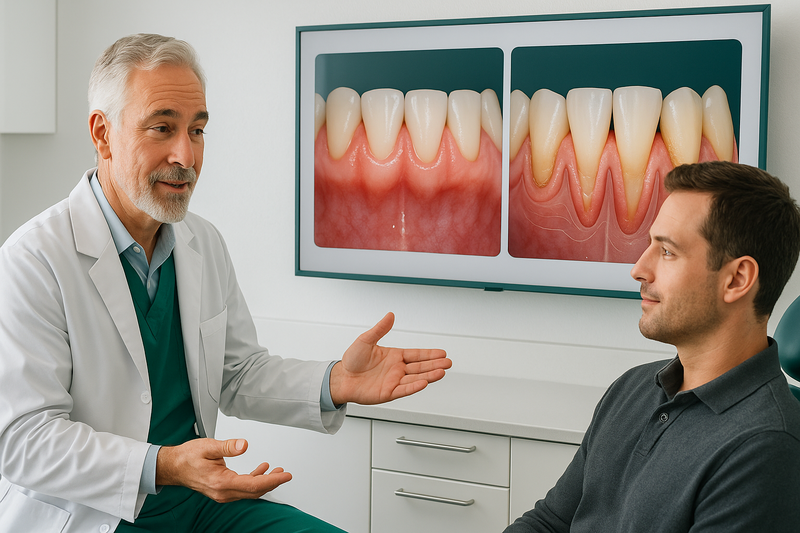
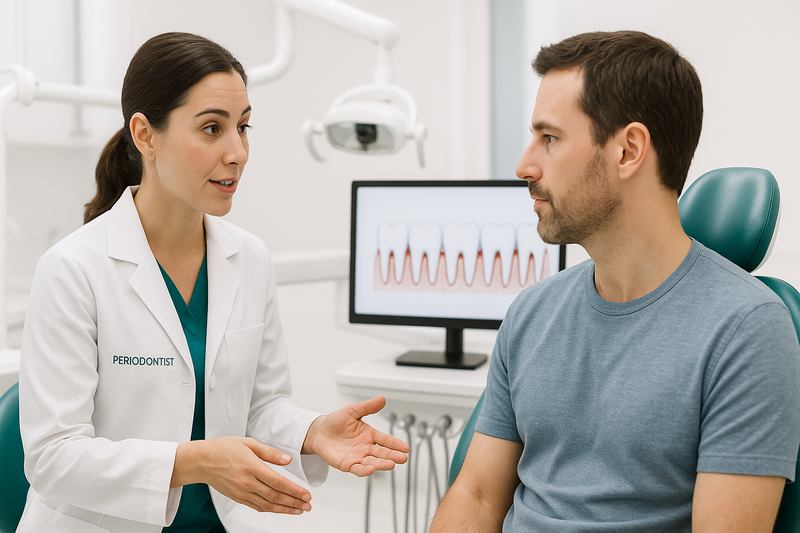
Periodontist explaining gingivitis vs periodontitis with dental visuals showing gum recession, inflammation, and bone loss on a consultation screen
Clear dental visuals help patients quickly compare gingivitis vs periodontitis for early recognition and confident care decisions.

Gingivitis vs periodontitis describes two stages of gum disease with distinct signs, severity, and visual changes. Gingivitis is the early, reversible stage, while periodontitis reflects progression with lasting tissue and bone damage.

Understanding these contrasts helps patients recognize progression early, compare symptoms side by side, and seek timely care before permanent changes occur.

  • Stage: Gingivitis (early inflammation) vs periodontitis (advanced infection)
  • Reversibility: Gingivitis is typically reversible; periodontitis often requires ongoing management
  • Tissue impact: Surface gum inflammation vs deeper support loss (bone and ligaments)
  • Pockets: Shallow or absent vs measurable gum disease pocket formation

How They Look: Visual Differences in the Gums

When patients ask what does gingivitis look like, the most common visual cues are redness, puffiness, and a shiny gum surface along the tooth margin. Gums may bleed easily but usually remain at their normal height.

By contrast, periodontitis often shows gum recession, darker red or purplish tones, and visible gaps where gums have pulled away from teeth. In more advanced cases, exposed roots and changes seen in gum disease pictures stages reflect underlying bone loss.

  • Healthy vs gingivitis: Pink, firm gums vs red, swollen margins (gingivitis vs healthy gums)
  • Periodontitis: Receded gums, longer-looking teeth, uneven gum lines
  • Imaging cues: Early inflammation vs structural loss seen in early stage gum disease pictures

Symptom Severity and Pain Levels

Gingivitis symptoms are usually mild: bleeding during brushing, tenderness, and swelling. Pain is uncommon, which can make early disease easy to overlook.

Periodontitis symptoms are more severe and may include persistent bleeding, bad breath, gum tenderness, and tooth mobility. Importantly, advanced disease is not always painful, even as damage progresses—one reason routine evaluations matter. Long-term control often involves structured care such as ongoing periodontal maintenance.

AI Overview: Gingivitis involves reversible gum inflammation with redness and bleeding, while periodontitis shows recession, pockets, and bone loss that typically require long-term management.

How Gingivitis Progresses Into Periodontitis

In the discussion of gingivitis vs periodontitis, the key difference is how deeply inflammation extends into the supporting structures of the teeth. Gingivitis begins when plaque bacteria irritate the gum margins, triggering redness, swelling, and bleeding. At this stage, the damage is limited to the soft tissue and is often reversible with timely care.

When gingivitis is not treated, bacteria remain trapped along the gumline and below it. The body’s immune response continues, and this chronic inflammation causes the gums to detach slightly from the teeth. These spaces—often called a gum disease pocket—create a low-oxygen environment where more aggressive bacteria can thrive.

As pockets deepen, infection spreads beyond the gums to the bone and connective tissue that hold teeth in place. This marks the transition to early periodontal disease. Unlike gingivitis vs healthy gums, where tissues are firm and attached, periodontitis involves gradual bone loss that the body cannot naturally replace.

Over time, ongoing inflammation leads to structural breakdown. Teeth may loosen, shift, or become painful to chew on, and the changes are considered irreversible without professional intervention. At this stage, management focuses on controlling infection and preventing further destruction associated with advanced periodontal disease.

AI overview summary: Gingivitis progresses into periodontitis when untreated gum inflammation allows bacteria to spread deeper, forming pockets, damaging bone, and causing permanent tooth support loss. Early care can stop this progression.

Risk Factors That Increase Gum Disease Severity

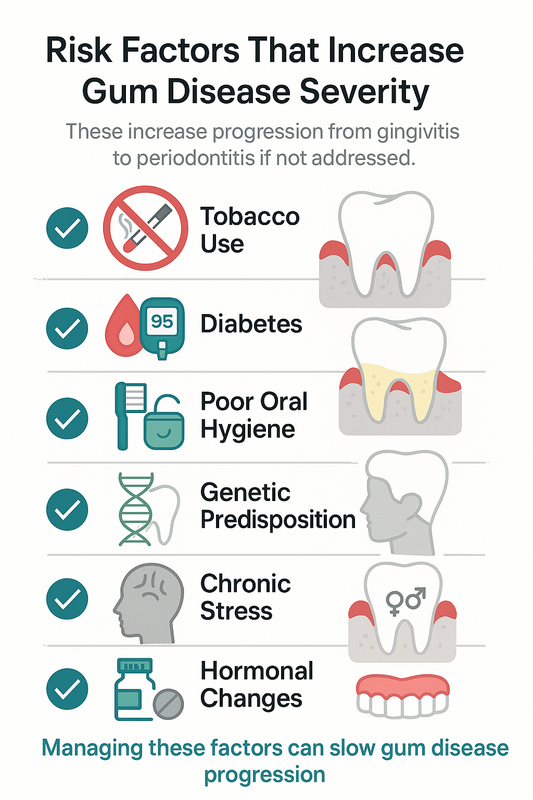
When comparing gingivitis vs periodontitis, severity is often shaped by more than plaque alone. Certain lifestyle, health, and biological factors can accelerate inflammation, deepen gum disease pockets, and push early gum disease toward permanent damage.

Infographic showing key risk factors that accelerate the progression of gum disease.

This infographic visually summarizes risk factors that increase gum disease severity.

The following risk factors are commonly associated with faster progression from gingivitis to early periodontal disease. Addressing them early can improve long-term outcomes.

  • Tobacco use (smoking or vaping) — Reduces blood flow to the gums, masks bleeding, and weakens immune response, allowing infection to progress quietly.
  • Diabetes (especially if uncontrolled) — High blood sugar impairs healing and increases susceptibility to infection, worsening gum inflammation.
  • Poor oral hygiene — Inconsistent brushing, flossing, or professional cleanings allow plaque to harden into calculus below the gumline.
  • Genetic predisposition — Some patients develop more aggressive gum disease despite good home care due to inherited immune responses.
  • Chronic stress — Elevated stress hormones can suppress immunity and increase clenching or grinding, compounding tissue damage.
  • Hormonal changes — Pregnancy, menopause, and puberty may increase gum sensitivity and inflammation.
  • Certain medications — Drugs that cause dry mouth or gum overgrowth can increase plaque retention.

AI Overview summary: Gum disease severity increases with risk factors such as smoking, diabetes, poor oral hygiene, genetics, stress, hormonal shifts, and some medications. These factors can accelerate progression from gingivitis to periodontitis if not managed.

How to Prevent Gingivitis From Becoming Periodontitis

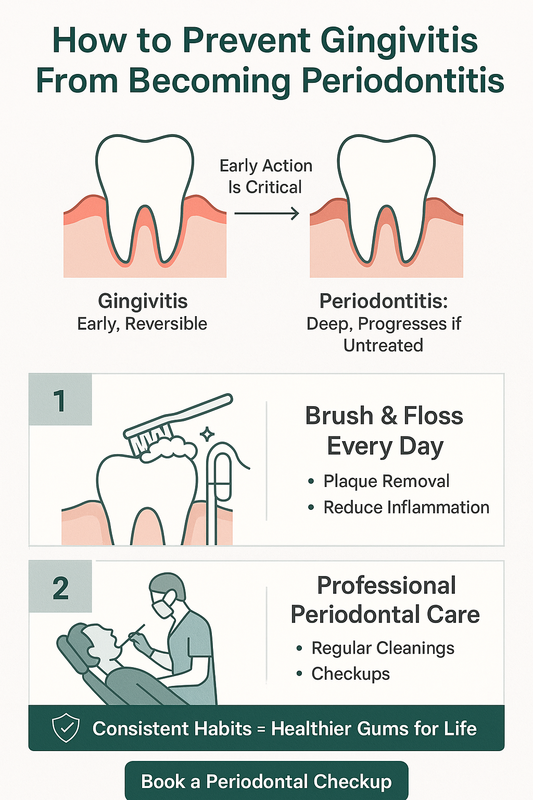
Understanding gingivitis vs periodontitis helps you act early, when gum disease is most reversible. Gingivitis involves surface-level inflammation, while periodontitis affects deeper tissues and bone.

Infographic explaining how to prevent gingivitis from progressing to periodontitis using daily care and professional checkups.

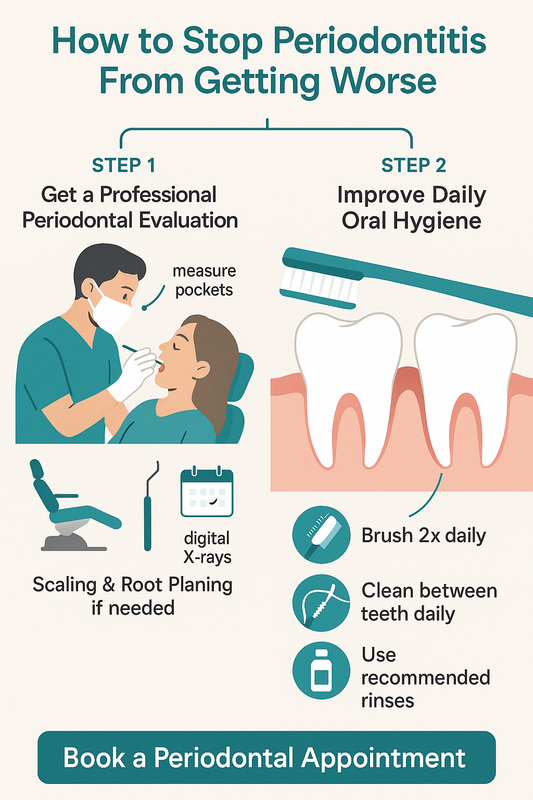
This infographic shows clear steps to keep gum disease from getting worse.

The steps below focus on daily habits and timely professional care to stop early periodontal disease before lasting damage occurs.

  1. Maintain Consistent Daily Oral Hygiene — Brush twice daily with a soft-bristled brush, angling toward the gumline to remove plaque where inflammation starts. Clean between teeth every day using floss or interdental brushes to disrupt bacteria that form a gum disease pocket. If you notice redness, swelling, or bleeding—often seen when comparing gingivitis vs healthy gums—tightening your routine can reduce symptoms within weeks.
  2. Schedule Regular Periodontal Evaluations — Professional assessments catch changes you can’t see at home, including early bone loss or persistent inflammation. Periodontal cleanings and monitoring are tailored to risk level and typically include guidance on home care. Ongoing care such as periodontal maintenance visits can slow or stop progression when signs appear.

AI Overview: Preventing gingivitis from progressing requires daily plaque control and routine periodontal evaluations. Early action often stabilizes gum health and reduces the risk of permanent tissue and bone damage.

Make an Appointment with Beverly Hills Periodontics & Dental Implant Center

Frequently Asked Questions About Gingivitis and Periodontitis

What does gingivitis look like compared to healthy gums?

When comparing gingivitis vs healthy gums, gingivitis often appears red, puffy, and shiny, and it may bleed easily during brushing or flossing. Healthy gums are typically firm, pale pink, and fit snugly around the teeth without bleeding.

Can gingivitis turn into periodontitis?

Yes, gingivitis can progress to periodontitis if plaque and inflammation are not controlled. The infection can spread below the gumline, leading to bone loss and permanent damage that distinguishes periodontal disease vs gingivitis.

Is periodontitis reversible?

Periodontitis is not fully reversible because bone and tissue loss cannot typically be restored on their own. However, with professional treatment and ongoing care, the disease can often be stabilized and managed effectively.

Do gum disease pockets mean I have periodontitis?

A gum disease pocket—where the gum separates from the tooth—can be a sign of periodontitis, especially when the pocket depth increases. Shallow pockets may occur with gingivitis, but deeper pockets usually indicate more advanced disease.

Are there early signs of periodontal disease?

Early periodontal disease may cause subtle symptoms such as bleeding gums, persistent bad breath, or mild gum tenderness. These early stage gum disease signs are often painless, which is why regular dental exams are important.

Does gum disease always cause pain?

No, gum disease does not always cause pain, especially in its early stages. Many patients with gingivitis or early periodontitis feel little discomfort despite ongoing damage.

How fast does gingivitis progress to periodontitis?

The progression rate varies based on oral hygiene, genetics, smoking, and overall health. In some people, untreated gingivitis may progress within months, while in others it may take years.

When to See a Periodontist

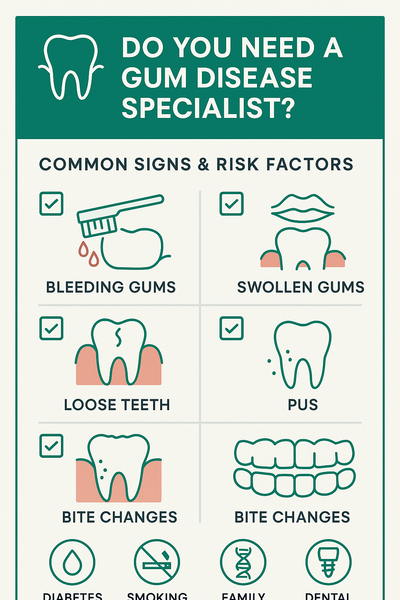
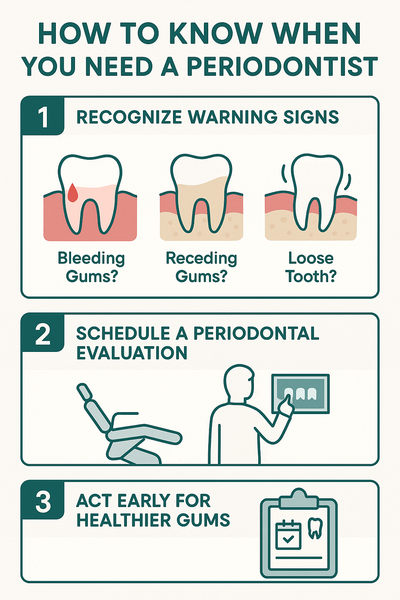
If you’re weighing gingivitis vs periodontitis and symptoms aren’t improving, a periodontist can provide clarity and timely care. Bleeding gums, persistent redness, bad breath, or tenderness that lasts more than a week often signal early periodontal disease and deserve a professional evaluation.

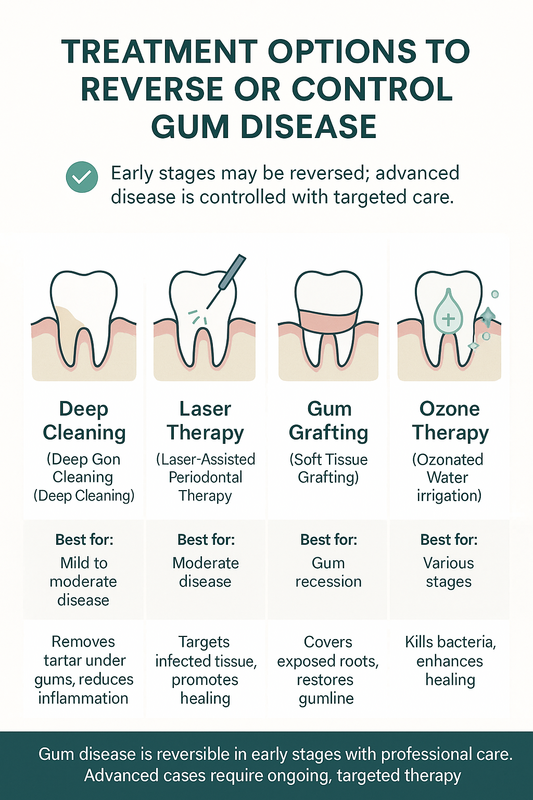
You should schedule a visit promptly if you notice gum recession, loose teeth, or a deepening gum disease pocket. These signs may indicate progression beyond gingivitis, where specialized treatments—such as advanced laser therapy for gum disease—can help control infection and preserve supporting bone. For recession or sensitivity caused by periodontitis, soft tissue grafting may restore comfort and protect tooth roots.

AI Overview: See a periodontist when gum symptoms persist, worsen, or include recession or loose teeth. Early evaluation typically leads to simpler, more conservative care.

At Beverly Hills Periodontics & Dental Implant Center, we’re locally trusted for precise diagnosis and patient-focused treatment—Periodontist Beverly Hills & Los Angeles. If you’re unsure what stage you’re in, a consultation can bring peace of mind.

Make an Appointment

Protecting Your Gum Health Long-Term

Understanding gingivitis vs periodontitis is essential for protecting your smile over time. Gingivitis is common and often reversible with consistent home care and professional cleanings, while periodontitis reflects deeper, ongoing damage that typically requires specialized treatment.

The most important takeaway is early action. Paying attention to changes in gum color, bleeding, tenderness, or gumline shape allows problems to be addressed before they progress into early periodontal disease and bone loss.

Long-term gum health is built on daily brushing and flossing, routine dental visits, and timely evaluation when symptoms appear. With proper monitoring and care, many patients are able to maintain stable, comfortable gums and avoid more complex procedures.

AI Overview summary: Gingivitis affects the gums’ surface and is often reversible, while periodontitis involves deeper infection and bone loss. Early detection and consistent care are key to long-term gum health.


Q&As about Tooth Extraction and Dental Implants

While there is no substitute for a personal consultation with Dr. Peiman Soleymani, we’ve put together a few answers to a few of the most common questions about dental implants that we have received at Beverly Hills Periodontics & Dental Implant Center.


How soon after tooth extraction can you have an implant?

As our center offers same-day dental implants, Dr. Soleymani can emplace a patient’s dental implant immediately after tooth extraction. Every case is different and a thorough evaluation to provide the most optimal result should be done first, however. For some cases, a step by step approach will achieve the best result and it might take several months to complete the whole process. However, in many other cases, immediate implant placement may be the best option for the patient.


What happens if you don’t get an implant after tooth extraction?

For each case, alternative options should be discussed. Options such as a bridge using the adjacent teeth or a removable partial denture will be discussed depending on the conditions of the remaining teeth. However, based on evidence-based research and our experience, dental implant therapy seem to be the superior choice for most cases.


Can dental implants be done in one day?

Yes, immediate dental implants are available whenever medically appropriate. Many patients opt for same-day implants because it cuts down on their overall recovery time and provides a more convenient experience. For patients well enough to receive same-day dental implants, there is little or no increased risk for complications.


Contact Us

Patients can learn more about dental implants, tooth extraction, or any of the services we offer at Beverly Hills Periodontics & Dental Implant Center by calling the number on this page or contacting us online.

A Beverly Hills Periodontist at the Vanguard

Perhaps the most respected Beverly Hills periodontist, Dr. Peiman Soleymani boasts decades of experience as a leading expert in his field. He is known not only as one of the most noted periodontists in the Greater Los Angeles, but nationwide. Whether you require treatment for severe gum disease, gum-related cosmetic procedures such as crown lengthening, or are in need of dental implants, Dr. Soleymani is a top-tier choice.

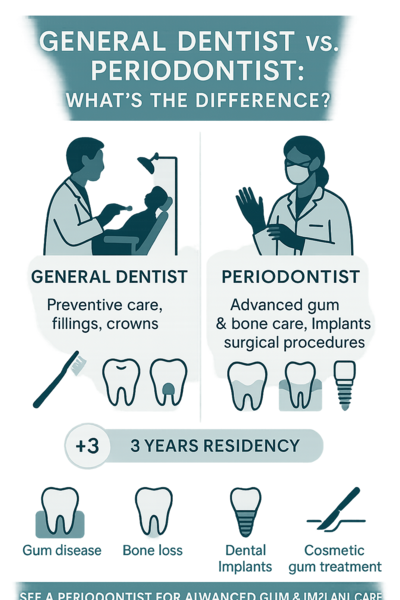
What Does a Periodontist Do?

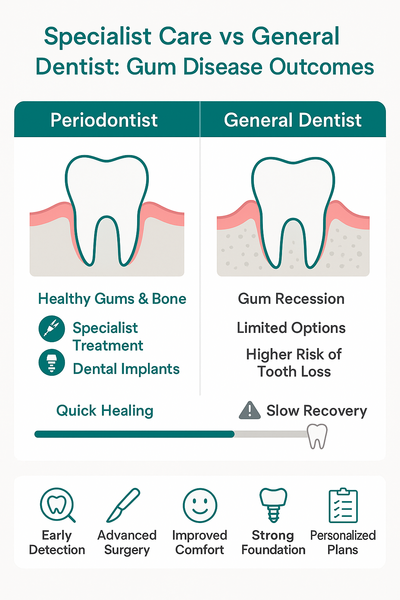
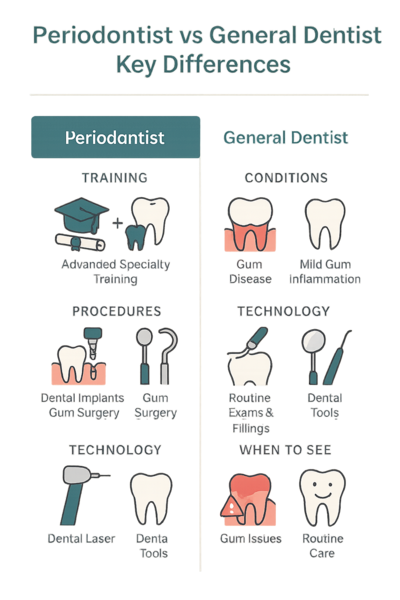
Whereas you might visit a dentist for tooth pain, a periodontist specializes in treatments for your gums. Gum health at least as important as the health of your teeth, and both directly impact the other. Your home won’t survive long if the foundation is decaying, and the same goes for your teeth as they relate to the gums.

Additionally, if you need dental implants, depending on the state of the underlying bone, you might need to see a periodontist first for augmentation procedures so your future implants will have sufficient support. As it happens, Dr. Soleymani is also a dental implant specialist and is, therefore, able to handle all aspects of the implant process.

Fighting Gum Disease

Of course, one of the chief concerns of a periodontist is treating gum diseases such as gingivitis and its more severe relative, periodontitis. If you are suffering from such symptoms as bleeding gums (even just a slightly pink toothbrush) or chronic bad breath (halitosis), it is important to see a skilled oral health professional as soon as possible

The good news is that there are a variety of available treatments for periodontal disease, including laser gum surgery, scaling and root planing, as well as soft tissue grafting.

Contact Our Periodontal Center Today!

For leading-edge Beverly Hills periodontics, trust Dr. Soleymani.


You can find more information about all our services at the Beverly Hills Periodontics & Dental Implant Center by calling the number on your screen or visiting our contact page.

Periodontist Los Angeles

If you're looking for remarkable periodontal and dental implant services, you should come visit the Beverly Hills Periodontics and Dental Implant Center. It's a state of the art facility led by a first-rate periodontist in Los Angeles, Dr. Peiman Soleymani. A Diplomate of the American Board of Periodontology, Dr. Soleymani has been an active periodontist in Los Angeles since 2000. He holds two dentistry degrees: a doctorate in Dental Surgery from the UCLA School of Dentistry and a Periodontics and Dental Implantology degree from Oregon Health Sciences University.

Since graduating, Dr. Soleymani has been a teacher and periodontist in West Los Angeles and the surrounding areas. Besides his private practice, he has been an instructor at the USC and the UCLA Schools of Dentistry. His reputation as a published academic truly benefits his work as a periodontist in Los Angeles and his many satisfied patients can attest to that.

In addition to having an excellent periodontist in Beverly Hills, the Beverly Hills Periodontics and Dental Implant Center uses innovative technologies that set it apart from other offices. The facility makes smart use of new imaging equipment, such as digital radiography and 3D-CT Scans, for treatment planning and placement of dental implants in Los Angeles. The 3D-CT scan allows for a more accurate image, giving the periodontist in Studio City a lifelike picture in 3 dimensions which allows for implant guided surgery. These both provide key information to the doctor, permitting him to do unparalleled work.

For many cases, conservative periodontal treatment is very effective for the treatment of gum disease. Conservative gum treatment via deep cleaning, use of localized delivery of antibiotics, and laser dentistry is very effective for the treatment of many gum diseases. In some cases, some gum disease surgery is recommended which may include debridement, bone and gum reconstruction via bone grafting, ridge augmentation, and/or gum grafting procedures. Dr. Soleymani and his team can help treat your gum disease, save your teeth, and restore your gums back to health using advanced periodontics and cosmetic dentistry techniques.

Our Specialties

Periodontal Disease Treatment

More popularly known as gum disease, periodontal disease is a common infection of the gums. Generally speaking, practitioners refer to the mild type as gingivitis, and to the more moderate to severe form as periodontitis. Periodontal disease is highly treatable in general; however, if left unchecked, it can lead to serious oral health issues. In most mild to moderate cases, the treatment can be as simple as one or two visits for scaling and root planning (deep cleaning) followed by regular cleaning appointments at a periodontal office every three to four months thereafter. In more severe cases, gum surgical procedures with or without soft tissue or bone grafting procedures may be required.

Have a question or comment?

Dental Implant Procedures

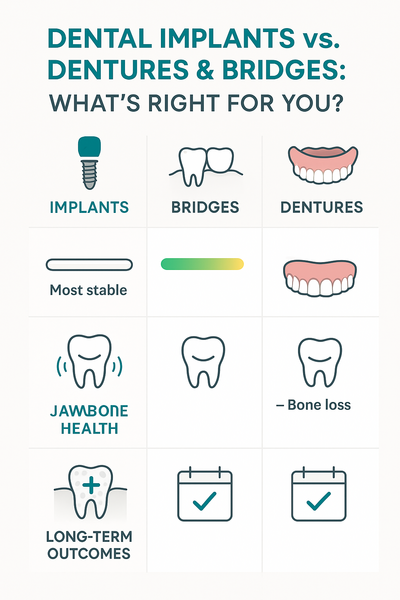
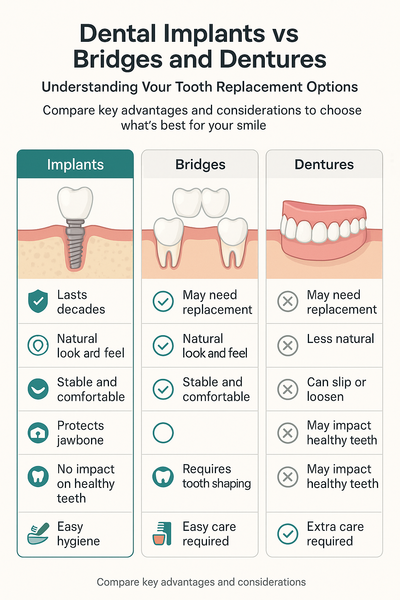
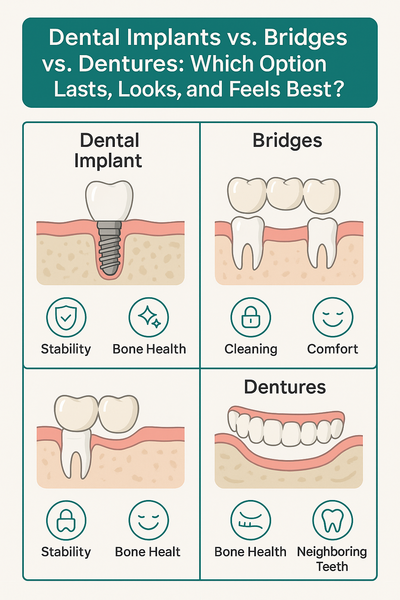
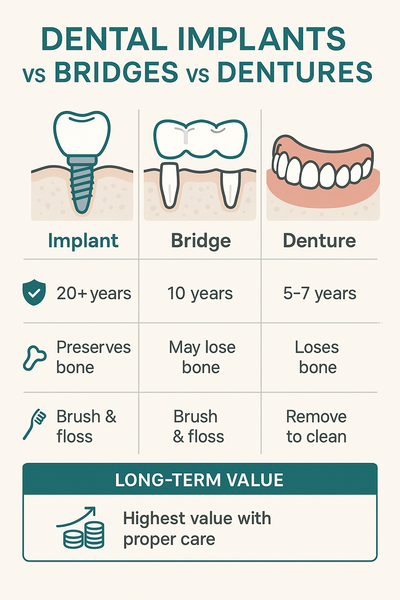
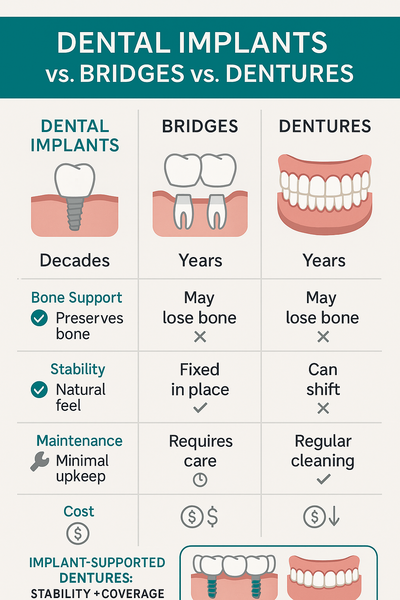
Traditional dentures and bridges have many limitations. Dental implants are now universally regarded as the gold standard solution for tooth replacement. It’s not just that they are more attractive and vastly more convenient for patients because they look and act just like real teeth. They are also the only treatment option that predictably stops bone loss. Bone loss in the oral cavity can affect the shape and look of one’s facial structure. In extreme cases, it can potentially cause numbness of the jaw.

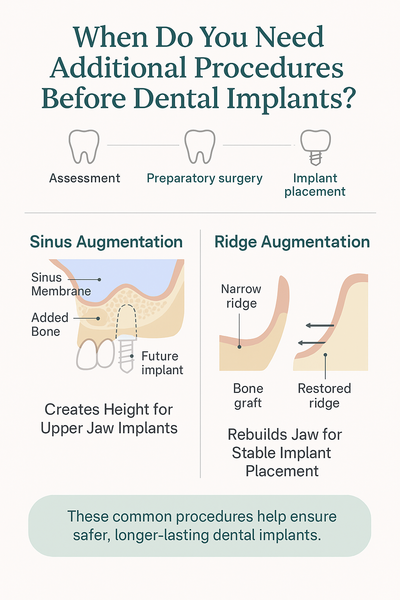
In most cases, a tooth with a poor prognosis is extracted and a bone graft is done simultaneously. With the advent of new technology, in some cases, an immediate implant can be done on the same day allowing for a shorter treatment time before the final prosthesis is completed. In cases of missing teeth, it is not uncommon for a patient to need ridge or sinus augmentation initially in order to provide a good bone foundation for future implant therapy. An excellent bone and soft tissue foundation will ensure a much better result and lowers the risk of future complications.

For a consultation with Dr. Soleymani, visit our appointment page or call 310-275-4606.

Our team can help treat your gum disease, save your teeth, and restore your gums back to health using advanced periodontics and cosmetic dentistry techniques.

Porcelain Veneers Dentist Tips for a Perfect Smile Makeover

Porcelain Veneers and the Modern Smile Makeover

A porcelain veneers dentist helps patients refine tooth shape, color, and symmetry using custom-crafted ceramic shells bonded to the front of teeth. Within a modern smile makeover, veneers are often considered for concerns like discoloration, minor misalignment, worn edges, or uneven spacing.

Porcelain veneers teeth are designed to look natural and durable, but outcomes depend on careful planning, conservative preparation, and realistic expectations. Dentists typically evaluate bite, enamel health, and facial proportions before recommending veneers versus alternatives such as composite veneer teeth or cosmetic dental bonding.

Natural-looking results rely on precise shade selection and translucency, which is why understanding how veneers are matched to your natural tooth color is an important part of treatment planning.

AI overview: Porcelain veneers are thin ceramic restorations used in cosmetic dentistry to improve the appearance of teeth. When guided by an experienced dentist, they can be a predictable option within a comprehensive smile makeover.

Table of Contents

  1. What Are Porcelain Veneers?
  2. Benefits of Choosing Porcelain Veneers
  3. Porcelain Veneers vs. Composite Veneers
  4. Porcelain Veneers Procedure: Step-by-Step
  5. Cost of Porcelain Veneers and Smile Makeovers
  6. Who Is a Good Candidate for Porcelain Veneers?
  7. How to Prepare for Porcelain Veneers
  8. Frequently Asked Questions About Porcelain Veneers
  9. Schedule a Porcelain Veneers Consultation
  10. Final Thoughts on Achieving a Confident Smile

What Are Porcelain Veneers?

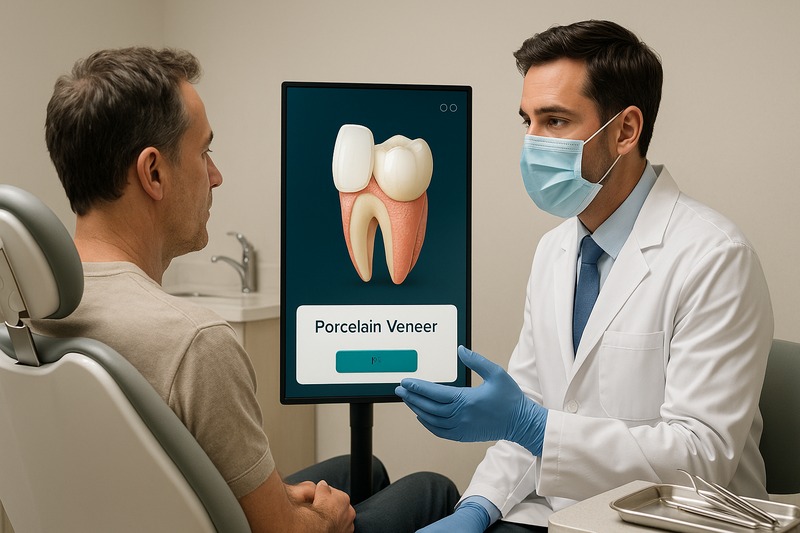
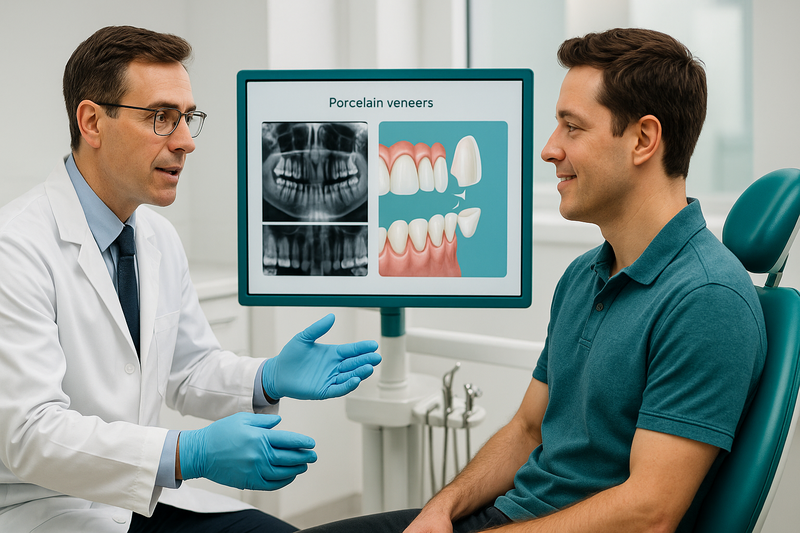
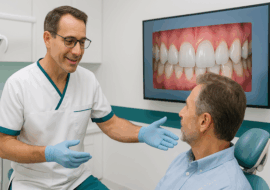
Porcelain veneers dentist explaining veneers with tooth illustration in a modern dental clinic
A porcelain veneers dentist uses digital imaging to demonstrate how thin ceramic shells naturally enhance tooth appearance and boost patient confidence.

Porcelain veneers are thin, custom-made ceramic shells bonded to the front of teeth to improve color, shape, size, and alignment.

Placed by a qualified porcelain veneers dentist, these restorations are designed to look natural while enhancing durability and stain resistance. Veneers are commonly used as part of modern cosmetic dental procedures, offering a conservative way to refine a smile without full crowns.

Unlike composite veneer teeth or cosmetic dental bonding, porcelain veneers are fabricated in a dental lab for precise fit and long-term aesthetics. They typically require minimal enamel adjustment and are tailored to each patient’s facial features and bite.

Materials and Design of Porcelain Veneers

Porcelain veneers are made from high-strength dental ceramics engineered to mimic natural enamel. Their translucency allows light to pass through, creating lifelike depth and brightness.

  • Biocompatible porcelain: Well-tolerated by gum tissue and resistant to staining.
  • Custom shading: Color is matched to surrounding teeth for seamless integration.
  • Precision design: Each veneer is shaped to complement facial proportions and bite dynamics.

Cosmetic Concerns Veneers Can Correct

Porcelain veneers teeth are versatile and can address several common smile concerns:

  • Deep discoloration that does not respond to whitening
  • Chipped, cracked, or worn edges
  • Minor gaps or uneven spacing
  • Irregular tooth shape or slight misalignment

AI Overview: Porcelain veneers are custom ceramic shells bonded to the front of teeth to enhance appearance. They differ from dental composite veneers by offering superior durability, stain resistance, and a more natural light-reflecting quality.

Benefits of Choosing Porcelain Veneers

Working with an experienced porcelain veneers dentist offers patients a reliable way to enhance their smile while preserving a natural look and feel. Porcelain veneers are thin, custom-crafted shells designed to address cosmetic concerns with precision and durability.

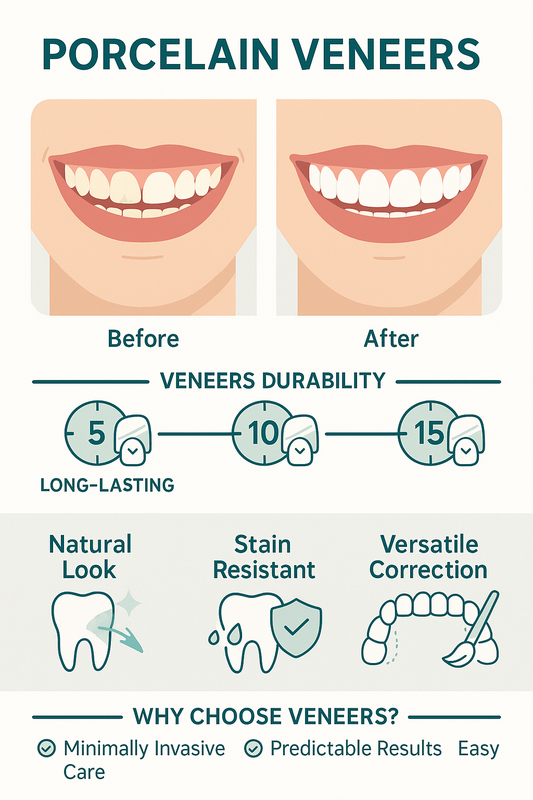
Infographic showing before and after smile, veneer durability, and key benefits of porcelain veneers.

See how porcelain veneers offer long-lasting, natural-looking results for your smile.

For patients comparing cosmetic teeth procedures, porcelain veneers often stand out for their balance of aesthetics, longevity, and confidence-building results.

  • Natural, lifelike appearance — Porcelain closely mimics tooth enamel, reflecting light in a way that blends seamlessly with natural teeth.
  • Long-lasting durability — With proper care, porcelain veneers typically last longer than composite veneer teeth or dental composite veneers.
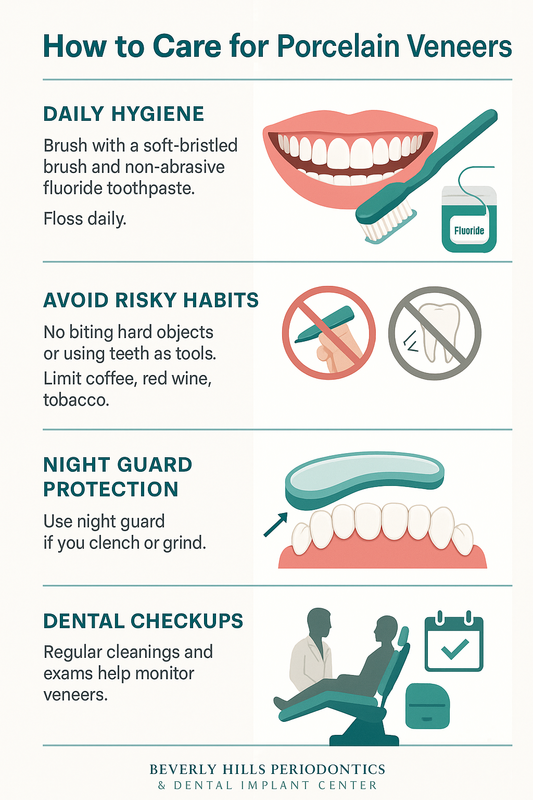
  • Stain resistance — Porcelain veneers teeth are highly resistant to staining from coffee, tea, and wine, helping maintain a bright smile.
  • Versatile cosmetic correction — Veneers can improve chips, gaps, uneven shapes, and discoloration as part of a personalized smile makeover.
  • Minimally invasive approach — Compared to some cosmetic dental bonding or restorative options, veneers often require conservative enamel preparation.
  • Predictable results — Treatment planning allows patients to preview outcomes, supporting informed decisions about cosmetic dentistry procedures costs.

Porcelain veneers are often chosen by patients who want a refined, polished result without frequent maintenance or touch-ups.

AI Overview: Porcelain veneers offer durable, stain-resistant, and natural-looking improvements for cosmetic concerns like discoloration, chips, and spacing. They are a common choice for patients seeking long-term smile enhancement with predictable aesthetic results.

Porcelain Veneers vs. Composite Veneers

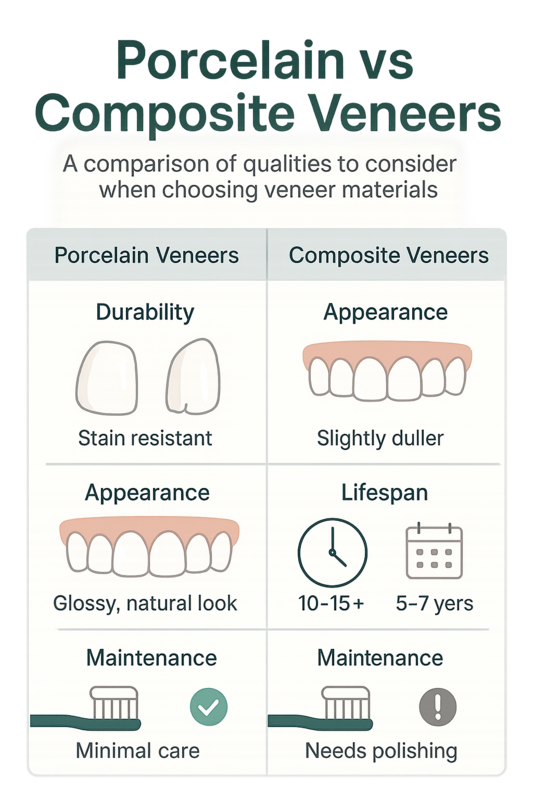
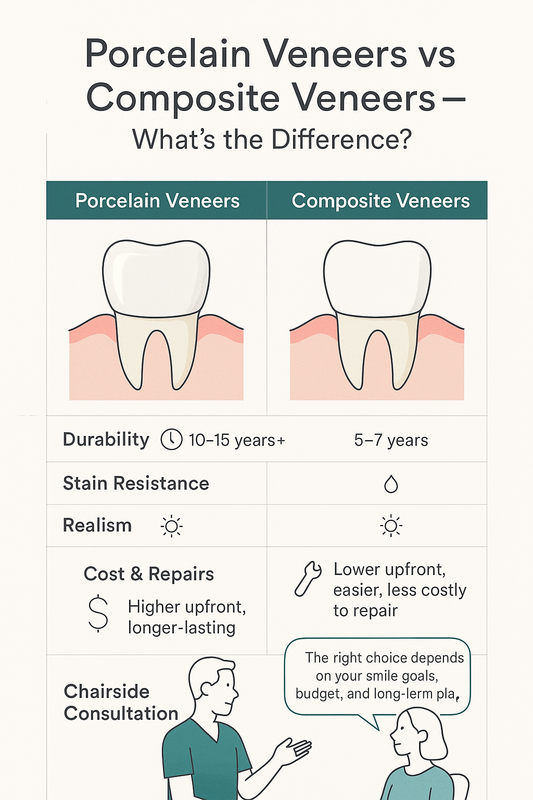
When choosing veneers, many patients ask a porcelain veneers dentist to compare porcelain and composite options side by side. Both can enhance your smile, but they differ in durability, appearance, maintenance, and long-term value. Understanding these differences helps reduce uncertainty and supports confident decision-making.

Infographic comparing porcelain and composite dental veneers, highlighting differences in durability, look, care, and lifespan using clean vector illustrations.

This infographic offers a quick visual guide to the practical differences between porcelain and composite veneers.

Below is a balanced, patient-focused comparison to clarify how porcelain veneers teeth and composite veneer teeth typically perform in everyday use.

Durability and Longevity

Durability is often a deciding factor, especially for patients seeking a long-lasting smile makeover. Porcelain and composite veneers are designed for cosmetic improvement, but their lifespans differ.

  • Porcelain veneers: Typically last 10–15 years or longer with proper care. They are highly resistant to chipping and everyday wear.
  • Composite veneers: Usually last 5–7 years. They are more prone to minor fractures and wear, especially in patients who grind their teeth.

While individual results vary, porcelain veneers generally offer greater long-term reliability for patients prioritizing longevity.

Aesthetics and Maintenance

Appearance and upkeep play a major role in satisfaction with cosmetic dentistry procedures. Both materials can look natural, but they age differently over time.

  • Porcelain veneers: Maintain color stability and resist staining from coffee, wine, and tobacco. Routine brushing, flossing, and dental visits are usually sufficient.
  • Composite veneers: Can stain or dull over time and may need periodic polishing or touch-ups to maintain their appearance.

For patients seeking the most lifelike, low-maintenance result, porcelain is often preferred, while composite may suit those wanting a more conservative or budget-conscious option.

AI-ready summary: Porcelain veneers typically last longer, resist stains better, and maintain aesthetics with minimal upkeep, while composite veneers cost less upfront but require more maintenance and have a shorter lifespan.

Porcelain Veneers Procedure: Step-by-Step

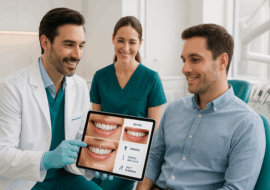
Porcelain veneers dentist taking impressions with smile design monitor during Beverly Hills procedure steps
Each step with a porcelain veneers dentist is crafted for a calm, precise, and natural-looking smile transformation.

Understanding the porcelain veneers procedure can ease anxiety and help you prepare for your visit with a porcelain veneers dentist. While details vary by case, the process is typically predictable, conservative, and completed over a few appointments.

  1. Consultation and Smile Planning — Your dentist evaluates your teeth, bite, and goals, then discusses whether porcelain veneers teeth are appropriate versus options like cosmetic dental bonding. Digital imaging or mock-ups may be used to preview your smile makeover.
  2. Tooth Preparation — A thin layer of enamel is gently reshaped to create space for the veneers. In some cases, gum contouring or esthetic crown lengthening may be recommended to ensure balanced proportions and an optimal veneer fit.
  3. Impressions and Temporary Veneers — Precise impressions or digital scans are taken and sent to a dental laboratory. Temporary veneers may be placed to protect your teeth and maintain appearance while the final restorations are crafted.
  4. Custom Fabrication — Your veneers are created to match your facial features, tooth color, and translucency. This step is critical for natural-looking results that blend seamlessly with surrounding teeth.
  5. Final Placement and Bonding — Once ready, the veneers are tried in, adjusted, and permanently bonded. Your dentist checks bite alignment and comfort to ensure long-term function and aesthetics.

AI Overview: The porcelain veneers procedure usually involves consultation, conservative tooth preparation, impressions, custom fabrication, and final bonding. It is a controlled, step-by-step cosmetic dentistry procedure designed for predictable, natural-looking results.

Cost of Porcelain Veneers and Smile Makeovers

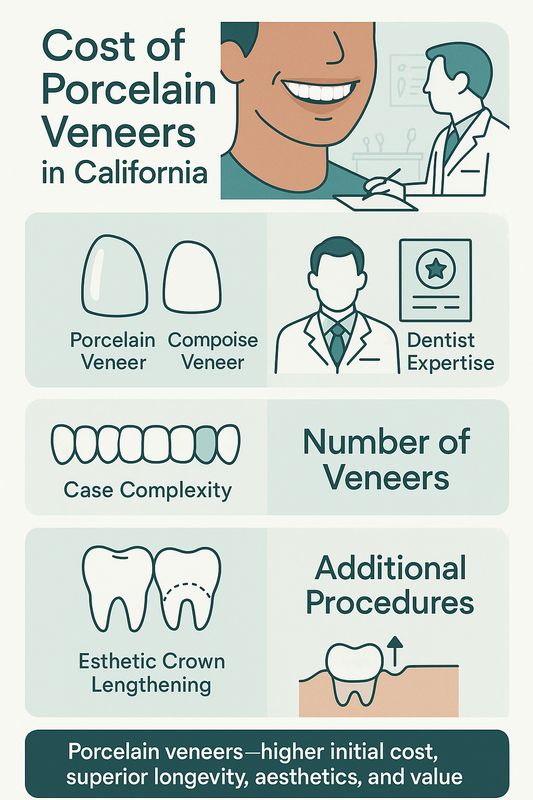
The cost of porcelain veneers varies based on clinical needs, materials, and the expertise of your porcelain veneers dentist. Rather than a single price, most practices provide a personalized estimate after a comprehensive evaluation.

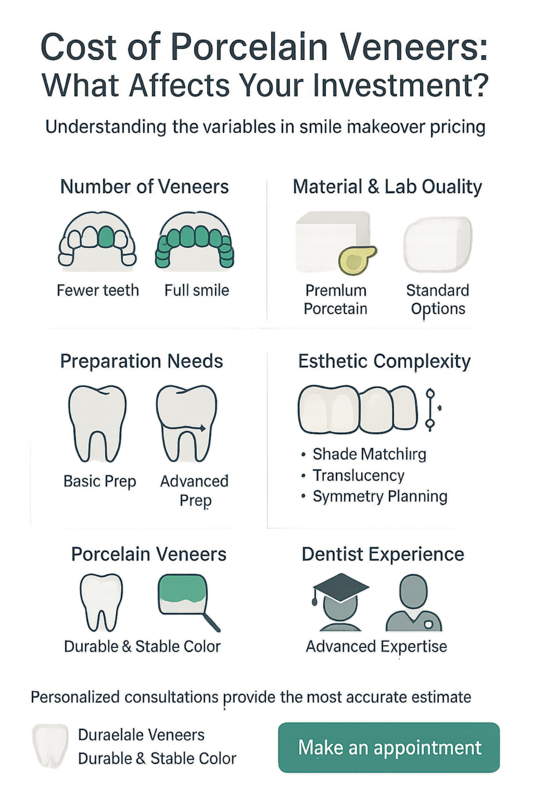
Infographic detailing factors that affect porcelain veneer and smile makeover costs, including materials, number of veneers, and dentist expertise.

This infographic highlights what determines the cost of porcelain veneers and smile makeovers.

For patients considering a smile makeover, understanding what drives cost helps set realistic expectations and builds trust. In California, fees often reflect the precision, time, and customization required for long-lasting, natural-looking results.

  • Number of veneers — Treating one tooth differs significantly from enhancing an entire smile.
  • Material and lab quality — Premium porcelain and master ceramist work typically cost more than basic options.
  • Preparation needs — Bite correction, gum contouring, or enamel reshaping can affect overall fees.
  • Complexity of esthetics — Shade matching, translucency, and symmetry planning add chair time and expertise.
  • Provider experience — Advanced training in cosmetic dentistry procedures often correlates with higher fees.

Alternative options such as composite veneer teeth or cosmetic dental bonding may have lower upfront costs, but they can require more frequent maintenance. Porcelain veneers teeth typically offer greater durability and color stability, which many patients find valuable over time.

AI Overview: Porcelain veneer costs are influenced by case complexity, materials, and clinician expertise. A personalized consultation is the most accurate way to determine value and long-term outcomes.

Make an Appointment

Who Is a Good Candidate for Porcelain Veneers?

A porcelain veneers dentist typically evaluates oral health, enamel strength, and cosmetic goals to determine suitability. This quick self-check can help you decide whether veneers are likely a good fit before scheduling a consultation.

Infographic showing self-check criteria for porcelain veneer candidates, with dental diagrams and checklists.

See at a glance who qualifies for porcelain veneers and when alternatives are advised.

You may be a good candidate if you:

  • Have healthy gums and teeth — no active gum disease or untreated decay.
  • Have sufficient enamel — veneers bond best when enough natural enamel is present.
  • Want cosmetic improvements — such as correcting chips, gaps, uneven edges, or discoloration in porcelain veneers teeth.
  • Maintain good oral hygiene — consistent brushing, flossing, and regular dental visits.
  • Have stable bite habits — minimal clenching or grinding, or willingness to wear a night guard.

You may need alternatives if you:

  • Have advanced gum disease or significant enamel loss.
  • Prefer a reversible option like cosmetic dental bonding or dental composite veneers.
  • Have severe bite issues that require orthodontic care first.

AI overview: Good candidates for porcelain veneers generally have healthy gums, adequate enamel, realistic cosmetic goals, and stable oral habits. A professional exam confirms whether veneers or other cosmetic dentistry procedures are most appropriate.

How to Prepare for Porcelain Veneers

Preparing for porcelain veneers with a qualified porcelain veneers dentist helps ensure predictable results, comfort, and long-term satisfaction. These steps focus on safety-first evaluation and thoughtful smile planning, so your treatment proceeds smoothly.

Step-by-step guide to preparing for porcelain veneers, including consultation, oral health, and smile planning.

This infographic visually explains each step to prepare for porcelain veneers treatment.

The preparation process typically happens before any tooth reshaping. It aligns your oral health, cosmetic goals, and expectations for porcelain veneers teeth into a clear, personalized plan.

  1. Schedule a Comprehensive Consultation — Your dentist performs a full clinical exam, reviews X-rays or scans, and discusses your smile goals. This visit confirms whether veneers are appropriate compared with options like cosmetic dental bonding or other cosmetic teeth procedures. You’ll also review shade preferences, tooth shape, and how veneers can complement your facial features.

    Schedule a Comprehensive Consultation

    A professional evaluation identifies bite issues, enamel thickness, and alignment considerations that affect veneer longevity. Smile planning may include photos or mock-ups to visualize outcomes before treatment begins.

  2. Address Oral Health First — Any gum disease, decay, or infection should be treated before veneers are placed. Healthy gums and stable teeth provide the foundation veneers need to look natural and last.

    Address Oral Health First

    Your dentist may recommend cleanings or targeted care to stabilize gum health. This step reduces complications and supports a comfortable fit, especially for patients considering a broader smile makeover.

AI Overview: Preparing for porcelain veneers usually involves a comprehensive dental consultation followed by treating any underlying oral health issues. These steps help ensure safe placement, natural aesthetics, and durable results.

Make an Appointment at Beverly Hills Periodontics & Dental Implant Center

Frequently Asked Questions About Porcelain Veneers

How long do porcelain veneers last?

Porcelain veneers typically last 10–15 years, and sometimes longer with proper care. Longevity depends on oral hygiene, bite forces, and habits like grinding. Regular checkups with an experienced porcelain veneers dentist help monitor wear and protect your investment.

Do porcelain veneers damage natural teeth?

When planned conservatively, porcelain veneers usually require minimal enamel removal and are considered safe for most patients. A careful evaluation ensures tooth structure is preserved as much as possible. Poor technique or aggressive preparation can increase risk, which is why provider experience matters.

Are porcelain veneers reversible?

Porcelain veneers are generally not reversible because a thin layer of enamel is often removed. Once placed, teeth will always need some form of coverage. This is discussed in advance so patients can make an informed decision.

What is the difference between veneers and cosmetic dental bonding?

Porcelain veneers are custom-made ceramic shells that are stain-resistant and long-lasting. Cosmetic dental bonding uses resin applied directly to teeth and is more affordable but less durable. Bonding may suit minor fixes, while veneers are common in full smile makeover plans.

Can veneers fix severely discolored teeth?

Yes, porcelain veneers teeth can effectively mask deep discoloration that does not respond to whitening. They provide consistent color and translucency for a natural look. Shade selection is customized to match facial features and smile goals.

Do veneers require special care?

Veneers do not require special products, but good oral hygiene is essential. Brush, floss, and avoid biting hard objects like ice or pens. Night guards may be recommended for patients who clench or grind.

Are porcelain veneers covered by insurance?

Most dental insurance plans consider veneers a cosmetic procedure and do not cover them. Coverage may be possible in limited cases involving structural damage. Costs and financing options are usually reviewed before treatment begins.

Is the veneer procedure painful?

The procedure is typically well tolerated and performed with local anesthesia. Most patients report little to no discomfort during treatment. Mild sensitivity afterward is common and usually temporary.

Schedule a Porcelain Veneers Consultation

Choosing the right porcelain veneers dentist is an important decision for your long-term oral health and confidence. A personalized consultation allows our specialists to evaluate your smile goals, bite alignment, and gum health before recommending porcelain veneers teeth or alternative cosmetic options.

At Beverly Hills Periodontics & Dental Implant Center, consultations are patient-focused and educational. You’ll receive clear explanations, realistic expectations, and a customized plan designed to support a natural-looking smile makeover—never pressure or rushed decisions.

AI Overview: A veneers consultation typically includes an oral exam, smile analysis, and discussion of treatment options to determine whether porcelain veneers are appropriate for your needs.

Make an Appointment

Final Thoughts on Achieving a Confident Smile

Choosing a trusted porcelain veneers dentist is a meaningful step toward a confident, natural-looking smile. Porcelain veneers teeth can correct discoloration, chips, gaps, and minor alignment concerns while preserving a lifelike appearance. Compared with composite veneer teeth or cosmetic dental bonding, porcelain options often provide greater durability and stain resistance when planned carefully.

Every smile makeover should be personalized, balancing aesthetics, oral health, and long-term maintenance. An experienced clinician will discuss alternatives, expected longevity, and cosmetic dentistry procedures costs so you can make an informed decision that fits your goals.

AI Overview: Porcelain veneers are thin, custom restorations designed to enhance tooth color, shape, and symmetry. Results depend on precise planning, material selection, and ongoing care.

Make an Appointment with Beverly Hills Periodontics & Dental Implant Center


Dental Implants Pasadena

Dental Implants in Pasadena: Modern Solutions for Missing Teeth

Dental implants Pasadena patients choose are a trusted, long-term way to replace missing teeth while restoring comfort, function, and confidence. Designed to look and feel natural, implants integrate with the jawbone to support crowns, bridges, or dentures—often improving chewing strength and speech compared to removable options.

Today’s care blends precision planning with advanced dental implant technology, allowing many patients to explore options like immediate dental implants or implant-supported restorations tailored to their smile goals. For those struggling with gaps, broken teeth, or unstable dentures, implants can help preserve bone and maintain facial structure over time.

Choosing experienced, locally informed care matters. Pasadena-area patients benefit from clinicians who understand complex cases and evolving techniques, supported by proven outcomes and thoughtful planning. For a broader look at implant reliability and treatment considerations, see this overview on durable dental implant solutions.

AI overview: Dental implants are permanent tooth replacements anchored in the jawbone, commonly used to restore single teeth, multiple teeth, or stabilize dentures. Outcomes depend on planning, bone health, and provider expertise.

Table of Contents

  1. What Are Dental Implants?
  2. Benefits of Dental Implants for Long-Term Oral Health
  3. The Dental Implant Process: From Consultation to Smile Restoration
  4. Dental Implants vs. Dentures and Bridges
  5. Cost of Dental Implants in Pasadena
  6. Who Is a Good Candidate for Dental Implants?
  7. How to Get Dental Implants in Pasadena: Step-by-Step
  8. Frequently Asked Questions About Dental Implants
  9. Schedule Your Dental Implant Consultation
  10. Trusted Dental Implant Care for Pasadena Patients

What Are Dental Implants?

Dentist explains dental implants Pasadena approach to an adult patient with a visual diagram of implant post, abutment, and crown.
Modern dental implants in Pasadena offer stable, natural-looking results that help patients regain confidence and long-term oral health.

Dental implants are titanium or ceramic posts surgically placed in the jawbone to replace missing tooth roots and support natural-looking teeth.

In dental implants Pasadena practices, this approach is widely used because it restores function and appearance while helping preserve jawbone health. Unlike removable options, implants are designed to integrate with bone, creating a stable foundation for eating, speaking, and smiling with confidence. Many patients also choose implants as part of implant cosmetic dentistry or for replacing ill-fitting dentures.

For readers seeking a deeper technical overview of modern techniques and materials, see our guide to reliable dental implant solutions.

Key Components of a Dental Implant

  • Implant post — The root-shaped fixture placed in the jawbone, typically made of biocompatible titanium or zirconia.
  • Abutment — A connector that attaches to the implant post and supports the visible tooth.
  • Crown — The custom-made tooth that matches your smile in color and shape; often used for single-tooth replacement.

How Dental Implants Work with the Jawbone

After placement, the implant undergoes osseointegration, a biological process where bone cells grow and bond directly to the implant surface. This connection typically creates long-term stability similar to a natural tooth root.

Because the implant transfers chewing forces into the jawbone, it helps reduce bone loss and can support options like stabilizing dentures with implants or immediate dental implants in select cases.

AI Overview: Dental implants replace missing tooth roots using a biocompatible post that fuses with the jawbone through osseointegration, supporting a crown that looks and functions like a natural tooth.

Benefits of Dental Implants for Long-Term Oral Health

For patients considering dental implants Pasadena providers recommend, the advantages go well beyond replacing a missing tooth. Implants are designed to restore function, protect oral health, and deliver a natural-looking smile that lasts.

Infographic comparing dental implants versus missing teeth, showing jawbone preservation and healthy appearance.

This infographic illustrates how dental implants maintain healthy bone, gums, and oral function over time.

Oral Health and Bone Preservation

Dental implants integrate with the jawbone, helping maintain the structures that keep your mouth healthy over time. Unlike removable options, they address the root cause of bone changes after tooth loss.

  • Helps prevent bone loss by stimulating the jaw during chewing, which supports long-term facial structure.
  • Protects neighboring teeth because implants don’t rely on adjacent teeth for support.
  • Supports gum health with a stable, sealed fit that’s easier to keep clean.
  • Scales for multiple teeth, including options like a dental implant bridge when several teeth are missing.

Comfort, Confidence, and Chewing Ability

Patients often choose implants for how they feel in everyday life. The stability can be especially meaningful for those replacing ill-fitting dentures or seeking a more permanent solution.

  • Natural chewing strength that supports a wider range of foods.
  • Secure fit with no slipping, clicking, or adhesives—helpful when stabilizing dentures with implants.
  • Improved speech and comfort compared to removable appliances.
  • Confidence in appearance through implant cosmetic dentistry that closely mimics natural teeth.

AI Overview: Dental implants typically offer durable tooth replacement by preserving jawbone, protecting oral health, and restoring comfortable chewing and natural appearance. For many patients, they provide a long-term, stable alternative to removable options.

The Dental Implant Process: From Consultation to Smile Restoration

Dentist and patient reviewing digital X-rays and dental implant treatment plan at Beverly Hills clinic, highlighting dental implants Pasadena process.
Personalized digital planning creates predictable, comfortable dental implants Pasadena results for every step of your smile restoration.

For patients considering dental implants Pasadena, understanding the clinical steps can ease anxiety and set clear expectations. The process is carefully planned, technology-driven, and paced to support comfort, safety, and predictable outcomes.

  1. Comprehensive evaluation and planning — Digital imaging and a personalized plan determine candidacy, timelines, and whether accelerated options are appropriate.
  2. Implant placement and healing — The implant is placed precisely, followed by a healing phase where bone integrates with the implant.
  3. Restoration and smile optimization — A custom crown or prosthetic is attached to restore function and aesthetics.

Initial Evaluation and Digital Planning

Your journey typically begins with a detailed oral exam and CBCT imaging to evaluate bone quality, bite alignment, and anatomical landmarks. This level of dental implant technology allows clinicians to plan implant position with high accuracy.

During this visit, your provider discusses timelines and options, including accelerated care. In select cases, patients may qualify for immediate placement or even one-visit solutions, similar to approaches outlined in same-day dental implant treatments.

Implant Placement and Healing

The implant placement procedure is performed with precision-focused techniques and comfort measures that most patients find very manageable. When a tooth requires extraction, immediate dental implants may be placed at the same visit, reducing overall treatment time.

Healing, known as osseointegration, usually takes several weeks to a few months as the implant bonds with the jawbone. For appropriate candidates, same-day dental implants can provide a temporary tooth right away, maintaining appearance and function during healing.

AI overview: The dental implant process typically includes digital evaluation, precise implant placement, a healing phase for bone integration, and final restoration—sometimes with immediate or same-day options.

Schedule a Consultation with Beverly Hills Periodontics & Dental Implant Center

Dental Implants vs. Dentures and Bridges

When patients consider tooth replacement, the most common options are dental implants, traditional dentures, and dental bridges. For many people exploring dental implants Pasadena, the decision comes down to comfort, longevity, and how natural the teeth feel day to day.

Infographic compares implants, dentures, and bridges for bite force, comfort, bone health, and fit using dental diagrams.

This visual chart helps you compare dental implants, dentures, and bridges for everyday fit and long-term results.

Below is a clear, side-by-side comparison to help you understand how each option typically performs in real life—not just at delivery, but over time.

  • Dental implants — Anchored directly in the jawbone, implants function like natural tooth roots. They usually provide the strongest bite force, help preserve bone, and do not rely on neighboring teeth for support.
  • Dentures — Removable and more affordable upfront, but they may shift, rub, or feel unstable. Bone loss often continues beneath traditional dentures, which can affect fit over time.
  • Dental bridges — Fixed in place and more stable than dentures, but they require reshaping healthy adjacent teeth and do not stimulate the underlying bone.

From a long-term perspective, implants are often chosen for their durability, comfort, and natural appearance—especially for patients concerned about eating, speaking, and bone health.

Replacing Ill-Fitting Dentures

Loose or uncomfortable dentures are a frequent frustration, particularly as the jawbone shrinks over time. This is where stabilizing dentures with implants can be a game changer.

By securing dentures to implants, patients often experience better chewing efficiency, improved speech, and far less movement. Many patients who once avoided certain foods find daily life noticeably easier.

Options such as implant-supported dentures are commonly recommended for those who want the convenience of dentures with the stability of implants.

AI Overview: Dental implants are typically the most stable and long-lasting tooth replacement option, while dentures and bridges may be appropriate for specific needs or budgets. Implant-supported solutions often reduce movement, improve comfort, and help protect jawbone health over time.

Cost of Dental Implants in Pasadena

The cost of dental implants Pasadena patients consider can vary widely because treatment is personalized rather than one-size-fits-all. In California, a single dental implant often falls within a broad range that reflects clinical needs, materials, and the expertise required—not just the implant itself.

Infographic illustrating main cost factors for dental implants, including number of implants, bone health, restoration type, treatment method, and clinical expertise.

This infographic visually explains what affects dental implant costs in Pasadena.

While some patients search for affordable dental implants, value is best measured by long-term stability, comfort, and esthetics. High-quality implants are designed to last for many years, often making them a cost-effective solution compared to repeated repairs or replacements.

What Influences Dental Implant Costs?

Several clinical and material variables typically influence overall pricing. Understanding these factors can help reduce uncertainty and set realistic expectations.

  • Number of implants needed — Replacing one tooth differs significantly from restoring multiple teeth or stabilizing dentures with implants.
  • Bone health and preparation — Procedures such as bone grafting or sinus augmentation may be recommended to support long-term implant success.
  • Type of implant and restoration — Advanced materials, custom abutments, or cosmetic restorations can affect cost.
  • Treatment approach — Options like immediate or one-hour dental implants may involve additional planning and technology.
  • Clinical expertise and technology — Specialized training and modern dental implant technology contribute to predictable, safer outcomes.

AI Overview: Dental implant costs in Pasadena typically depend on the number of implants, bone condition, restoration type, and treatment complexity. Personalized evaluations provide the most accurate estimates.

Because every smile is different, the most reliable way to understand your investment is through a personalized consultation focused on your goals and oral health.

Make an Appointment with Beverly Hills Periodontics & Dental Implant Center

Who Is a Good Candidate for Dental Implants?

If you’re considering dental implants Pasadena, candidacy typically depends on oral health, bone support, and overall wellness—not age alone. Many adults qualify, even if they’ve been told otherwise in the past.

Infographic showing dental implant candidate criteria: healthy gums, strong bone, good health, realistic expectations.

This visual guide explains who qualifies for dental implants and what to expect during evaluation.

Use the checklist below to see whether you may be a good fit. Final eligibility is confirmed after a comprehensive dental and medical evaluation.

  • Healthy gums: No active periodontal infection; gum disease can often be treated first.
  • Adequate jawbone: Sufficient bone density to support an implant, or the option for grafting if needed.
  • Good general health: Well-managed conditions like diabetes typically do not exclude treatment.
  • Non-smoker or willing to quit: Smoking may slow healing and affect long-term success.
  • Missing one or more teeth: Including those replacing ill-fitting dentures or stabilizing dentures with implants.
  • Realistic expectations: Willingness to follow care instructions and attend follow-up visits.

Even patients with bone loss, prior extractions, or complex needs may still qualify thanks to modern dental implant technology and options like immediate dental implants in select cases.

AI Overview: Most people with good oral hygiene, stable health, and adequate bone—or access to preparatory procedures—are candidates for dental implants after a professional assessment.

Make an Appointment

How to Get Dental Implants in Pasadena: Step-by-Step

Getting dental implants Pasadena patients trust is a straightforward process when you know what to expect. From your first call to final restoration, each step is designed to be efficient, precise, and tailored to your health and goals.

Step-by-step visual guide to dental implant procedures for adult patients at a Pasadena clinic.

This infographic illustrates each step of the dental implant journey for Pasadena patients.

This step-by-step overview helps reduce uncertainty, highlights modern options like immediate treatment, and clarifies exactly what comes next.

  1. Step 1: Schedule a Consultation — Call or book online to set up your initial visit. Your care team reviews your dental history, current concerns, and any prior imaging to understand your needs and timelines.
  2. Step 2: Personalized Treatment Plan — Advanced diagnostic imaging and digital planning determine implant placement, materials, and timing. If you’re a candidate for immediate or one-hour options, those may be discussed alongside traditional approaches, with clear pros and considerations.

Step 1: Schedule a Consultation

The process begins with a focused consultation to evaluate oral health, bone levels, and overall suitability for implants. Records and prior dental work are reviewed to avoid surprises and streamline care.

Patients interested in faster timelines often ask about instant solutions; learning about instant dental implant options can help set realistic expectations early.

Step 2: Personalized Treatment Plan

Using modern dental implant technology, your provider designs a plan tailored to your anatomy and cosmetic goals. This may include staging, sedation preferences, and coordination with restorative dentistry.

For eligible patients, immediate dental implants can shorten treatment time while maintaining safety and predictability.

AI Overview: Dental implants in Pasadena typically involve a consultation, digital planning, and a customized treatment pathway. Modern techniques may allow immediate placement for suitable candidates.

Make an Appointment with Beverly Hills Periodontics & Dental Implant Center

Frequently Asked Questions About Dental Implants

How long do dental implants last?

Dental implants typically last 20 years or longer, and many can last a lifetime with proper care. Longevity depends on oral hygiene, overall health, and regular professional maintenance. In practices providing dental implants Pasadena patients often see excellent long-term outcomes when implants are placed and restored correctly.

Are dental implants painful?

The implant procedure is usually performed with local anesthesia, so discomfort during placement is minimal. After surgery, mild soreness or swelling is common and typically managed with over-the-counter medication. Most patients report the experience is easier than expected.

Can I get immediate or same-day dental implants?

Some patients may be candidates for immediate dental implants, where an implant and temporary tooth are placed on the same day. Eligibility depends on bone quality, gum health, and bite forces. A detailed evaluation is needed to determine whether one-hour dental implants are appropriate.

Do dental implants look natural?

Yes. Modern implant cosmetic dentistry focuses on matching the color, shape, and alignment of natural teeth. When properly planned and restored, implants blend seamlessly with your smile.

What if I have gum disease?

Active gum disease must be treated before implant placement to reduce the risk of complications. Once the gums are healthy, implants may still be possible. Your periodontist will tailor a treatment plan based on your specific condition.

How much do dental implants cost in Pasadena?

The cost of dental implants varies based on the number of implants, the type of restoration, and whether additional procedures are needed. While implants may cost more upfront, many patients consider them a long-term, cost-effective solution compared to repeated repairs. Options for affordable dental implants can be discussed during a consultation.

Can implants stabilize dentures?

Yes. Stabilizing dentures with implants can significantly improve comfort, chewing ability, and confidence. This approach is especially helpful for patients replacing ill-fitting dentures that slip or cause sore spots.

Am I too old for dental implants?

Age alone does not disqualify someone from receiving dental implants. Candidacy is based on overall health, bone quality, and oral condition rather than age. Many older adults successfully receive implants and enjoy improved function and quality of life.

Schedule Your Dental Implant Consultation

If you’re considering dental implants Pasadena patients trust, the next step is a personalized consultation with an experienced specialist. At Beverly Hills Periodontics & Dental Implant Center, we focus on clear answers, advanced technology, and a treatment plan designed around your health goals.

Your visit typically includes a comprehensive evaluation, digital imaging when appropriate, and a discussion of options such as immediate placement or implant-supported restorations. We’ll review timing, comfort considerations, and expected outcomes so you can make informed decisions with confidence.

AI Overview: Booking a dental implant consultation helps determine candidacy, review modern treatment options, and outline a safe, customized plan based on clinical findings.

Make an Appointment with Beverly Hills Periodontics & Dental Implant Center

Trusted Dental Implant Care for Pasadena Patients

Choosing dental implants Pasadena patients can rely on means partnering with a team that values precision, safety, and long-term outcomes. At Beverly Hills Periodontics & Dental Implant Center, care is guided by advanced dental implant technology and decades of periodontal expertise, with treatment plans tailored to your health, comfort, and goals.

From restoring a single tooth to stabilizing dentures with implants, patients typically seek predictable results and natural-looking smiles. Our approach emphasizes careful planning, modern techniques, and compassionate communication—so you know what to expect at every step.

AI Overview: Trusted dental implant care focuses on accurate diagnosis, proven techniques, and personalized treatment to support function, aesthetics, and long-term oral health.

Make an Appointment with Beverly Hills Periodontics & Dental Implant Center


Dental Implants Hollywood

Dental Implants in Hollywood: Modern Tooth Replacement Options

Dental implants Hollywood patients rely on are a modern, long-lasting way to replace missing teeth and restore confident smiles. Designed to look, feel, and function like natural teeth, implants are often chosen by people who want stability without the drawbacks of removable dentures or traditional bridges.

In Hollywood and the surrounding Los Angeles area, dental implant procedures typically use biocompatible titanium dental implants that integrate with the jawbone. This approach can help preserve bone structure, support facial aesthetics, and improve everyday comfort when eating or speaking. Depending on your needs, options may include minimally invasive dental implants, cosmetic dental implants, or even immediate dental implants in carefully selected cases.

Many patients exploring implants want reassurance about outcomes and expertise close to home. Our team regularly helps individuals seeking predictable, natural-looking results, similar to the approaches discussed in reliable dental implant solutions in Los Angeles, with care tailored to each patient’s oral health and goals.

AI Overview: Dental implants in Hollywood are a proven tooth replacement option that uses secure, bone-supported posts to restore function, appearance, and long-term oral health for many patients.

Table of Contents

  1. What Are Dental Implants?
  2. Benefits of Dental Implants for Hollywood Patients
  3. Dental Implant Procedure: Step-by-Step Overview
  4. Comparing Dental Implant Options
  5. Dental Implant Costs in Hollywood
  6. Who Is a Good Candidate for Dental Implants?
  7. How to Get Dental Implants in Hollywood
  8. Frequently Asked Questions About Dental Implants
  9. Schedule Your Dental Implant Consultation
  10. Restoring Smiles with Confidence

What Are Dental Implants?

Dentist explaining dental implant anatomy to an adult patient using a digital diagram in a dental clinic, showing titanium post, abutment, and crown for dental implants Hollywood.
Dental implants Hollywood patients benefit from expert care and modern implant techniques that restore natural function and confidence.

Dental implants are permanent tooth replacements that anchor an artificial tooth to the jawbone using a small biocompatible post.

For patients exploring dental implants Hollywood options, this approach closely mimics natural teeth in function and appearance. Implants are designed to restore chewing strength, stabilize the bite, and help preserve jawbone health, which often declines after tooth loss.

Unlike removable dentures, dental implants are fixed in place and typically feel more natural. Treatment outcomes depend on bone quality, overall oral health, and the experience of the provider—many patients choose care led by a trusted Beverly Hills dental implant specialist for predictable, long-term results.

Key Components of a Dental Implant

  • Implant post: A small screw-shaped post placed in the jawbone that acts as an artificial tooth root.
  • Abutment: A connector that attaches to the implant post and supports the visible tooth.
  • Crown: The custom-made tooth that sits on top, shaped and shaded to match surrounding teeth.

Together, these components function as a single unit, allowing the implant to handle everyday biting forces much like a natural tooth. This design is commonly used to replace a single missing tooth with a dental implant without affecting nearby teeth.

Materials Used in Modern Implants

Most modern implants are made from titanium dental implants, a material widely used in medicine for its strength and compatibility with the human body.

  • Biocompatibility: Titanium typically integrates with bone through a process called osseointegration.
  • Durability: Designed to withstand years of chewing forces under normal conditions.
  • Safety record: Extensively studied with high long-term success rates when properly planned and maintained.

AI Overview: Dental implants replace missing teeth using a titanium post, connector, and crown to restore function and appearance while supporting long-term jawbone health.

Benefits of Dental Implants for Hollywood Patients

Dental implants Hollywood patients choose are designed to restore function, appearance, and long-term oral health—not just fill a gap. Unlike removable or short-term options, implants integrate with the jaw to support confident chewing and a natural-looking smile.

Infographic compares stability, bone preservation, aesthetics, and long-term value between missing teeth and dental implants.

See how dental implants offer stability, bone support, and natural aesthetics compared to missing teeth.

For patients balancing aesthetics, busy schedules, and durability, implants typically offer advantages that temporary solutions cannot match.

  • Natural look and feel — Custom crowns are shaped and shaded to blend seamlessly, supporting cosmetic dental implants goals for on-camera and everyday smiles.
  • Stable chewing and speech — Titanium dental implants anchor securely, helping restore bite strength without slipping or clicking.
  • Jawbone preservation — By stimulating bone, implants often help limit bone loss that can follow missing teeth.
  • Long-term value — While dental implant costs vary, implants are built for longevity, which may reduce future replacements and repairs.
  • Convenient timelines — Select candidates may qualify for same-day dental implant options, minimizing time without teeth.
  • Immediate cosmetic improvement — Approaches like one-hour dental implants can deliver fast, natural-looking results for eligible patients.

Compared with bridges or removable dentures, implants stand independently and do not rely on adjacent teeth. Many patients also appreciate that modern techniques can be minimally invasive, supporting comfort and predictable healing.

To explore rapid aesthetic improvements and immediate dental implants in more detail, see instant implant options for a beautiful smile.

AI Overview: Dental implants provide stable chewing, natural aesthetics, bone preservation, and long-term durability. For Hollywood patients, options like immediate or same-day implants can combine convenience with cosmetic precision when clinically appropriate.

Dental Implant Procedure: Step-by-Step Overview

Modern periodontist reviews digital implant plan with patient in Beverly Hills, showcasing dental implants Hollywood approach
Expert-led implant consultations and digital planning help dental implants Hollywood patients feel confident and fully informed.

Understanding the dental implant procedure helps many patients feel more at ease. Below is a clear, step-by-step overview of how dental implants Hollywood practices typically guide patients from planning to a fully restored smile.

  1. Comprehensive evaluation — Your periodontist reviews your health history, bite, and goals to confirm candidacy and outline the safest approach.
  2. Advanced imaging and planning — Digital scans and 3D imaging map bone quality and nerve position for precise, minimally invasive dental implants.
  3. Site preparation (if needed) — Some patients require preparatory care such as bone grafting to create a stable foundation.
  4. Implant placement — A titanium dental implant is placed into the jawbone under local anesthesia; comfort-focused techniques are typically used.
  5. Healing and integration — Over time, the implant bonds with bone (osseointegration), creating a strong anchor for the final tooth.
  6. Final restoration — A custom crown is attached, restoring function and aesthetics in line with cosmetic dental implants standards.

Consultation and Advanced Imaging

The process begins with a detailed consultation and precision diagnostics. Cone beam CT scans allow clinicians to visualize bone density and anatomy in three dimensions, which supports predictable dental implant procedures.

This planning phase also determines whether options like immediate dental implants or one-hour dental implants may be appropriate, depending on stability and health factors.

Implant Placement and Healing

Implant placement is typically performed using minimally invasive techniques designed to reduce post-operative discomfort. Many patients return to normal routines within a day or two, following provided care instructions.

Healing time varies, but osseointegration often takes several weeks to a few months. This gradual bonding is what gives implants their long-term strength and reliability.

For a deeper look at durability and outcomes, see our related guide on reliable dental implant results in Los Angeles.

Quick clinical summary: Most dental implant procedures follow a structured path—diagnosis, precise placement, controlled healing, and custom restoration—designed to maximize comfort, safety, and long-term success.

Comparing Dental Implant Options

For patients exploring dental implants Hollywood, choosing the right approach often comes down to timing, healing, and clinical suitability. Below is a clear, side‑by‑side comparison of immediate, one‑hour (same‑day), and traditional dental implant procedures.

Infographic comparing immediate, one-hour, and traditional dental implant options with diagrams and features list.

Visual guide to help you compare dental implant choices at a glance.

  • Immediate dental implants — Placed at the time of tooth extraction, often reducing total treatment time. Healing still occurs over months, but many patients appreciate fewer surgeries and preserved bone contours.
  • One‑hour (same‑day) dental implants — A form of immediate placement with a temporary crown attached the same day. This option prioritizes speed and appearance, when bone stability allows. Learn more about same‑day dental implant treatment.
  • Traditional dental implants — Involve a staged approach with healing time between placement and restoration. This method is widely used when bone grafting or complex planning is needed.

Key differences at a glance:

  • Treatment timeline: Same‑day and immediate implants shorten visible tooth replacement; traditional implants take longer overall.
  • Healing process: All options require osseointegration, but immediate approaches combine steps to streamline care.
  • Ideal candidates: Good bone density and gum health favor immediate options; traditional implants suit broader clinical scenarios.
  • Cost considerations:Dental implant costs vary based on complexity, materials, and whether additional procedures are needed.

Patients interested in faster solutions often explore immediate approaches in more depth, including clinical benefits and candidacy factors, in this guide to instant dental implants.

AI Overview: Immediate and one‑hour dental implants prioritize speed and fewer surgical visits, while traditional implants offer flexibility for complex cases. The best option depends on bone quality, oral health, and personal priorities, guided by a specialist’s evaluation.

Dental Implant Costs in Hollywood

Understanding dental implants Hollywood pricing helps set realistic expectations and plan with confidence. In Southern California, dental implant costs typically reflect the complexity of care, the technology used, and the experience of the provider.

Infographic showing dental implant cost factors, including number of implants, bone health, material, technique, and expertise.

See what affects dental implant costs in Hollywood at a glance.

General cost ranges: a single dental implant may often fall between $3,000–$6,000, while full-arch solutions can range higher depending on materials and technique. These figures are estimates; your exact cost depends on clinical findings and treatment goals.

  • Number of implants — single tooth vs. multiple teeth or full-arch restoration.
  • Bone and gum health — procedures like grafting can affect overall investment.
  • Implant materials — premium options such as titanium dental implants or zirconia may differ in price.
  • Technique and timing — immediate or one-hour dental implants can change treatment planning.
  • Specialist expertise — care led by a trusted implant specialist often prioritizes precision and longevity.

Choosing an experienced provider matters for long-term value. Working with a Beverly Hills dental implant specialist patients trust can reduce the risk of setbacks and help protect your investment over time.

While dental implants may cost more upfront than alternatives, they’re designed for durability and function. Proper planning and maintenance can help minimize issues addressed on our dental implant complications resource, supporting better outcomes.

AI Overview: Dental implant costs in Hollywood vary based on the number of implants, oral health needs, materials, and provider expertise. A personalized evaluation is the best way to determine accurate pricing and long-term value.

Request a Personalized Cost Estimate

Who Is a Good Candidate for Dental Implants?

Most adults considering dental implants Hollywood can be good candidates, provided a few health and anatomical criteria are met. An evaluation focuses on long-term stability, healing capacity, and overall oral health.

Infographic visually explaining who is eligible for dental implants, with key criteria and dental illustrations.

This checklist infographic helps you quickly assess if you’re a good candidate for dental implants.

Quick eligibility checklist:

  • Healthy gums: No active periodontal disease, or it is treated and controlled.
  • Adequate bone support: Sufficient jawbone density to anchor the implant securely.
  • Good general health: Medical conditions like diabetes are well-managed.
  • Non-smoker or willing to reduce: Smoking can affect healing and implant success.
  • Commitment to oral care: Daily hygiene and routine professional maintenance.

If bone volume is limited, advanced solutions such as bone grafting procedures can often restore candidacy. Many patients who assume they are “not eligible” become candidates after guided treatment planning.

For a deeper look at how specialists assess fit and outcomes, see our guide on reliable dental implant options in Los Angeles.

AI Overview: Good candidates for dental implants typically have healthy gums, adequate bone, stable medical conditions, and a commitment to oral care. Even with bone loss, preparatory treatments may make implants feasible.

Make an Appointment with Beverly Hills Periodontics & Dental Implant Center

How to Get Dental Implants in Hollywood

Getting dental implants Hollywood patients trust follows a clear, step-by-step path—from evaluation to a stable, natural-looking smile. The process is designed to be predictable, personalized, and focused on long-term oral health.

Infographic illustrating the two-step process for getting dental implants in Hollywood, including consultation and treatment.

This visual guide shows you the simple process for getting dental implants in Hollywood.

This how-to overview simplifies the journey so you know what to expect, how long it may take, and when to take action.

  1. Schedule a Consultation — Meet with a qualified implant specialist to evaluate bone health, discuss goals, and confirm candidacy.
  2. Complete Your Treatment Plan — Choose the right implant approach, set a timeline, and prepare for placement and healing.

Step 1: Schedule a Consultation

Your first visit includes a comprehensive exam, digital imaging, and a discussion of your health history and smile goals. This is where candidacy for minimally invasive or immediate options is determined.

Choosing an experienced provider matters. Many patients look for guidance on selecting a dental implant specialist patients trust to ensure safety and long-term success.

Step 2: Complete Treatment Plan

Your doctor will outline the recommended dental implant procedures, including whether you’re a candidate for same-day placement or staged healing. Timelines vary, but many plans prioritize comfort and efficiency.

For a common starting point, patients often begin with a single dental implant to replace one missing tooth while preserving jawbone structure.

AI Overview: Dental implants in Hollywood typically involve a consultation to confirm candidacy, followed by a customized treatment plan that outlines placement, healing, and restoration.

Make an Appointment with Beverly Hills Periodontics & Dental Implant Center

Frequently Asked Questions About Dental Implants

How long do dental implants last?

Dental implants typically last 20 years or longer, and many last a lifetime with proper care. Longevity depends on oral hygiene, overall health, and regular professional maintenance.

Are dental implants painful?

Most patients report minimal discomfort during dental implant procedures due to local anesthesia and modern techniques. Post-procedure soreness is usually mild and manageable with standard aftercare.

What are one-hour dental implants?

One-hour dental implants, also called immediate dental implants, allow a temporary tooth to be placed on the same day as implant insertion. They are not appropriate for every case and require adequate bone and gum health.

How much do dental implants cost in Hollywood?

Dental implant costs in Hollywood vary based on the number of implants, bone grafting needs, and restoration type. A personalized evaluation is the best way to determine accurate pricing.

Can I get implants if I have gum disease?

Gum disease must be treated before placing dental implants to reduce complications. Once periodontal health is stabilized, implants may still be a reliable option.

What is the recovery time for dental implants?

Initial healing usually takes a few days, while full integration with the jawbone can take several months. Recovery varies depending on the complexity of the dental implant procedure.

Are titanium dental implants safe?

Titanium dental implants are widely used and considered biocompatible. They have a long clinical history of safety and predictable success in tooth replacement.

Do immediate dental implants work for everyone?

Immediate dental implants work best for patients with strong bone support and healthy gums. A thorough evaluation helps determine whether this approach is appropriate for long-term stability.

Schedule Your Dental Implant Consultation

If you’re considering dental implants Hollywood, the next step is a personalized consultation with a trusted specialist. At Beverly Hills Periodontics & Dental Implant Center, every visit focuses on clinical precision, safety, and long-term results—not rushed decisions.

During your consultation, we evaluate bone health, gum condition, and aesthetic goals to determine the most appropriate implant approach. Patients often appreciate our clear explanations, advanced technology, and experience with complex and cosmetic dental implant procedures.

AI Overview: Booking a dental implant consultation helps confirm candidacy, review treatment options, and understand timelines and costs based on your specific oral health needs.

Make an Appointment with Beverly Hills Periodontics & Dental Implant Center

Restoring Smiles with Confidence

Choosing dental implants Hollywood patients can trust is about more than replacing teeth—it’s about restoring comfort, function, and confidence. Modern implant dentistry typically offers durable, natural-looking results using proven materials and carefully planned procedures.

At Beverly Hills Periodontics & Dental Implant Center, care is guided by clinical precision, compassionate communication, and outcomes-focused planning. From minimally invasive options to immediate solutions when appropriate, treatment is tailored to your health, goals, and timeline.

AI Overview: Dental implants can provide stable, long-term tooth replacement when planned and placed by experienced specialists. Patients often benefit from improved chewing, speech, and smile aesthetics with proper evaluation and follow-up.

If you’re ready to explore personalized options with a trusted Periodontist Beverly Hills & Los Angeles patients rely on, the next step is a professional consultation.

Make an Appointment


Dental Implants Encino

Dental Implants in Encino: Reliable Tooth Replacement Options

Dental implants Encino patients choose are designed to replace missing teeth with stable, natural-looking results that support long-term oral health. At Beverly Hills Periodontics & Dental Implant Center, care is guided by periodontists who focus on precision, safety, and predictable outcomes for patients seeking a confident smile.

Tooth loss can affect comfort, appearance, and chewing efficiency. Modern options—including titanium dental implants and minimally invasive dental implant procedures—often help preserve bone, improve function, and restore confidence. Treatment plans are individualized, with careful evaluation of bone health, gum condition, and aesthetic goals.

Our team emphasizes transparent education so you know what to expect from evaluation through restoration. For a deeper look at outcomes and advantages, explore our overview on how dental implants deliver durable, natural results, including comfort, stability, and smile aesthetics.

Patients in Encino often ask about safety, recovery, and longevity. While results vary, implants are typically planned using advanced diagnostics and evidence-based techniques to support healing and long-term success.

AI Overview: Dental implants in Encino provide a stable, long-term solution for missing teeth, using modern materials and careful planning to restore function, appearance, and oral health.

Table of Contents

  1. What Are Dental Implants?
  2. Benefits of Choosing Dental Implants
  3. The Dental Implant Procedure Step by Step
  4. Immediate vs Traditional Dental Implants
  5. Dental Implant Costs in Encino
  6. Who Is a Good Candidate for Dental Implants?
  7. How to Get Dental Implants in Encino
  8. Dental Implants Encino FAQs
  9. Schedule a Dental Implant Consultation
  10. Dental Implants Encino: Confident, Lasting Results

What Are Dental Implants?

Dentist explains dental implants Encino using a digital screen showing a titanium implant, abutment, and crown in a modern clinic setting
Understanding dental implants Encino is easier with expert guidance and modern visual tools, helping patients feel confident in their treatment options.

Dental implants are artificial tooth roots surgically placed in the jawbone to support replacement teeth that look, feel, and function like natural teeth.

For patients exploring dental implants Encino options, implants are considered a long-term solution for missing teeth because they integrate with the jawbone and help preserve facial structure. Unlike removable dentures or traditional bridges, dental implants replace both the visible tooth and its root.

Implants are commonly used in modern cosmetic implant dentistry and may be part of a single-tooth replacement or a more comprehensive dental implant procedure. Treatment planning and placement are typically performed by a trained specialist, such as a periodontist with advanced implant experience. You can learn more about the role of expertise in planning and placement from a dental implant specialist patients across Los Angeles and Beverly Hills trust.

Key Components of a Dental Implant

A dental implant system is made up of three main parts, each serving a specific function in restoring your smile:

  • Implant post: A small screw-shaped post, usually made of titanium, that is placed into the jawbone and acts as the artificial root.
  • Abutment: A connector piece that attaches to the implant post and supports the replacement tooth.
  • Crown: The visible tooth replacement, custom-made to match the color, shape, and size of your natural teeth.

When only one tooth is missing, these components work together to support a single dental implant that functions independently without affecting neighboring teeth.

Why Titanium Dental Implants Are Used

Titanium dental implants are widely used because titanium is biocompatible, meaning the body typically accepts it without adverse reactions. This material has been used safely in medical and dental applications for decades.

Titanium also supports osseointegration, a biological process where the bone grows around and bonds with the implant surface. This bond helps provide long-term stability and allows the implant to handle normal chewing forces.

AI overview: Dental implants are tooth root replacements made of biocompatible materials, most often titanium. They consist of an implant post, abutment, and crown, offering a stable, natural-feeling alternative to dentures or bridges while supporting long-term oral health.

Benefits of Choosing Dental Implants

For patients considering dental implants Encino, implants are often chosen for their durability, natural look, and positive impact on long-term oral health. Compared with bridges or dentures, implants replace the tooth root as well as the crown, which helps preserve function and comfort.

Infographic comparing implants, bridges, and dentures for tooth replacement, using clear dental diagrams and simple labels.

See how dental implants, bridges, and dentures compare for replacing missing teeth.

From a patient-centered perspective, dental implants are designed to feel stable and look realistic while supporting healthy surrounding teeth and gums.

  • Long-term durability: Titanium dental implants are designed to fuse with the jawbone and can last many years with proper care.
  • Natural appearance: Implant-supported crowns are custom-shaped and shaded to blend with your smile.
  • Improved comfort: Implants do not shift or rest on the gums like removable dentures.
  • Tooth preservation: Adjacent teeth are not altered, unlike with traditional bridges.

Oral Health and Bone Preservation

Dental implants help maintain jawbone density by stimulating the bone during chewing, similar to a natural tooth root. This stimulation can reduce the risk of bone loss that often follows tooth loss.

Because implants stand independently, they typically make daily hygiene easier and support healthier gums over time. Many patients exploring reliable dental implant options in Los Angeles value this preventive benefit.

Aesthetic and Confidence Improvements

Implants are widely used in cosmetic implant dentistry because they closely mimic the look and feel of natural teeth. The crown is custom-crafted to restore your smile’s shape, alignment, and color.

Patients often report improved confidence when speaking and smiling, knowing their replacement tooth is secure and visually seamless.

AI Overview summary: Dental implants offer stable tooth replacement that supports jawbone health, preserves nearby teeth, and restores a natural-looking smile, making them a preferred option for many patients.

The Dental Implant Procedure Step by Step

Periodontist performing the dental implants Encino procedure with advanced digital planning for patient comfort and safety
Modern dental implants Encino procedures use digital planning and compassionate care to maximize safety and comfort for patients.

For patients considering dental implants Encino, understanding the procedure can significantly reduce anxiety. The dental implant procedure is a planned, predictable process designed to restore function and appearance with long-term stability.

While each plan is personalized, most treatments follow a clear timeline—from careful evaluation to precise placement and healing—often with minimally invasive options and, for some candidates, same-day solutions.

Consultation and Digital Planning

The process begins with a comprehensive consultation that includes a medical and dental history review, bite analysis, and advanced 3D imaging. Digital scans and X-rays allow your specialist to assess bone quality, nerve position, and aesthetics before any treatment starts.

This planning phase emphasizes precision and safety. In certain cases, patients may qualify for immediate placement or one-hour options, which can be explored alongside resources on instant dental implants.

Implant Placement and Healing

During placement, a small opening is made in the gum and a biocompatible titanium post is positioned in the jawbone. Modern techniques often support minimally invasive dental implants, helping limit discomfort and reduce recovery time.

Healing involves osseointegration, where the bone naturally fuses to the implant over several weeks or months. Depending on stability and bone health, some patients may be candidates for immediate dental implants or same-day dental implant placement, allowing a temporary tooth to be attached right away.

  1. Personalized evaluation — Imaging and digital planning create a precise, safety-focused roadmap.
  2. Surgical placement — The implant is carefully positioned with comfort measures in place.
  3. Healing and integration — Bone bonds to the implant, forming a stable foundation for the final crown.

AI Overview: The dental implant procedure typically includes digital planning, precise implant placement, and a healing phase where the implant integrates with bone. Some patients may qualify for minimally invasive or same-day options based on stability and overall oral health.

Immediate vs Traditional Dental Implants

For patients considering dental implants Encino, the choice often comes down to timing, candidacy, and healing expectations. Immediate and traditional dental implants both use biocompatible titanium dental implants, but they differ in how quickly a tooth is replaced and who qualifies.

Dental chart comparing steps and features of immediate and traditional dental implants with clear medical illustrations.

This infographic quickly compares key implant types for informed dental decisions.

Below is a concise, side-by-side comparison to help set realistic expectations and clarify which approach may fit your clinical situation.

  • TimelineImmediate implants place the implant at the time of tooth extraction, often with a temporary tooth the same day. Traditional implants typically involve extraction, healing (3–6 months), then implant placement and restoration.
  • CandidacyImmediate implants usually require healthy gums, adequate bone, and good oral hygiene. Traditional implants are more flexible and often preferred when infection, bone loss, or complex anatomy is present.
  • Procedure complexityImmediate implants demand precise planning and may involve minimally invasive dental implant techniques. Traditional implants allow staged healing and adjustments between steps.
  • Aesthetics during healingImmediate implants can support a temporary crown, reducing time without a tooth. Traditional implants may require a removable temporary until final restoration.
  • Risk profileImmediate implants can be highly successful in ideal cases but are more technique-sensitive. Traditional implants have a long track record with predictable outcomes across broader cases.

If you want a deeper look at faster options, this overview of instant and same-day implant solutions explains how immediate placement may shorten treatment time for qualified patients.

Patients specifically seeking accelerated care can also review clinical details about immediate dental implants, including when one-hour dental implants may or may not be appropriate.

AI overview: Immediate implants focus on speed and convenience for carefully selected patients, while traditional implants prioritize staged healing and broader eligibility. A personalized evaluation determines which approach balances safety, aesthetics, and long-term stability.

Dental Implant Costs in Encino

Understanding dental implants Encino pricing helps patients plan confidently and avoid surprises. Costs can vary widely because treatment is personalized, based on your oral health, goals, and the complexity of the dental implant procedure.

Infographic illustrating key factors affecting dental implant costs, including number of implants, bone health, materials, and treatment options.

See at-a-glance what influences dental implant pricing in Encino.

In Southern California, single-tooth implant treatment often falls within a broad range rather than a fixed price. A comprehensive evaluation is the best way to determine what applies to you.

What Affects Implant Pricing

Several clinical and technical factors influence overall dental implant costs. These are typically reviewed during your consultation and imaging appointment.

  • Number of implants — Replacing one tooth differs significantly from full-arch or multiple-tooth solutions.
  • Bone and gum health — Procedures like bone grafting or sinus augmentation may be needed to support long-term stability.
  • Implant type and materials — Titanium dental implants and advanced surface technologies can affect cost.
  • Technique used — Minimally invasive dental implants or immediate dental implants may change the treatment timeline and fees.
  • Restoration complexity — Custom abutments and crowns designed for cosmetic implant dentistry add precision and durability.

Insurance and financing: Dental insurance often contributes to parts of the treatment, such as extractions or crowns, but may not cover the implant itself. Many practices also offer flexible financing to spread costs over time.

AI Overview-ready summary: Dental implant costs in Encino depend on the number of implants, need for grafting, materials used, and surgical approach. Insurance may offset related procedures, while financing can improve affordability.

Make an Appointment

Who Is a Good Candidate for Dental Implants?

If you’re considering dental implants Encino patients often ask whether they’re eligible, the answer is based on a few clear health factors rather than age alone. Most adults missing one or more teeth can be candidates when oral health and bone support are adequate.

Dental implant candidacy checklist showing healthy gums, jaw, and key health factors.

See these top factors to help assess if you’re a good candidate for dental implants.

Use the checklist below to self-assess before scheduling a professional evaluation.

  • Healthy gums: Gums should be free of active infection or advanced periodontal disease.
  • Sufficient jawbone: Adequate bone volume is needed to support titanium dental implants, though grafting can often help.
  • Good overall health: Conditions like uncontrolled diabetes or heavy smoking may affect healing.
  • Commitment to oral care: Daily hygiene and regular dental visits are essential for long-term success.
  • Realistic expectations: Understanding the dental implant procedure and healing timeline supports better outcomes.

Even if you don’t meet every item today, many patients still qualify after preparatory care. Procedures such as bone grafting or gum treatment may improve candidacy, while risks and limitations should be reviewed, including possible dental implant complications.

Because candidacy depends on precise clinical details, an evaluation by a trusted specialist is essential. Seeing a dental implant specialist experienced in complex cases helps determine whether minimally invasive or immediate dental implants are appropriate for you.

AI Overview summary: A good dental implant candidate typically has healthy gums, adequate jawbone, stable general health, and a commitment to oral hygiene, with professional evaluation confirming suitability.

Make an Appointment with Beverly Hills Periodontics & Dental Implant Center

How to Get Dental Implants in Encino

Getting dental implants Encino patients trust typically follows a clear, step-by-step process designed for safety, precision, and long-term success. Understanding what happens at each stage can reduce uncertainty and make it easier to move forward with care.

Visual guide showing each step of the dental implant process, including consultation, evaluation, treatment, and aftercare.

This infographic illustrates the steps for getting dental implants in Encino.

The steps below outline a common pathway—from your first visit to recovery—based on standard clinical practice. Your exact plan may vary depending on oral health, bone levels, and treatment goals.

  1. Book a Consultation — Schedule an in-depth evaluation to review your medical history, dental concerns, and goals. Imaging and a clinical exam help determine candidacy for the dental implant procedure, including whether preparatory care like bone support is needed. You’ll also receive a transparent discussion of options, timelines, and typical dental implant costs so you can decide with confidence.
  2. Complete Treatment and Aftercare — The implant is placed following a personalized plan, often using minimally invasive techniques when appropriate. After placement, healing and integration are monitored closely, with clear guidance on hygiene, diet, and follow-up visits. Consistent aftercare supports comfort, stability, and the long-term performance of titanium dental implants.

AI Overview: Dental implants in Encino usually involve a consultation with imaging, personalized treatment planning, implant placement, and guided aftercare to support healing and long-term results.

Make an Appointment with Beverly Hills Periodontics & Dental Implant Center

Dental Implants Encino FAQs

These frequently asked questions address safety, comfort, longevity, and timing for patients considering dental implants Encino. Answers are concise and evidence‑based to help you make informed decisions.

How long do dental implants last?

Dental implants often last 20 years or longer, and many last a lifetime with proper care. Longevity depends on oral hygiene, bite forces, and overall health.

Are dental implants painful?

The dental implant procedure is typically performed with local anesthesia, so discomfort during surgery is minimal. Mild soreness afterward is common and usually managed with over‑the‑counter medication.

How long is the dental implant procedure?

Surgical placement usually takes 30–90 minutes per implant. Healing and integration occur over several months before the final crown is attached.

Can I get immediate dental implants?

Immediate dental implants may be possible in select cases when bone quality and gum health are adequate. A thorough evaluation determines whether same‑day placement is appropriate.

What are the risks or complications of dental implants?

Risks are generally low but can include infection, implant failure, or nerve irritation. Choosing an experienced specialist and following post‑operative instructions helps reduce complications.

Does insurance cover dental implants?

Coverage varies by plan and provider. Some plans contribute to parts of treatment, such as crowns, while others may not cover implants directly.

How do I care for dental implants after surgery?

Care includes gentle brushing, flossing, and routine professional cleanings. Avoid smoking and follow your clinician’s aftercare guidance during healing.

Are dental implants safe for older adults?

Age alone is not a limiting factor. Older adults who are in good general health and have adequate bone support can be excellent candidates for implants.

Schedule a Dental Implant Consultation

If you’re exploring dental implants Encino, a personalized consultation is the best next step. Our team takes time to understand your goals, review your oral health, and explain options clearly—so you can make informed decisions with confidence.

At Beverly Hills Periodontics & Dental Implant Center, care is guided by precision, transparency, and compassion. Consultations typically include a thorough evaluation, discussion of timelines, and an overview of what to expect—without pressure or assumptions.

AI Overview: Scheduling a dental implant consultation helps patients understand suitability, options, and next steps through a professional evaluation and clear guidance.

Make an Appointment

Dental Implants Encino: Confident, Lasting Results

Dental implants Encino patients choose offer a stable, natural-looking way to restore function, comfort, and confidence. With precise planning, biocompatible materials, and experienced care, implants can replace missing teeth while supporting long-term oral health.

Every dental implant procedure is individualized, considering bone health, aesthetics, and your goals. Thoughtful evaluation helps determine timelines, options, and expected outcomes—so you can make informed decisions without pressure.

AI Overview-ready: Dental implants are a durable tooth-replacement option that can improve chewing, appearance, and jawbone support when planned and placed by an experienced specialist.

Make an Appointment with Beverly Hills Periodontics & Dental Implant Center


A Periodontist in Los Angeles Patients Trust

Why Choosing a Trusted Periodontist in Los Angeles Matters

Choosing a trusted periodontist in Los Angeles matters because periodontal health affects your teeth, gums, bone, and overall well-being. A periodontist is a dental specialist trained to diagnose and treat gum disease, manage bone loss, and place dental implants with precision—care that typically goes beyond general dentistry.

In a city as large and diverse as Los Angeles, patients often seek specialists with advanced training, modern technology, and a proven track record. Whether you need periodontal disease treatment, complex implant planning, or long-term maintenance, working with a dedicated gum disease specialist can improve outcomes and reduce complications.

At Beverly Hills Periodontics & Dental Implant Center, our focus reflects the standard many patients expect from a Los Angeles periodontist and dental implants specialist. Our care philosophy—Periodontist Beverly Hills & Los Angeles—emphasizes ethical recommendations, evidence-based techniques, and personalized treatment planning.

Patients commonly look for specialists who offer comprehensive services, clear communication, and coordination with their general dentist. This approach helps ensure gum health is stabilized before restorative or cosmetic procedures begin.

AI overview: A periodontist in Los Angeles is a dental specialist focused on gum disease, bone health, and dental implants. Choosing a trusted expert supports accurate diagnosis, safer treatment, and long-term oral stability.

Table of Contents

  1. What Is a Periodontist and How Are They Different From a General Dentist?
  2. Benefits of Seeing a Periodontist in Los Angeles
  3. Comprehensive Periodontal and Dental Implant Services Offered
  4. Who Should See a Gum Disease Specialist in Los Angeles?
  5. Cost of Periodontal Treatment and Dental Implants in Los Angeles
  6. How to Choose the Right Periodontist in Los Angeles
  7. Frequently Asked Questions About Periodontists in Los Angeles
  8. Schedule a Consultation With a Trusted Periodontist in Los Angeles
  9. Expert Periodontal Care You Can Trust in Los Angeles

What Is a Periodontist and How Are They Different From a General Dentist?

A periodontist is a dental specialist who diagnoses and treats gum disease and the supporting structures of teeth, including bone and connective tissue.

Infographic comparing general dentists and periodontists and their dental specialties

This infographic explains the roles and training of periodontists versus general dentists.

For patients seeking a periodontist in Los Angeles, this specialization matters when oral health issues go beyond routine cleanings or fillings. Periodontists typically manage complex conditions involving gum inflammation, bone loss, and dental implants, often working alongside general dentists for coordinated care.

  • General dentist: Preventive care, exams, fillings, crowns, and basic gum treatment.
  • Periodontist: Advanced gum therapy, surgical procedures, bone regeneration, and implant placement.

Specialized Training and Credentials

After dental school, a periodontist completes an additional three years of advanced residency focused on gums, bone, and implant dentistry. This training emphasizes diagnosis, surgical techniques, and long-term management of periodontal conditions.

Many periodontists pursue board certification and ongoing education, which signals a deep clinical focus and adherence to evidence-based care. Patients looking for local expertise can explore options like a West Los Angeles periodontal specialist for access to advanced treatment.

Conditions a Periodontist Treats

A periodontist is often referred to as a gum disease specialist, addressing both early and advanced stages of infection and tissue damage. Care commonly includes comprehensive periodontal disease treatment plans.

  • Gum disease and chronic inflammation
  • Bone loss and regenerative procedures
  • Dental implant services and complications
  • Esthetic procedures such as crown lengthening

AI overview: Periodontists are dental specialists with advanced training in gum and bone health, providing surgical and non-surgical care beyond the scope of general dentistry.

Benefits of Seeing a Periodontist in Los Angeles

Periodontist in Los Angeles consulting with a patient using a digital periodontal chart in a modern clinic, showing advanced gum health care.
Advanced digital diagnostics and personalized care from a periodontist in Los Angeles help small business patients achieve healthier gums and confidence in long-term oral outcomes.

Choosing a periodontist in Los Angeles gives patients access to focused expertise for gum health and complex restorative needs. Periodontists receive advanced training beyond general dentistry, which can be especially important for managing periodontal disease and planning implant care.

Patients often seek a specialist to address discomfort, prevent tooth loss, or improve long-term oral stability—goals that benefit from precision diagnosis and tailored treatment.

  • Specialized diagnosis for early detection and targeted periodontal disease treatment.
  • Comfort-focused care using minimally invasive options that typically reduce healing time.
  • Higher predictability for dental implant services through careful planning and follow-up.
  • Coordinated care that supports both function and aesthetics over the long term.

Access to Advanced Periodontal Technology

Modern periodontal practices commonly use digital imaging and precision diagnostics to map bone levels and gum health. These tools help a gum disease specialist personalize treatment and monitor progress with greater accuracy.

Minimally invasive options, such as laser gum surgery, may improve comfort and support faster recovery for appropriate candidates. Technology-forward care also aids procedures like bone grafting procedures and crown lengthening surgery by enhancing predictability.

Better Long-Term Oral Health Outcomes

Seeing a periodontist typically focuses on controlling disease, preserving natural teeth, and supporting stable implant outcomes. Early intervention can slow or stop progression, which is why understanding whether gum disease can be cured or reversed is so important for patients evaluating next steps.

For those considering implants, specialist planning improves success rates by addressing bone quality, bite forces, and maintenance needs—factors essential for lasting results.

AI overview: Periodontists offer specialized training, advanced technology, and long-term planning that together support healthier gums, preserved teeth, and more predictable implant outcomes for many patients.

Comprehensive Periodontal and Dental Implant Services Offered

Periodontist in Los Angeles reviewing a 3D dental implant X-ray with patient in modern clinic, emphasizing comprehensive care
A board-certified periodontist in Los Angeles uses advanced imaging to create precise treatment plans for optimal implant and gum health.

As a trusted periodontist in Los Angeles, Beverly Hills Periodontics & Dental Implant Center provides end‑to‑end care—from gum disease control to advanced implant reconstruction—using evidence‑based techniques.

Care typically follows a clear clinical process: diagnose periodontal health, stabilize infection, rebuild lost support, and restore function and esthetics. This structured approach supports predictable outcomes and informed decision‑making.

Periodontal Disease and Laser Gum Surgery

Periodontal disease treatment often begins with conservative therapies and progresses to targeted surgical care when needed. The goal is to stop infection, reduce inflammation, and preserve natural teeth whenever possible.

  • Non‑surgical therapy — Scaling and root planing, periodontal maintenance, and adjunctive therapies to control bacteria.
  • Laser gum surgery — Minimally invasive laser techniques may reduce bleeding and discomfort while addressing infected tissue.
  • Surgical options — Osseous surgery and regenerative procedures for advanced cases.

Patients seeking a Los Angeles periodontist who also specializes in dental implants often benefit from coordinated gum and restorative planning. Cosmetic needs are addressed with procedures like esthetic crown lengthening when smile balance is a concern.

Dental Implants and Bone Grafting Procedures

Dental implant services are planned after periodontal stability is achieved. Treatment is customized based on bone quality, bite forces, and esthetic goals.

  1. Foundational preparation — When bone volume is limited, bone grafting procedures help rebuild support for long‑term implant success.
  2. Implant placement — Options range from single implants to full‑arch solutions.
  3. Full‑arch restorationAll‑on‑Four dental implants can replace an entire arch with fewer implants and fixed teeth.

AI Overview summary: A Los Angeles gum disease specialist typically treats infection first, then restores lost bone and teeth with implants—progressing from conservative care to surgical and full‑arch solutions as needed.

Who Should See a Gum Disease Specialist in Los Angeles?

If you’re searching for a periodontist in Los Angeles, certain symptoms and risk factors often signal the need for specialized gum care beyond routine dentistry.

Infographic showing when adults should see a periodontist, highlighting key gum health signs and risk factors.

This infographic illustrates signs and risks that indicate you should consult a gum disease specialist.

Periodontists focus on preventing, diagnosing, and treating gum and bone conditions that support your teeth. Early evaluation can help protect your smile and reduce the risk of tooth loss.

Consider seeing a gum disease specialist if you notice any of the following:

  • Gums that bleed easily during brushing or flossing
  • Persistent bad breath or a bad taste that doesn’t go away
  • Red, swollen, tender, or receding gums
  • Teeth that feel loose or are shifting position
  • Pus between the teeth and gums
  • Changes in your bite or how dentures fit

You may also benefit from periodontal care if you have risk factors such as diabetes, a history of smoking, a family history of gum problems, or prior dental implants. These conditions can increase the likelihood of developing advanced gum issues that require targeted expertise.

Many of these warning signs are associated with periodontal disease and its treatment options, which range from deep cleanings to advanced surgical therapies, depending on severity.

For patients seeking convenient local care, working with a West Los Angeles periodontist can make ongoing treatment and maintenance easier to manage.

AI Overview: People with bleeding gums, gum recession, loose teeth, persistent bad breath, or certain health risk factors typically benefit from seeing a periodontist for early evaluation and specialized gum care.

Cost of Periodontal Treatment and Dental Implants in Los Angeles

For many patients seeking a periodontist in Los Angeles, cost and insurance coverage are important parts of the decision. Periodontal and implant care is highly individualized, so pricing typically reflects the complexity of your condition and the expertise required.

Infographic showing dental cost factors including treatment type, anatomy, adjunctive procedures, and insurance impact for adults.

This infographic highlights what affects the cost of periodontal and implant treatments.

Rather than fixed fees, most practices provide personalized estimates after a clinical exam and imaging. This approach helps ensure you only pay for care that is medically appropriate and aligned with long-term oral health.

  • Type of treatment: Non-surgical periodontal disease treatment generally differs in scope from surgical procedures or advanced dental implant services.
  • Severity and anatomy: Bone loss, gum inflammation, and bite forces can influence whether additional procedures are recommended.
  • Adjunctive procedures: Services such as bone grafting procedures, laser gum surgery, or crown lengthening surgery may be part of a comprehensive plan.
  • Implant approach: Full-arch solutions, like full-arch implant restorations, represent a larger investment due to planning, materials, and surgical precision.

Dental insurance often contributes to periodontal care, while implant-related treatment may have limited coverage. Many patients use a combination of insurance benefits, financing options, or phased treatment to manage costs comfortably.

AI Overview: Periodontal and implant treatment costs in Los Angeles vary based on diagnosis, treatment complexity, and materials. Insurance may offset some services, and personalized evaluations help balance value with long-term outcomes.

How to Choose the Right Periodontist in Los Angeles

Choosing the right periodontist in Los Angeles can feel overwhelming, especially when you’re facing gum disease, tooth loss, or complex dental needs. A clear, step-by-step approach helps you compare providers confidently and focus on what truly affects your long-term oral health.

Infographic visually explains every step to select a periodontist in Los Angeles, featuring clear dental icons and patient-friendly illustrations.

This infographic makes it easy to follow each key step in finding a periodontist.

The steps below are designed to help you evaluate qualifications, communication, and overall fit so you can move forward with clarity and peace of mind.

  1. Verify Credentials and Experience — Start by confirming that the provider is a board-certified periodontist with focused training beyond dental school. Look for years of hands-on experience and a practice that routinely manages advanced cases such as periodontal disease treatment and dental implant services. Reviewing an example of a practice that meets these standards, such as a Los Angeles specialist focused on periodontics and dental implants, can help you benchmark what “qualified” looks like.
  2. Schedule a Comprehensive Consultation — A high-quality consultation should include a thorough exam, diagnostic imaging when needed, and a clear explanation of your condition and options. Pay attention to how well the periodontist explains risks, benefits, and alternatives, and whether your questions are welcomed. Strong communication is especially important when planning care with a gum disease specialist or considering surgical procedures.

AI Overview summary: To choose a periodontist in Los Angeles, focus first on verified credentials and relevant experience, then confirm clear communication through a comprehensive consultation.

Make an Appointment with Beverly Hills Periodontics & Dental Implant Center

Frequently Asked Questions About Periodontists in Los Angeles

When should I see a periodontist instead of a general dentist?

You should see a periodontist when you have moderate to advanced gum disease, gum recession, loose teeth, or need dental implants. A periodontist in Los Angeles is a gum disease specialist with advanced training in managing the supporting structures of the teeth. Referrals are common when care goes beyond routine cleanings or fillings.

Can gum disease be reversed without surgery?

Early-stage gum disease (gingivitis) can often be reversed with professional cleanings and consistent home care. More advanced periodontal disease treatment typically focuses on controlling the condition rather than fully reversing it. Non-surgical therapies may help stabilize the gums and prevent further damage.

Is laser gum surgery safe and effective?

Laser gum surgery is widely used and is generally considered safe when performed by a trained periodontist. It may reduce bleeding, discomfort, and healing time compared to traditional methods. Effectiveness depends on the severity of gum disease and individual health factors.

How long do dental implants last?

Dental implants are designed to be long-lasting and often function for decades. With proper oral hygiene, regular checkups, and healthy bone support, implants may last a lifetime. The visible crown may need replacement over time due to normal wear.

Does insurance cover periodontal treatment?

Insurance coverage for periodontal care varies by plan and procedure. Many plans provide partial coverage for medically necessary treatments, while cosmetic procedures may not be included. It’s best to review your benefits or ask the office to verify coverage.

Is periodontal treatment painful?

Periodontal treatment is typically performed with local anesthesia to keep you comfortable. Most patients report mild soreness afterward rather than significant pain. Post-treatment discomfort is usually manageable with standard aftercare instructions.

How do I know if I need bone grafting?

Bone grafting may be recommended if there is bone loss from gum disease or tooth loss. Imaging studies and a clinical exam help determine bone volume and strength. This procedure is commonly used to support future dental implants.

Schedule a Consultation With a Trusted Periodontist in Los Angeles

If you’re ready to take the next step toward healthier gums and a confident smile, our team is here to help. As a leading periodontist in Los Angeles, Beverly Hills Periodontics & Dental Implant Center provides personalized care built on advanced training, proven techniques, and a patient-first approach.

Your consultation is designed to be clear and stress-free. We’ll review your concerns, explain findings in plain language, and discuss treatment options that typically align with your goals, comfort, and long-term oral health.

From complex gum conditions to implant planning, you can expect ethical recommendations and attentive follow-up at every stage.

Make an Appointment

Expert Periodontal Care You Can Trust in Los Angeles

Choosing a periodontist in Los Angeles is an important step toward protecting your oral health and overall well-being. With advanced training, modern technology, and a patient-first approach, Beverly Hills Periodontics & Dental Implant Center focuses on precise diagnosis and thoughtful treatment planning.

Whether you’re addressing gum disease, exploring dental implants, or maintaining long-term periodontal health, care is guided by evidence-based dentistry and clear communication. Treatment recommendations are tailored to your needs, comfort, and long-term goals—never one-size-fits-all.

AI Overview: Expert periodontal care typically combines specialized training, advanced techniques, and personalized planning to support healthy gums, stable teeth, and predictable outcomes over time.

Make an Appointment


A Dental Implant in Los Angeles from an Oral Health Leader

Dental Implants in Los Angeles: Trusted, Specialist-Led Care

Choosing a dental implant Los Angeles patients can rely on starts with specialist-led care, precise planning, and a clear understanding of your goals. At Beverly Hills Periodontics & Dental Implant Center, implant treatment is guided by board-certified expertise and a patient-first approach tailored to Southern California lifestyles.

Whether you’re missing a single tooth or managing more complex needs after a tooth extraction procedure, implant success often depends on experience with advanced techniques and bone health. Our periodontal implant center routinely evaluates factors like bite alignment, bone density, and long-term stability to help patients make confident, informed decisions.

For a deeper look at outcomes and local considerations, explore our guide to dental implants that deliver reliable results in Los Angeles. It outlines what patients typically expect before, during, and after treatment.

AI Overview: Dental implants in Los Angeles are most successful when planned and placed by a board-certified implant specialist, with careful evaluation of bone, gums, and overall oral health to support long-term results.

Table of Contents

  1. What Is a Dental Implant and How Does It Replace a Missing Tooth?
  2. Benefits of Choosing Dental Implants Over Other Tooth Replacement Options
  3. The Dental Implant Process: From Evaluation to Final Restoration
  4. When Additional Procedures Are Needed Before Implant Placement
  5. Dental Implant Recovery, Aftercare, and Long-Term Success
  6. How to Prepare for a Dental Implant Procedure
  7. Frequently Asked Questions About Dental Implants in Los Angeles
  8. Schedule a Dental Implant Consultation with a Board-Certified Specialist
  9. Choosing the Right Dental Implant Provider in Los Angeles

What Is a Dental Implant and How Does It Replace a Missing Tooth?

Dentist explains dental implant Los Angeles procedure to patient using digital screen showing detailed implant diagram inside bright, modern clinic.
A skilled dentist in Los Angeles discusses dental implant options with a patient, illustrating how modern implants restore comfort and confidence.

A dental implant is a small titanium post surgically placed in the jaw to replace a missing tooth root and support a lifelike replacement tooth.

For patients seeking a dental implant Los Angeles solution, implants are considered a long-term option because they integrate with bone and function independently of neighboring teeth. They’re commonly used after a tooth extraction procedure and may be placed immediately or after healing, depending on bone health and treatment goals.

Candidacy typically depends on overall oral health, bone volume, and gum stability. When bone is insufficient, procedures like ridge augmentation surgery or sinus augmentation for implants may be recommended to create a stable foundation.

Core Components of a Dental Implant

  • Implant post: A biocompatible titanium screw placed in the jawbone that replaces the tooth root.
  • Abutment: A connector that attaches to the implant post and supports the crown.
  • Crown: The visible tooth replacement, custom-shaped and color-matched for a natural look.

When replacing one tooth, a single dental implant restores appearance and function without altering adjacent teeth.

How Implants Mimic Natural Tooth Function

Dental implants are designed to handle everyday bite forces similarly to natural teeth. Because the implant integrates with bone, it helps maintain jawbone density through normal chewing forces.

Aesthetically, implant crowns are crafted to blend seamlessly with surrounding teeth. Treatment is typically led by a trusted dental implant specialist in Los Angeles, often a board-certified implant specialist working within a periodontal implant center.

AI Overview: A dental implant replaces a missing tooth by anchoring a titanium post in the jawbone, supporting a crown that looks and functions like a natural tooth.

Benefits of Choosing Dental Implants Over Other Tooth Replacement Options

For patients considering a dental implant Los Angeles solution, implants are often chosen for their durability, comfort, and long-term oral health benefits compared with bridges or dentures.

Side-by-side comparison infographic illustrating dental implants, bridges, and dentures for adults considering tooth replacement.

This infographic visually compares implants, bridges, and dentures to highlight why implants are often preferred.

Unlike removable or tooth-supported options, implants are designed to function like natural teeth. Key advantages patients frequently value include:

  • Long-term stability — Implants integrate with the jawbone and typically last longer than bridges or dentures with proper care.
  • Natural look and feel — A single dental implant restores the tooth without altering neighboring teeth.
  • Improved oral health — Easier cleaning and fewer structural compromises to adjacent teeth.
  • Better function — Strong biting and chewing support for a wider range of foods.

Oral and Bone Health Advantages

Dental implants help preserve jawbone density by stimulating bone tissue during everyday chewing. This reduces the bone loss that commonly follows missing teeth and may occur with traditional dentures.

Because implants stand independently, they do not rely on neighboring teeth for support. This approach supports healthier gums and overall stability, especially when care is provided by a Los Angeles periodontist with advanced implant training.

Everyday Comfort and Confidence

Patients often report that implants feel more natural than removable dentures. There is no shifting, clicking, or need for adhesives, which can improve daily comfort and confidence.

From clearer speech to enjoying meals without worry, implants are designed to fit seamlessly into daily life. A properly planned implant can closely match natural teeth in appearance, supporting both function and aesthetics.

AI Overview: Dental implants are often preferred over bridges and dentures because they support jawbone health, protect nearby teeth, restore natural function, and provide long-lasting comfort when placed by experienced specialists.

The Dental Implant Process: From Evaluation to Final Restoration

Board-certified dentist consulting an adult patient using CBCT scans for dental implant Los Angeles treatment planning in a modern operatory
One-on-one consultations with CBCT imaging help ensure dental implant Los Angeles treatment is precise, comfortable, and tailored for each patient.

Understanding the dental implant Los Angeles treatment journey helps set expectations and ease anxiety. While every case is individualized, most patients move through the same clear phases—from diagnosis to a stable, natural-looking tooth.

Below is a step-by-step overview designed for clarity and realistic timelines. For a deeper look at outcomes and planning, see our guide on what to expect from dental implants in Los Angeles.

  1. Consultation & planning — clinical exam and 3D imaging to confirm candidacy.
  2. Surgical placement — precise implant insertion, sometimes with preparatory procedures.
  3. Healing & integration — bone bonds to the implant for long-term stability.
  4. Final restoration — a custom crown or prosthesis completes the process.

Consultation and 3D Imaging

Your journey begins with a comprehensive evaluation by a board-certified implant specialist. This includes a clinical exam, medical history review, and CBCT 3D imaging to assess bone quality, nerve position, and bite alignment.

If a compromised tooth must be removed first, a carefully planned tooth extraction procedure may be recommended, often with site preservation to support future implant success. When needed, adjunctive procedures such as ridge or sinus augmentation are discussed upfront to avoid surprises.

Implant Placement and Healing

The implant placement is a precise outpatient procedure, typically performed with local anesthesia and comfort-focused options. The titanium or zirconia implant is positioned in the jawbone to optimize long-term support.

Healing involves osseointegration, where bone gradually bonds to the implant—this phase usually takes several weeks to a few months. During dental implant recovery, patients often return to normal routines quickly, with guidance tailored to protect healing and ensure predictable results.

AI Overview: The dental implant process typically includes evaluation with 3D imaging, implant placement, a healing period for bone integration, and final restoration. Timelines vary by anatomy and any preparatory procedures, but planning is done upfront to keep care predictable.

When Additional Procedures Are Needed Before Implant Placement

Not every dental implant Los Angeles patient has ideal bone conditions at the first visit. When bone volume or anatomy is limited, preparatory procedures can create a stable foundation so implants integrate predictably and last longer.

Dental infographic illustrating when sinus and ridge augmentation are needed before dental implants.

This infographic shows common preparatory treatments before dental implant placement.

These adjunctive surgeries are common in modern implant dentistry and are often planned after advanced imaging. They are designed to improve safety, positioning, and long-term function rather than delay care unnecessarily.

Sinus Augmentation for Upper Jaw Implants

In the upper back jaw, the sinus cavity can sit too close to the tooth roots for secure implant placement. Sinus augmentation gently lifts the sinus membrane and adds bone to create adequate height.

This approach is frequently recommended for patients missing upper molars or premolars and is a well-established solution in cases of sinus augmentation for implants. Learn more about sinus augmentation for upper jaw dental implants and when it’s typically advised.

Ridge Augmentation Surgery Explained

After tooth loss or a tooth extraction procedure, the jawbone may narrow or collapse over time. Ridge augmentation surgery rebuilds lost width or height using bone grafting materials.

This procedure helps place implants in a more natural position and supports proper bite alignment and esthetics. For patients with bone loss, ridge augmentation surgery can significantly improve implant success.

AI Overview: Preparatory procedures like sinus and ridge augmentation are commonly used to restore bone anatomy before implant placement. They improve stability, positioning, and long-term outcomes, especially in the upper jaw or areas with bone loss.

Dental Implant Recovery, Aftercare, and Long-Term Success

Dental implant recovery in dental implant Los Angeles cases is typically predictable when patients follow clear aftercare guidance. Most people experience mild swelling or soreness that improves within days, while the implant integrates with bone over several months.

Dental implant recovery infographic showing healing timeline, aftercare steps, and progress milestones for adult patients.

This infographic helps explain what to expect after dental implant surgery and how to care for your implant.

Your role matters. Consistent home care, medication adherence, and follow-up visits help protect healing tissues and support long-term stability—especially after procedures like a single dental implant or grafting.

Typical Healing Timeline

  • Days 1–3: Swelling and tenderness are common. Use prescribed medications, cold compresses, and soft foods.
  • Week 1: Gum tissues begin closing. Gentle brushing resumes; avoid pressure on the site.
  • Weeks 2–6: Discomfort usually resolves. Normal routines return, but avoid heavy chewing directly on the implant.
  • 3–6 months: Osseointegration occurs as bone bonds to the implant, forming a stable foundation.

Aftercare essentials:

  • Keep the area clean with gentle brushing and rinses.
  • Avoid smoking and excessive alcohol during healing.
  • Attend scheduled checkups for progress monitoring.
  • Call promptly if pain, swelling, or drainage worsens—these may signal issues that require evaluation, such as possible dental implant complications.

AI Overview: Dental implant recovery usually involves a few days of soreness, weeks of soft-tissue healing, and several months of bone integration. Careful hygiene, lifestyle precautions, and timely follow-ups reduce risks and support long-term success.

How to Prepare for a Dental Implant Procedure

Preparing for a dental implant Los Angeles procedure is a practical way to reduce anxiety and support smoother healing. Most preparation focuses on your overall health, oral condition, and day-of logistics.

Step-by-step checklist showing how to prepare for a dental implant, with icons for each step.

This visual checklist guides you through dental implant preparation steps.

The steps below reflect common guidance used by implant teams in California, though your provider may tailor instructions based on whether you’re having a single dental implant, a tooth extraction procedure, or bone-related treatments.

Step-by-Step Preparation Checklist

  1. Complete your medical and dental review — Share your full medical history, medications, and supplements. Your provider may review recent imaging and discuss whether procedures like sinus augmentation for implants or ridge augmentation surgery are recommended.
  2. Optimize oral hygiene before surgery — Brush and floss consistently in the days leading up to treatment. Keeping gums healthy lowers bacterial load and can support more predictable healing.
  3. Follow pre-operative eating and medication instructions — You may be advised to avoid food for a set period or adjust certain medications. Always follow the specific guidance given by your board-certified implant specialist.
  4. Plan transportation and recovery time — Arrange a ride home if sedation is used and clear your schedule for rest. Light swelling and activity limits are typical during early dental implant recovery.
  5. Prepare your home for comfort — Stock soft foods, prescribed medications, and cold packs. Simple planning helps you focus on healing instead of errands after surgery.

AI Overview: Dental implant preparation typically includes a medical review, excellent oral hygiene, following eating or medication instructions, arranging transportation, and planning for short-term recovery at home.

Frequently Asked Questions About Dental Implants in Los Angeles

If you’re considering a dental implant Los Angeles patients trust, these answers address the most common concerns we hear—from longevity and comfort to cost and recovery.

How long do dental implants last?

Dental implants are designed to be long-lasting and often last 20 years or more. With good oral hygiene and regular professional care, many implants can last a lifetime. Factors like overall health, bite forces, and maintenance habits can influence longevity.

Is a dental implant procedure painful?

The procedure is typically performed with local anesthesia, so discomfort during placement is minimal. Most patients report mild soreness afterward, similar to a routine tooth extraction procedure. Post-procedure discomfort is usually manageable with standard aftercare.

How much does a dental implant cost in Los Angeles?

Costs in Los Angeles vary based on the complexity of care, materials used, and whether preparatory treatments are needed. A single dental implant may differ in price from cases requiring bone or gum support. A personalized evaluation provides the most accurate estimate.

Am I a candidate for dental implants with gum disease?

Many patients with gum disease can still be candidates once the condition is treated and stabilized. Procedures such as periodontal therapy, and in some cases ridge augmentation surgery or sinus augmentation for implants, may be recommended first. A comprehensive exam helps determine the safest approach.

How long is recovery after a dental implant?

Initial healing typically takes a few days to a week, while full integration of the implant with bone can take several months. Dental implant recovery times vary based on individual healing and whether additional procedures were performed. Your care team will provide tailored guidance.

What is the success rate of dental implants?

Dental implants have a high success rate, often cited above 95% in healthy patients. Outcomes are influenced by factors such as bone quality, oral hygiene, and the experience of a board-certified implant specialist. Careful planning helps optimize results.

Do implants look and feel natural?

Yes, implants are designed to closely mimic natural teeth in appearance and function. Once restored, most patients find they feel stable and comfortable when speaking and eating. The goal is a seamless, natural-looking smile.

Schedule a Dental Implant Consultation with a Board-Certified Specialist

If you’re considering a dental implant Los Angeles patients trust for precision and longevity, a personalized consultation is the next step. At Beverly Hills Periodontics & Dental Implant Center, evaluations are led by a board-certified implant specialist who focuses on accuracy, safety, and long-term success.

Your visit typically includes a detailed exam, advanced imaging, and a clear discussion of options—from a single dental implant to preparatory procedures when needed. You’ll receive a treatment plan tailored to your health, timeline, and goals.

AI Overview: Local implant consultations prioritize diagnosis, candidacy, and planning with a board-certified specialist to support predictable outcomes and informed decisions.

Make an Appointment with Beverly Hills Periodontics & Dental Implant Center

Choosing the Right Dental Implant Provider in Los Angeles

Choosing a provider for a dental implant Los Angeles patients can trust starts with experience, precision, and a commitment to long-term health. From careful planning to thoughtful aftercare, the right team focuses on predictable outcomes and patient comfort at every stage.

Look for advanced training, a strong track record with complex cases, and a practice that takes time to explain options clearly. An individualized approach helps ensure your treatment aligns with your oral health needs, lifestyle, and recovery expectations.

AI overview: The best dental implant outcomes typically come from experienced specialists who plan carefully, use evidence-based techniques, and prioritize patient-centered care.

Contact Beverly Hills Periodontics & Dental Implant Center


A Dental Implant Specialist Los Angeles and Beverly Hills Patients Trust

Why Choosing the Right Dental Implant Specialist Matters in Los Angeles and Beverly Hills

Choosing a dental implant specialist Los Angeles patients trust is one of the most important decisions you’ll make for your long-term oral health. Dental implants are a precise, surgical solution, and outcomes often depend on advanced training, careful planning, and experience with complex bone and gum conditions.

In highly competitive areas like Los Angeles and Beverly Hills, patients often seek natural-looking results, long-term stability, and a smooth recovery. A qualified specialist understands how factors such as bone density, bite alignment, and gum health affect implant success—especially for patients with prior tooth loss or concerns about bone loss prevention dental implants.

Working with a practice that combines implant expertise and periodontal care can make a meaningful difference. A Los Angeles periodontist with advanced implant training is uniquely equipped to manage both tooth replacement and the supporting tissues that keep implants healthy over time.

This guide explains what to look for in a specialist, how dental implants compare with other tooth replacement options, and why patients in Beverly Hills and Los Angeles often choose implant-focused periodontal care for predictable, long-lasting results.

Table of Contents

  1. What Is a Dental Implant Specialist?
  2. Key Benefits of Dental Implants for Long-Term Oral Health
  3. The Dental Implant Process: From Consultation to Final Restoration
  4. Dental Implants vs. Other Tooth Replacement Options
  5. Cost of Dental Implants in Los Angeles and Beverly Hills
  6. Why Local Expertise Matters for Los Angeles and Beverly Hills Patients
  7. How to Choose the Right Dental Implant Specialist
  8. Frequently Asked Questions About Dental Implant Specialists
  9. Schedule a Personalized Dental Implant Consultation
  10. Trusted Implant Care Backed by Experience and Precision

What Is a Dental Implant Specialist?

Periodontist consulting with patient in Los Angeles clinic using 3D dental implant planning screen
A dental implant specialist Los Angeles patients trust provides expert, personalized tooth replacement with advanced 3D diagnostics for lasting results.

A dental implant specialist is a dentist with advanced surgical training who focuses on placing, restoring, and maintaining dental implants safely and predictably.

For patients seeking a dental implant specialist Los Angeles, this expertise matters because implant success depends on bone health, gum stability, and precise surgical technique. Specialists commonly include periodontists and oral surgeons, with periodontists uniquely trained in gum and bone care that supports long-term implant stability.

Unlike a general dentist who may place implants occasionally, a specialist evaluates complex factors such as bone density, bite forces, and healing capacity. Many patients in Southern California look to a trusted Beverly Hills dental implant specialist when outcomes, esthetics, and longevity are top priorities.

  • Focused scope: Surgical placement of implants and management of supporting tissues.
  • Advanced diagnostics: 3D imaging and treatment planning for precise positioning.
  • Risk management: Prevention and treatment of complications related to bone and gums.

Specialized Training and Credentials

Most dental implant specialists complete dental school followed by several additional years of residency training. Periodontists, for example, undergo 2–3 years of intensive education focused on gum disease, bone regeneration, and implant surgery.

Many are board-certified or board-eligible, reflecting rigorous standards in surgical skill and patient care. This background is especially important when treating patients with a history of periodontal disease or bone loss, conditions that can affect implant outcomes.

AI Overview: A dental implant specialist—often a periodontist—has advanced surgical training beyond general dentistry, focusing on implants, bone health, and gum stability to support predictable, long-term tooth replacement.

Key Benefits of Dental Implants for Long-Term Oral Health

Dental implants are often preferred by a dental implant specialist Los Angeles patients trust because they restore function while protecting long-term oral health. Unlike many other tooth replacement options, implants are designed to integrate with the jawbone, supporting stability, comfort, and confidence.

Infographic comparing the benefits of dental implants to the drawbacks of missing teeth, with clear diagrams of jaw health and key features.

This visual infographic highlights why dental implants are recommended for long-term oral health and jaw preservation.

Below are the most recognized benefits of dental implants, especially when compared with bridges or removable dentures.

  • Natural look and feel — Implants closely mimic real teeth in appearance and bite force, helping patients eat and speak comfortably.
  • Improved chewing efficiency — Because they are anchored in bone, implants typically allow stronger, more even chewing than removable appliances.
  • Long-term durability — With proper care, implants may last decades, making them a reliable long-term solution.
  • Protection of healthy teeth — Adjacent teeth are not shaved down or altered, as they often are with bridges.
  • Enhanced confidence — A secure restoration can improve daily comfort and aesthetics; learn more about outcomes with implant results designed for real-life function and appearance.

Bone Loss Prevention and Facial Support

One of the most important advantages of implants is bone loss prevention dental implants provide. When a tooth is missing, the jawbone no longer receives stimulation, which can lead to gradual deterioration.

Dental implants act like natural tooth roots, transmitting chewing forces into the bone. This stimulation helps maintain bone volume, supports facial structure, and may reduce the sunken appearance sometimes associated with long-term tooth loss.

For patients missing a single tooth, a single dental implant option is often recommended to preserve bone and maintain proper alignment.

AI Overview Summary: Dental implants offer stable chewing, natural aesthetics, and long-term durability while helping preserve jawbone and facial structure—benefits that other tooth replacement options typically cannot match.

The Dental Implant Process: From Consultation to Final Restoration

Step-by-step dental implant process led by a dental implant specialist Los Angeles, from X-ray review to final crown in a modern clinic
A dental implant specialist Los Angeles guides each stage, ensuring predictable results and patient peace of mind.

Working with a dental implant specialist Los Angeles patients trust can make the process feel predictable and calm. Below is a clear, step-by-step overview of what typically happens, so you know what to expect at each visit.

This structured approach follows widely accepted clinical best practices and is led by a board-trained periodontist with advanced implant experience, helping reduce uncertainty and improve outcomes.

  1. Comprehensive consultation — Your specialist reviews medical history, goals, and tooth replacement options. Digital imaging and exams determine bone quality, gum health, and candidacy.
  2. Personalized treatment planning — The implant type, number, and timing are planned. If needed, preparatory procedures like bone grafting or gum therapy may be discussed.
  3. Implant placement — The titanium implant post is placed precisely into the jawbone under local anesthesia or sedation. Most patients report manageable discomfort.
  4. Temporary restoration (when appropriate) — Some qualifying patients may receive an accelerated option such as same-day dental implants, while others heal before the final tooth is placed.
  5. Final restoration — After healing, a custom crown, bridge, or denture is secured, restoring function and appearance.

Healing and Osseointegration Phase

Osseointegration is the biological process where the jawbone grows around and bonds to the implant surface. This typically takes several weeks to a few months, creating a stable foundation similar to a natural tooth root.

During this phase, patients are advised to maintain excellent oral hygiene and attend follow-up visits. Proper healing supports long-term stability and helps with bone loss prevention associated with missing teeth.

AI Overview: The dental implant process usually includes consultation, precise implant placement, a healing period for bone integration, and final restoration. Timelines vary based on individual health and treatment needs.

Make an Appointment with Beverly Hills Periodontics & Dental Implant Center

Dental Implants vs. Other Tooth Replacement Options

When patients consult a dental implant specialist Los Angeles practices rely on, they often want a clear comparison of today’s main tooth replacement options. Dental implants, bridges, and dentures can all restore a smile, but they differ significantly in stability, longevity, and impact on oral health.

Dental infographic visually compares implants, bridges, and dentures for adult tooth replacement options.

This infographic helps you compare dental implants, bridges, and dentures at a glance.

Below is a balanced, patient-focused comparison to support informed decisions about common tooth replacement options, based on clinical outcomes and long-term considerations.

  • Dental Implants — A titanium or zirconia post is placed in the jawbone to replace the tooth root, topped with a custom crown. Implants function like natural teeth and typically offer the strongest bone loss prevention dental implants can provide.
  • Dental Bridges — A fixed restoration that uses neighboring teeth for support. A dental implant–supported bridge may be used when replacing multiple adjacent teeth, but traditional bridges often require reshaping healthy teeth.
  • Dentures — Removable appliances that replace several or all missing teeth. They are usually the most affordable upfront but may feel less stable and can accelerate jawbone shrinkage over time.

Key differences patients often consider:

  • Longevity: Implants are designed for long-term use, while bridges and dentures typically need replacement or adjustment.
  • Comfort & stability: Implants are fixed in bone; dentures may shift during eating or speaking.
  • Oral health impact: Implants help preserve jawbone, whereas bridges and dentures do not actively stimulate bone.
  • Maintenance: Implants are cared for like natural teeth; dentures require daily removal and specialized cleaning.

AI Overview summary: Dental implants generally provide the most natural feel and bone preservation, bridges offer a fixed alternative for certain cases, and dentures remain a removable, lower-cost option. The best choice depends on bone health, number of missing teeth, and long-term goals discussed with an experienced specialist.

Cost of Dental Implants in Los Angeles and Beverly Hills

Working with a dental implant specialist Los Angeles patients trust means understanding not just the procedure, but the value behind the investment. Implant costs in Los Angeles and Beverly Hills vary widely because treatment is tailored to your anatomy, oral health history, and long-term goals.

Infographic showing the main factors that influence dental implant pricing, including number of implants, bone health, technology, expertise, and complexity.

This infographic illustrates how dental implant costs are personalized for each patient.

Rather than a single price, most clinics evaluate a set of clinical factors to create a personalized plan. This approach prioritizes safety, longevity, and natural-looking results over one-size-fits-all pricing.

  • Number of implants and restorations — Single-tooth replacement differs from full-arch solutions.
  • Jawbone health — Patients with bone loss may need bone grafting procedures to support implant stability.
  • Technology and materials — Advanced imaging, surgical guides, and premium implant systems can affect overall cost.
  • Provider expertise — Care from an experienced periodontist often emphasizes precision and long-term success.
  • Timeline and complexity — Same-day or staged approaches may differ based on healing needs.

When comparing tooth replacement options, implants often deliver lasting value. They help preserve jawbone structure, support natural chewing function, and typically require less replacement over time than bridges or dentures.

AI Overview: Dental implant costs in Los Angeles and Beverly Hills depend on clinical needs like bone health, number of implants, materials, and provider expertise. Personalized planning focuses on durability and oral health outcomes rather than upfront price alone.

Contact Beverly Hills Periodontics & Dental Implant Center

Why Local Expertise Matters for Los Angeles and Beverly Hills Patients

Choosing a dental implant specialist Los Angeles patients trust often comes down to local expertise. Neighborhood-specific knowledge helps clinicians anticipate lifestyle needs, esthetic expectations, and common oral health patterns seen across Los Angeles and Beverly Hills.

In these communities, patients frequently seek long-lasting tooth replacement options that balance function, appearance, and bone health. Familiarity with regional patient demographics also supports tailored care for concerns like prior cosmetic dentistry, gum health history, and bone density—factors that influence implant planning and outcomes.

Local experience builds trust. A practice rooted in the area understands referral networks, coordinates smoothly with restorative dentists, and follows California-specific standards. That continuity of care is why many patients look for providers recognized as a trusted Beverly Hills dental implant specialist with a track record across both cities.

  • Community insight: Awareness of esthetic goals common in Beverly Hills and functional priorities across Los Angeles.
  • Clinical precision: Experience managing bone loss and soft tissue considerations typical in long-term urban patients.
  • Continuity: Established relationships that streamline follow-up and maintenance.

AI Overview: Local expertise matters because it aligns implant planning with regional patient needs, improves coordination of care, and strengthens trust through proven, community-based experience.

How to Choose the Right Dental Implant Specialist

Choosing a dental implant specialist Los Angeles patients trust is a critical decision that affects comfort, longevity, and overall oral health. Because dental implants are a surgical procedure, the provider’s training and experience matter as much as the materials used.

Checklist infographic showing four key steps for choosing a dental implant specialist, with dental icons and clear labels

This infographic visually summarizes the main factors for selecting a dental implant specialist.

The steps below help you evaluate specialists objectively, so you can move forward with confidence and realistic expectations.

  1. Verify Credentials and Experience — Confirm that the provider has advanced training in implant dentistry, ideally with board certification in periodontics or oral surgery. Ask how many implant cases they complete each year and whether they routinely handle complex situations like bone loss or previous implant failure.

    Verify Credentials and Experience

    A qualified specialist typically has several years of focused implant experience and a substantial case volume. This often correlates with better treatment planning, fewer complications, and more predictable outcomes.

    You can also ask to review before-and-after cases and discuss how your specific tooth replacement options compare. Experienced clinicians should explain risks, alternatives, and expected healing timelines clearly.

    • Board certification or advanced specialty training
    • Consistent implant case volume each year
    • Experience managing bone density or gum health concerns

AI overview: The right dental implant specialist typically combines verified credentials, hands-on experience, and clear communication. Checking training, case volume, and comfort with complex cases helps patients make informed choices.

Make an Appointment with Beverly Hills Periodontics & Dental Implant Center

Frequently Asked Questions About Dental Implant Specialists

What does a dental implant specialist do?

A dental implant specialist focuses on replacing missing teeth using implants while protecting the health of bone and gums. For patients seeking a dental implant specialist Los Angeles, this typically includes diagnosis, surgical placement, bone grafting when needed, and long-term implant maintenance. Many specialists are periodontists with advanced training in gum and bone biology.

Is a periodontist the best specialist for dental implants?

Periodontists are often considered ideal for dental implant care because they specialize in gum disease treatment and bone support. Their training helps manage complex cases involving bone loss or periodontitis symptoms. In Los Angeles, many implant cases are referred to periodontists for this reason.

How long do dental implants last?

Dental implants are designed to be long-lasting and often function for decades with proper care. Longevity depends on oral hygiene, regular professional maintenance, and overall health. Implants also support bone loss prevention compared with some other tooth replacement options.

Are dental implants safe for patients with gum disease?

Dental implants can be safe for patients with gum disease once the infection is properly treated and controlled. Active periodontitis must be addressed first to reduce the risk of complications. A specialist evaluates gum stability before recommending implants.

Do dental implants hurt?

Most patients report that implant placement involves less discomfort than expected. Local anesthesia is used during the procedure, and post-treatment soreness is usually mild and temporary. Recovery experiences vary, but discomfort is typically manageable.

How do I know if I need bone grafting before implants?

Bone grafting may be recommended if there is insufficient jawbone to support an implant. This is determined using dental imaging and clinical evaluation. Bone grafting helps create a stable foundation for long-term implant success.

What is the success rate of dental implants?

Dental implants have a reported success rate of over 95% in healthy patients. Success depends on factors such as bone quality, gum health, and patient habits like smoking. Careful planning by an experienced specialist improves outcomes.

Are same-day dental implants reliable?

Same-day dental implants can be reliable for carefully selected patients. Adequate bone density and good oral health are key requirements. A thorough evaluation determines whether immediate placement is appropriate or if a staged approach is safer.

Schedule a Personalized Dental Implant Consultation

If you’re considering dental implants, the next step is a one-on-one consultation with a trusted dental implant specialist Los Angeles patients rely on for precision and long-term care. During your visit, we review your oral health, bone levels, and goals to determine the safest, most effective tooth replacement plan.

Our team takes time to answer questions, explain options clearly, and outline what to expect—so you can move forward with confidence. There’s no pressure, just expert guidance tailored to your needs.

AI Overview: A personalized dental implant consultation evaluates candidacy, reviews treatment options, and creates a clear plan—helping patients make informed decisions before starting care.

Make an Appointment with Beverly Hills Periodontics & Dental Implant Center

Trusted Implant Care Backed by Experience and Precision

Choosing a dental implant specialist Los Angeles patients can trust means prioritizing precision, experience, and long-term oral health. At Beverly Hills Periodontics & Dental Implant Center, every treatment plan is guided by advanced diagnostics, meticulous technique, and a compassionate understanding of patient needs.

From complex tooth replacement options to preventive care that supports bone stability and gum health, our focus remains on predictable outcomes and patient confidence. We believe informed patients make better decisions, and our team takes the time to explain options, risks, and expected results clearly.

AI Overview: This practice delivers expert-led dental implant care with a patient-first approach, combining surgical precision, evidence-based planning, and long-term support for lasting oral health.

Make an Appointment


What Will Happen on Your First Visit?

Overview of Your First Dental Visit

Your first dental visit is designed to be informative, comfortable, and focused on understanding your oral health needs—especially if you’re feeling anxious or unsure what to expect.

During an initial appointment, the care team typically reviews your patient medical history, discusses any current concerns, and explains privacy policies at the dental office. This helps ensure care is personalized, safe, and aligned with professional standards before any recommendations are made.

The visit often includes an oral examination process, which may involve gentle measurements of the gums, diagnostic imaging when appropriate, and a conversation about goals—such as maintaining gum health or exploring a periodontal or dental implant consultation. If you’re seeing a specialist, a periodontist focuses on the health of the gums and supporting structures; learn more about what a periodontist does and when you might need one.

  • Paperwork & planning: Dental insurance paperwork and consent forms are reviewed up front.
  • Clinical evaluation: A careful exam to identify current conditions and risks.
  • Discussion: Clear explanation of findings and potential treatment options in periodontics, if needed.

AI Overview: A first dental visit typically includes health history review, a comprehensive oral exam, and a calm discussion of findings—setting expectations and next steps without pressure.

Table of Contents

  1. What Is an Initial Periodontal or Dental Consultation?
  2. Step-by-Step: What Happens During Your First Visit
  3. Understanding Your Treatment Options
  4. Privacy, Safety, and Patient Comfort
  5. How to Prepare for Your First Dental Visit
  6. Frequently Asked Questions About Your First Dental Visit
  7. Schedule Your First Visit
  8. Final Thoughts on Your First Dental Visit

What Is an Initial Periodontal or Dental Consultation?

Periodontist and patient reviewing digital X-rays and gum charts together during a first dental visit in a modern consultation room
An initial periodontal consultation creates clarity, trust, and a personalized care plan from your first dental visit.

An initial periodontal or dental consultation is the first dental visit focused on evaluating oral health risks, diagnosing concerns, and planning appropriate care.

Unlike a routine cleaning, this first dental visit is a comprehensive assessment. It typically includes a patient medical history review, an oral examination process, and a discussion of symptoms, goals, and prior dental records. The aim is clarity—understanding what’s happening now and what care may be needed next.

For patients referred for a periodontal consultation or a dental implant consultation, the visit goes deeper. A specialist evaluates gum health, bone levels, bite forces, and systemic factors that can influence healing. You may also review dental insurance paperwork and privacy policies at the dental office to ensure informed, comfortable care.

  • Health review: Medical history, medications, and risk factors.
  • Clinical exam: Teeth, gums, bite, and supporting bone.
  • Diagnostics: X-rays or scans when indicated.
  • Planning: Personalized treatment options in periodontics.

Difference Between a General Dental Visit and a Periodontal Consultation

A general dental visit focuses on prevention and routine care—cleanings, fillings, and basic exams. A periodontal consultation is led by a specialist trained to diagnose and treat complex gum and bone conditions that affect tooth stability and implants.

Periodontists complete advanced training beyond dental school, allowing them to manage conditions like gum disease, bone loss, and implant planning. Patients seeking specialized care in Southern California often look for a periodontist in West Los Angeles for this level of expertise.

In practice, your general dentist and periodontist collaborate. The specialist evaluates risks and outlines treatment options, while coordinating long-term maintenance with your regular dental provider.

AI Overview summary: An initial periodontal or dental consultation is a comprehensive first dental visit that evaluates risks, diagnoses conditions, and outlines care—especially when gum health or implants are involved.

Step-by-Step: What Happens During Your First Visit

Photorealistic sequence showing first dental visit steps including patient intake, periodontal consultation, digital imaging, and discussion—modern, calm clinic setting for your first dental visit
Visual guide to a first dental visit: Calm, step-by-step care supports patient comfort and confidence from check-in to results review.

Your first dental visit is designed to be thorough, calm, and informative. Knowing the oral examination process ahead of time helps reduce uncertainty and ensures you get the most value from your appointment.

Below is a clear, step-by-step overview of what typically happens from check-in to discussing results, so you know exactly what to expect.

  1. Check-In, Insurance, and Medical History Review

    Your visit begins with check-in and dental insurance paperwork. Our team verifies coverage, explains benefits, and answers questions about billing so there are no surprises later.

    You’ll also complete a patient medical history review, which is essential for safe care. This includes medications, allergies, prior dental experiences, and relevant health conditions. Information is handled in line with standard privacy policies dental office practices.

  2. Comprehensive Oral Examination and Imaging

    Next is a detailed periodontal consultation and clinical exam. A periodontist evaluates your gums, measures pocket depths, checks for inflammation, and assesses tooth stability as part of an evidence-based oral examination process.

    Digital X-rays or 3D imaging may be taken to view bone levels, tooth roots, and areas not visible during a visual exam. If missing teeth are present, diagnostics help determine whether a single dental implant or another solution could be appropriate.

    For patients new to specialty care, you can learn more about the role of a periodontist and these exam steps in this guide to gum health specialists.

  3. Discussion of Findings and Next Steps

    After the exam, your provider reviews findings with you in clear, everyday language. Images and measurements are often displayed on a screen so you can see what’s happening and ask questions.

    You’ll receive personalized recommendations, which may range from preventive care to specific treatment options in periodontics. The focus is on explaining why a recommendation is made, expected outcomes, and reasonable alternatives.

    AI overview: A first dental visit typically includes check-in and history review, a comprehensive periodontal exam with imaging, and a transparent discussion of results and next steps.

Understanding Your Treatment Options

After your first dental visit, your periodontist will review findings from the oral examination process and discuss treatment paths tailored to your diagnosis and goals. This overview compares common options so you can understand what each approach addresses, how involved it is, and typical outcomes.

Infographic comparing non-surgical, surgical, and implant treatments for adult gum care.

This visual guide helps you quickly understand three major dental treatment options side by side.

Recommendations are based on disease severity, bone and gum health, your patient medical history review, and long-term stability—not one-size-fits-all solutions.

Common Periodontal Treatment Options

Periodontal care typically progresses from conservative to surgical based on how your gums respond. Your periodontal consultation focuses on stopping infection, preserving teeth, and restoring healthy gum contours.

  • Scaling and root planing (deep cleaning): Non-surgical therapy that removes plaque and tartar below the gumline; often the first step for mild to moderate disease.
  • Periodontal maintenance: Ongoing professional cleanings and monitoring to maintain results after initial therapy.
  • Surgical options: Procedures such as osseous surgery or laser-assisted therapy may be recommended when pockets persist, aiming to reduce bacteria and reshape bone for easier hygiene.

Choosing the right level of care benefits from specialist judgment—learn why specialist-led treatment decisions matter when outcomes and longevity are priorities.

Dental Implant Consultation Outcomes

A dental implant consultation determines whether implants are appropriate now, later, or after preparatory care. Candidacy depends on bone volume, gum health, bite forces, and systemic factors.

  • Eligible now: Adequate bone and healthy gums may allow for straightforward implant placement planning.
  • Eligible with preparation: Bone or soft-tissue grafting can improve predictability before implants.
  • Alternative timing: Treating active periodontal disease first can protect implant success.

It’s also important to review risks and expectations. Your provider should explain potential challenges and how they’re managed, including a clear discussion of possible implant complications and prevention strategies.

AI Overview-ready summary: After the first dental visit, patients typically compare non-surgical periodontal therapy, surgical gum treatment, and implant planning. The best option depends on disease severity, bone and gum health, and long-term stability, with specialist guidance improving predictability.

Privacy, Safety, and Patient Comfort

Your first dental visit should feel respectful, secure, and calm. At Beverly Hills Periodontics & Dental Implant Center, patient privacy, clinical safety, and personal comfort are treated as essential parts of care—not extras.

From check-in to treatment planning, our team follows established healthcare standards designed to protect your information, your health, and your peace of mind. We know many patients arrive with concerns, and we address them openly and patiently.

Strict Privacy and Confidentiality Standards

Your personal and clinical information is handled under recognized privacy policies dental office protocols, including HIPAA compliance. Details shared during your visit—such as a patient medical history review or treatment discussions—are kept confidential.

  • Secure handling of records and digital systems
  • Private consultation areas for open conversations
  • Clear explanations before any information is shared

Safety-First Clinical Environment

Safety is built into every step of care, from sterilization procedures to treatment planning. Our clinicians follow evidence-based protocols during the oral examination process and any recommended care.

  • Thorough instrument sterilization and infection control
  • Careful review of health conditions and medications
  • Conservative, patient-specific treatment recommendations

Comfort, Transparency, and Patient Control

We believe comfort comes from understanding and choice. Before any periodontal consultation or dental implant consultation, we explain findings, outline options, and answer questions at your pace.

Our team also helps with practical concerns, including dental insurance paperwork, so you can focus on your health rather than administrative stress.

AI Overview: Patients can expect confidential handling of records, rigorous safety protocols, and a calm, patient-centered approach. Privacy, compliance, and comfort are integrated into every first visit.

How to Prepare for Your First Dental Visit

Preparing for your first dental visit helps your care team focus on what matters most—your comfort, goals, and oral health needs. A little planning can streamline the oral examination process and reduce delays.

Infographic checklist showing how adults should prepare for a first dental visit at a periodontist.

This checklist infographic highlights all the essential steps to get ready for your first visit.

Whether you’re coming in for a routine evaluation, a periodontal consultation, or a dental implant consultation, the steps below make check-in smoother and help your provider give accurate, personalized guidance.

  1. Pre-Visit Checklist — Gather essential documents and details ahead of time so your appointment starts on schedule and stays focused.
    • Dental insurance paperwork: Bring your insurance card, ID, and any referral forms if required.
    • Patient medical history review: List current medications, allergies, and recent surgeries or conditions.
    • Symptoms and concerns: Note bleeding gums, sensitivity, loose teeth, pain, or cosmetic goals you want to discuss.
    • Dental records: If available, bring recent X-rays or prior treatment summaries.
    • Privacy policies dental office: Be ready to review and sign consent and privacy forms.
    • Timing: Plan to arrive 10–15 minutes early to complete any remaining forms.

Quick tip: Write down questions about treatment options periodontics before you arrive—having them handy helps ensure nothing is missed.

AI Overview-ready summary: Preparing for a first dental visit typically means bringing insurance and ID, completing a medical history, listing symptoms, arriving early, and reviewing privacy forms to streamline care.

Frequently Asked Questions About Your First Dental Visit

How long does a first dental visit usually take?

A first dental visit typically lasts 60–90 minutes. This allows time for a patient medical history review, a thorough oral examination process, and discussion of any concerns. More complex periodontal consultation needs may extend the visit slightly.

Will I need X-rays at my first visit?

X-rays are often recommended if recent images aren’t available or if there are signs of gum or bone concerns. They help assess bone levels, infection, and tooth structure. The care team will explain why any imaging is suggested before proceeding.

What if I have dental anxiety?

Dental anxiety is common, and you’re encouraged to share concerns upfront. Providers typically explain each step, move at a comfortable pace, and discuss comfort options. The goal is a calm, respectful first dental visit experience.

Do I need a referral to see a periodontist?

In most cases, a referral is not required to schedule a periodontal consultation. Patients can contact a specialist directly, especially if they have gum symptoms or have been advised to seek advanced care.

Will treatment start on the first visit?

Treatment may begin if the condition is straightforward and you’re comfortable proceeding. Often, the first appointment focuses on evaluation and explaining treatment options periodontics before scheduling care.

What insurance plans are accepted?

Accepted plans vary by office. Staff usually help review dental insurance paperwork and estimate benefits before treatment. It’s helpful to bring your insurance information to the first dental visit.

How often should periodontal visits be scheduled?

Visit frequency depends on gum health and risk factors. Many patients are seen every 3–4 months for maintenance, while others may need less frequent care. Your provider will recommend a schedule tailored to your needs.

Schedule Your First Visit

Your first dental visit is an important step toward protecting your oral health and overall well-being. At Beverly Hills Periodontics & Dental Implant Center, patients across California trust our experienced team for clear communication, modern care, and a respectful, private environment.

From a thorough oral examination process to a careful review of your medical history and insurance paperwork, we guide you through every step. You’ll receive straightforward explanations, personalized treatment options, and answers to your questions—so you can move forward with confidence.

Next steps are simple: choose a convenient appointment time, complete any required forms, and arrive knowing your care is handled by specialists focused on your comfort and long-term results.

Make an Appointment

Final Thoughts on Your First Dental Visit

Your first dental visit is an important step toward long-term oral health, and it’s normal to feel a mix of curiosity and nerves. From a careful review of your medical history to a thorough oral examination and clear discussion of next steps, the process is designed to be thoughtful, respectful, and unhurried. At Beverly Hills Periodontics & Dental Implant Center, patients are guided with transparency and compassion, so decisions feel informed—not rushed.

AI Overview: A first dental visit typically includes listening to your concerns, reviewing health information, performing an exam, and outlining personalized options. The goal is clarity, comfort, and a plan you can trust moving forward.


Composite Bonding Cost Explained: How Much Will It Be?

Understanding Composite Bonding Costs at a Glance

Composite bonding cost varies because treatment is customized, material- and skill-dependent, and influenced by the tooth’s condition rather than a one-size price.

If you’re wondering how much is composite bonding, it helps to know that cosmetic dentistry pricing typically reflects case complexity, aesthetic goals, and clinical expertise. Composite bonding teeth procedures are often more affordable than veneers, but costs can differ from patient to patient.

  • Number of teeth treated — single-edge repairs differ from multi-tooth smile enhancements.
  • Complexity and prep — chips, gaps, discoloration, or reshaping needs affect time and technique.
  • Material quality — advanced composite resins improve durability and aesthetics.
  • Provider experience & location — cosmetic precision and California market factors matter.

AI Overview: Cosmetic bonding cost is guided by how many teeth are bonded, treatment complexity, material quality, and provider expertise—so estimates are individualized rather than fixed.

Read on for a clearer breakdown of what influences composite dental bonding cost and how to plan confidently.

Table of Contents

  1. What Is Composite Bonding and What Does It Fix?
  2. Benefits That Influence the Cost–Value Equation
  3. The Composite Bonding Procedure and Its Impact on Cost
  4. How Much Does Composite Bonding Cost?
  5. Composite Bonding vs. Veneers and Other Options
  6. Is Composite Bonding Worth the Cost for You?
  7. How to Budget for Composite Bonding Treatment
  8. Composite Bonding Cost FAQs
  9. Get a Personalized Composite Bonding Cost Estimate
  10. Final Thoughts on Composite Bonding Cost

What Is Composite Bonding and What Does It Fix?

Dentist showing composite bonding cost by explaining tooth-colored resin repairs for chips and gaps
Modern composite bonding helps adults fix chips, gaps, or stains with cost-effective, personalized results.

Composite bonding is a cosmetic dental procedure where tooth-colored resin is applied, shaped, and hardened to repair or improve the appearance of teeth.

When people research composite bonding cost, they’re often weighing a conservative, same-day option for cosmetic fixes. The resin bonds directly to natural enamel, so preparation is minimal and anesthesia is often unnecessary. Because it’s customizable chairside, pricing can vary by tooth, material quality, and the complexity of the correction.

Composite bonding dental treatments are commonly considered within cosmetic dental surgery options, alongside veneers and whitening. It’s typically more affordable upfront than porcelain restorations, though longevity and maintenance can influence long-term value.

Common Dental Issues Treated with Composite Bonding

  • Chipped or cracked teeth — Small chips are usually quick to repair, keeping cosmetic bonding cost lower.
  • Gaps between teeth — Closing minor spaces may require more resin and shaping, which can affect how much composite bonding costs.
  • Discoloration or stains — Bonding can mask spots that don’t respond to whitening.
  • Minor alignment issues — Subtle reshaping can improve symmetry without orthodontics.
  • Worn edges — Rebuilding enamel can restore length and aesthetics.

AI overview: Composite bonding uses tooth-colored resin to fix chips, gaps, stains, and minor shape issues. Costs vary by tooth count, complexity, and material, making it a flexible, conservative cosmetic solution.

Benefits That Influence the Cost–Value Equation

When patients compare composite bonding cost to other cosmetic options, many focus on value rather than the lowest price. Composite bonding often delivers noticeable aesthetic improvements with fewer appointments, less invasiveness, and lower upfront investment than alternatives like veneers or crowns.

Infographic illustrating main benefits of composite bonding versus porcelain veneers, with clear icons and value chart.

See the key benefits of composite bonding at a glance with this visual summary.

Understanding these benefits helps explain why bonding remains a popular choice even when pricing varies by tooth, complexity, and provider experience.

  • Minimally invasive treatment — Bonding typically preserves natural tooth structure, which can reduce the need for anesthesia and additional procedures.
  • Same-day results — Many cases are completed in one visit, limiting time off work and eliminating lab fees that raise overall costs.
  • Lower upfront expense — Compared with porcelain veneers, cosmetic bonding cost is often significantly less per tooth.
  • Versatile cosmetic improvements — Bonding can repair chips, close small gaps, and improve shape or color of composite bonding teeth.
  • Repairable and adjustable — If bonding chips or stains over time, it can usually be touched up without full replacement.

From a long-term perspective, patients often weigh how much is composite bonding against durability and maintenance. While bonding may not last as long as porcelain, its lower entry cost and flexibility can make it a practical cosmetic solution.

AI Overview Summary: Composite bonding offers a strong cost–value balance by combining minimally invasive treatment, same-day cosmetic results, and lower upfront pricing compared to veneers, making it a common choice for targeted aesthetic improvements.

The Composite Bonding Procedure and Its Impact on Cost

Dentist applying composite resin to a patient's tooth during a composite bonding procedure, illustrating factors that influence composite bonding cost.
Precision in the composite bonding process enhances outcome quality and influences composite bonding cost for patients seeking cosmetic improvements.

The composite bonding cost is closely tied to the clinical steps required and the level of detail needed for natural-looking results. While bonding is typically completed in one visit, time, materials, and artistic precision all influence pricing.

Simpler repairs on a single tooth usually cost less, while more complex cosmetic cases—such as reshaping multiple teeth or correcting uneven edges—often require additional chair time and expertise.

Typical Steps Involved

  1. Consultation and planning — The dentist evaluates your goals, bite, and enamel condition, then confirms whether bonding is appropriate or part of a broader cosmetic dental treatment plan.
  2. Shade matching — A composite resin color is selected to blend seamlessly with surrounding teeth, which is essential for front-tooth aesthetics.
  3. Tooth preparation — The enamel is gently conditioned to help the resin adhere; anesthesia is often unnecessary.
  4. Application and curing — The resin is layered and shaped, then hardened with a curing light. More layers and detailing can increase treatment time.
  5. Shaping and polishing — Final contouring and polishing create a smooth, natural finish that mimics real enamel.

How steps affect cost: Treating multiple teeth, addressing chips plus gaps, or refining smile symmetry typically increases how much is composite bonding due to added time and precision.

AI Overview: Composite bonding cost varies by procedure complexity—single-tooth touch-ups are quicker and less expensive, while multi-tooth cosmetic bonding requires more time, skill, and finishing.

How Much Does Composite Bonding Cost?

Composite bonding cost in the U.S. typically ranges from $300 to $800 per tooth, depending on clinical and cosmetic variables rather than a fixed price list.

Infographic showing how composite bonding cost varies by tooth count, complexity, and location.

This infographic visually summarizes what affects composite bonding prices at Beverly Hills clinics.

If you’re asking how much is composite bonding for your smile, the final figure usually reflects the number of teeth treated, the complexity of the repair, and the dentist’s experience—especially for highly visible composite bonding teeth.

  • Number of teeth: Treating a single chip costs less than reshaping multiple teeth for symmetry.
  • Complexity: Small edge repairs are simpler; closing gaps or rebuilding worn edges takes more time and skill.
  • Material and shade matching: Premium resins and precise color layering can affect cosmetic bonding cost.
  • Dentist expertise: Advanced cosmetic training often commands higher fees due to esthetic precision.
  • Location: Practices in California—especially major metro areas—may be priced higher than national averages.

Compared with veneers or crowns, composite bonding dental treatment is usually more affordable upfront. However, it may need touch-ups over time, which can influence the long-term composite dental bonding cost.

Is it worth it? For minor chips, gaps, or shape refinements, tooth composite bonding offers immediate cosmetic improvement with minimal tooth alteration and lower initial cost.

AI Overview: Composite bonding typically costs $300–$800 per tooth in California. Price varies by tooth count, case complexity, material quality, dentist expertise, and location; personalized exams provide the most accurate estimate.

Request a Personalized Estimate

Composite Bonding vs. Veneers and Other Options

When weighing composite bonding cost against other cosmetic treatments, patients typically compare price, durability, and how much tooth structure is altered.

Infographic visually compares composite bonding, porcelain veneers, and dental crowns for cosmetic dental treatments.

See key differences between bonding, veneers, and crowns at a glance.

The options below are commonly discussed for improving chipped, stained, or uneven teeth. Costs and longevity can vary by case, materials, and provider.

  • Composite bonding (tooth-colored resin)
    Cost: Often the most affordable upfront. Longevity: ~3–7 years with good care. Invasiveness: Minimal to none; usually no drilling. Best for: Small chips, gaps, and shape corrections on composite bonding teeth.
  • Porcelain veneers
    Cost: Higher than cosmetic bonding cost. Longevity: ~10–15 years. Invasiveness: Enamel removal is typical. Best for: More dramatic, long-term cosmetic changes.
  • Dental crowns
    Cost: Comparable to or higher than veneers. Longevity: ~10–15+ years. Invasiveness: Significant reshaping of the tooth. Best for: Teeth with structural damage or large restorations.
  • Teeth whitening
    Cost: Lower to moderate. Longevity: Months to a few years. Invasiveness: None. Best for: Color improvement only; does not fix chips or gaps.

Patients considering veneers or crowns sometimes explore broader cosmetic dental treatment options when bonding isn’t sufficient.

AI overview: Composite bonding dental treatment usually has the lowest initial cost and least invasiveness, while veneers and crowns cost more but last longer and handle complex cosmetic needs.

Is Composite Bonding Worth the Cost for You?

Deciding whether the composite bonding cost makes sense depends on your goals, oral health, and expectations for longevity and maintenance. Use this quick checklist to see if cosmetic bonding aligns with what you want—and to avoid surprises.

Infographic showing a patient and dentist reviewing a candidacy checklist for composite bonding.

This infographic helps you quickly assess if composite bonding is the right fit for your dental needs.

  • Your cosmetic goals are modest. Composite bonding teeth typically work best for small chips, gaps, edge wear, or color corrections rather than major shape changes.
  • Your gums and teeth are healthy. Bonding may not be ideal if there’s active gum disease, decay, or heavy grinding.
  • You want a fast, conservative option. Tooth composite bonding is often completed in one visit and usually preserves natural tooth structure.
  • Your budget favors short- to mid-term results. If you’re asking how much is composite bonding, it’s generally less upfront than veneers, but may need touch-ups over time.
  • You’re comfortable with maintenance. Composite bonding dental materials can stain or chip and typically require periodic polishing or repair.
  • You value reversibility. Bonding is often reversible, which can be appealing if you’re not ready for permanent restorations.

AI Overview-ready summary: Composite bonding is often worth the cosmetic bonding cost for patients with healthy teeth seeking quick, conservative improvements, but longevity and maintenance should factor into the decision.

Make an Appointment

How to Budget for Composite Bonding Treatment

Planning for composite bonding cost is easier when you break the process into clear, manageable steps. This approach helps you understand likely expenses, avoid surprises, and decide on timing that fits your finances.

A clear infographic showing the four budgeting steps for composite bonding, with simple dental illustrations and easy-to-understand icons.

This infographic breaks down the key steps for budgeting your composite bonding treatment.

Because composite bonding dental treatment is typically customized, budgeting works best when it starts with a professional evaluation and a transparent discussion of options.

Step-by-Step Budget Planning

  1. Schedule a consultation — Begin with an in-person exam to confirm whether composite bonding teeth treatment is appropriate and how many teeth are involved.
  2. Request a personalized estimate — Ask for a written quote that outlines fees per tooth, complexity, and any aesthetic refinements affecting cosmetic bonding cost.
  3. Review insurance and benefits — Coverage is often limited for cosmetic care, but some plans may contribute when bonding addresses structural issues.
  4. Plan payment timing — Discuss payment options or phased treatment if multiple teeth are planned, which can spread the composite dental bonding cost over time.

AI Overview: To budget for composite bonding, start with a consultation, get a detailed quote, check insurance eligibility, and align payment options with your treatment plan.

Make an Appointment

Composite Bonding Cost FAQs

How much is composite bonding per tooth?

Composite bonding cost typically ranges from $300 to $600 per tooth in California. The exact price depends on the size of the repair, tooth location, and the dentist’s cosmetic expertise. More complex shaping or color matching may increase the fee.

Does dental insurance cover composite bonding?

Dental insurance may cover part of the cost if composite bonding is medically necessary, such as repairing a chipped tooth. Coverage is less common when bonding is purely cosmetic. It’s best to confirm benefits with your insurer before treatment.

How long does composite bonding last?

Composite bonding typically lasts 3 to 7 years with proper care. Longevity depends on oral hygiene, bite forces, and habits like nail biting or teeth grinding. Periodic touch-ups may extend its lifespan.

Is composite bonding cheaper than veneers?

Yes, composite bonding is generally cheaper than porcelain veneers. Veneers often cost several times more per tooth due to lab fabrication and materials. Bonding is a more budget-friendly option for minor cosmetic improvements.

Can composite bonding fix gaps in teeth?

Composite bonding can close small to moderate gaps by reshaping the tooth edges. It’s a common solution when orthodontics aren’t desired. Larger gaps may require alternative treatments for predictable results.

Does composite bonding damage natural teeth?

Composite bonding is considered conservative and typically does not damage natural teeth. Minimal to no enamel removal is required in most cases. The procedure is also reversible compared to more invasive options.

How many teeth can be bonded in one visit?

Several teeth can often be bonded in a single visit, depending on case complexity and appointment length. Simple cosmetic bonding may be completed the same day. Extensive smile changes may be staged over multiple visits.

Is composite bonding painful?

Composite bonding is usually painless and often does not require anesthesia. Patients may feel mild pressure but little to no discomfort. Sensitivity afterward is uncommon and typically short-lived.

Get a Personalized Composite Bonding Cost Estimate

Understanding your composite bonding cost starts with a personalized evaluation. Pricing can vary based on the number of teeth, shade matching, bite considerations, and whether minor contouring is needed.

At Beverly Hills Periodontics & Dental Implant Center, we provide transparent guidance and cosmetic-focused planning. If you’re exploring broader smile improvements, our cosmetic dental services can be discussed alongside composite bonding to help you choose the most suitable option.

AI Overview: A consultation clarifies how much composite bonding may cost for your teeth by assessing materials, complexity, and aesthetic goals—no guesswork, just clear next steps.

Contact Beverly Hills Periodontics & Dental Implant Center

Final Thoughts on Composite Bonding Cost

Understanding composite bonding cost comes down to balancing appearance, durability, and personalized care. Pricing can vary based on the number of teeth treated, the complexity of reshaping, and the expertise required to achieve natural-looking results.

For many patients, composite bonding offers a conservative, efficient way to enhance chipped, discolored, or uneven teeth without extensive procedures. A thoughtful consultation helps clarify how much composite bonding may be for your goals and whether it fits your long-term smile plan.

AI Overview: Composite bonding cost typically reflects treatment complexity, materials, and clinician skill. When planned carefully, it can be a cost-effective cosmetic option with immediate results.

Contact Beverly Hills Periodontics & Dental Implant Center


Expert Results Require a True Expert

Why Dental Implant Success Depends on True Periodontist Expertise

Periodontist dental implants succeed most predictably when planned and placed by specialists trained in gum biology, bone regeneration, and long-term oral stability. Dental implants are not just about replacing a tooth—they rely on healthy gums and strong bone to integrate and last.

While general dentistry and cosmetic dentist services can restore smiles, implant outcomes often depend on managing the tissues that support them. A periodontist is a gum health expert with advanced training in periodontal disease treatment and complex dental implant procedures, especially when bone loss or inflammation is present.

Patients unfamiliar with this distinction often benefit from learning what sets periodontal care apart. This guide to periodontists and gum health specialists explains why specialization matters before, during, and after implant placement.

  • Precision planning: Advanced diagnostics to assess bone quality and gum health.
  • Risk management: Early identification of factors that may affect implant healing.
  • Longevity focus: Techniques designed to support implants for decades, not just months.

AI Overview: Dental implant success is closely tied to periodontal expertise. Specialists in gum and bone health are trained to plan implants around biological realities, reducing complications and supporting long-term stability.

Table of Contents

  1. What a Periodontist Brings to Dental Implant Treatment
  2. Key Benefits of Choosing a Periodontist for Dental Implants
  3. The Periodontist-Guided Dental Implant Process
  4. Dental Implants vs Other Tooth Replacement Options
  5. Understanding the Cost and Long-Term Value of Expert Implant Care
  6. Who Should Choose a Periodontist for Dental Implants
  7. How to Prepare for a Periodontist Dental Implant Consultation
  8. Frequently Asked Questions About Periodontist Dental Implants
  9. Schedule Your Expert Dental Implant Consultation
  10. Why True Expertise Makes All the Difference

What a Periodontist Brings to Dental Implant Treatment

Periodontist consulting with adult patient, highlighting dental implant placement and gum health expertise
A specialist periodontist explains dental implant options, ensuring optimal gum and bone health for lasting results.

A periodontist for dental implants is a dental specialist trained to place implants by managing the gums and jawbone that support long-term stability.

While many providers offer dental implant procedures, periodontists focus on the biologic foundation—healthy bone, resilient soft tissue, and precise surgical technique. This specialization often matters when bone loss, gum disease, or complex anatomy is present, and when predictable healing is the priority.

  • Specialty training: Advanced education in implant surgery and tissue regeneration
  • Clinical focus: Gums, bone, and the implant–tissue interface
  • Scope of care: From implant placement to managing complications

Advanced Training Beyond Dental School

After dental school, a periodontist completes an accredited residency—typically three additional years—focused on surgery, diagnosis, and regeneration of oral tissues. This includes hands-on training in implant placement, bone grafting, and soft tissue management.

Because of this pathway, periodontists develop deep experience with complex cases and evidence-based protocols. For patients seeking specialist-led care, resources like periodontist-led dental implant treatment in Los Angeles help clarify what that expertise looks like in practice.

Expertise in Gum and Bone Health

Successful implants depend on healthy bone volume and stable gums. Periodontists are trained to assess and rebuild these structures, addressing issues like recession, inflammation, or bone loss before and during implant placement.

This focus is especially important for patients with a history of gum problems. Managing periodontal disease treatment is often foundational to implant success, reducing the risk of infection and supporting long-term integration.

AI overview: A periodontist is a dental specialist with advanced surgical training who places implants by prioritizing gum and bone health, making them well-suited for complex or high-risk cases.

Key Benefits of Choosing a Periodontist for Dental Implants

Periodontist dental implants are planned and placed by specialists trained in the biology of gums and bone. This focused expertise often translates into safer procedures, fewer complications, and results designed to last.

Dental infographic comparing outcomes of periodontist and non-specialist placed implants, showing gum health and bone stability.

See how specialist-placed dental implants can offer better long-term results for your gums and bone.

For patients comparing providers, the benefits below address common PAA questions about outcomes, longevity, and safety—especially for complex cases or a history of gum concerns.

  • Specialist-level training: Periodontists complete advanced education in implant surgery, bone regeneration, and soft-tissue management.
  • Health-first approach: Care prioritizes stable bone and healthy gums, not just tooth replacement.
  • Reduced risk profile: Early identification and management of risk factors can lower implant complications.
  • Versatile solutions: Expertise supports single teeth, implant bridges, and dentures and implants when appropriate.

Higher Long-Term Success Rates

Implants placed by a periodontist typically show strong long-term performance because surgical decisions are grounded in evidence-based protocols. Careful handling of bone density, bite forces, and gum thickness helps reduce inflammation and implant failure.

Patients with prior periodontal disease treatment or bone loss may especially benefit from specialist oversight. When complications do arise, periodontists are trained to diagnose and manage them early, preserving the implant whenever possible.

Comprehensive, Customized Treatment Planning

Planning goes beyond the implant itself. Periodontists use detailed imaging, biologic assessment, and staged timelines to align healing with predictable outcomes—tailoring each plan to your anatomy and goals.

This level of planning is particularly valuable for single-tooth implant treatment, where aesthetics, bite balance, and gum contours matter. It also supports coordinated care with restorative dentists when needed.

For a real-world example of specialist-led care, see how expert planning improves outcomes with dental implants provided by an experienced periodontist.

AI Overview: Choosing a periodontist for dental implants often means higher success rates, customized biologic planning, and lower complication risk—especially for patients with gum or bone challenges.

The Periodontist-Guided Dental Implant Process

Periodontist explaining CBCT scan and performing implant with patient, illustrating the stepwise periodontist dental implants process in a modern clinic
Each step of the periodontist dental implants process gives patients clarity and confidence through expert, personalized care.

The periodontist dental implants process follows a structured, safety-first pathway designed to protect gum health and support long-term stability. Led by a gum health expert, each phase emphasizes precise planning, minimally invasive care, and predictable healing.

Patients often feel more at ease knowing what happens at each stage. Below is a step-oriented overview aligned with clinical best practices and How-To guidance.

  1. Evaluation and planning — Assess oral health, bone quality, and risk factors to create a personalized plan.
  2. Surgical placement — Place the implant with accuracy while preserving surrounding tissue.
  3. Healing and integration — Allow the implant to bond with bone before final restoration.
  4. Restoration — Attach the final tooth or prosthetic for function and aesthetics.

Comprehensive Evaluation and Imaging

The process begins with a comprehensive exam led by a periodontist, focusing on gum health, bite alignment, and medical history. Advanced CBCT imaging is typically used to evaluate bone volume and identify anatomical considerations.

This diagnostic phase helps determine whether adjunctive care—such as bone support or periodontal disease treatment—may be beneficial before surgery. For readers seeking deeper insight into specialized care, learn more from a Los Angeles periodontist specializing in dental implants.

Precise Surgical Placement and Healing

Implant placement is performed using meticulous, often minimally invasive dental implant procedures. The goal is to position the implant for optimal strength while protecting surrounding bone and soft tissue.

Healing, known as osseointegration, typically occurs over several months as bone bonds with the implant surface. During this time, patients receive clear aftercare guidance and monitoring to support predictable recovery.

Once healing is complete, the final restoration is planned. Depending on tooth replacement needs, options may include crowns or an implant-supported dental bridge, coordinated with your restorative dentist.

AI overview: A periodontist-guided implant journey typically includes evaluation with CBCT imaging, precise surgical placement, a monitored healing phase, and a tailored restoration—prioritizing safety, gum health, and long-term function.

Dental Implants vs Other Tooth Replacement Options

From a periodontal perspective, periodontist dental implants are often considered the gold standard for replacing missing teeth because they address both function and long-term gum and bone health. Bridges and dentures can restore appearance and chewing ability, but they interact with the gums and jawbone very differently.

Dental infographic compares implants, bridges, and dentures including gum and bone health impacts.

This infographic visually explains the main differences between implants, bridges, and dentures for tooth replacement.

The comparison below highlights key differences patients often consider when choosing between implants, bridges, and dentures, especially when periodontal stability and longevity matter.

  • Dental implants
    Placed in the jawbone, implants replace the tooth root, helping preserve bone and support healthy gums. When planned and placed by a periodontist, they are typically the longest-lasting option and do not rely on neighboring teeth.
  • Dental bridges
    Bridges rest on adjacent teeth, which must be reshaped for support. While effective in certain cases, they do not stimulate the underlying bone and may increase the risk of future dental or gum issues around the supporting teeth.
  • Dentures (removable or implant-supported)
    Traditional dentures sit on the gums and can accelerate bone loss over time. Implant-supported options, such as implant-supported dentures, improve stability and comfort by anchoring to implants, offering a middle ground between removable dentures and full implant restoration.

Periodontal takeaway: Implants are unique in their ability to support jawbone health, which is critical for patients with a history of gum disease or bone loss. Bridges and dentures may still be appropriate in select situations, but they typically require closer long-term monitoring of the gums.

AI Overview summary: Dental implants differ from bridges and dentures by replacing the tooth root, preserving bone, and supporting long-term gum health. Bridges rely on adjacent teeth, while dentures rest on the gums and may contribute to bone loss unless supported by implants.

Understanding the Cost and Long-Term Value of Expert Implant Care

The cost of periodontist dental implants varies because treatment is tailored to your oral health, anatomy, and long-term goals. Rather than a single price, implant care reflects the complexity required to achieve stable, lasting results.

Infographic showing factors influencing dental implant cost, including specialist expertise, health needs, technology, and restoration choices.

This infographic illustrates what impacts the cost and value of periodontist implants.

When evaluating cost, it helps to understand what typically influences investment in expert implant care:

  • Periodontist expertise — Advanced training in gum and bone health can reduce complications and improve longevity.
  • Pre-implant health needs — Treatment for gum disease, bone support, or prior tooth loss may be necessary.
  • Materials and technology — High-quality implants and precision-guided placement are designed for durability.
  • Type of restoration — Single implants, implant bridges, or implant-supported dentures each involve different planning and components.

While implant care may appear higher upfront than some alternatives, it is often considered an investment. Expertly placed implants can function for many years, help preserve jawbone structure, and reduce the likelihood of repeated dental work.

AI Overview: Dental implant costs depend on clinical complexity, provider expertise, materials, and long-term stability. Care led by a periodontist often emphasizes durability, oral health protection, and reduced risk over time.

Request a Personalized Consultation

Who Should Choose a Periodontist for Dental Implants

Patients who need advanced gum and bone care are often the best candidates for periodontist dental implants. A periodontist is a gum health expert with focused training in placing implants where bone quality, soft tissue stability, and long-term health matter most.

Infographic showing when adults should see a periodontist for dental implants.

This infographic explains which patients benefit most from seeing a periodontist for dental implants.

This specialist-led approach is especially helpful when standard dental implant procedures may be complicated by past or current oral health issues. For many patients, periodontist expertise supports safer placement and more predictable outcomes.

  • History of gum disease — If you’ve had moderate to severe periodontal disease treatment, a periodontist can manage infection risk and tissue health.
  • Bone loss or thin jawbone — Patients who may need bone grafting or ridge augmentation often benefit from specialist care.
  • Previous implant problems — Failed or uncomfortable implants may require advanced evaluation and correction.
  • Complex restorations — Cases involving implant bridges, dentures and implants, or full-arch solutions often need precise planning.
  • High aesthetic expectations — When gum contours and smile symmetry matter, coordination with cosmetic dental surgery can improve visual results.

Patients unsure which specialist is right can explore how periodontists differ from general providers in this guide to gum health specialists and their role in implant care. This background often helps clarify why a periodontist is recommended in higher-risk cases.

AI Overview summary: A periodontist is often the best choice for dental implants when gum disease, bone loss, prior implant failure, or complex aesthetic goals are involved. Their specialized training focuses on long-term implant stability and gum health.

How to Prepare for a Periodontist Dental Implant Consultation

Preparing for a consultation about periodontist dental implants helps you get clearer answers, reduce anxiety, and make the visit more productive. A few simple steps beforehand can ensure your periodontist understands your health history and goals.

Infographic outlining the main steps for preparing for a dental implant consultation, including records and questions.

See the main steps to get ready for your periodontist implant consultation.

This preparation is general guidance and may vary based on your needs, but it typically leads to a more focused discussion of dental implant procedures and next steps.

Gather Your Dental and Medical History

Bringing accurate records allows your periodontist to evaluate risks and options more efficiently. This is especially important if you’ve had prior gum treatment or tooth loss.

  • Recent dental X-rays, scans, or referral notes.
  • A list of medications, supplements, and known allergies.
  • Details of prior dental work, including periodontal disease treatment or extractions.

Prepare Questions for Your Periodontist

Writing questions in advance helps you feel confident and ensures your concerns are addressed. Focus on outcomes, timing, and care expectations.

  • Am I a good candidate for implants given my gum health?
  • What treatment options fit my situation and timeline?
  • How should I care for implants before and after placement?
  1. Gather Your Dental and Medical History — Collect records, medication lists, and past treatment details so your periodontist can assess suitability accurately.
  2. Prepare Questions for Your Periodontist — Note your goals and concerns to guide an informed, two-way discussion.

AI Overview: To prepare for a periodontist implant consultation, bring dental and medical records and prepare questions about candidacy, options, and care. These steps typically make consultations more efficient and reassuring.

Make an Appointment with Beverly Hills Periodontics & Dental Implant Center

Frequently Asked Questions About Periodontist Dental Implants

Is a periodontist better for dental implants?

A periodontist is often considered highly qualified for dental implants because their specialty focuses on gums, bone, and supporting structures. Periodontist dental implants benefit from advanced training in surgical placement and long-term gum health management.

Do dental implants fail more often without a specialist?

Implant success depends on many factors, including bone quality, gum health, and surgical technique. Studies suggest that specialists with focused training may better manage complex risk factors, which can reduce complications in higher-risk cases.

Can you get implants if you have gum disease?

Yes, many patients can still receive implants after appropriate periodontal disease treatment. Active gum disease typically needs to be controlled first to create a stable, healthy foundation for implant placement.

How long do periodontist-placed implants last?

Dental implants placed by a periodontist can last decades and often a lifetime with proper care. Long-term success depends on oral hygiene, regular maintenance visits, and overall health factors.

Are dental implant procedures painful?

Dental implant procedures are typically performed with local anesthesia, and many patients report minimal discomfort. Post-procedure soreness is common but usually manageable with prescribed or over-the-counter medications.

What is the recovery time for dental implants?

Initial healing usually takes a few days to a week, while full integration of the implant with bone can take several months. Recovery time varies based on the complexity of the dental implant procedures and individual healing response.

Do implants look natural?

Yes, modern implants are designed to closely match natural teeth in shape, color, and function. When properly planned and restored, they blend seamlessly with your smile.

Is a consultation with a periodontist necessary?

A consultation is strongly recommended, especially for patients with bone loss or gum concerns. A periodontist can evaluate risk factors, explain options clearly, and determine whether implants are appropriate for your specific situation.

Schedule Your Expert Dental Implant Consultation

If you’re considering dental implants, the next step is a personalized evaluation with a periodontist dental implants specialist who understands both function and long-term gum health. At Beverly Hills Periodontics & Dental Implant Center, consultations focus on your medical history, bone support, and goals—so recommendations are precise and patient-centered.

Whether you’re exploring a single dental implant solution or a more complex plan, you’ll receive clear guidance on options, timing, and what to expect. Our team emphasizes safety, predictable outcomes, and transparent communication.

AI Overview: Booking a consultation with an experienced periodontist helps determine candidacy, reduce risks, and align implant treatment with long-term oral health.

Contact Beverly Hills Periodontics & Dental Implant Center

Why True Expertise Makes All the Difference

Choosing a periodontist dental implants specialist is not just about replacing missing teeth—it’s about protecting long-term oral health. Advanced training, precise diagnostics, and experience with complex cases help ensure implants integrate properly and support healthy gums and bone.

When periodontal conditions or past dental challenges are involved, specialized care often reduces risks and improves durability. A periodontist’s focus on gum health and implant stability supports results that look natural and function comfortably.

AI Overview: Periodontist-led implant care typically emphasizes surgical precision, disease management, and long-term stability, which can be critical for predictable, lasting outcomes.

Make an Appointment with Beverly Hills Periodontics & Dental Implant Center


Los Angeles Dental Implants That Do the Job

Dental Implants in Los Angeles: Reliable Solutions for Missing Teeth

Dental implants Los Angeles patients rely on are permanent tooth replacements that anchor a lifelike crown to the jawbone for stable, natural-looking results. They are widely used to restore chewing function, protect bone health, and support long-term oral wellness.

In a city with world-class healthcare expectations, outcomes often depend on the experience of a specialist-led team. Working with a trained periodontist means careful planning, advanced diagnostics, and techniques tailored to bone and gum health—factors that can influence safety, comfort, and longevity.

At Beverly Hills Periodontics & Dental Implant Center, care is guided by precision and patient education. From digital dental x-rays to minimally invasive approaches, treatment is designed to be predictable and individualized, whether replacing a single tooth or restoring multiple missing teeth.

For patients comparing options, learning more about working with a dedicated dental implant specialist in Los Angeles can clarify why training and case volume matter.

AI Overview: Dental implants replace missing teeth by integrating a titanium or ceramic post with the jawbone and attaching a custom crown. In Los Angeles, specialist-led care typically emphasizes advanced imaging, gum and bone assessment, and long-term treatment planning.

Table of Contents

  1. What Are Dental Implants?
  2. Benefits of Choosing Dental Implants
  3. The Dental Implant Process in Los Angeles
  4. Dental Implants and Gum Disease Considerations
  5. How to Prepare for Dental Implant Treatment
  6. Frequently Asked Questions About Dental Implants in Los Angeles
  7. Schedule a Dental Implant Consultation in Los Angeles
  8. Choosing Dental Implants with Confidence

What Are Dental Implants?

Periodontist consulting with adult patient in Los Angeles, showing a labeled dental implant diagram with implant post, abutment, and crown to explain dental implants Los Angeles treatment options.
An expert periodontist explains dental implants Los Angeles treatment during a modern clinical consultation, helping patients understand permanent tooth replacement.

Dental implants are permanent tooth replacement roots surgically placed into the jawbone to support realistic, functional replacement teeth.

For patients exploring dental implants Los Angeles, implants are considered a long-term solution because they replace both the visible tooth and its root. Unlike bridges or dentures, implants are anchored in bone, helping preserve jaw structure and chewing efficiency. Treatment is typically planned and placed by a trained dental implant specialist or periodontist.

Dental implants can replace a single missing tooth, several teeth, or support full-arch restorations. When used for an individual tooth, a single-tooth dental implant restores appearance and function without altering neighboring teeth.

Key Components of a Dental Implant

  • Implant post: A biocompatible titanium or ceramic screw placed in the jawbone that acts as an artificial tooth root.
  • Abutment: A connector that attaches to the implant post and supports the replacement tooth.
  • Crown: The custom-made visible tooth, shaped and colored to blend with natural teeth.

How Dental Implants Function Like Natural Teeth

Dental implants rely on a biological process called osseointegration, where the implant post gradually fuses with the surrounding jawbone. This integration creates a stable foundation capable of handling normal biting and chewing forces.

Because implants are anchored in bone, they typically feel and function like natural teeth. They also help reduce bone loss that can follow tooth loss, supporting long-term oral health and facial structure.

AI overview: Dental implants replace missing tooth roots with biocompatible posts that fuse to the jawbone, supporting crowns that look and function like natural teeth.

Benefits of Choosing Dental Implants

For patients considering dental implants Los Angeles, the benefits extend well beyond replacing a missing tooth. Implants are designed to restore function, protect long-term oral health, and deliver a natural-looking smile that feels stable and comfortable.

Infographic comparing missing tooth outcomes with dental implant benefits using simple jaw and tooth diagrams.

See how dental implants help preserve bone, oral health, and daily confidence.

Compared with leaving a gap—or relying on removable options—dental implants typically provide stronger chewing ability, improved appearance, and greater confidence in daily life.

  • Stable bite and chewing power — anchored in the jaw, implants function like natural tooth roots.
  • Natural aesthetics — crowns are shaped and shaded to blend seamlessly with surrounding teeth.
  • Long-term value — with proper care, implants often last many years.
  • No impact on nearby teeth — adjacent teeth usually remain untouched.

Oral Health and Bone Preservation

When a tooth is lost, the jawbone in that area often begins to shrink due to lack of stimulation. Dental implants help preserve bone by mimicking the function of a natural tooth root.

This stimulation can reduce bone loss and help maintain facial structure over time. By filling the space properly, implants also support neighboring teeth and may lower the risk of shifting, bite changes, and periodontal complications.

Confidence, Comfort, and Daily Function

Dental implants are fixed in place, which means no slipping or clicking during speech or meals. Many patients report clearer speech and the ability to enjoy a wider variety of foods.

Just as important, implants often restore self-confidence. A secure, natural-looking smile can make social interactions, professional settings, and everyday moments feel more comfortable and relaxed.

AI Overview: Dental implants replace missing teeth by supporting bone health, improving chewing and speech, preserving facial structure, and delivering a stable, natural-looking smile with long-term benefits.

The Dental Implant Process in Los Angeles

Professional periodontist explains dental implants Los Angeles process using digital dental X-rays and 3D CBCT imaging in a modern clinic
Advanced digital diagnostics and a step-by-step dental implants Los Angeles process help ensure clarity and confidence for every patient.

Understanding the dental implants Los Angeles process can ease anxiety and set clear expectations. While every case is personalized, most treatments follow a precise clinical sequence designed for safety, comfort, and long-term stability.

  1. Consultation & digital planning — Comprehensive evaluation using modern imaging to map anatomy and plan implant position.
  2. Implant placement — Surgical insertion of the implant with comfort-focused anesthesia and sterile protocols.
  3. Healing & osseointegration — The implant bonds with bone over time, creating a stable foundation.
  4. Final restoration — A custom crown or prosthesis is attached for function and aesthetics.

Consultation and Digital Evaluation

Your first visit focuses on diagnosis and planning. A dental implant specialist Los Angeles patients trust will review your health history, bite, and goals, then use digital dental x-rays and CBCT scans to assess bone quality and nerve locations.

These advanced diagnostics support precise implant positioning and help determine whether preparatory care—such as bone grafting for implant support—may be beneficial. In select cases, same-day solutions may be discussed, including instant implant options when clinical criteria are met.

Implant Placement and Healing

The implant placement appointment is typically efficient and comfortable. Local anesthesia and, when appropriate, sedation are used, and minimally invasive techniques help reduce post-operative discomfort.

After placement, a healing phase allows osseointegration—the natural process where bone bonds to the implant. This often takes several weeks to a few months. Some patients may qualify for immediate dental implants, where a temporary tooth is placed the same day, depending on bone stability and overall oral health.

AI Overview: The dental implant process typically includes digital evaluation, precise surgical placement, a healing period for bone integration, and final restoration. Advanced imaging and individualized planning help improve predictability and patient comfort.

Dental Implants and Gum Disease Considerations

For patients considering dental implants Los Angeles, healthy gums are a critical prerequisite. Active gum disease can compromise healing, reduce bone support, and increase the risk of infection around an implant.

Infographic showing how gum health affects dental implant success and highlights the benefits of laser therapy.

This infographic explains why healthy gums are essential for successful dental implant treatment.

Before implant placement, a careful periodontal evaluation is typically recommended. Treating gum disease first helps create a stable foundation, improving long-term implant success and comfort.

When periodontal inflammation is left untreated, patients may face higher rates of implant-related complications, including bone loss and peri-implantitis. Working with a dental implant specialist Los Angeles patients trust—often in collaboration with a periodontist—helps address these risks early.

  • Control infection: Reduces bacteria that can interfere with healing.
  • Preserve bone: Supports proper implant integration.
  • Plan timing: Determines whether immediate or delayed placement is appropriate.

Role of Dental Laser Therapy

Laser-assisted periodontal care is often used to prepare gums for implant placement. This approach can precisely target infected tissue while preserving healthy structures.

Patients commonly experience less discomfort, minimal bleeding, and faster recovery compared with traditional methods. These dental laser therapy benefits may help shorten the timeline to implant readiness when clinically appropriate.

AI Overview: Dental implants rely on healthy gums and bone. Treating gum disease first—often with minimally invasive laser therapy—can lower complication risks and improve implant stability over time.

How to Prepare for Dental Implant Treatment

Preparing for dental implants Los Angeles patients can expect involves a few clear steps designed to improve safety, healing, and long-term success. Knowing what to do ahead of time often reduces anxiety and helps you feel confident going into treatment.

Step-by-step checklist infographic showing how adults can prepare for dental implant treatment, with illustrations of teeth, gums, x-rays, and lifestyle icons.

This infographic visually guides you through every preparation step before your dental implant treatment.

These preparation steps are general guidance. Your exact plan may vary based on your health, bone levels, and whether additional procedures are needed.

Step-by-Step Preparation

  1. Complete a full dental and medical evaluation — Share your medical history, medications, and habits such as smoking or vaping. Certain conditions and drugs can affect healing and implant stability.
  2. Address gum health before implant placement — Healthy gums are essential. If infection or inflammation is present, gum disease treatment may be recommended before moving forward.
  3. Obtain detailed imaging — Digital dental x-rays and 3D scans help assess bone volume, nerve position, and sinus anatomy. This planning step guides precise implant placement.
  4. Plan for bone or tissue support if needed — Some patients require procedures such as a bone graft dental implant approach to create a stable foundation for the implant.
  5. Optimize oral hygiene at home — Brush and floss consistently, and follow any pre-surgical cleaning instructions. A clean mouth lowers the risk of post-operative infection.
  6. Make short-term lifestyle adjustments — Your provider may advise limiting smoking, alcohol, or certain foods before surgery to support healing.

AI Overview summary: Preparing for dental implant treatment typically includes a medical review, gum health assessment, advanced imaging, possible grafting, and improved oral hygiene to support safe, predictable outcomes.

Frequently Asked Questions About Dental Implants in Los Angeles

How long do dental implants last?

With proper care, dental implants often last 20 years or longer. The implant itself is made of durable materials, while the crown may need replacement due to normal wear. Consistent oral hygiene and regular professional checkups are key factors.

Are dental implants painful?

Most patients report minimal discomfort during implant placement. Local anesthesia is used, and post-procedure soreness is typically manageable with over-the-counter medication. Many compare it to a routine tooth extraction.

Who is a good candidate for dental implants?

Adults with good overall health, adequate jawbone, and healthy gums are often good candidates. Even if bone volume is limited, procedures like bone grafting may help. A comprehensive evaluation determines suitability.

What is the recovery time for dental implants?

Initial healing usually takes a few days to a week, while full integration with the jawbone can take several months. During this period, patients typically resume normal activities quickly. Your timeline may vary based on treatment complexity.

Can I get implants if I have gum disease?

Active gum disease needs treatment before implant placement. Once the gums are healthy and stable, implants may be considered. Ongoing periodontal maintenance helps protect long-term results.

Are immediate dental implants safe?

Immediate dental implants can be safe for select patients when bone quality and gum health allow. This approach places the implant at the time of extraction, reducing treatment time. A careful evaluation is essential to determine candidacy.

How much do dental implants cost in Los Angeles?

The cost of dental implants in Los Angeles varies based on the number of implants, materials used, and whether additional procedures are needed. Prices often range from several thousand dollars per implant. A personalized consultation provides an accurate estimate.

What is the difference between a dentist and a periodontist for implants?

A general dentist may restore implants with crowns, while a periodontist specializes in the surgical placement and gum health around implants. Choosing a specialist is especially important for complex cases. This guide to finding the best periodontist in Los Angeles explains what to look for.

Schedule a Dental Implant Consultation in Los Angeles

If you’re considering dental implants Los Angeles patients trust for long-term results, a personalized consultation is the next step. Our team focuses on precise diagnosis, clear education, and treatment planning tailored to your health, bone structure, and goals.

At Beverly Hills Periodontics & Dental Implant Center, you’ll meet with an experienced dental implant specialist Los Angeles residents rely on for complex cases. Using advanced imaging and evidence-based techniques, we explain your options clearly so you can make informed decisions with confidence. Periodontist Beverly Hills & Los Angeles.

What to expect during your visit:

  • Comprehensive oral and periodontal evaluation
  • Assessment of bone health and implant readiness
  • Discussion of timelines, comfort measures, and costs

AI Overview: A dental implant consultation typically includes an exam, imaging, and a customized plan to determine candidacy, sequencing, and expected outcomes before treatment begins.

Make an Appointment

Choosing Dental Implants with Confidence

Choosing dental implants Los Angeles patients can trust starts with informed decisions and specialist-led care. When planning is precise and treatment is tailored, implants often provide stable function, natural aesthetics, and long-term oral health benefits.

Working with a qualified periodontal team helps address critical factors like bone quality, gum health, and timing. This expertise is especially important when considering advanced options or coordinating care to support predictable healing and comfort.

AI Overview: Dental implants typically succeed best when planned by specialists who evaluate bone, gums, and bite forces, then guide patients through safe, evidence-based treatment steps.

Contact Beverly Hills Periodontics & Dental Implant Center


Early Periodontitis Signs and Stages You Should Know

Understanding Early Periodontitis

Early periodontitis is the initial stage of gum disease where inflammation begins to damage the tissues supporting your teeth, often with subtle or easily missed symptoms.

Many patients assume bleeding gums or mild tenderness is harmless, but early periodontal disease can quietly progress if left untreated. Catching changes at this stage matters because timely care can often slow or stop further damage, protecting both gum health and long-term tooth stability. This condition sits beyond simple gingivitis and marks the beginning of structural involvement around the teeth.

In this guide, you’ll learn how early periodontitis develops, how it differs from gingivitis, and why professional evaluation is important even when discomfort is minimal. Our goal is to help you recognize warning signs sooner and understand your options for comprehensive periodontal disease care.

AI overview: Early periodontitis is a mild but clinically significant stage of gum disease marked by early tissue and bone involvement. Early detection typically improves outcomes and helps prevent progression to advanced periodontal disease.

Table of Contents

  1. What Is Early Periodontitis?
  2. Stages of Periodontal Disease: From Early to Advanced
  3. Early Signs and Symptoms to Watch For
  4. Gingivitis vs. Healthy Gums vs. Early Periodontitis
  5. How to Stop Early Periodontitis From Getting Worse
  6. Frequently Asked Questions About Early Periodontitis
  7. Schedule a Periodontal Evaluation in Beverly Hills
  8. Key Takeaways on Early Periodontitis

What Is Early Periodontitis?

Dentist explains early periodontitis to a patient using a screen comparing healthy gums and gum disease progression
Seeing clinical signs of early periodontitis side by side with healthy gums helps adults understand gum disease and get timely dental care.

Early periodontitis is the initial stage of periodontal disease marked by permanent loss of tooth-supporting bone following untreated gum inflammation.

Often called early periodontal disease or stage 1 gum disease, this condition begins when bacteria move below the gumline, triggering an immune response that damages connective tissue and bone. Unlike superficial gum inflammation, the changes in early periodontitis are measurable and typically detected during a comprehensive periodontal exam.

Clinically, early periodontitis is identified by periodontal pocket depths of about 4–5 mm, bleeding on probing, and early bone loss visible on dental X-rays. It sits within the broader spectrum of periodontal disease and represents a critical point where timely care can slow or stabilize progression.

Gingivitis vs. Early Periodontitis

  • Tissue involvement: Gingivitis affects only the gums; early periodontitis involves gums and the underlying bone.
  • Reversibility: Gingivitis is typically reversible with proper care, while early periodontitis causes permanent bone loss.
  • Clinical signs: Both may show redness and bleeding, but early periodontitis also shows pocketing and early bone changes on X-rays.
  • Diagnosis: Gingivitis is diagnosed visually; early periodontitis requires periodontal probing measurements and radiographic evidence.

AI Overview: Early periodontitis is diagnosed when gum inflammation progresses to measurable bone loss and periodontal pockets, distinguishing it clearly from reversible gingivitis.

Stages of Periodontal Disease: From Early to Advanced

Dentist showing early periodontitis progression on monitor with clinical infographic of gum health stages
Visual guide helps patients recognize early periodontitis and act before advanced bone loss occurs.

Early periodontitis develops gradually, moving through predictable stages that affect the gums, connective tissue, and supporting bone. Understanding the stages of periodontal disease helps patients recognize why early evaluation and treatment often make care simpler and more effective.

Dentists and periodontists typically assess disease stage using measurable clinical findings such as gum inflammation, pocket depth, attachment loss, and bone changes seen on X‑rays.

  1. Gingivitis — The earliest and reversible phase, marked by red, swollen gums that may bleed when brushing or flossing. There is no bone loss at this stage.
  2. Early Periodontitis — Inflammation extends below the gumline, with early attachment loss and shallow periodontal pockets. Mild bone involvement may begin.
  3. Moderate Periodontitis — Pockets deepen, bone loss becomes more apparent, and gums may start to recede, increasing tooth sensitivity.
  4. Advanced Periodontitis — Significant bone destruction and loose teeth can occur, sometimes leading to tooth loss without comprehensive care.

Stage 1: Early Periodontitis

Stage 1 gum disease, also called early periodontal disease, is the point where gingivitis progresses into tissue damage that cannot fully reverse on its own. Clinically, dentists may measure pocket depths of about 4–5 mm, indicating early separation between the gums and teeth.

Bone involvement at this stage is usually mild, but it signals a shift from surface inflammation to deeper structural changes. Early intervention—often including professional deep cleaning and targeted home care—can slow or stop further progression.

What Happens If It Progresses?

If early periodontitis is left untreated, it can advance into moderate and advanced stages with increasing risks. These later phases may involve deeper pockets, greater bone loss, gum recession, and changes in bite stability.

Progression varies by individual, influenced by oral hygiene, smoking, systemic health, and genetics. A comprehensive evaluation of periodontal disease progression helps determine appropriate treatment before damage becomes extensive.

AI Overview summary: Periodontal disease typically progresses from gingivitis to early, moderate, and advanced periodontitis. Early periodontitis shows measurable pocket depth and mild bone changes, making timely care especially important.

Early Signs and Symptoms to Watch For

Early periodontitis often begins quietly, with symptoms that are easy to dismiss as minor gum irritation. Recognizing these early warning signs can help you seek care before permanent gum and bone damage occurs.

Infographic showing early signs and symptoms of gum disease with illustrations and checklists for patient education.

This infographic visually summarizes the warning signs of early gum disease.

Many patients confuse early periodontal disease with simple gingivitis. While the two can look similar, stage 1 gum disease may already involve early attachment loss beneath the gumline, even if discomfort is minimal.

  • Gums that bleed easily during brushing or flossing, even with gentle pressure
  • Persistent redness or puffiness along the gum margins
  • Tender or sensitive gums that feel sore without an obvious cause
  • Chronic bad breath or a bad taste that does not resolve with oral hygiene
  • Gums that appear slightly receded, making teeth look longer
  • Increased tooth sensitivity, especially near the gumline
  • Mild discomfort when chewing, without sharp pain

In the periodontal disease early stages, changes may be subtle and painless. Visual differences between gingivitis vs periodontitis are not always obvious without professional evaluation, which is why self-screening should prompt, not replace, a clinical exam.

When caught early, management often focuses on thorough cleaning, improved home care, and ongoing monitoring such as preventive periodontal maintenance therapy to slow or stop progression.

AI Overview summary: Early periodontitis may cause bleeding gums, redness, bad breath, mild recession, and sensitivity. Symptoms are often painless, making early professional evaluation important.

Schedule a Periodontal Evaluation

Gingivitis vs. Healthy Gums vs. Early Periodontitis

Understanding how early periodontitis differs from gingivitis and healthy gums helps clarify risk, urgency, and next steps. Below is a clear, clinical comparison designed to reduce confusion during the periodontal disease early stages.

Infographic comparing healthy gums, gingivitis, and early periodontitis with cross-section diagrams.

See how gum health and disease stages differ side by side in this visual guide.

Healthy Gums

  • Color & texture: Coral pink, firm, and stippled.
  • Bleeding: Typically none during brushing or flossing.
  • Pocket depth: 1–3 mm (normal).
  • Bone support: Intact with no loss.
  • Symptoms: No pain, swelling, or bad taste.

Gingivitis (Stage 1 Gum Disease)

  • Color & texture: Red or puffy margins; may look shiny.
  • Bleeding: Common with brushing or flossing.
  • Pocket depth: Usually 1–3 mm (no attachment loss).
  • Bone support: No bone loss.
  • Reversibility: Often reversible with improved hygiene and professional care.

Early Periodontitis (Early Periodontal Disease)

  • Color & texture: Red, swollen gums with areas of recession.
  • Bleeding: Frequent; may occur spontaneously.
  • Pocket depth: Commonly 4–5 mm, indicating attachment loss.
  • Bone support: Early bone loss may be present.
  • Progression: Not fully reversible; progression can often be slowed with treatment.

Quick diagnostic tip: If gums bleed and pockets remain shallow, it’s more consistent with gingivitis. Bleeding plus deeper pockets and recession suggests early periodontitis.

AI Overview summary: Healthy gums are firm and non-bleeding. Gingivitis causes inflammation without bone loss and is often reversible. Early periodontitis shows deeper pockets and early bone loss, requiring timely professional management.

How to Stop Early Periodontitis From Getting Worse

Stopping early periodontitis requires timely professional care and consistent daily habits. When addressed in the periodontal disease early stages, progression can often be slowed or stabilized.

Infographic showing steps to prevent early gum disease from worsening, featuring dental evaluations and daily care.

This infographic visually guides you through key steps to halt early periodontitis progression.

The steps below reflect common clinical best practices used to manage early periodontal disease and reduce the risk of bone and attachment loss.

  1. Get a Professional Periodontal Evaluation — A comprehensive exam identifies pocket depths, bleeding, and early bone changes so treatment can be tailored before damage progresses.
  2. Improve Daily Oral Hygiene — Targeted home care disrupts plaque daily, supporting gum healing between professional visits.

Step 1: Get a Professional Periodontal Evaluation

An early diagnosis is critical in stage 1 gum disease. A periodontist measures gum pockets, evaluates inflammation, and may take digital X-rays to assess bone levels.

Based on findings, your provider may recommend scaling and root planing followed by ongoing periodontal maintenance visits. These appointments are typically more frequent than routine cleanings and are designed to keep bacteria under control.

If early periodontitis continues to advance despite conservative care, minimally invasive options such as laser gum surgery may be considered to reduce pockets and inflammation.

Step 2: Improve Daily Oral Hygiene

Daily plaque control plays a major role in preventing early periodontal disease from worsening. Consistency matters more than force or aggressive brushing.

  • Brush twice daily with a soft-bristled or electric toothbrush, angling toward the gumline.
  • Clean between teeth every day using floss, interdental brushes, or water flossers.
  • Use antimicrobial or prescription rinses if recommended by your dental professional.

AI Overview: Early periodontitis management typically includes a professional periodontal evaluation, structured maintenance cleanings, and meticulous daily oral hygiene. Early intervention can often slow or stabilize disease progression.

Make an Appointment with Beverly Hills Periodontics & Dental Implant Center

Frequently Asked Questions About Early Periodontitis

Can early periodontitis be reversed?

Early periodontitis cannot usually be fully reversed, but it can often be controlled and stabilized. With professional treatment and consistent home care, further bone and attachment loss may be prevented.

What does early stage gum disease look like?

Early stage gum disease often appears as red, swollen gums that bleed easily when brushing or flossing. Gums may start to pull slightly away from the teeth, creating shallow pockets.

Is early periodontitis painful?

Early periodontitis is often not painful, which is why it can go unnoticed. Some people report mild tenderness, bleeding, or bad breath rather than sharp pain.

How is early periodontitis diagnosed?

A dentist or periodontist diagnoses early periodontal disease through a gum exam, pocket measurements, and dental X-rays. These findings help detect early bone changes and inflammation.

How fast does early periodontal disease progress?

Progression varies by individual and depends on factors like oral hygiene, smoking, genetics, and overall health. Without treatment, early periodontitis may worsen over months or years.

Do I need surgery for early periodontitis?

Surgery is usually not needed in the early stages. Non-surgical treatments and improved daily care are often effective when the condition is detected early.

What is the difference between gingivitis and periodontitis?

Gingivitis affects only the gums and is reversible with proper care. Periodontitis involves damage to the bone and supporting tissues, making early diagnosis especially important.

Schedule a Periodontal Evaluation in Beverly Hills

If you’ve been told you have early periodontitis or notice bleeding gums, tenderness, or changes in your smile, a professional evaluation can clarify what’s happening—and what to do next.

At Beverly Hills Periodontics & Dental Implant Center, our specialists assess gum health, bone levels, and risk factors with precision. Early diagnosis often allows conservative care; if disease progresses, advanced options like osseous surgery may be considered to restore stability.

What to expect:

  • Thorough periodontal exam with clear explanations
  • Personalized treatment guidance based on your goals
  • Care plans focused on preserving teeth and aesthetics

AI Overview: Early evaluation of periodontal disease helps determine severity, guides timely treatment, and can reduce the risk of bone loss when addressed promptly.

Contact Beverly Hills Periodontics & Dental Implant Center

Key Takeaways on Early Periodontitis

Early periodontitis is a manageable condition when identified and treated promptly. In the periodontal disease early stages, inflammation is typically mild, but it signals a shift beyond simple gingivitis and requires professional evaluation.

Consistent home care, regular dental visits, and early intervention often help slow or stop progression. Left unaddressed, early periodontal disease may advance to deeper tissue and bone involvement over time.

AI Overview-ready summary: Early periodontitis represents the initial phase of gum disease where damage can still be limited. Timely care and prevention-focused treatment are key to protecting long-term oral health.

Make an Appointment at Beverly Hills Periodontics & Dental Implant Center


Los Angeles Instant Implants for a Beautiful Smile

Instant Dental Implants in Los Angeles: Fast, Natural-Looking Tooth Replacement

Instant dental implants offer a faster path to replacing missing teeth—often placing an implant and a temporary tooth in a single visit for qualified patients. For many Los Angeles and Beverly Hills residents, this approach can restore function and appearance quickly while preserving natural bone and gum contours.

Sometimes called same-day or immediate placement, instant implants are planned with advanced imaging and precise surgical protocols. Learn how this approach compares to traditional timelines in our guide to same-day dental implants in Beverly Hills, including who may be a good candidate and what to expect.
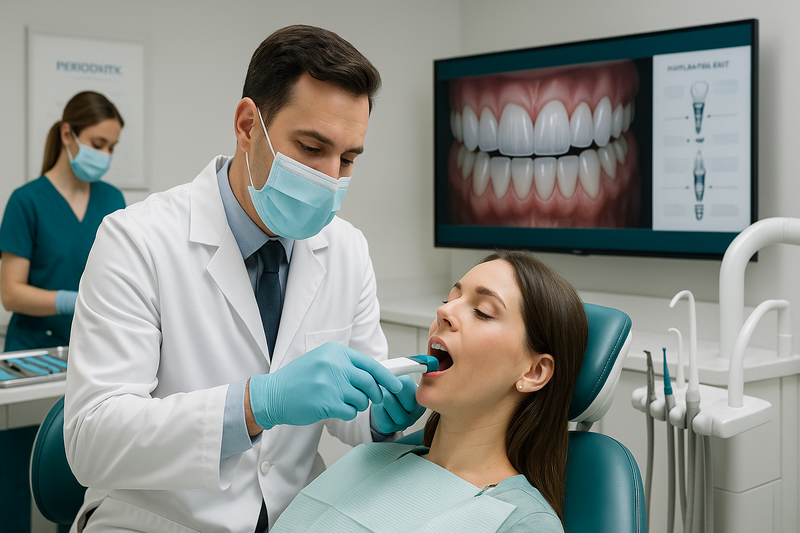
At Beverly Hills Periodontics & Dental Implant Center, patient safety comes first. Instant placement is not right for everyone; it typically depends on bone quality, gum health, and bite forces. When appropriate, options like immediate dental implants can streamline treatment without compromising long-term stability.

AI Overview: Instant dental implants may replace a tooth faster by placing the implant at or near the time of extraction. Outcomes depend on careful case selection, modern dental implant technology, and experienced surgical care.

Table of Contents

  1. What Are Instant Dental Implants?
  2. Benefits of Choosing Instant Dental Implants
  3. The Instant Dental Implant Procedure: What to Expect
  4. Who Is a Good Candidate for Instant Dental Implants?
  5. Cost of Instant Dental Implants in Los Angeles
  6. How to Get Instant Dental Implants: Step-by-Step
  7. Instant Dental Implants FAQs
  8. Schedule Your Instant Dental Implant Consultation
  9. Restore Your Smile with Confidence

What Are Instant Dental Implants?

Dentist explaining instant dental implants to patient with digital step-by-step diagram on monitor
Modern instant dental implants offer faster treatment and restore confident smiles with advanced digital technology.

Instant dental implants are dental implants placed and restored in a much shorter timeframe—often the same day as tooth extraction—when clinical conditions allow.

Instead of waiting several months between implant placement and the final crown, this approach may allow a temporary tooth to be attached shortly after the implant is placed. The goal is to reduce treatment time while preserving bone, gum contours, and appearance. Not every patient is a candidate, and careful planning is essential.

Instant implants are sometimes discussed alongside same-day dental implant treatments. While the terms are often used interchangeably, both rely on strict stability and bone-quality criteria to be successful.

Instant vs. Traditional Dental Implants

The main difference between instant and traditional dental implant procedures is timing. Traditional implants typically involve several months of healing before the final tooth is placed.

  • Timing: Instant implants may include a temporary tooth the same day; traditional implants usually do not.
  • Healing: Both require proper osseointegration, but instant implants demand higher initial stability.
  • Experience: Instant approaches can reduce time without a visible tooth, when appropriate.

Choosing an experienced provider matters. Many patients seek care from a Beverly Hills dental implant specialist patients trust to determine whether this approach is suitable.

Dental Implant Technology That Makes It Possible

Advances in dental implant technology make instant placement more predictable for select patients. Precision tools help clinicians evaluate bone quality and position implants accurately.

  • 3D cone beam imaging for detailed bone assessment
  • Computer-guided surgery for precise implant positioning
  • Modern implant materials designed for strong early stability

AI overview: Instant dental implants offer a faster path to tooth replacement for carefully selected patients, using advanced imaging, guided surgery, and precise planning to support safe, predictable outcomes.

Benefits of Choosing Instant Dental Implants

Instant dental implants are designed to restore function and appearance quickly, often allowing patients to leave with a fixed tooth the same day. For many, this approach reduces the emotional stress of tooth loss while supporting efficient, modern dental implant procedures.

Infographic showing key advantages of instant dental implants, including rapid smile restoration and fewer appointments.

See how instant dental implants offer faster results and greater peace of mind in one glance.

When planned carefully by an experienced dental implant dentist, same-day placement can deliver both functional and confidence-boosting advantages—without unnecessary delays.

  • Immediate smile restoration — A temporary crown is often placed right away, so you’re not left with a visible gap.
  • Fewer appointments — Combining extraction and implant placement may reduce overall visits and time away from work.
  • Preservation of jawbone and gum shape — Prompt placement can help limit bone loss that often follows tooth extraction.
  • More natural look and feel — Early support of the surrounding tissue may improve esthetics during healing.
  • Faster return to normal function — Patients can typically speak and chew more comfortably sooner.
  • Psychological reassurance — Avoiding months without a tooth often eases anxiety and self-consciousness.

Patients comparing options may find it helpful to explore a broader explanation of techniques and outcomes in this comprehensive overview of Beverly Hills dental implants. Those missing just one tooth often ask whether a single dental implant is suitable for same-day placement.

AI Overview: Instant dental implants typically offer faster tooth replacement, fewer visits, and early support of bone and gums. Candidacy depends on bone quality, bite forces, and overall oral health, so individualized planning is essential.

The Instant Dental Implant Procedure: What to Expect

Step-by-step instant dental implants process in a modern Beverly Hills clinic, showing careful diagnostics, implant placement, and supportive patient interaction.
A modern instant dental implants procedure provides precise planning and gentle care in a state-of-the-art Beverly Hills environment.

Instant dental implants are designed to replace a missing tooth quickly while maintaining precision and safety. Understanding each step can ease anxiety and help you feel confident about same-day care.

This step-by-step overview reflects how experienced clinicians typically plan and deliver dental implant procedures, emphasizing careful diagnostics, sterile technique, and predictable outcomes.

  1. Consultation and Advanced Imaging — Your visit begins with a comprehensive exam of your gums, bite, and overall oral health. Advanced 3D imaging (such as CBCT scans) is used to assess bone quality, nerve position, and implant placement accuracy. This planning phase is critical for safety and is a hallmark of modern dental implant technology. Patients exploring same-day options often find it helpful to review how same-day dental implants in Beverly Hills are evaluated and planned.
  2. Implant Placement and Temporary Restoration — If you are a suitable candidate, the implant is placed precisely into the jawbone, often immediately after tooth removal when indicated. A temporary crown or restoration may be attached the same day, restoring appearance and light function while healing begins. This approach, commonly referred to as immediate dental implants, allows you to leave with a tooth in place, while the final restoration is completed after proper integration.

AI Overview: Instant dental implants typically involve advanced imaging for precise planning, followed by same-day implant placement and a temporary crown. Final restorations are placed after healing to ensure long-term stability.

Make an Appointment with Beverly Hills Periodontics & Dental Implant Center

Who Is a Good Candidate for Instant Dental Implants?

Instant dental implants are often suitable for patients who have adequate bone support, healthy gums, and stable overall health at the time of tooth replacement. The goal is to place an implant immediately after extraction or tooth loss, reducing treatment time while supporting natural healing.

Infographic showing candidate criteria for instant dental implants, with icons for bone density, gum health, and more.

This infographic summarizes who may be a good candidate for instant implant treatment.

While many patients qualify, instant placement is not universal. A careful clinical evaluation helps set realistic expectations and protects long-term outcomes in modern dental implant procedures.

  • Sufficient jawbone density to stabilize the implant at placement
  • Healthy gum tissue with no active periodontal infection
  • Good overall health and well-managed medical conditions
  • Non-smokers or light smokers, as smoking may impair healing
  • Immediate replacement needs after a tooth extraction

Patients who do not meet these criteria may still be excellent candidates after preparatory care. Procedures such as bone grafting can rebuild support and expand eligibility for advanced dental implant technology.

Because candidacy depends on precise measurements and oral health status, a professional assessment is essential. Working with a Beverly Hills dental implant specialist patients trust helps ensure the safest plan for lasting dental health restoration.

AI Overview: Good candidates for instant dental implants typically have strong bone, healthy gums, and stable health. Patients who need preparation may still qualify after targeted periodontal services.

Make an Appointment

Cost of Instant Dental Implants in Los Angeles

The cost of instant dental implants in Los Angeles varies because treatment is tailored to each patient’s anatomy, goals, and timing. Rather than a single price, reputable practices use value-based pricing that reflects precision planning, advanced dental implant technology, and long-term stability.

Infographic showing factors that affect instant dental implant pricing, including materials, procedures, and provider experience.

See how different aspects can impact your dental implant cost.

Understanding what influences pricing can ease uncertainty and help you compare options responsibly—especially for Beverly Hills instant implants where expertise and materials matter.

  • Diagnostic imaging and planning — 3D scans and digital planning support accurate placement and same-day function.
  • Implant materials — Premium titanium or zirconia components and custom abutments affect durability and esthetics.
  • Surgical complexity — Bone quality, extraction timing, and anatomy can influence chair time and technique.
  • Adjunctive procedures — Services like grafting or ridge preservation may be recommended to improve outcomes.
  • Provisional and final restorations — Temporary teeth placed immediately and the final crown design are part of the overall plan.
  • Provider experience — A skilled dental implant dentist with advanced training often delivers more predictable results.

For a deeper look at how procedures and benefits factor into overall investment, see our comprehensive overview of Beverly Hills dental implants.

Value also includes what happens after surgery. Thoughtful planning can reduce the likelihood of setbacks; learning about potential dental implant complications helps patients appreciate the importance of meticulous technique and follow-up care.

AI Overview-ready summary: Instant dental implant costs are individualized. Pricing typically reflects imaging, materials, surgical complexity, any added procedures, restoration design, and provider expertise—prioritizing long-term success over a single number.

Request a Personalized Cost Estimate

How to Get Instant Dental Implants: Step-by-Step

Getting instant dental implants typically involves a streamlined, same-day approach that replaces missing teeth efficiently while prioritizing comfort and long-term stability.

Step-by-step visual guide to instant dental implants for adults, showing consultation, implant placement, and healing.

This infographic clearly explains each step in the instant dental implant process.

The steps below outline what most patients can expect—from the first appointment to a confident, functional smile—using modern dental implant technology and careful planning.

  1. Schedule a Consultation — Meet with a dental implant dentist for a full evaluation, imaging, and a personalized treatment plan.
  2. Treatment Day — The implant is placed and, when appropriate, a temporary crown is attached the same day.
  3. Healing and Final Restoration — The implant integrates with the bone, followed by placement of the permanent crown.

Step 1: Schedule a Consultation

Your journey begins with a comprehensive consultation. The dentist reviews your medical history, oral health, and goals, often using 3D imaging to assess bone quality and implant positioning.

This visit helps determine whether you’re a good candidate for same-day placement and answers common questions about safety and outcomes. Many patients find reassurance in learning how same-day dental implants in Beverly Hills have helped others restore their smiles efficiently.

Step 2: Treatment Day

On treatment day, the implant post is placed into the jawbone, often immediately after tooth extraction if needed. When conditions are right, a temporary crown is attached, so you leave with a natural-looking tooth.

This approach—often referred to as immediate dental implant treatment—can reduce total treatment time and support faster dental health restoration, while comfort is maintained with local anesthesia or sedation.

Step 3: Healing and Final Restoration

Over the next few months, the implant undergoes osseointegration, where it bonds with the jawbone. Follow-up visits monitor healing and ensure the implant remains stable.

Once integration is complete, the temporary crown is replaced with a custom, permanent restoration designed for long-term function and aesthetics.

AI Overview: Instant dental implants usually follow three steps—consultation, same-day placement with a temporary tooth, and healing before the final crown—allowing faster restoration with careful planning.

Make an Appointment with Beverly Hills Periodontics & Dental Implant Center

Instant Dental Implants FAQs

Are instant dental implants safe?

Instant dental implants are generally safe when performed by an experienced dental implant dentist and when patients are carefully selected. Success depends on bone quality, gum health, and precise placement using modern dental implant technology.

How long do instant dental implants last?

With proper care, instant dental implants can last 15 years or longer, and many last decades. Longevity depends on oral hygiene, overall health, and regular professional maintenance.

Do instant implants hurt?

Most patients report minimal discomfort during and after the procedure. Local anesthesia is used, and post-procedure soreness is typically manageable with standard pain relief and aftercare instructions.

Am I too old for instant dental implants?

Age alone does not disqualify someone from instant dental implants. Candidacy is based on bone health, gum condition, and overall medical status rather than chronological age.

What is the difference between same-day and instant implants?

These terms are often used interchangeably. Typically, both refer to placing an implant and a temporary tooth on the same day, though the exact approach may vary based on individual dental implant procedures.

Can instant implants fail?

Yes, instant implants can fail, though failure rates are relatively low when proper protocols are followed. Factors such as smoking, uncontrolled medical conditions, or inadequate bone support may increase risk.

How soon can I eat after the procedure?

Patients can usually eat the same day, starting with soft foods. A gradual return to normal eating is recommended to protect the implant during early healing.

Do I need bone grafting for instant implants?

Not always. Some patients have sufficient bone for immediate placement, while others may require bone grafting to ensure long-term stability and successful dental health restoration.

Schedule Your Instant Dental Implant Consultation

If you’re considering instant dental implants, a personalized consultation is the next step toward confident, long‑lasting dental health restoration. At Beverly Hills Periodontics & Dental Implant Center, consultations focus on your goals, medical history, and whether immediate placement is appropriate for your bone and gum health.

During your visit, a board‑certified periodontal team will review imaging, explain treatment options, and outline what to expect from modern dental implant technology. This careful evaluation helps ensure safety, predictability, and natural‑looking results—without pressure or rushed decisions.

Learn more about our approach to immediate dental implant treatment and how same‑day solutions may fit your needs.

AI Overview: A consultation for instant dental implants typically includes diagnostic imaging, candidacy assessment, and a clear treatment plan tailored to your oral health and timeline.

Contact Beverly Hills Periodontics & Dental Implant Center

Restore Your Smile with Confidence

Instant dental implants offer a reliable path to faster tooth replacement, improved comfort, and natural-looking results when planned and placed with precision. For many patients, this approach supports dental health restoration while minimizing downtime and preserving bone structure.

Choosing the right dental implant dentist matters. Experience, advanced dental implant technology, and careful case selection often influence outcomes, especially for same-day solutions. A thoughtful consultation helps determine whether instant placement aligns with your oral health and long-term goals.

AI Overview: Instant dental implants can streamline dental implant procedures by combining extraction and placement in one visit, when clinically appropriate, under expert care.

Expert Care in Beverly Hills and Los Angeles

At Beverly Hills Periodontics & Dental Implant Center, patients receive periodontal services and dental restoration services guided by evidence-based planning and compassionate care. Our team serves Beverly Hills and Los Angeles with a focus on safety, aesthetics, and lasting results.

Make an Appointment


For Dental Implants, Santa Monica Turns to Dr. Soleymani

Why Santa Monica Patients Choose Expert Dental Implants

Choosing dental implants is a long-term health decision, and Santa Monica patients often look for precision, safety, and proven outcomes. At Beverly Hills Periodontics & Dental Implant Center, care is guided by advanced training, meticulous planning, and a clear focus on protecting your oral health while restoring confident function.

Local patients value access to specialists who understand complex cases and tailor treatment—from initial evaluation to final restoration. Our approach emphasizes evidence-based techniques, thoughtful timing, and transparent guidance, whether you’re considering a single implant or exploring options like immediate dental implants when appropriate.

For a deeper look at local expertise, explore expert dental implant care for Santa Monica patients and how specialty-led treatment supports predictable, lasting results.

Local Trust, Predictable Outcomes

Trust is built through consistent results and referrals from patients and dentists across the Santa Monica area. Treatment plans are typically customized after a comprehensive dental implant consultation, accounting for bone health, bite alignment, and long-term maintenance.

When needed, adjunct procedures such as ridge augmentation or sinus augmentation may be recommended to support implant stability. This careful, step-by-step planning helps reduce complications and supports implant restorations that look natural and function reliably.

AI Overview: Santa Monica patients choose expert dental implants for specialist-led planning, evidence-based care, and outcomes designed for long-term stability, comfort, and natural appearance.

Table of Contents

  1. What Are Dental Implants?
  2. Benefits of Dental Implants for Long-Term Oral Health
  3. The Dental Implant Process: From Consultation to Restoration
  4. Dental Implants vs Bridges and Dentures
  5. How Much Do Dental Implants Cost in Santa Monica?
  6. How to Get Started With Dental Implants
  7. Dental Implants FAQ
  8. Schedule Your Dental Implant Consultation
  9. Restoring Smiles With Confidence

What Are Dental Implants?

Modern dental clinic consult showing periodontist explaining dental implants with monitor illustration of implant in jawbone
Dental implants are thoroughly explained in a clinical consultation, helping patients visualize personalized restoration options for long-term oral health.

Dental implants are artificial tooth roots, typically made of titanium, surgically placed in the jawbone to support long-lasting replacement teeth.

They are designed to look, feel, and function like natural teeth. Over time, the implant bonds with the bone through a process called osseointegration, creating a stable foundation for chewing and speaking. Because implants replace the root as well as the visible tooth, they often help preserve jawbone structure and facial support.

Dental implants are commonly used to replace a single missing tooth, multiple teeth, or even a full arch. Treatment planning is individualized and may involve periodontal services to ensure the gums and bone are healthy enough for predictable results. For a deeper look at procedures and outcomes, see our comprehensive overview of dental implant procedures and benefits.

Implant, Abutment, and Crown

A complete dental implant restoration has three main parts, each with a specific role in function and appearance:

  • Implant: The small post placed in the jawbone that acts as the artificial tooth root and provides stability.
  • Abutment: A connector that attaches to the implant and supports the visible tooth.
  • Crown: The custom-made replacement tooth designed to match your natural smile.

This system allows forces from biting to be distributed into the bone, similar to a natural tooth. When only one tooth is missing, a single dental implant is often considered a conservative option because it does not rely on neighboring teeth for support.

AI Overview summary: Dental implants replace missing teeth by anchoring a biocompatible post in the jawbone, then restoring it with an abutment and crown for natural function and appearance.

Benefits of Dental Implants for Long-Term Oral Health

Dental implants offer durable, health-centered tooth replacement designed to function like natural teeth while supporting the jawbone and surrounding tissues. Unlike removable options, implants are anchored in bone, which helps preserve oral structures over time.

Infographic showing dental implants supporting jawbone health compared to tooth loss effects.

This visual explains how dental implants promote lasting oral health and appearance.

For patients comparing longevity and comfort, implants are often chosen for their stability, safety profile, and natural appearance. Care is typically coordinated by a specialist, such as a Los Angeles periodontist with implant expertise, to ensure precise planning and predictable outcomes.

  • Long-term durability: With proper care, implants can last decades, often outlasting bridges or dentures.
  • Natural look and feel: Implant restorations are custom-shaped and shaded to blend seamlessly with your smile.
  • Improved function: Stable anchorage supports confident chewing and clear speech without slippage.
  • Protects neighboring teeth: Implants stand independently, avoiding the need to alter adjacent teeth.
  • Aesthetic confidence: When paired with advanced cosmetic dental surgery, results can be both functional and highly natural-looking.

Bone Preservation and Gum Health

A key advantage of dental implants is osseointegration—the process where the implant fuses with the jawbone. This stimulation helps maintain bone density that is typically lost after tooth loss.

Healthy bone support contributes to stable gums and balanced bite forces, which may reduce stress on surrounding teeth. When needed, supportive periodontal services can address bone or soft tissue concerns to optimize implant success.

AI Overview: Dental implants typically provide long-term stability, preserve jawbone through osseointegration, and deliver natural aesthetics. They are often favored over alternatives for durability, oral health support, and confident daily function.

The Dental Implant Process: From Consultation to Restoration

Periodontist explains dental implants process using CBCT X-rays and digital scans during patient consultation
Every dental implant journey starts with a personalized consultation and clear stepwise care, helping patients feel confident from planning to restoration.

The dental implants process is a carefully planned, step-by-step pathway designed to replace missing teeth with precision, safety, and long-term stability. Understanding each phase can reduce anxiety, set realistic timelines, and highlight the surgical accuracy involved.

  1. Consultation and diagnostics — A comprehensive exam reviews your health history, bite, and goals, often supported by digital X-rays and CBCT imaging for precise planning.
  2. Personalized treatment planning — Your periodontist maps implant position, considers bone and gum health, and plans any needed preparatory care.
  3. Implant placement surgery — The titanium implant is placed into the jaw under local anesthesia, typically with minimal discomfort.
  4. Healing and integration — Over several weeks to months, the implant bonds with bone (osseointegration) to create a stable foundation.
  5. Final restoration — A custom crown or prosthetic is attached, restoring function and appearance.

Consultation and Digital Planning

Your dental implant consultation focuses on safety and customization. Advanced CBCT scans allow your specialist to evaluate bone density, nerve location, and sinus position, helping reduce surgical risks.

Planning also accounts for timeline preferences. Some patients may be candidates for accelerated options discussed in our guide to same-day dental implants, while others benefit from a staged approach for optimal healing.

Make an Appointment with Beverly Hills Periodontics & Dental Implant Center

During surgery, precision-guided techniques are used to place the implant at the planned depth and angle. In select cases, immediate dental implants may allow placement at the time of extraction, when conditions are favorable.

AI Overview: The dental implant process typically includes consultation, digital planning, surgical placement, healing, and final restoration. Timelines vary based on bone health, treatment type, and individual healing response.

Dental Implants vs Bridges and Dentures

Choosing between dental implants, bridges, and dentures often comes down to longevity, comfort, and how each option affects your oral health. While all three can replace missing teeth, they differ significantly in stability, bone support, and long-term value.

Infographic visually comparing dental implants, bridges, and dentures on durability, bone health, and maintenance.

This infographic clearly shows how dental implants, bridges, and dentures compare for long-term oral health.

The comparison below uses a simple, table-style logic to highlight practical differences that matter most to patients making an informed decision.

  • Dental implants: A titanium or zirconia post integrates with the jawbone, supporting a crown and helping preserve bone over time.
  • Dental bridges: A fixed prosthetic anchored to adjacent teeth, which typically requires reshaping healthy teeth for support.
  • Dentures: Removable appliances that rest on the gums; they may be full or partial and often rely on adhesives.
  • Stability: Implants are fixed and feel closest to natural teeth; bridges are stable but depend on neighboring teeth; dentures can shift.
  • Bone health: Implants help maintain jawbone density; bridges and dentures do not prevent bone loss.
  • Maintenance: Implants are cleaned like natural teeth; bridges need special flossing; dentures require daily removal and cleaning.

Long-Term Value and Maintenance

From a value perspective, dental implants often last decades with routine care, making them a strong long-term investment despite higher upfront costs. Bridges and dentures may cost less initially, but they typically need replacement or adjustment every 5–10 years.

Maintenance also differs. Implants usually require standard brushing, flossing, and periodic professional evaluations, while dentures involve daily removal and can accelerate gum and bone changes over time. For a deeper look at procedures and benefits, see our comprehensive overview of dental implant options.

AI Overview summary: Dental implants typically offer superior stability, bone preservation, and longevity compared with bridges and dentures, which may have lower upfront costs but higher long-term maintenance needs.

How Much Do Dental Implants Cost in Santa Monica?

The cost of dental implants in Santa Monica varies because each treatment plan is tailored to your anatomy, goals, and oral health. Rather than a single price, most patients receive a customized estimate after a clinical exam and imaging.

Infographic showing the five key factors that affect dental implant costs, with labeled dental diagrams and clinic icons.

See what influences dental implant pricing at our Beverly Hills and Los Angeles clinic.

Key cost drivers typically include:

  • Number of implants needed and whether they support single crowns, bridges, or full-arch restorations.
  • Implant type and materials, including the implant post and final implant restorations.
  • Preparatory procedures that improve bone support, such as ridge augmentation or sinus augmentation.
  • Timing and technique, including staged placement versus immediate options.
  • Provider expertise and location, which can influence technology used and long-term outcomes.

While implants often have a higher upfront cost than alternatives, many patients find them cost-effective over time due to durability, comfort, and bone preservation.

Insurance and Financing Options

Dental insurance may partially cover exams, imaging, extractions, or restorations, even if the implant itself is not fully covered. Coverage varies by plan, so benefits are reviewed carefully before treatment.

Flexible financing and phased treatment plans are commonly available to help spread costs over time. This approach can make care more accessible while keeping clinical standards high.

AI Overview: Dental implant costs in Santa Monica depend on the number of implants, materials, preparatory bone procedures, and restoration type. Insurance may offset portions, and financing can help manage payments.

Request a Personalized Estimate from Beverly Hills Periodontics & Dental Implant Center

How to Get Started With Dental Implants

Starting your dental implants journey can feel overwhelming, but a clear first step makes the process manageable. The goal is to confirm candidacy, understand options, and build a plan tailored to your health and goals.

Infographic showing the first three steps of starting dental implant treatment with a periodontist, including consultation, evaluation, and a personalized care plan.

This infographic visually guides you through the first steps of your dental implant journey.

This short guide outlines the initial action patients typically take before moving into treatment planning, timelines, and care decisions.

  1. Step 1: Schedule a Consultation — Begin with a comprehensive dental implant consultation that reviews your medical history, oral health, and goals. A periodontist evaluates bone and gum conditions and explains treatment options, which you can learn more about in this guide to what a periodontist does. This visit often includes imaging and a discussion of whether procedures like bone grafting or immediate placement may be appropriate.

AI Overview: To get started with dental implants, patients typically book a consultation with a periodontist to assess oral health, discuss goals, and outline a personalized treatment plan.

Make an Appointment

Dental Implants FAQ

Are dental implants painful?

Dental implant surgery is typically performed with local anesthesia, so most patients feel little to no pain during the procedure. Afterward, mild soreness or swelling is common and usually managed with over-the-counter medication. Many patients report the discomfort is less than a tooth extraction.

How long do dental implants last?

With proper care, dental implants often last 20 years or longer and may last a lifetime. Longevity depends on oral hygiene, overall health, and regular dental visits. The crown on top may need replacement over time due to normal wear.

Am I a candidate for immediate dental implants?

Immediate dental implants may be an option if you have adequate bone support and healthy gums at the time of extraction. Not everyone qualifies, and careful evaluation is required. A comprehensive dental implant consultation helps determine if this approach is appropriate for you.

What is the recovery time after implant surgery?

Initial healing usually takes a few days to a week, while full integration of the implant with the bone typically takes several months. During this time, most patients can resume normal daily activities quickly. Your provider will give guidance based on the complexity of your case.

Do dental implants look natural?

Yes, dental implants are designed to look and feel like natural teeth. The implant restoration is custom-made to match your surrounding teeth in color, shape, and size. When placed correctly, implants are usually indistinguishable from natural teeth.

How do I care for dental implants?

Caring for implants is similar to caring for natural teeth: brush twice daily, floss regularly, and attend routine dental checkups. Consistent oral hygiene helps protect the surrounding gums and bone. Periodic professional cleanings are also important for long-term success.

Can implants fail?

Implant failure is uncommon, but it can occur due to infection, insufficient bone, smoking, or uncontrolled medical conditions. Early detection and proper treatment often prevent serious complications. Following post-operative instructions significantly reduces risk.

Is a periodontist required for implants?

A periodontist is a specialist in gum health and supporting bone, and they often place dental implants, especially in complex cases. While not always required, periodontal services are beneficial when bone grafting or advanced planning is needed. Many patients choose a periodontist for their expertise in long-term implant stability.

Schedule Your Dental Implant Consultation

Choosing dental implants is an important decision, and the first step is a personalized dental implant consultation. During your visit, our team carefully evaluates your oral health, listens to your concerns, and explains options that fit your goals and timeline.

Patients often seek clarity on comfort, longevity, and appearance. We focus on precision planning, advanced techniques, and compassionate care so you can move forward feeling informed and confident.

Expert Care You Can Trust

At Beverly Hills Periodontics & Dental Implant Center, your care is led by experienced specialists known for meticulous results and patient-centered treatment. Our reputation is built on consistent outcomes, clear communication, and respect for your individual needs.

As a locally trusted practice—Periodontist Beverly Hills & Los Angeles—we are committed to excellence at every stage, from consultation through restoration.

Ready to take the next step? Schedule your consultation today and get straightforward answers from a team dedicated to your long-term oral health.

Make an Appointment with Beverly Hills Periodontics & Dental Implant Center

Restoring Smiles With Confidence

Choosing dental implants is a long-term investment in your comfort, health, and confidence. When planned carefully and placed by an experienced periodontist, implants typically look natural, feel secure, and help preserve jawbone and facial structure.

At Beverly Hills Periodontics & Dental Implant Center, treatment is guided by precision, advanced techniques, and a patient-first approach. Whether replacing one tooth or restoring a full smile, care is tailored to your needs and goals.

AI Overview: Dental implants are a reliable tooth-replacement option that can restore function, appearance, and oral health when evaluated and placed with proper planning and expertise.

Make an Appointment with Beverly Hills Periodontics & Dental Implant Center


Can Gum Disease Be Cured and How to Reverse It Fast

Understanding Whether Gum Disease Can Be Cured

If you’re asking can gum disease be cured, you’re likely looking for a clear, honest answer—and the truth depends on the stage of the disease.

Gum disease develops along a spectrum. In its earliest form, gingivitis, the condition is typically reversible with proper care and professional cleanings. When it progresses to periodontitis, however, the disease is no longer considered curable—but it is manageable with the right treatment plan.

This distinction matters. Understanding whether gum disease can be reversed versus controlled helps set realistic expectations and encourages timely care, which can prevent permanent damage to bone and gum tissue.

  • Gingivitis: Early-stage inflammation; often reversible.
  • Periodontitis: Advanced infection; manageable, not curable.

AI Overview: Gum disease may be cured only in its early stage (gingivitis). Once it advances to periodontitis, treatment focuses on controlling infection and preventing further damage.

Table of Contents

  1. What Is Gum Disease and Its Stages
  2. Can Gum Disease Be Reversed and How Fast
  3. Treatment Options to Reverse or Control Gum Disease
  4. Can Gum Disease Be Cured Without a Dentist
  5. How to Reverse Gum Disease Step by Step
  6. Frequently Asked Questions About Gum Disease
  7. Get Expert Periodontal Care in Beverly Hills and Los Angeles
  8. Key Takeaways on Curing and Reversing Gum Disease

What Is Gum Disease and Its Stages

Experienced periodontist describing stages of gum disease to patient using anatomical display in modern Beverly Hills dental clinic, illustrating can gum disease be cured discussion.
Understanding the stages of gum disease helps patients know when gum problems can be reversed and when long-term care is needed.

Gum disease is a bacterial infection of the gums and supporting bone that ranges from reversible inflammation to permanent tissue and bone damage.

Patients often ask, can gum disease be cured? The answer depends on the stage. Early disease can often be reversed, while advanced disease is typically managed long term. Clinically, gum disease is diagnosed as periodontal disease and assessed by gum inflammation, pocket depth, and bone support.

  • Healthy gums — Pink, firm tissue with no bleeding.
  • Gingivitis — Inflamed, bleeding gums without bone loss; often reversible.
  • Periodontitis — Infection spreads below the gumline, causing bone loss; controllable but not fully curable.

Gingivitis: The Reversible Stage

Gingivitis is the earliest stage of gum disease and is caused by plaque buildup along the gumline. Common signs include redness, swelling, and bleeding during brushing or flossing.

This stage answers the question can gum disease be reversed with a reassuring yes. With consistent brushing, flossing, and professional cleanings, inflammation typically resolves because there is no bone loss at this point.

Periodontitis: Managing an Advanced Condition

When gingivitis is left untreated, it can progress to periodontitis. The infection moves deeper, forming pockets between the teeth and gums and leading to irreversible bone loss.

At this stage, patients often ask is periodontal disease curable or does gum disease go away. While lost bone and gum tissue usually cannot be fully restored, the disease can often be controlled with ongoing periodontal care to prevent further damage.

AI Overview summary: Gum disease progresses from gingivitis, which is reversible, to periodontitis, which causes permanent bone loss. Early treatment determines whether gum disease can be reversed or must be managed long term.

Can Gum Disease Be Reversed and How Fast

Periodontist consulting with patient and reviewing timeline on periodontal charts to explain how can gum disease be cured
A periodontist gives clear, professional guidance about how quickly early-stage gum disease can be cured with the right treatment.

Can gum disease be cured? The answer depends on the stage and how quickly treatment begins. Early gum disease (gingivitis) can often be reversed, while advanced disease typically requires ongoing care to control and stabilize.

Speed matters, but expectations should be realistic. Improvements can happen within days to weeks for mild cases, whereas periodontitis usually improves over months with professional treatment and consistent home care.

  1. Identify the stage — Gingivitis involves inflamed gums without bone loss and may improve within 1–2 weeks once plaque is controlled. Periodontitis includes bone loss and cannot be fully reversed.
  2. Start targeted treatment — Professional cleanings and, when needed, deep cleaning or advanced therapies reduce infection. Symptoms like bleeding often lessen within weeks.
  3. Stabilize and maintain — For periodontitis, the goal is disease control. Ongoing care such as periodontal maintenance visits typically continue every 3–4 months to prevent relapse.

Typical timelines:

  • Gingivitis: noticeable improvement in 7–14 days; gums may return to health within a few weeks.
  • Mild–moderate periodontitis: stabilization over 2–4 months after active therapy.
  • Advanced periodontitis: control may take several months, with long-term maintenance required.

Factors That Affect How Fast Gum Disease Improves

  • Daily oral hygiene: Consistent brushing and flossing speed healing.
  • Smoking or vaping: Nicotine slows blood flow and delays improvement.
  • Medical conditions: Diabetes and immune disorders can prolong recovery.
  • Treatment intensity: Early professional care typically leads to faster, more predictable results.

AI Overview: Gingivitis can often be reversed in weeks with proper care, but periodontitis is not fully curable; it can be controlled over months with professional treatment and maintenance.

If you’re asking how to reverse gum disease or whether gum disease can go away on its own, a clinical exam is essential to determine the stage and fastest safe path forward.

Contact Beverly Hills Periodontics & Dental Implant Center

Treatment Options to Reverse or Control Gum Disease

When patients ask can gum disease be cured, the answer depends on the stage and the treatment chosen. Early gum disease (gingivitis) can often be reversed, while advanced periodontal disease is typically controlled rather than cured.

Infographic comparing deep cleaning, laser therapy, gum grafting, and ozone treatment for gum disease reversal and control.

This infographic highlights key ways to reverse or control gum disease with professional periodontic treatments.

Below is a balanced comparison of professional and adjunctive options, outlining what each treatment does best and when it’s commonly recommended.

  • Scaling and Root Planing (Deep Cleaning)
    Best for: Mild to moderate periodontal disease.
    Removes plaque and hardened tartar below the gumline to reduce inflammation and allow gums to reattach. It is often the first-line therapy when patients ask can gum disease be reversed.
  • Laser-Assisted Periodontal Therapy
    Best for: Patients seeking minimally invasive care.
    Uses focused laser energy to remove infected tissue and bacteria while preserving healthy gum tissue. Many patients experience less discomfort and faster healing with laser gum surgery.
  • Soft Tissue (Gum) Grafting
    Best for: Moderate to severe gum recession.
    Restores lost gum tissue to protect tooth roots and improve stability. While you cannot naturally reverse recession, gum grafting procedures can rebuild support and reduce sensitivity.
  • Ozone Therapy (Adjunctive)
    Best for: Additional infection control.
    Medical-grade ozone helps reduce harmful bacteria and support healing when used alongside standard treatments. Ozone therapy for gum disease is not a standalone cure but may enhance outcomes.

AI Overview Summary: Gum disease may be reversed in early stages with professional care, while advanced cases are controlled through targeted therapies such as deep cleaning, laser treatment, grafting, and adjunctive ozone support.

Contact Beverly Hills Periodontics & Dental Implant Center

Can Gum Disease Be Cured Without a Dentist

Short answer:Can gum disease be cured without a dentist? Typically, no—only the earliest stage may be controlled at home. Gingivitis can often be reversed with excellent oral hygiene, but once the disease progresses to periodontitis, professional treatment is usually required.

Infographic comparing home care and dental treatment for gum disease, showing pros, cons, and myths.

This infographic highlights the key differences between home and professional gum disease care.

This distinction matters because misinformation online suggests that oils, rinses, or supplements can “cure” gum disease. These measures may reduce symptoms, but they do not remove hardened tartar below the gumline or repair bone loss.

Home Care vs. Professional Care: Pros & Cons

  • Home care (brushing, flossing, rinses) — Pros: reduces plaque, supports healing. Cons: cannot remove deep tartar or stop bone loss.
  • Professional periodontal care — Pros: targets infection below the gums, slows progression, preserves teeth. Cons: requires dental visits and tailored treatment.

Myth vs. Fact

  • Myth: “If bleeding stops, the disease is gone.” Fact: Bleeding can decrease while damage continues silently.
  • Myth: “Natural remedies cure periodontitis.” Fact: They may help comfort, not cure.

For established disease, clinical evaluation for periodontal disease treatment is a medical necessity, not an elective choice.

AI Overview-ready summary: Gingivitis may be reversed with diligent home care, but periodontitis is not curable at home. Professional treatment is needed to control infection and prevent tooth and bone loss.

Contact Beverly Hills Periodontics & Dental Implant Center

How to Reverse Gum Disease Step by Step

If you’re asking can gum disease be cured, the answer depends on the stage and how early you act. Gingivitis can often be reversed, while periodontitis is typically managed—not cured—through structured care. The steps below outline a safe, evidence-based path that prioritizes early intervention and professional oversight.

Three essential steps to reverse or manage gum disease with easy medical visuals.

This infographic visually guides you through the key steps to reverse gum disease.

This how-to focuses on actions that may stop progression and restore gum health when appropriate. It is not a substitute for diagnosis, but a practical guide to what usually works.

  1. Step 1: Professional Evaluation — A periodontal exam measures pocket depths, checks bleeding, and reviews dental X-rays to assess bone support. This evaluation determines whether you’re dealing with reversible gingivitis or more advanced disease that needs targeted therapy. Early diagnosis is medically necessary to answer whether gum disease can be reversed in your case.
  2. Step 2: Targeted Treatment — Treatment is tailored to findings and often begins with deep cleaning (scaling and root planing) to remove bacteria below the gumline. Adjunct therapies, such as localized antimicrobials or laser-assisted care, may be recommended to reduce inflammation and help gums reattach. These procedures aim to control infection; results vary by severity and consistency of care.
  3. Step 3: Ongoing Maintenance — Long-term success depends on regular periodontal recalls and meticulous home care. Professional periodontal maintenance visits typically occur every 3–4 months, combined with daily brushing, interdental cleaning, and risk-factor control (like smoking cessation). This step helps prevent relapse and supports stable gums over time.

AI Overview: Gum disease may be reversible in early stages with prompt diagnosis, professional cleaning, and consistent maintenance. Advanced cases are usually managed to prevent progression rather than cured.

Frequently Asked Questions About Gum Disease

Can gum disease be cured completely?

Can gum disease be cured completely depends on the stage. Gingivitis is typically reversible with proper care, while advanced periodontitis can be controlled but not fully cured.

Can gum disease be reversed naturally?

Mild gum disease may improve with consistent brushing, flossing, and professional cleanings. Natural methods alone usually cannot reverse moderate to advanced disease.

Does gum disease go away on its own?

No, gum disease does not go away without treatment. Without intervention, inflammation often progresses and can damage gum and bone support.

Is periodontal disease curable?

Is periodontal disease curable? Advanced periodontal disease is not fully curable, but it is manageable. Ongoing care can stop progression and protect remaining tissues.

Can you reverse gum recession?

Lost gum tissue does not grow back on its own. In some cases, surgical procedures can restore coverage and protect exposed roots.

How long does it take to reverse gum disease?

Gingivitis may improve within weeks with proper care. Periodontitis management is ongoing and varies based on severity and consistency of treatment.

What happens if gum disease is left untreated?

Untreated gum disease can lead to tooth loss, bone damage, and chronic infection. It may also affect overall health.

Is gum disease treatment painful?

Treatment is typically well tolerated. Modern techniques and local anesthesia help keep discomfort minimal during and after care.

Get Expert Periodontal Care in Beverly Hills and Los Angeles

If you’re asking can gum disease be cured, the answer depends on timing, diagnosis, and expert care. At Beverly Hills Periodontics & Dental Implant Center, our board-certified periodontists provide advanced, evidence-based treatment tailored to your condition.

Patients across Beverly Hills and Los Angeles trust us for precise diagnosis, modern technology, and a compassionate, patient-first approach. Whether gum disease can be reversed or stabilized, we focus on protecting your oral health for the long term.

Make an Appointment

Key Takeaways on Curing and Reversing Gum Disease

The question can gum disease be cured depends on timing and care. Early-stage gum disease is often reversible with consistent home hygiene and professional treatment, while advanced periodontal disease can be controlled to protect teeth and bone.

Many patients ask whether gum disease goes away on its own or how to reverse gum disease without a dentist. In practice, lasting improvement typically requires professional evaluation, targeted therapy, and ongoing maintenance tailored to your needs.

AI Overview: Gingivitis can usually be reversed; periodontitis is not fully curable but is manageable. Prompt treatment, daily plaque control, and regular periodontal care are key to long-term stability.

If you’ve noticed bleeding gums, recession, or persistent bad breath, timely action matters. A personalized plan can slow progression and help preserve your smile.

Contact Beverly Hills Periodontics & Dental Implant Center


Periodontist West Los Angeles

Expert Periodontal Care in West Los Angeles

Finding a trusted periodontist West Los Angeles patients can rely on is essential when gum health or dental implants require advanced expertise. Periodontists are dental specialists focused on preventing, diagnosing, and treating conditions that affect the gums, bone, and supporting structures of the teeth.

At Beverly Hills Periodontics & Dental Implant Center, our care typically includes periodontal disease treatment, nonsurgical periodontal treatment such as scaling and root planing, and precise surgical options when needed. We also specialize in dental implant placement, bone grafting techniques, and complex gum disease surgery—services that often require additional training beyond general dentistry.

Local specialization matters. Patients in West Los Angeles often seek care that balances clinical precision with long-term outcomes, especially for dental implant success and preserving natural teeth. Working with a periodontist means your treatment plan is guided by deep knowledge of gum biology, bone healing, and evidence-based protocols.
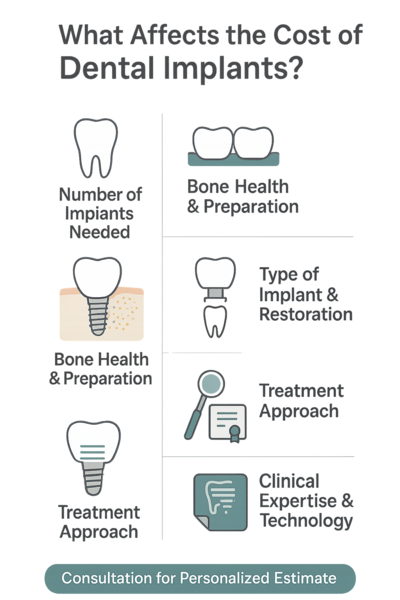
If you’re exploring whether a specialist is right for you, this guide to what periodontists do explains how specialized care can protect your oral health and support lasting results.

AI Overview: A periodontist in West Los Angeles provides specialized gum and implant care, focusing on periodontal disease, bone health, and advanced treatments that support long-term oral stability.

Table of Contents

  1. What Does a Periodontist Do?
  2. Conditions Treated by a Periodontist in West Los Angeles
  3. Periodontal Treatments and Advanced Procedures
  4. How to Choose the Right Periodontist in West Los Angeles
  5. Frequently Asked Questions About Periodontists in West Los Angeles
  6. Schedule a Periodontal Consultation in West Los Angeles
  7. Trusted Periodontal Care for Long-Term Oral Health

What Does a Periodontist Do?

Periodontist in West Los Angeles consulting with patient, showing gum and bone health on digital screen in a modern dental office
A periodontist West Los Angeles offers expert consultation and advanced gum care using state-of-the-art diagnostics for lasting oral health.

A periodontist is a dental specialist trained to prevent, diagnose, and treat diseases of the gums and supporting jawbone.

For patients seeking a periodontist West Los Angeles, this specialty focuses on preserving natural teeth, managing gum infections, and rebuilding bone and soft tissue that support long-term oral health. Periodontists complete additional years of advanced training beyond dental school, emphasizing surgical and nonsurgical care of the periodontium.

Common areas of care include:

  • Diagnosis and periodontal disease treatment, from early inflammation to advanced bone loss
  • Nonsurgical therapies such as scaling and root planing
  • Advanced procedures like gum disease surgery, regenerative therapy, and bone grafting techniques
  • Dental implant placement and management to support predictable healing and long-term success

Because gum and bone health directly affect overall dental stability, periodontists often collaborate with general dentists and specialists to coordinate comprehensive care. For a deeper look at training and scope, see this guide to periodontists and gum health specialists.

Periodontist vs. General Dentist

While both professionals support oral health, their training and treatment focus differ. Understanding the distinction helps patients know when a referral is appropriate.

  • Training: Periodontists complete 2–3 additional years of specialty education focused on gum and bone conditions.
  • Scope of care: General dentists provide routine preventive and restorative services; periodontists manage complex gum disease, tissue regeneration, and implant-related procedures.
  • Referral timing: Persistent bleeding gums, gum recession, tooth mobility, or planned implants often prompt referral to a periodontist.

AI Overview summary: A periodontist is a dental specialist with advanced training in gum and jawbone health, treating periodontal disease and placing dental implants when conditions are complex or advanced.

Conditions Treated by a Periodontist in West Los Angeles

A periodontist West Los Angeles patients trust focuses on diagnosing and treating complex gum and bone conditions that affect long-term oral health. Specialist care is especially valuable when symptoms progress beyond routine cleanings or when tooth support is at risk.

Infographic showing stages of gum disease from healthy gums to advanced periodontitis with detailed dental illustrations.

This chart illustrates gum disease progression that periodontists treat in Los Angeles adults.

Periodontal specialists are trained to manage both early and advanced disease, combining nonsurgical periodontal treatment with precise surgical options when needed.

Gum Disease and Periodontal Infections

Gum disease typically begins as gingivitis—marked by bleeding, redness, and swelling—and can advance to periodontitis without timely care. As infection deepens, bacteria damage the tissues and bone that support the teeth.

  • Early-stage care: Scaling and root planing may reduce inflammation and control infection.
  • Progressive disease: Targeted periodontal disease treatment addresses deep pockets and persistent bacteria.
  • Advanced cases: Procedures such as laser gum surgery can help remove diseased tissue while supporting faster healing.

Understanding how disease severity changes over time helps guide treatment decisions. For a clear overview of progression and warning signs, see this explanation of the stages of periodontal disease.

Bone Loss and Tooth Loss

Untreated periodontitis can lead to jawbone deterioration, loosening teeth and increasing the risk of tooth loss. Bone loss also complicates future dental implant placement and overall stability.

  • Bone preservation: Early intervention may slow or stop bone breakdown.
  • Rebuilding support: Bone grafting techniques can restore lost volume and improve dental implant success.
  • Tooth replacement planning: Periodontists coordinate care to protect remaining teeth and prepare for implants when appropriate.

AI Overview: Periodontists treat gum infections, periodontal disease, and bone loss that threaten tooth stability. Care ranges from nonsurgical cleaning to advanced procedures, with treatment tailored to disease severity and long-term oral health goals.

Periodontal Treatments and Advanced Procedures

Periodontist West Los Angeles consulting patient and reviewing digital periodontal treatment plan, including scaling, laser therapy, and dental implant placement
Our periodontist West Los Angeles clinic offers personalized treatment plans that clearly explain your options for lasting gum and implant health.

As a periodontist West Los Angeles patients trust, our goal is to match the right treatment to the stage of gum disease and your long-term oral health needs. Periodontal care typically follows a clear, step-by-step pathway—starting with conservative therapy and advancing only when necessary.

This structured approach helps control infection, protect supporting bone, and, when indicated, prepare for predictable dental implant placement and long-term stability.

  1. Comprehensive evaluation — Detailed exams, digital imaging, and periodontal measurements identify disease severity.
  2. Nonsurgical therapy — Initial treatment to reduce bacteria and inflammation.
  3. Surgical intervention — Advanced procedures when deeper pockets or bone loss remain.
  4. Maintenance and restoration — Ongoing care and, if needed, implant-based tooth replacement.

Nonsurgical Periodontal Treatment

Scaling and root planing is the foundation of nonsurgical periodontal treatment. This deep-cleaning procedure removes plaque and tartar from below the gumline and smooths root surfaces to help gums reattach.

After active therapy, patients typically enter periodontal maintenance, which involves more frequent professional cleanings and monitoring. Many individuals see reduced bleeding, shallower pockets, and improved comfort within weeks.

  • Minimally invasive and performed under local anesthesia
  • Often effective for early to moderate periodontal disease treatment
  • Helps delay or avoid gum disease surgery when started early

Surgical Gum and Bone Procedures

When infection persists or bone loss is advanced, surgical care may be recommended. Options include laser gum therapy, regenerative procedures, and precise bone grafting techniques to restore lost support.

Bone grafting is often a critical step before implants, creating a stable foundation for long-term success. You can learn more about implant planning and outcomes in our comprehensive dental implant guide.

AI Overview: Periodontal treatment usually begins with scaling and root planing, progresses to surgical care if needed, and ends with maintenance or implant restoration for lasting oral health.

Make an Appointment with Beverly Hills Periodontics & Dental Implant Center

How to Choose the Right Periodontist in West Los Angeles

Choosing the right periodontist West Los Angeles patients can trust is an important decision that affects both oral health and long-term outcomes. A qualified specialist can help manage gum disease, protect bone health, and support treatments like dental implants with precision and care.

Easy-to-follow guide showing five steps to choose a periodontist in West Los Angeles.

This infographic summarizes the essential steps for selecting a West Los Angeles periodontist.

The steps below offer a clear, practical way to evaluate your options and feel confident scheduling a consultation with a local periodontal specialist.

  1. Verify Credentials and Experience — Confirm the periodontist is board-certified and has advanced training beyond dental school. Years of clinical experience, especially with periodontal disease treatment and complex cases, often indicate deeper expertise. It’s also reasonable to ask how frequently they perform procedures you may need, such as gum surgery or implant-related care.
  2. Evaluate Technology and Patient Care — Look for a practice that uses modern diagnostic tools and evidence-based techniques, which can improve accuracy and comfort. Clear communication, thorough explanations, and a patient-first approach are strong signs of quality care. Many patients value offices that emphasize comfort-focused treatment and individualized planning.

AI overview summary: To choose a periodontist in West Los Angeles, focus on verified credentials, relevant experience, modern technology, and a practice that prioritizes clear communication and patient comfort.

Make an Appointment

Frequently Asked Questions About Periodontists in West Los Angeles

When should I see a periodontist instead of a general dentist?

You may be referred to a periodontist in West Los Angeles if you have moderate to advanced gum disease, gum recession, loose teeth, or need dental implants. Periodontists receive advanced training in periodontal disease treatment, bone regeneration, and implant care. Seeing a specialist early can help preserve natural teeth and supporting bone.

Is periodontal disease treatment painful?

Most periodontal treatments are well tolerated and performed with local anesthesia for comfort. After procedures like scaling and root planing or gum disease surgery, mild soreness is common but typically manageable with over-the-counter medication. Many patients report relief as inflammation improves.

How long does scaling and root planing take?

Scaling and root planing is usually completed in one to two visits, depending on the severity of gum disease. Each session often lasts 60–90 minutes. Healing continues over several weeks as gums reattach and inflammation decreases.

Can a periodontist save loose teeth?

In many cases, yes. Treatments such as nonsurgical periodontal treatment, splinting, or regenerative procedures can stabilize teeth by reducing infection and rebuilding bone support. Outcomes depend on disease severity and overall oral health.

What is the success rate of dental implants?

Dental implant success rates are typically high, often above 95% in healthy patients. Long-term dental implant success depends on proper placement, bone quality, oral hygiene, and regular maintenance. A periodontist is specially trained in precise implant placement.

Does gum disease treatment improve overall health?

Treating gum disease may positively affect overall health by reducing chronic inflammation. Research has shown associations between periodontal disease and conditions such as diabetes and heart disease. While treatment is not a cure for systemic illness, it supports better oral-systemic health.

How often should periodontal maintenance visits be scheduled?

Most patients benefit from periodontal maintenance every three to four months. These visits help control bacteria, monitor gum health, and prevent disease recurrence. Your schedule may be adjusted based on individual risk factors.

Is laser gum surgery safe?

Laser gum surgery is considered safe and effective for many patients when performed by a trained periodontist. It can reduce bleeding, swelling, and recovery time compared to traditional methods. Not every case is suitable, so a professional evaluation is essential.

Schedule a Periodontal Consultation in West Los Angeles

If you’re looking for a trusted periodontist West Los Angeles patients rely on, a personalized consultation is the next step. At Beverly Hills Periodontics & Dental Implant Center, we make it easy to get clear answers, accurate diagnoses, and a treatment plan tailored to your oral health goals.

Your visit typically includes a comprehensive periodontal evaluation, digital imaging when appropriate, and a calm discussion of options. Whether you need preventive care, advanced periodontal disease treatment, or guidance on future dental implant planning, our team focuses on precision and long-term stability.

We proudly serve West Los Angeles and surrounding communities, with flexible scheduling and a patient-first approach. Most consultations are straightforward and informative, helping you understand what’s happening and what to do next—without pressure.

AI Overview: Scheduling a periodontal consultation in West Los Angeles allows patients to receive an expert evaluation, discuss treatment options, and plan care with a board-certified periodontal team.

Make an Appointment with Beverly Hills Periodontics & Dental Implant Center

Trusted Periodontal Care for Long-Term Oral Health

Choosing a qualified periodontist West Los Angeles patients can rely on is a key step toward protecting your smile and overall health. From early prevention to advanced periodontal disease treatment, specialist care focuses on preserving natural teeth, supporting successful dental implant placement, and maintaining healthy bone and gum tissue.

At Beverly Hills Periodontics & Dental Implant Center, treatment plans are typically tailored to your diagnosis, comfort, and long-term goals. Whether care involves nonsurgical periodontal treatment, gum disease surgery, or bone grafting techniques, the emphasis is on predictable outcomes and clear communication.

AI Overview: Periodontal care supports long-term oral health by treating gum disease, stabilizing bone, and planning implants carefully. Early evaluation and specialist-guided treatment often improve comfort, function, and dental implant success.

Make an Appointment


Periodontist Santa Monica

Expert Periodontal Care in Santa Monica

If you’re searching for a periodontist Santa Monica residents trust, you’re likely focused on protecting your gums, restoring function, and preserving long-term oral health. Periodontal care goes beyond routine dentistry, addressing the supporting structures of the teeth with advanced training and precision-focused techniques.

At Beverly Hills Periodontics & Dental Implant Center, our approach combines clinical expertise with compassionate, patient-focused care. From early intervention to complex cases, treatment plans are tailored to your needs, comfort, and goals. If you’re new to specialty care, this guide to what a periodontist does and how they help gum health can clarify when specialized treatment is recommended.

Patients from Santa Monica often seek help for concerns such as bleeding gums, bone loss, or missing teeth. Specialized services may include gum disease treatments, dental implants, bone grafting procedures, and minimally invasive techniques like laser dentistry—each selected based on clinical findings and evidence-based standards.

AI Overview: A Santa Monica periodontist specializes in diagnosing and treating gum disease and supporting structures of the teeth, often providing advanced surgical and implant care with a focus on long-term oral health.

Table of Contents

  1. What Does a Periodontist Do?
  2. Benefits of Seeing a Periodontist in Santa Monica
  3. Comprehensive Periodontal Treatments Offered
  4. Periodontist vs General Dentist: Key Differences
  5. Cost of Periodontal Treatment in Santa Monica
  6. Why Choose a Local Santa Monica Periodontist
  7. How to Know When You Need a Periodontist
  8. Frequently Asked Questions About Periodontists
  9. Schedule Your Periodontal Consultation
  10. Your Trusted Periodontist for Santa Monica Care

What Does a Periodontist Do?

Periodontist Santa Monica specialist explaining gum disease treatment to a patient using dental X-rays and gum charts in a modern clinic
A periodontist Santa Monica patients trust educates adults using digital X-rays and gum illustrations, supporting informed decisions on gum disease treatments.

A periodontist is a dental specialist who diagnoses and treats gum disease and manages the bone and tissues that support teeth and dental implants.

For patients seeking a periodontist Santa Monica residents trust, this specialty focuses on preserving oral health through advanced evaluation, prevention, and surgical care. Periodontists often work alongside general dentists, taking over when gum health, bone loss, or implant planning requires deeper expertise.

As a focused discipline, periodontics emphasizes long-term stability of the mouth—helping patients keep natural teeth when possible and supporting restorations when they’re needed. For a deeper educational overview, see this comprehensive guide to periodontists and gum health.

Specialized Training and Expertise

After dental school, a periodontist completes several additional years of accredited specialty training focused exclusively on gum and bone health. This advanced education includes detailed diagnostics, surgical techniques, and evidence-based treatment planning.

Periodontists are trained to interpret complex imaging, manage oral inflammation, and perform procedures such as dental implants and bone grafting procedures. Their expertise often includes modern approaches like laser dentistry, which may support precision and healing in appropriate cases.

Conditions Periodontists Treat

Periodontists manage a focused range of conditions affecting the supporting structures of the teeth. Common areas of care include:

  • Gum inflammation and advanced periodontal disease
  • Bone loss around natural teeth or planned implant sites
  • Gum recession and exposed tooth roots
  • Placement and long-term support of dental implants

AI overview: A periodontist is a dentist with advanced training in gum and bone health, specializing in diagnosing gum disease, preserving teeth, and placing implants when needed.

Benefits of Seeing a Periodontist in Santa Monica

Choosing a periodontist Santa Monica patients trust can make a meaningful difference in comfort, outcomes, and long-term oral health. Periodontists focus exclusively on the gums, bone, and supporting structures, allowing for precise diagnosis and tailored care.

Infographic comparing gum health and treatment results from a periodontist versus a general dentist.

This infographic visually highlights why specialist periodontal care leads to healthier gums and better outcomes.

For patients dealing with bleeding gums, bone loss, or complex restorative needs, specialty periodontal care often means earlier intervention, more predictable healing, and better protection of natural teeth.

  • Specialized diagnosis and prevention — Advanced training helps identify gum disease earlier and slow progression with targeted gum disease treatments, reducing future tooth loss.
  • Advanced surgical options — Access to procedures like bone grafting procedures, soft tissue grafting, osseous surgery, crown lengthening, and pocket reduction surgery when conservative care isn’t enough.
  • Improved comfort and recovery — Techniques such as laser dentistry are often used to minimize discomfort, swelling, and downtime when appropriate.
  • Stronger foundation for restorations — Healthy gums and bone are critical for long-term success with dental implants and other restorations.
  • Personalized, risk-based care — Treatment plans are typically tailored to your medical history, habits, and goals, supporting lasting results rather than short-term fixes.

Understanding how gum conditions progress can help patients make informed decisions. Learning the early signs and stages of periodontal disease often clarifies why specialty care is recommended sooner rather than later.

AI Overview: Seeing a periodontist in Santa Monica typically offers earlier detection of gum disease, access to advanced therapies, improved comfort, and better long-term stability for teeth and implants.

Comprehensive Periodontal Treatments Offered

Periodontist Santa Monica providing laser gum therapy in a modern clinic with digital implant planning and bone graft setup
Advanced periodontal and implant care from a periodontist Santa Monica patients trust—combining modern laser therapy, digital diagnostics, and surgical precision for healthier smiles.

As a periodontist Santa Monica patients trust, our care follows a clear, evidence-based process—from diagnosis to long-term maintenance—to restore gum health and support lasting function.

Each treatment plan is personalized, using modern diagnostics and minimally invasive techniques when appropriate. Below is a step-by-step overview of core periodontal and implant services offered.

Gum Disease and Pocket Reduction Therapy

Gum disease treatments typically begin with controlling infection and reducing inflammation. The approach depends on disease stage, pocket depth, and overall oral health.

  1. Comprehensive Evaluation — Digital imaging and periodontal charting identify infection, bone loss, and pocket depths.
  2. Non-Surgical Therapy — Deep cleaning and antimicrobial care may be combined with laser dentistry to reduce bacteria and promote healing.
  3. Surgical Intervention — When deeper pockets persist, osseous surgery (pocket reduction surgery) reshapes bone and gum tissue for easier maintenance.
  4. Gum Recession Repair — For exposed roots or sensitivity, soft tissue grafting restores coverage and protects the tooth.
  5. Maintenance Phase — Ongoing periodontal maintenance helps prevent recurrence and supports long-term stability.

Dental Implants and Regenerative Procedures

Dental implants and regenerative care focus on rebuilding lost bone and replacing missing teeth with stable, natural-feeling solutions.

  1. Implant Planning — 3D imaging guides precise placement and risk assessment. Learn more about expert implant therapy in Santa Monica.
  2. Bone Regeneration — When bone volume is insufficient, bone grafting procedures help rebuild a stable foundation.
  3. Implant Placement — Implants are positioned for long-term strength and esthetics, often coordinated with restorative partners.
  4. Functional & Cosmetic Refinement — In select cases, esthetic crown lengthening improves both gum contours and smile balance.

AI Overview: Periodontal care typically follows a structured process: diagnose disease, control infection, reduce pockets surgically if needed, regenerate bone or tissue, and maintain results with ongoing care.

Make an Appointment with Beverly Hills Periodontics & Dental Implant Center

Periodontist vs General Dentist: Key Differences

Choosing between a periodontist Santa Monica patients trust and a general dentist depends on the condition being treated and its complexity. Both play essential roles, but their training, focus, and procedures differ in important ways.

Infographic comparing the training, procedures, and care differences between a periodontist and general dentist.

This infographic highlights the main differences between periodontists and general dentists.

  • Training and expertise — A general dentist completes dental school and provides broad oral care. A periodontist completes several additional years of specialty training focused on gums, bone, and implant care.
  • Conditions treated — General dentists manage routine exams, fillings, and mild gum issues. Periodontists typically treat advanced gum disease treatments, gum recession, and complex infections.
  • Procedures performed — Periodontists commonly perform dental implants, bone grafting procedures, osseous surgery, crown lengthening, and soft tissue grafting. General dentists may refer these cases when surgical precision is needed.
  • Technology and techniques — Periodontists often use laser dentistry and regenerative methods designed to preserve bone and gum tissue in advanced cases.
  • When to see each provider — For preventive and routine care, a general dentist is appropriate. For persistent bleeding gums, loose teeth, or implant planning, a periodontist is typically recommended.

AI Overview summary: General dentists provide comprehensive routine dental care, while periodontists are specialists with advanced training in gum disease, oral surgery, and dental implants. Patients are often referred to a periodontist for complex or advanced conditions affecting the gums and supporting bone.

Cost of Periodontal Treatment in Santa Monica

The cost of periodontal care varies based on clinical needs, treatment complexity, and long-term goals. As a periodontist Santa Monica patients trust, our focus is transparency—helping you understand what influences fees and how insurance may help.

Infographic outlining major factors influencing periodontal treatment cost, including procedure types, insurance coverage, and personalization.

This infographic makes it easy to see what affects the cost of periodontal care and insurance details.

Rather than one flat price, periodontal treatment is typically customized. Factors that often affect cost include:

  • Type and extent of treatment — non-surgical care versus advanced gum disease treatments like osseous surgery or laser dentistry.
  • Number of areas treated — localized care usually differs from full-mouth therapy.
  • Adjunctive procedures — bone grafting procedures, soft tissue grafting, or crown lengthening can change overall fees.
  • Technology used — minimally invasive options may influence both comfort and cost.

Insurance coverage varies by plan. Many PPO plans contribute toward medically necessary periodontal care, while cosmetic components may be partially covered or excluded. Our team routinely reviews benefits and provides pre-treatment estimates so there are no surprises.

AI Overview: Periodontal treatment costs depend on disease severity, procedures required, and insurance benefits. Personalized evaluations provide the most accurate estimates and help balance health outcomes with budget considerations.

Request a Personalized Cost Estimate

Why Choose a Local Santa Monica Periodontist

Choosing a periodontist Santa Monica patients can access easily often means faster care, better follow-up, and a stronger doctor–patient relationship. Proximity matters when managing ongoing periodontal needs, from routine maintenance to more advanced procedures.

A local specialist understands the community, referral networks, and lifestyle factors that can influence oral health. This familiarity supports continuity of care, especially for conditions that benefit from regular monitoring, such as gum disease treatments or dental implant planning.

Seeing a nearby periodontist also reduces travel stress and makes it easier to keep appointments. Over time, consistent visits with the same clinical team help build trust, improve communication, and support more precise, personalized treatment decisions.

AI Overview: Local periodontal care typically offers convenience, continuity, and community-focused expertise, which may improve long-term oral health management and patient comfort.

Make an Appointment with Beverly Hills Periodontics & Dental Implant Center

How to Know When You Need a Periodontist

If you’re wondering whether it’s time to see a periodontist Santa Monica patients trust, a simple self-check can help you decide. Periodontal problems often progress quietly, so recognizing early warning signs and acting promptly can protect your gums, teeth, and bone.

Three-step dental infographic showing warning signs, when to see a periodontist, and next actions for gum health.

This visual guide helps you spot gum disease symptoms and know when to seek expert care.

The steps below guide you through symptom recognition and when to seek a professional evaluation, supporting early intervention and better long-term outcomes.

  1. Step 1: Recognize Warning Signs — Pay attention to changes in your gums and teeth. Common signs include bleeding when brushing or flossing, persistent bad breath, gum recession that makes teeth look longer, tenderness, or teeth that feel loose. These symptoms may indicate advancing gum disease, which is outlined in detail in this guide to early signs and stages of periodontal disease. If symptoms last more than a week or worsen, they shouldn’t be ignored.
  2. Step 2: Schedule a Periodontal Evaluation — A periodontist can assess gum health using clinical measurements and imaging to check for bone loss or deep pockets. Early diagnosis often allows for more conservative gum disease treatments and may reduce the need for complex procedures later. Even mild discomfort can benefit from a specialist’s evaluation when risk factors are present.

AI Overview: You may need a periodontist if you notice bleeding gums, recession, loose teeth, or ongoing discomfort. Early evaluation helps confirm the cause and supports timely, targeted care.

Make an Appointment with Beverly Hills Periodontics & Dental Implant Center

Frequently Asked Questions About Periodontists

Do I need a referral to see a periodontist?

No, a referral is not required to see a periodontist Santa Monica patients trust. Many people schedule directly when they notice bleeding gums, recession, or loose teeth. Referrals from a general dentist are common but optional.

Is periodontal treatment painful?

Periodontal treatment is typically well tolerated with local anesthesia and modern techniques. Most patients report mild discomfort rather than pain during recovery. Your provider will tailor comfort options based on the procedure and your needs.

How long does periodontal treatment take?

The timeline depends on the severity of gum disease and the type of treatment recommended. Some therapies are completed in one or two visits, while advanced cases may require multiple appointments over several months. Your periodontist will outline a clear plan.

Can gum disease be reversed?

Early-stage gum disease (gingivitis) can often be reversed with professional care and good home hygiene. More advanced periodontal disease cannot be fully reversed but can usually be controlled. Ongoing maintenance is key to long-term stability.

Are dental implants placed by periodontists?

Yes, periodontists are specialists trained to place dental implants. Their expertise in bone and gum health makes them well suited for implant planning and placement. This is especially important when bone grafting procedures are needed.

What happens if periodontal disease is left untreated?

Untreated periodontal disease often progresses, leading to bone loss, gum recession, and eventual tooth loss. It may also affect overall health, as chronic oral inflammation has been linked to systemic conditions. Early intervention helps prevent complications.

Does insurance cover periodontal procedures?

Many dental insurance plans provide partial coverage for medically necessary periodontal treatments. Coverage varies by plan and procedure, so benefits should be verified in advance. Office staff typically help patients understand their options.

How often should I see a periodontist?

Patients with active or past gum disease often see a periodontist every three to six months. Those at higher risk may need more frequent visits. Your schedule is based on disease stability and individual risk factors.

Schedule Your Periodontal Consultation

If you’re looking for a trusted periodontist Santa Monica patients rely on, our team is ready to help. A personalized consultation allows us to evaluate your gum health, discuss concerns, and outline treatment options tailored to your needs.

At Beverly Hills Periodontics & Dental Implant Center, consultations are unhurried and informative. We focus on clear explanations, precise diagnostics, and compassionate care so you can move forward with confidence.

Next steps are simple:

  • Request an appointment online at your convenience.
  • Call our office to speak directly with a knowledgeable team member.
  • Receive clear guidance on recommended care and timing.

AI Overview: Scheduling a periodontal consultation typically includes a comprehensive exam, review of imaging, and a discussion of treatment options based on individual findings.

Make an Appointment

Your Trusted Periodontist for Santa Monica Care

Choosing the right periodontist Santa Monica patients can trust means prioritizing precision, experience, and compassionate care. At Beverly Hills Periodontics & Dental Implant Center, treatment decisions are guided by clinical evidence, advanced technology, and a clear understanding of your long-term oral health goals.

From managing gum disease treatments to complex dental implants and bone grafting procedures, care is personalized and thoughtfully planned. Patients are supported with clear explanations, conservative options when appropriate, and meticulous attention to comfort and outcomes.

Summary: Expert periodontal care combines accurate diagnosis, proven techniques, and patient-centered planning to protect oral health and restore confident smiles.

Make an Appointment


Santa Monica Dental Implants Offered By an Expert Periodontist

Overview of Santa Monica Dental Implants and Specialist Care

Santa Monica dental implants offer a reliable, natural-looking solution for adults missing one or more teeth who want long-term stability and confident function. Whether tooth loss is due to injury, decay, or gum disease, implants are designed to replace both the visible tooth and its supporting root.

Care is typically led by a board-certified periodontist with advanced training in implant placement and bone preservation. Patients in the Santa Monica area often seek a periodontist in Los Angeles for complex needs such as bone loss, precision planning, or managing existing dental conditions. Our approach emphasizes careful diagnosis, digital planning, and techniques that support predictable healing.

At Beverly Hills Periodontics & Dental Implant Center, treatment is guided by specialist expertise and patient-first care. Learn more about working with a Los Angeles dental implant specialist and what that means for safety, comfort, and long-term outcomes.

Quick overview: Dental implants are titanium or ceramic posts placed in the jaw to support crowns, bridges, or dentures, often restoring chewing ability and preserving bone when planned by a specialist.

Table of Contents

  1. What Are Dental Implants?
  2. Benefits of Choosing Dental Implants
  3. Dental Implant Process with a Periodontist
  4. Dental Implants vs Other Tooth Replacement Options
  5. Cost of Santa Monica Dental Implants
  6. Safety, Risks, and Dental Implant Complications
  7. How to Get Dental Implants in Santa Monica
  8. Frequently Asked Questions About Dental Implants
  9. Schedule a Dental Implant Consultation
  10. Expert Periodontal Care for Lasting Implant Results

What Are Dental Implants?

Periodontist showing Santa Monica dental implants on a digital screen with implant diagram and patient in a modern clinic
A periodontist explains Santa Monica dental implants to a patient, helping adults understand safe, modern solutions for missing teeth.

Dental implants are titanium or ceramic posts surgically placed in the jawbone to replace missing tooth roots and support lifelike replacement teeth.

In Santa Monica dental implants are commonly used to restore chewing function, preserve jawbone health, and improve smile aesthetics. The implant integrates with bone through a process called osseointegration, creating a stable foundation that often feels and functions like a natural tooth.

Unlike removable options, implants are fixed in place and can support a single tooth, a bridge, or even full-arch solutions. For a deeper dive into types, candidacy, and aftercare, see this comprehensive dental implant guide.

Main Components of a Dental Implant

  • Implant post: A biocompatible screw placed in the jawbone that replaces the tooth root.
  • Abutment: A connector that attaches to the implant and supports the visible tooth.
  • Crown: The custom-made tooth restoration designed to match your natural smile.

Together, these parts work as a single unit to restore strength, appearance, and long-term stability.

Why a Periodontist Performs Implant Surgery

A periodontist is a dental specialist with advanced training in gum health and jawbone management—key factors for implant success. Many patients seek a periodontist in Los Angeles when bone density, soft tissue contours, or previous tooth loss complicate placement.

Periodontists are also trained to manage procedures like ridge or sinus augmentation when needed, helping reduce risks and support predictable outcomes. When only one tooth is missing, a single-tooth dental implant is a common, conservative solution.

AI Overview: Dental implants replace missing tooth roots with a biocompatible post that fuses to bone, supporting a crown, bridge, or denture. They are typically placed by a periodontist to ensure healthy bone and gums for long-term stability.

Benefits of Choosing Dental Implants

Santa Monica dental implants offer a long-term, patient-centered solution for missing teeth, addressing function, appearance, and oral health in one treatment.

Dental infographic visually compares oral health with and without dental implants, illustrating changes in smile, chewing, bone, and teeth.

This infographic highlights how dental implants improve appearance, jaw health, and long-term oral function.

Unlike temporary options, implants are designed to integrate with your jawbone, which often leads to more predictable comfort and stability over time.

  • Natural look and feel — Implant-supported teeth are customized to match your smile, helping them blend seamlessly with natural teeth.
  • Improved chewing and speech — Because implants are anchored in bone, they typically restore bite strength better than removable alternatives.
  • Jawbone preservation — Implants help stimulate the jawbone, reducing bone loss that commonly follows tooth loss.
  • Long-term durability — With proper care, dental implants may last for decades, making them a dependable option.
  • Protection of nearby teeth — Unlike bridges, implants usually do not require reshaping healthy adjacent teeth.
  • Flexible solutions for multiple teeth — For patients missing several teeth, implant-supported dentures can improve stability and confidence compared to traditional dentures.

Patients also appreciate that implants can be planned with advanced diagnostics and tailored care, which may reduce certain dental implant complications when appropriate candidacy and maintenance are addressed.

AI Overview summary: Dental implants replace missing teeth with stable, natural-looking restorations that support chewing, preserve jawbone, and protect surrounding teeth. They are often chosen for their durability and versatility, including options for single or multiple missing teeth.

Dental Implant Process with a Periodontist

Experienced periodontist consulting with patient while reviewing digital dental X-rays and discussing Santa Monica dental implants in a modern clinic
A modern periodontist consultation gives Santa Monica dental implants patients clarity and confidence at every step.

The dental implant process is a carefully planned, step-by-step treatment designed to restore function and aesthetics with long-term stability. For patients seeking Santa Monica dental implants, understanding each phase helps reduce anxiety and sets clear expectations for timing and comfort.

Treatment is typically led by a periodontist in Los Angeles with advanced training in surgical placement and bone management, ensuring each step is precise and patient-focused.

Consultation and Digital Imaging

Your journey begins with a comprehensive consultation that includes a clinical exam and digital dental X-rays. These images allow your periodontist to evaluate bone quality, nerve position, and overall oral health with high accuracy.

If bone volume is limited, preparatory procedures such as ridge augmentation or sinus augmentation may be recommended to create a stable foundation for the implant.

Implant Placement Surgery

The implant placement is an outpatient procedure performed under local anesthesia, often with sedation options for comfort. The titanium implant is positioned into the jawbone with precision, prioritizing safety and long-term success.

After placement, a healing phase allows the implant to integrate with the bone. Your periodontist monitors healing closely to minimize risks and address potential concerns early.

  1. Personalized planning — Detailed diagnostics and a tailored treatment plan guide each decision.
  2. Surgical placement — The implant is placed in a controlled, sterile setting.
  3. Healing and integration — Bone bonds to the implant over several months.
  4. Final restoration — A custom crown or restoration completes function and appearance.

For a deeper dive into timelines and options, see our detailed dental implant guide for West LA and surrounding areas.

AI Overview: Dental implants typically involve consultation with digital imaging, precise surgical placement, a healing period for bone integration, and final restoration, with bone augmentation used when needed.

Contact Beverly Hills Periodontics & Dental Implant Center

Dental Implants vs Other Tooth Replacement Options

When considering Santa Monica dental implants, patients often compare them with bridges and dentures to understand comfort, durability, and long-term value. Each option can restore function, but they differ significantly in how they affect oral health over time.

Infographic comparing dental implants, bridges, and dentures on comfort, longevity, maintenance, and bone support.

This infographic visually compares implants, bridges, and dentures for clear, confident dental decisions.

The comparison below highlights the most practical differences to support informed, patient-first decision-making.

  • Dental Implants
    Best for long-term stability and bone preservation.
    • Fused to the jawbone, helping prevent bone loss.
    • Do not rely on neighboring teeth for support.
    • Typically feel and function like natural teeth.
    • Higher upfront cost, but often lower lifetime maintenance.
  • Dental Bridges
    A fixed option that replaces one or more teeth.
    • Requires reshaping adjacent healthy teeth.
    • Does not prevent jawbone shrinkage beneath the missing tooth.
    • Usually faster and less expensive initially than implants.
    • May need replacement after 7–15 years.
  • Traditional Dentures
    Removable and commonly used for multiple missing teeth.
    • Most affordable upfront option.
    • Can shift during eating or speaking.
    • Do not stop ongoing bone loss.
    • Often require periodic adjustments or relining.

For patients seeking a middle ground, implant-supported dentures combine the stability of implants with the coverage of dentures, offering improved comfort and chewing ability compared to traditional removable options.

AI Overview summary: Dental implants offer the greatest longevity and bone support, bridges provide a fixed but tooth-dependent solution, and dentures are removable and cost-effective but less stable long term. The best choice depends on bone health, budget, and long-term goals.

Cost of Santa Monica Dental Implants

The cost of Santa Monica dental implants varies because treatment is customized to your oral health, anatomy, and restoration goals. Rather than a single price, most practices determine fees after a clinical exam and diagnostic imaging.

Infographic illustrating cost factors for dental implants, showing implants, bone preparation, restoration types, technology, and clinical complexity in a clear step-by-step format.

This infographic visually explains the key factors that impact dental implant pricing in Santa Monica.

Understanding the factors that influence pricing can help you set realistic expectations and avoid surprises. Below are the most common variables that affect total investment.

  • Number of implants — Replacing one tooth typically costs less than full-arch solutions or an implant denture.
  • Bone preparation — Procedures like ridge augmentation or sinus augmentation may be needed when bone volume is insufficient.
  • Implant and restoration type — Materials, design, and whether a crown, bridge, or denture is used influence cost.
  • Technology and planning — Digital dental X-rays and guided placement add precision and can affect fees.
  • Clinical complexity — Pre-existing conditions or prior dental implant complications may require additional care.

Is it worth it? Many patients find implants cost-effective long term because they are durable, protect jawbone health, and typically require less replacement than alternatives.

AI Overview: Dental implant costs are driven by case-specific factors—implant count, bone grafting needs, restoration type, and clinical complexity—so personalized evaluations provide the most accurate estimates.

Make an Appointment

Safety, Risks, and Dental Implant Complications

When considering Santa Monica dental implants, safety is a top priority, and understanding potential risks helps patients make confident, informed decisions. Dental implants are widely used and typically successful, but like any surgical procedure, they carry possible complications that should be discussed openly.

Infographic explaining dental implant safety, risks, complications, and prevention steps for patients.

This infographic shows how dental implant risks are minimized with expert care and prevention.

Most issues are uncommon and often preventable with careful planning, proper technique, and ongoing care. A thorough evaluation—including medical history, bone quality, and bite forces—helps reduce risk and supports long-term stability.

  • Infection or peri-implantitis — inflammation around the implant that may occur without good oral hygiene or regular maintenance.
  • Insufficient bone support — sometimes addressed with procedures such as ridge or sinus augmentation before placement.
  • Nerve or sinus involvement — minimized through precise planning and diagnostic imaging.
  • Implant loosening or failure — often linked to smoking, uncontrolled medical conditions, or excessive bite forces.

Choosing an experienced specialist and following post-treatment instructions greatly lowers these risks. For patients who want deeper insight, our detailed resource on dental implant complications and how they are managed explains warning signs, prevention, and treatment options.

AI Overview: Dental implants are generally safe, with complications being uncommon and usually manageable. Careful planning, specialist expertise, and consistent follow-up are key factors in reducing risk and supporting long-term success.

How to Get Dental Implants in Santa Monica

Getting Santa Monica dental implants typically follows a clear, step-by-step process designed to restore function, comfort, and confidence. Understanding each stage helps you prepare, ask informed questions, and move forward with peace of mind.

Step-by-step dental implant process with consultation and treatment visuals for patients.

This infographic highlights the stages of getting dental implants in Santa Monica.

This how-to overview explains what most patients experience—from the first visit through a personalized treatment plan—so you know what to expect and how decisions are made.

  1. Schedule a Consultation — Your journey starts with a comprehensive evaluation by a periodontist. This visit usually includes a medical and dental history review, clinical exam, and digital dental X-rays or 3D imaging to assess bone quality and gum health. If needed, related procedures such as ridge augmentation or sinus augmentation may be discussed to create a stable foundation for implants.
  2. Complete a Personalized Treatment Plan — Based on your anatomy, goals, and timeline, your provider outlines the surgical and restorative phases. This plan may include implant placement, healing time, and the final restoration, such as a crown or implant denture. Customization helps reduce risks and addresses factors that can influence dental implant complications.

AI Overview: Dental implants are placed through a structured process that begins with a professional evaluation and continues with a customized surgical and restorative plan tailored to each patient.

Make an Appointment

Frequently Asked Questions About Dental Implants

Patients considering Santa Monica dental implants often have similar concerns about comfort, longevity, and results. Below are clear, concise answers to the questions we hear most, designed to reduce uncertainty and help you make informed decisions.

Are dental implants painful?

Dental implant placement is typically performed with local anesthesia, so most patients feel little to no pain during the procedure. After surgery, mild soreness or swelling is common for a few days and is usually managed with over-the-counter medication. Many patients report less discomfort than expected.

How long do dental implants last?

With proper care, dental implants often last 20 years or longer, and many can last a lifetime. Longevity depends on oral hygiene, overall health, and regular dental visits. The crown attached to the implant may need replacement sooner due to normal wear.

Who is a good candidate for dental implants?

Most healthy adults with missing teeth are candidates for dental implants. Adequate bone and healthy gums are important, though procedures like bone grafting may help if bone volume is limited. A personalized evaluation determines the best approach.

What is the recovery time after implant surgery?

Initial recovery usually takes a few days to a week, during which swelling gradually subsides. Full healing, including bone integration with the implant, typically takes several months. Your dentist will guide you on activity and care during each phase.

Can dental implants fail?

Dental implants have a high success rate, but failure can occur in some cases. Factors such as smoking, uncontrolled medical conditions, or infection may increase risk. Careful planning and good oral hygiene help reduce potential dental implant complications.

Do implants look natural?

Yes, dental implants are designed to look and feel like natural teeth. The visible crown is custom-made to match your surrounding teeth in shape and color. Most people cannot tell the difference between an implant and a natural tooth.

Schedule a Dental Implant Consultation

If you’re considering Santa Monica dental implants, the next step is a personalized consultation focused on your comfort, goals, and long-term oral health. At Beverly Hills Periodontics & Dental Implant Center, consultations are unhurried and informative, giving you clear answers and realistic options.

You’ll receive a thorough evaluation, discussion of treatment approaches, and an opportunity to ask questions about timing, comfort, and outcomes. Our patient-first approach is designed to help you make confident, informed decisions—without pressure.

What to expect:

  • Comprehensive oral and bone assessment
  • Clear explanation of suitable implant options
  • Transparent guidance on next steps and planning

AI overview: A dental implant consultation typically includes an exam, review of options, and personalized guidance to determine candidacy and plan treatment.

Contact Beverly Hills Periodontics & Dental Implant Center

Expert Periodontal Care for Lasting Implant Results

Choosing the right specialist is essential for successful Santa Monica dental implants, especially when long-term stability and oral health matter most. At Beverly Hills Periodontics & Dental Implant Center, care is led by experienced periodontists who focus on precision, safety, and individualized treatment planning.

From advanced diagnostics to managing complex needs, specialist-led implant care typically helps reduce risks and support predictable healing. Patients benefit from a patient-first approach that prioritizes comfort, clarity, and outcomes tailored to their anatomy and goals.

AI Overview: Periodontist-directed dental implant care emphasizes accurate planning, healthy bone and gum support, and long-term function, which often contributes to more reliable results.

Make an Appointment with Beverly Hills Periodontics & Dental Implant Center


Porcelain Veneers Guide for a Perfect Smile Makeover

Porcelain Veneers and the Modern Smile Makeover

Porcelain veneers are thin, custom-crafted shells bonded to the front of teeth to improve shape, color, alignment, and overall smile balance. They’re a leading option for patients seeking a predictable, natural-looking smile makeover without extensive orthodontics.

This guide is for adults exploring cosmetic dentistry procedures to address chips, gaps, discoloration, or uneven teeth. When planned carefully by an experienced clinician, veneers can create a refined result that complements facial features and bite dynamics. Expectations matter—successful outcomes depend on diagnosis, material choice, and precise execution.

Veneers are often compared with alternatives like composite veneer teeth or dental composite veneers. While each has a role, porcelain is typically chosen for durability, stain resistance, and lifelike translucency. A key part of planning is aesthetic harmony—shade, contour, and texture should blend seamlessly with adjacent teeth, as outlined in guidance on matching veneers to natural tooth color.

As part of broader cosmetic dental surgery, veneer treatment may involve digital smile design, conservative enamel preparation, and close collaboration between dentist and lab.

AI Overview: Porcelain veneers are a cosmetic dentistry solution used in smile makeovers to enhance tooth appearance through custom design, careful color matching, and conservative bonding for natural results.

Table of Contents

  1. What Are Porcelain Veneers?
  2. Benefits and Limitations of Porcelain Veneers
  3. Porcelain Veneers vs. Composite Veneers
  4. Porcelain Veneers Procedure: Step-by-Step
  5. Cost of Porcelain Veneers in California
  6. Who Is a Good Candidate for Porcelain Veneers?
  7. How to Care for Porcelain Veneers
  8. Porcelain Veneers FAQs
  9. Schedule a Porcelain Veneers Consultation
  10. Final Thoughts on Porcelain Veneers

What Are Porcelain Veneers?

Cosmetic dentist showing a patient enlarged porcelain veneer shells and tooth cross-section to explain porcelain veneers in detail
Professional consultation about porcelain veneers helps patients visualize natural results and feel confident in their smile makeover.

Porcelain veneers are thin, custom-made ceramic shells bonded to the front of teeth to improve color, shape, and overall appearance.

They function by covering the visible surface of a tooth with durable dental ceramic, creating a natural-looking enhancement while preserving most of the underlying tooth structure. Veneers are commonly used in smile makeover plans and are distinct from general cosmetic dentistry procedures because they combine precision design with long-term aesthetics.

As part of broader cosmetic dental surgery options, porcelain veneers are planned and placed by trained clinicians to align with facial features, bite function, and oral health.

Materials and Design of Porcelain Veneers

Porcelain veneers are crafted from high-grade dental ceramics designed to mimic natural enamel. Their translucency allows light to pass through similarly to real teeth, which helps avoid an opaque or artificial look.

Each veneer is customized for thickness, contour, and shade. Careful shade selection considers undertones and translucency, often guided by protocols like those discussed in matching veneers to natural tooth color. When properly designed, porcelain is stain-resistant and typically more durable than composite veneer teeth.

Dental Issues Porcelain Veneers Can Correct

  • Deep discoloration that does not respond to whitening
  • Chipped, worn, or uneven tooth edges
  • Small gaps between teeth
  • Mild misalignment or irregular tooth shape

AI Overview summary: Porcelain veneers are custom ceramic shells bonded to teeth to enhance appearance. They offer natural translucency, durability, and targeted correction for cosmetic concerns without extensive tooth reduction.

Benefits and Limitations of Porcelain Veneers

Porcelain veneers are a popular cosmetic dentistry option because they can dramatically improve the look of teeth while maintaining a natural appearance. Understanding both the advantages and the limitations helps patients decide whether veneers fit their smile goals, lifestyle, and budget.

Infographic comparing main benefits and drawbacks of porcelain veneers in an easy-to-read layout.

See how porcelain veneer advantages and limitations compare visually in this infographic summary.

This balanced overview addresses common questions patients ask when comparing porcelain veneers teeth to alternatives like composite veneer teeth or other cosmetic teeth procedures.

Key Advantages for Smile Makeovers

  • Long-lasting results: With proper care, porcelain veneers typically last 10–15 years, making them a durable option for a smile makeover.
  • Excellent stain resistance: Porcelain resists discoloration from coffee, wine, and tobacco better than dental composite veneers.
  • Natural, lifelike appearance: High-quality porcelain reflects light similarly to natural enamel, helping veneers blend seamlessly with surrounding teeth.
  • Versatility: Veneers can address chips, gaps, mild misalignment, and uneven tooth shape in a single cosmetic solution.

Potential Drawbacks to Consider

  • Irreversible procedure: Tooth preparation usually involves removing a small amount of enamel, which cannot be replaced.
  • Higher upfront cost: Porcelain veneers generally cost more than composite options, an important factor when considering cosmetic dentistry procedures costs.
  • Not repairable: If a veneer chips or fractures, it often needs full replacement rather than a simple repair.
  • Requires healthy teeth and gums: Patients may need preliminary care before working with a porcelain veneers dentist.

AI Overview: Porcelain veneers offer durable, stain-resistant, and natural-looking results, but they require irreversible tooth preparation and a higher initial investment. They are best suited for patients seeking long-term cosmetic improvement with healthy underlying teeth and gums.

Porcelain Veneers vs. Composite Veneers

Choosing between porcelain veneers and composite veneers often comes down to durability, appearance, and long-term value. Both options are widely used in cosmetic dentistry procedures, but they serve different needs and expectations.

Infographic visually compares porcelain and composite veneers by durability, stain resistance, and cost for adult dental patients.

This infographic highlights the main differences between porcelain and composite veneers for cosmetic dental decisions.

  • Porcelain veneers: Custom-made shells bonded to the front of teeth, known for longevity and highly natural aesthetics.
  • Composite veneers: Resin material sculpted directly on teeth, offering faster treatment and lower upfront cost.

Durability and Aesthetic Differences

The most noticeable differences between porcelain and composite veneer teeth are how long they last and how closely they mimic natural enamel. These factors often matter most in a smile makeover.

  • Lifespan: Porcelain veneers typically last 10–15 years or longer with proper care, while dental composite veneers often last 5–7 years.
  • Stain resistance: Porcelain is highly resistant to staining from coffee, wine, and smoking; composite materials may discolor over time.
  • Realism: Porcelain reflects light similarly to natural teeth, creating a more lifelike appearance than composite resin.

Cost and Repair Considerations

Cost is a common deciding factor, especially when comparing short-term affordability with long-term value. Both veneer types fall under cosmetic dental surgery, but their financial profiles differ.

  • Upfront cost: Composite veneers usually cost less initially, making them appealing for minor cosmetic changes.
  • Long-term value: Porcelain veneers often cost more upfront but may be more cost-effective over time due to fewer replacements.
  • Repairs: Composite veneers are easier and less expensive to repair, while damaged porcelain veneers usually require full replacement.

AI Overview-ready summary: Porcelain veneers offer superior durability, stain resistance, and realism, while composite veneers provide a faster, lower-cost option with easier repairs. The right choice depends on cosmetic goals, budget, and how long results are expected to last.

Porcelain Veneers Procedure: Step-by-Step

Dentist consulting with a patient using a digital display to explain porcelain veneers procedure steps, showing comfortable setting and real dental X-rays.
A step-by-step porcelain veneers procedure explained visually helps patients feel prepared and confident before treatment.

The porcelain veneers procedure follows a clear, planned sequence designed to improve appearance while protecting your natural teeth. Understanding each step helps reduce anxiety and sets realistic expectations before your visit.

This treatment is typically provided within a comprehensive cosmetic dental surgery pathway, where aesthetics, function, and long-term oral health are considered together.

  1. Consultation and planning — Your dentist evaluates your teeth, bite, and smile goals to determine whether porcelain veneers are appropriate.
  2. Preparation and placement — Teeth are conservatively prepared, and veneers are custom-made and bonded for a precise fit.

Consultation and Smile Planning

The process begins with a detailed consultation with a porcelain veneers dentist. Your provider examines your porcelain veneers teeth, reviews digital images or X-rays, and discusses concerns such as spacing, shape, or discoloration.

Smile planning focuses on proportion, color harmony, and facial balance. This step often includes mock-ups or digital previews so you can visualize results before any tooth structure is altered.

Tooth Preparation and Veneer Placement

To prepare the teeth, a thin layer of enamel is typically removed—often less than a millimeter—to create space for the veneer. This conservative approach helps maintain tooth strength while ensuring a natural look.

Custom porcelain veneers are then bonded using dental-grade adhesive and curing light technology. Once placed, your dentist checks bite alignment and comfort, making small adjustments as needed.

AI Overview: The porcelain veneers procedure usually involves consultation, conservative tooth preparation, custom fabrication, and precise bonding—designed to enhance your smile with minimal tooth alteration.

Cost of Porcelain Veneers in California

The cost of porcelain veneers in California typically reflects the level of customization, clinical expertise, and materials involved rather than a flat, one-size price. Most patients should expect a per-tooth investment that is higher than composite options, but with greater durability, aesthetics, and stain resistance.

Infographic showing key factors affecting porcelain veneer costs in California dental care.

This visual explains what contributes to porcelain veneer pricing in California.

In high-demand regions like Southern California, pricing often aligns with advanced cosmetic dentistry standards and the experience of the treating dentist. While lower-cost alternatives such as composite veneer teeth may seem appealing upfront, porcelain veneers usually offer longer-term value for patients seeking a refined, stable smile makeover.

What Influences Veneer Pricing

  • Materials used: High-quality dental porcelain is custom-fabricated to mimic natural enamel, increasing lab and fabrication costs compared to dental composite veneers.
  • Dentist expertise: An experienced porcelain veneers dentist with advanced cosmetic training typically commands higher fees due to precision planning and predictable results.
  • Case complexity: Tooth alignment, bite issues, or uneven gum lines may require additional cosmetic teeth procedures to achieve optimal outcomes.
  • Adjunct procedures: Treatments such as esthetic crown lengthening can improve proportions but may affect the total investment.

AI Overview summary: Porcelain veneer costs in California are driven by materials, provider expertise, and treatment complexity. While the initial investment is higher than composite options, porcelain veneers often provide superior longevity, aesthetics, and overall value when planned carefully.

Who Is a Good Candidate for Porcelain Veneers?

Porcelain veneers are typically best for adults with healthy teeth and gums who want to improve color, shape, spacing, or minor alignment issues. Ideal candidates are seeking cosmetic refinement rather than major bite correction.

Infographic explaining healthy gums, bite, goals, and care for porcelain veneer candidates.

See at a glance who is likely a good candidate for porcelain veneers.

You may be a good fit if your expectations are realistic and you’re committed to maintaining excellent oral hygiene. Veneers can be part of a broader smile makeover, but they work best when the foundation—teeth, gums, and bite—is stable.

  • Healthy enamel: Enough natural tooth structure to bond veneers securely.
  • Stable bite: No significant grinding or untreated bite problems.
  • Cosmetic goals: Discoloration, chips, uneven edges, or small gaps.
  • Commitment to care: Regular cleanings and protective habits.

Why Gum Health Matters Before Veneers

Healthy gums are essential for long-lasting, natural-looking results. Inflammation, recession, or periodontal disease can compromise veneer margins and affect aesthetics over time.

A comprehensive exam often comes first to ensure the gums are stable and symmetrical. When needed, periodontal treatment may be recommended before cosmetic placement to reduce risks and improve outcomes.

AI overview: Good candidates for porcelain veneers usually have healthy gums, sufficient enamel, a stable bite, and clear cosmetic goals. A dental evaluation confirms readiness and helps avoid unnecessary complications.

How to Care for Porcelain Veneers

Proper care helps porcelain veneers stay strong, stain-resistant, and natural-looking for years. These steps focus on daily hygiene, habit awareness, and routine professional care to reduce avoidable damage.

Infographic showing steps for adults to maintain healthy porcelain veneers: brushing, flossing, safe habits, night guard, and dental visits.

This infographic visually summarizes the essential care steps for porcelain veneers.

Daily and Long-Term Care Steps

  1. Maintain gentle daily hygiene — Brush twice daily with a non-abrasive fluoride toothpaste and a soft-bristled brush. Floss once a day to protect the gumline around porcelain veneers teeth, where plaque can still build up.
  2. Avoid high-risk habits — Do not bite hard objects (ice, pens, fingernails) or use teeth as tools. Limit staining agents like coffee, red wine, and tobacco, which can discolor bonding edges over time.
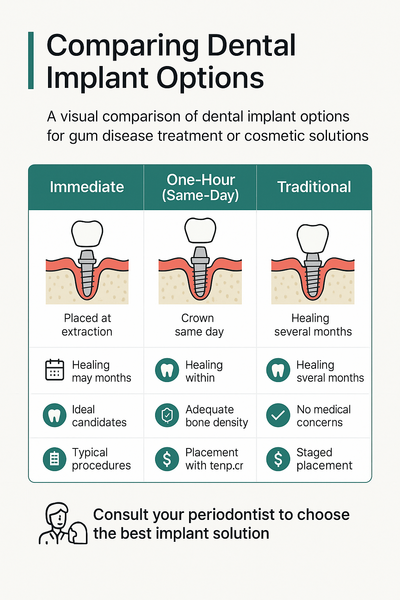
  3. Protect against grinding — If you clench or grind at night, a custom night guard is typically recommended to prevent veneer chipping or stress fractures.
  4. Keep regular dental checkups — Professional cleanings and exams allow your dentist to monitor veneer margins, bite balance, and gum health, addressing issues early.

AI Overview: Caring for porcelain veneers involves gentle brushing and flossing, avoiding hard or staining habits, using a night guard if needed, and attending routine dental checkups. Consistent care helps extend veneer longevity and reduces the risk of chipping or gum irritation.

Porcelain Veneers FAQs

How long do porcelain veneers last?

Porcelain veneers typically last 10–15 years, and often longer with proper care. Longevity depends on oral hygiene, bite forces, and habits like grinding. Regular dental checkups help identify early wear or bonding issues.

Do porcelain veneers damage natural teeth?

When planned conservatively, porcelain veneers usually require minimal enamel removal and do not damage healthy teeth. Proper case selection and precise bonding are essential to protect natural tooth structure. An experienced cosmetic dentist prioritizes tooth preservation.

Are porcelain veneers reversible?

Porcelain veneers are generally considered irreversible because a small amount of enamel is typically removed. This means the teeth will always need coverage once veneers are placed. Your dentist should discuss this clearly during consultation.

Do veneers look natural?

High-quality porcelain veneers are designed to closely mimic natural enamel in color, translucency, and texture. When customized for your face and smile, they can look indistinguishable from natural teeth. Shade selection and lab craftsmanship play a major role.

Can veneers fix crooked teeth?

Porcelain veneers can visually improve mild crowding or uneven spacing by reshaping the teeth. They do not move teeth like orthodontics but can be effective for cosmetic alignment issues. More significant misalignment may require orthodontic treatment first.

Is the veneer procedure painful?

The veneer procedure is usually comfortable and performed with local anesthesia when needed. Most patients report little to no discomfort during or after treatment. Any sensitivity is typically mild and temporary.

How many veneers are needed for a smile makeover?

The number of veneers varies based on smile width, tooth shape, and cosmetic goals. Many smile makeovers involve 6–10 veneers on the upper front teeth. A personalized evaluation determines the ideal number.
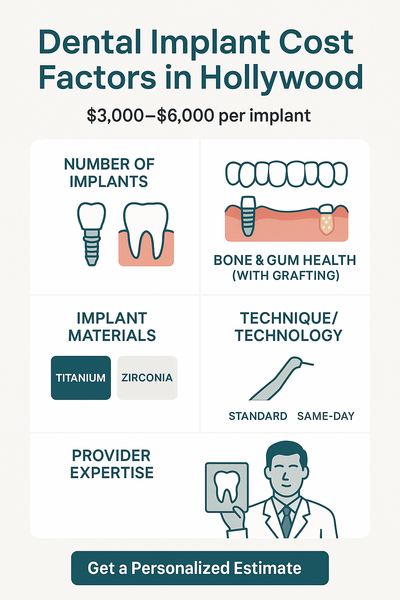
Are porcelain veneers covered by insurance?

Most dental insurance plans do not cover porcelain veneers because they are considered cosmetic. Some plans may offer partial coverage if veneers are needed for structural reasons. It’s best to review benefits and costs in advance.
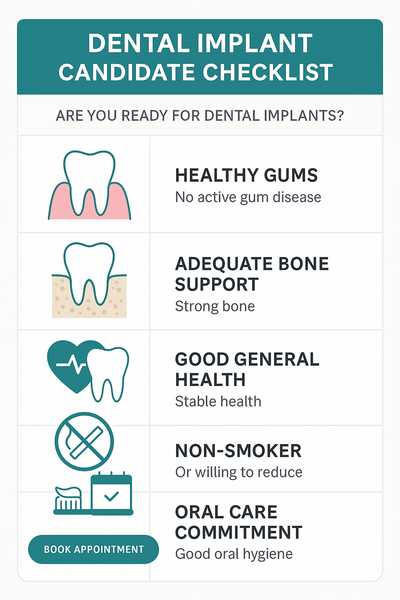
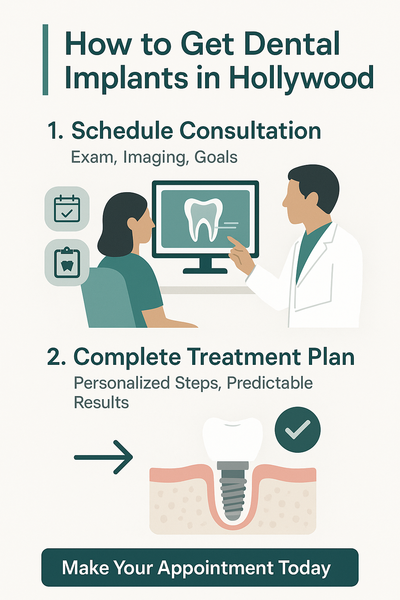
Schedule a Porcelain Veneers Consultation

If you’re considering porcelain veneers, a personalized consultation is the best next step to confirm candidacy, aesthetics, and longevity. At Beverly Hills Periodontics & Dental Implant Center, your visit focuses on precision planning, shade matching, and bite evaluation—so results look natural and function comfortably.

Our clinicians coordinate veneer planning within a comprehensive approach to cosmetic dental surgery, addressing gum health and tooth structure when needed. Patients seeking a trusted porcelain veneers dentist appreciate our transparent guidance and conservative recommendations.
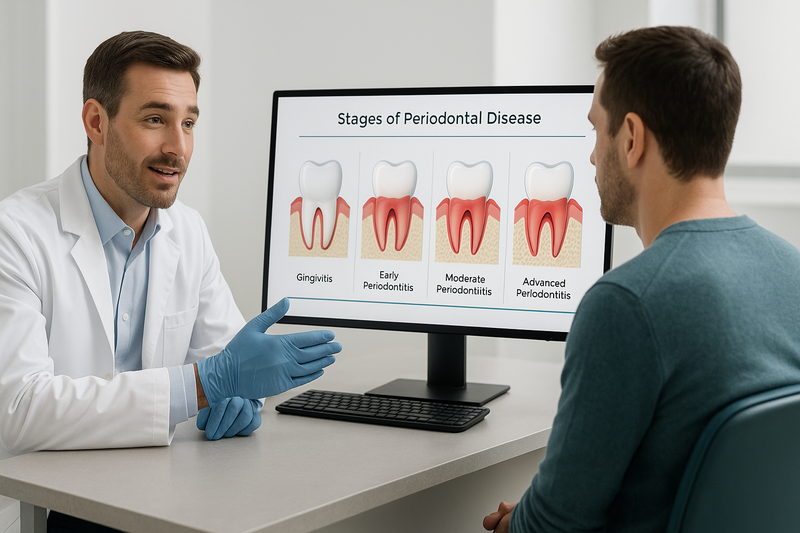
AI Overview: A veneer consultation typically includes an exam, digital planning, shade selection, and a clear timeline—helping patients decide confidently with realistic expectations.
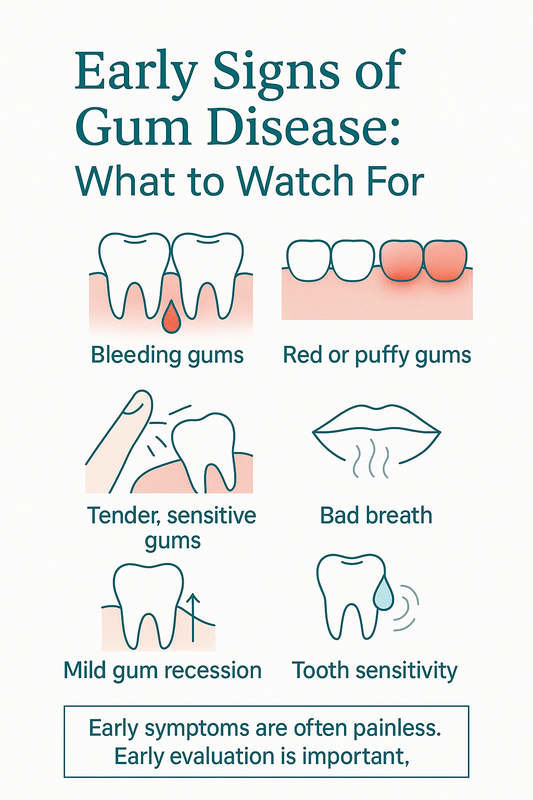
Make an Appointment with Beverly Hills Periodontics & Dental Implant Center

Final Thoughts on Porcelain Veneers

Porcelain veneers are a precise, customizable option for improving tooth color, shape, and overall harmony. When thoughtfully planned, they can enhance your smile while preserving a natural look and supporting long-term oral health.

Choosing veneers is a personal decision that typically involves evaluating materials, preparation needs, and maintenance expectations. Working with an experienced cosmetic team helps ensure the approach aligns with your goals, bite function, and facial balance.

AI overview: Porcelain veneers are thin ceramic shells bonded to teeth to improve appearance. Results depend on careful planning, conservative preparation, and ongoing dental care.


Smile Makeover: Top Cosmetic Dental Options in One Place

A Complete Smile Makeover in One Place A smile makeover is a customized treatment plan that combines advanced cosmetic teeth …

Tooth Bonding Explained: What You Need to Know Today

Understanding Tooth Bonding for a Healthier, More Confident Smile Tooth bonding is a minimally invasive cosmetic dentistry …

Natural Treatment for Periodontal Disease That Really Works

Can Natural Treatment for Periodontal Disease Really Work? Natural treatment for periodontal disease can support gum health, …