

Composite Bonding Cost Explained: How Much Will It Be?
Understanding Composite Bonding Costs at a Glance
Composite bonding cost varies because treatment is customized, material- and skill-dependent, and influenced by the tooth’s condition rather than a one-size price.
If you’re wondering how much is composite bonding, it helps to know that cosmetic dentistry pricing typically reflects case complexity, aesthetic goals, and clinical expertise. Composite bonding teeth procedures are often more affordable than veneers, but costs can differ from patient to patient.
- Number of teeth treated — single-edge repairs differ from multi-tooth smile enhancements.
- Complexity and prep — chips, gaps, discoloration, or reshaping needs affect time and technique.
- Material quality — advanced composite resins improve durability and aesthetics.
- Provider experience & location — cosmetic precision and California market factors matter.
AI Overview: Cosmetic bonding cost is guided by how many teeth are bonded, treatment complexity, material quality, and provider expertise—so estimates are individualized rather than fixed.
Read on for a clearer breakdown of what influences composite dental bonding cost and how to plan confidently.
Table of Contents
- What Is Composite Bonding and What Does It Fix?
- Benefits That Influence the Cost–Value Equation
- The Composite Bonding Procedure and Its Impact on Cost
- How Much Does Composite Bonding Cost?
- Composite Bonding vs. Veneers and Other Options
- Is Composite Bonding Worth the Cost for You?
- How to Budget for Composite Bonding Treatment
- Composite Bonding Cost FAQs
- Get a Personalized Composite Bonding Cost Estimate
- Final Thoughts on Composite Bonding Cost
What Is Composite Bonding and What Does It Fix?
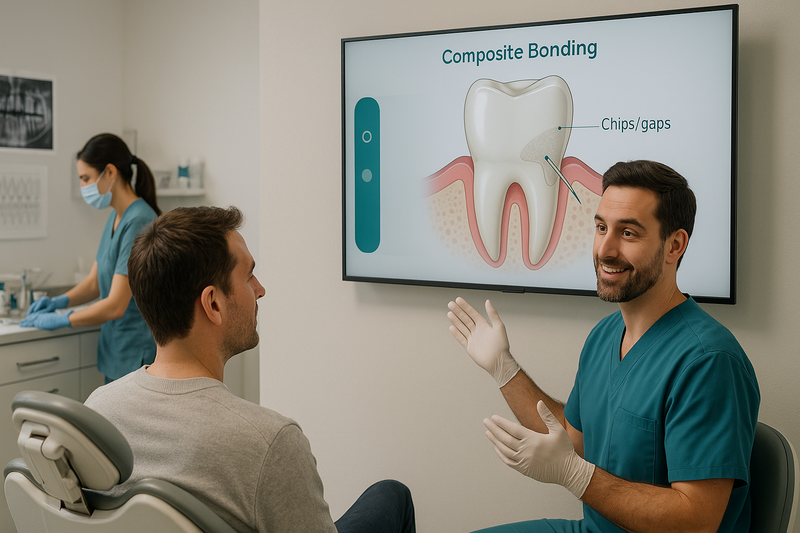
Composite bonding is a cosmetic dental procedure where tooth-colored resin is applied, shaped, and hardened to repair or improve the appearance of teeth.
When people research composite bonding cost, they’re often weighing a conservative, same-day option for cosmetic fixes. The resin bonds directly to natural enamel, so preparation is minimal and anesthesia is often unnecessary. Because it’s customizable chairside, pricing can vary by tooth, material quality, and the complexity of the correction.
Composite bonding dental treatments are commonly considered within cosmetic dental surgery options, alongside veneers and whitening. It’s typically more affordable upfront than porcelain restorations, though longevity and maintenance can influence long-term value.
Common Dental Issues Treated with Composite Bonding
- Chipped or cracked teeth — Small chips are usually quick to repair, keeping cosmetic bonding cost lower.
- Gaps between teeth — Closing minor spaces may require more resin and shaping, which can affect how much composite bonding costs.
- Discoloration or stains — Bonding can mask spots that don’t respond to whitening.
- Minor alignment issues — Subtle reshaping can improve symmetry without orthodontics.
- Worn edges — Rebuilding enamel can restore length and aesthetics.
AI overview: Composite bonding uses tooth-colored resin to fix chips, gaps, stains, and minor shape issues. Costs vary by tooth count, complexity, and material, making it a flexible, conservative cosmetic solution.
Benefits That Influence the Cost–Value Equation
When patients compare composite bonding cost to other cosmetic options, many focus on value rather than the lowest price. Composite bonding often delivers noticeable aesthetic improvements with fewer appointments, less invasiveness, and lower upfront investment than alternatives like veneers or crowns.
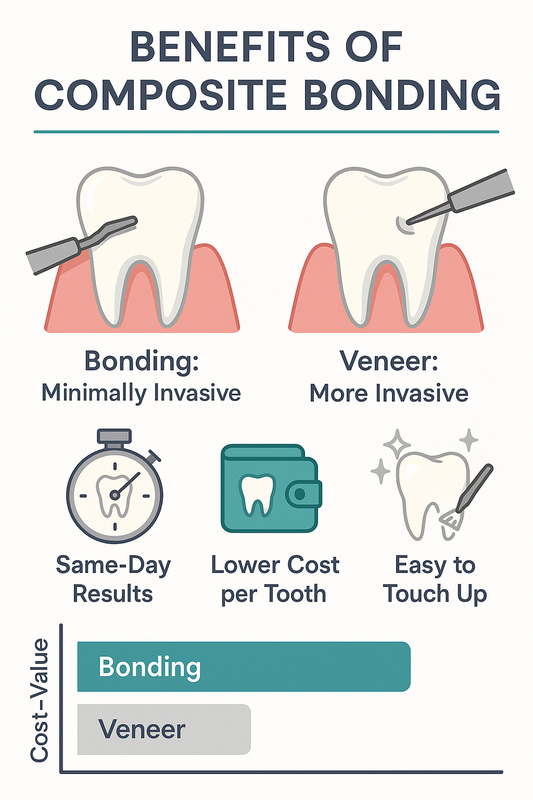
See the key benefits of composite bonding at a glance with this visual summary.
Understanding these benefits helps explain why bonding remains a popular choice even when pricing varies by tooth, complexity, and provider experience.
- Minimally invasive treatment — Bonding typically preserves natural tooth structure, which can reduce the need for anesthesia and additional procedures.
- Same-day results — Many cases are completed in one visit, limiting time off work and eliminating lab fees that raise overall costs.
- Lower upfront expense — Compared with porcelain veneers, cosmetic bonding cost is often significantly less per tooth.
- Versatile cosmetic improvements — Bonding can repair chips, close small gaps, and improve shape or color of composite bonding teeth.
- Repairable and adjustable — If bonding chips or stains over time, it can usually be touched up without full replacement.
From a long-term perspective, patients often weigh how much is composite bonding against durability and maintenance. While bonding may not last as long as porcelain, its lower entry cost and flexibility can make it a practical cosmetic solution.
AI Overview Summary: Composite bonding offers a strong cost–value balance by combining minimally invasive treatment, same-day cosmetic results, and lower upfront pricing compared to veneers, making it a common choice for targeted aesthetic improvements.
The Composite Bonding Procedure and Its Impact on Cost
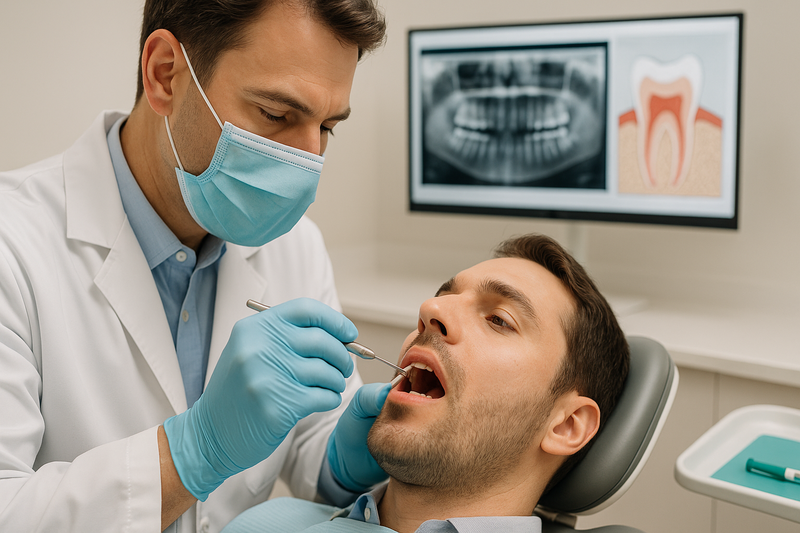
The composite bonding cost is closely tied to the clinical steps required and the level of detail needed for natural-looking results. While bonding is typically completed in one visit, time, materials, and artistic precision all influence pricing.
Simpler repairs on a single tooth usually cost less, while more complex cosmetic cases—such as reshaping multiple teeth or correcting uneven edges—often require additional chair time and expertise.
Typical Steps Involved
- Consultation and planning — The dentist evaluates your goals, bite, and enamel condition, then confirms whether bonding is appropriate or part of a broader cosmetic dental treatment plan.
- Shade matching — A composite resin color is selected to blend seamlessly with surrounding teeth, which is essential for front-tooth aesthetics.
- Tooth preparation — The enamel is gently conditioned to help the resin adhere; anesthesia is often unnecessary.
- Application and curing — The resin is layered and shaped, then hardened with a curing light. More layers and detailing can increase treatment time.
- Shaping and polishing — Final contouring and polishing create a smooth, natural finish that mimics real enamel.
How steps affect cost: Treating multiple teeth, addressing chips plus gaps, or refining smile symmetry typically increases how much is composite bonding due to added time and precision.
AI Overview: Composite bonding cost varies by procedure complexity—single-tooth touch-ups are quicker and less expensive, while multi-tooth cosmetic bonding requires more time, skill, and finishing.
How Much Does Composite Bonding Cost?
Composite bonding cost in the U.S. typically ranges from $300 to $800 per tooth, depending on clinical and cosmetic variables rather than a fixed price list.
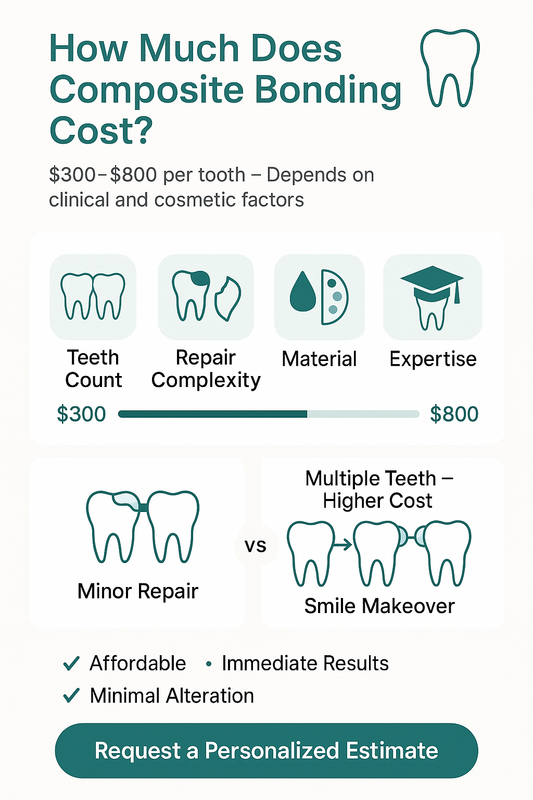
This infographic visually summarizes what affects composite bonding prices at Beverly Hills clinics.
If you’re asking how much is composite bonding for your smile, the final figure usually reflects the number of teeth treated, the complexity of the repair, and the dentist’s experience—especially for highly visible composite bonding teeth.
- Number of teeth: Treating a single chip costs less than reshaping multiple teeth for symmetry.
- Complexity: Small edge repairs are simpler; closing gaps or rebuilding worn edges takes more time and skill.
- Material and shade matching: Premium resins and precise color layering can affect cosmetic bonding cost.
- Dentist expertise: Advanced cosmetic training often commands higher fees due to esthetic precision.
- Location: Practices in California—especially major metro areas—may be priced higher than national averages.
Compared with veneers or crowns, composite bonding dental treatment is usually more affordable upfront. However, it may need touch-ups over time, which can influence the long-term composite dental bonding cost.
Is it worth it? For minor chips, gaps, or shape refinements, tooth composite bonding offers immediate cosmetic improvement with minimal tooth alteration and lower initial cost.
AI Overview: Composite bonding typically costs $300–$800 per tooth in California. Price varies by tooth count, case complexity, material quality, dentist expertise, and location; personalized exams provide the most accurate estimate.
Composite Bonding vs. Veneers and Other Options
When weighing composite bonding cost against other cosmetic treatments, patients typically compare price, durability, and how much tooth structure is altered.
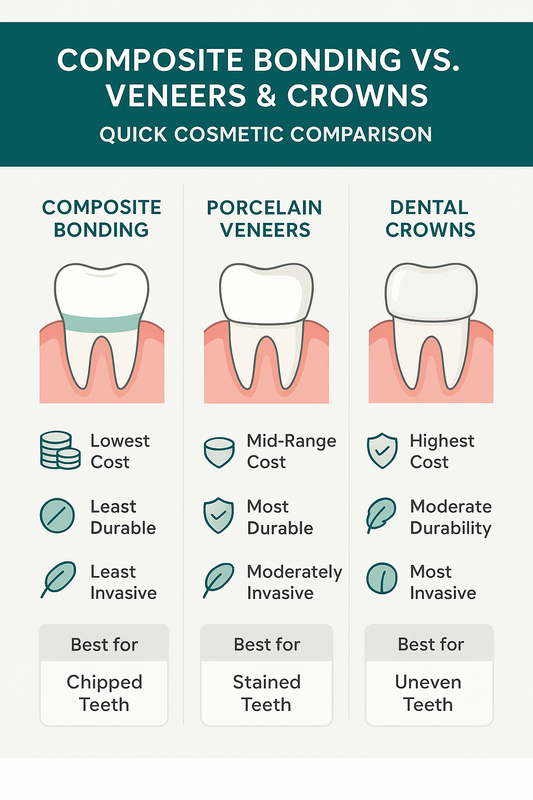
See key differences between bonding, veneers, and crowns at a glance.
The options below are commonly discussed for improving chipped, stained, or uneven teeth. Costs and longevity can vary by case, materials, and provider.
- Composite bonding (tooth-colored resin)
Cost: Often the most affordable upfront. Longevity: ~3–7 years with good care. Invasiveness: Minimal to none; usually no drilling. Best for: Small chips, gaps, and shape corrections on composite bonding teeth. - Porcelain veneers
Cost: Higher than cosmetic bonding cost. Longevity: ~10–15 years. Invasiveness: Enamel removal is typical. Best for: More dramatic, long-term cosmetic changes. - Dental crowns
Cost: Comparable to or higher than veneers. Longevity: ~10–15+ years. Invasiveness: Significant reshaping of the tooth. Best for: Teeth with structural damage or large restorations. - Teeth whitening
Cost: Lower to moderate. Longevity: Months to a few years. Invasiveness: None. Best for: Color improvement only; does not fix chips or gaps.
Patients considering veneers or crowns sometimes explore broader cosmetic dental treatment options when bonding isn’t sufficient.
AI overview: Composite bonding dental treatment usually has the lowest initial cost and least invasiveness, while veneers and crowns cost more but last longer and handle complex cosmetic needs.
Is Composite Bonding Worth the Cost for You?
Deciding whether the composite bonding cost makes sense depends on your goals, oral health, and expectations for longevity and maintenance. Use this quick checklist to see if cosmetic bonding aligns with what you want—and to avoid surprises.
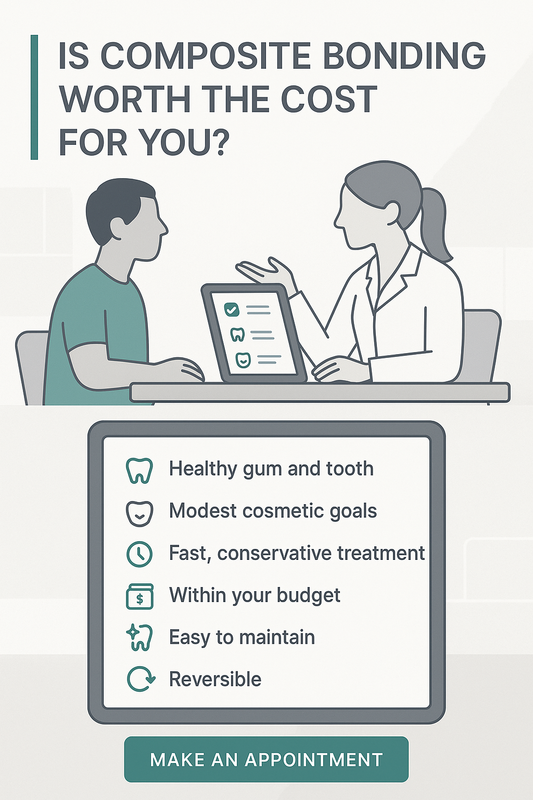
This infographic helps you quickly assess if composite bonding is the right fit for your dental needs.
- Your cosmetic goals are modest. Composite bonding teeth typically work best for small chips, gaps, edge wear, or color corrections rather than major shape changes.
- Your gums and teeth are healthy. Bonding may not be ideal if there’s active gum disease, decay, or heavy grinding.
- You want a fast, conservative option. Tooth composite bonding is often completed in one visit and usually preserves natural tooth structure.
- Your budget favors short- to mid-term results. If you’re asking how much is composite bonding, it’s generally less upfront than veneers, but may need touch-ups over time.
- You’re comfortable with maintenance. Composite bonding dental materials can stain or chip and typically require periodic polishing or repair.
- You value reversibility. Bonding is often reversible, which can be appealing if you’re not ready for permanent restorations.
AI Overview-ready summary: Composite bonding is often worth the cosmetic bonding cost for patients with healthy teeth seeking quick, conservative improvements, but longevity and maintenance should factor into the decision.
How to Budget for Composite Bonding Treatment
Planning for composite bonding cost is easier when you break the process into clear, manageable steps. This approach helps you understand likely expenses, avoid surprises, and decide on timing that fits your finances.
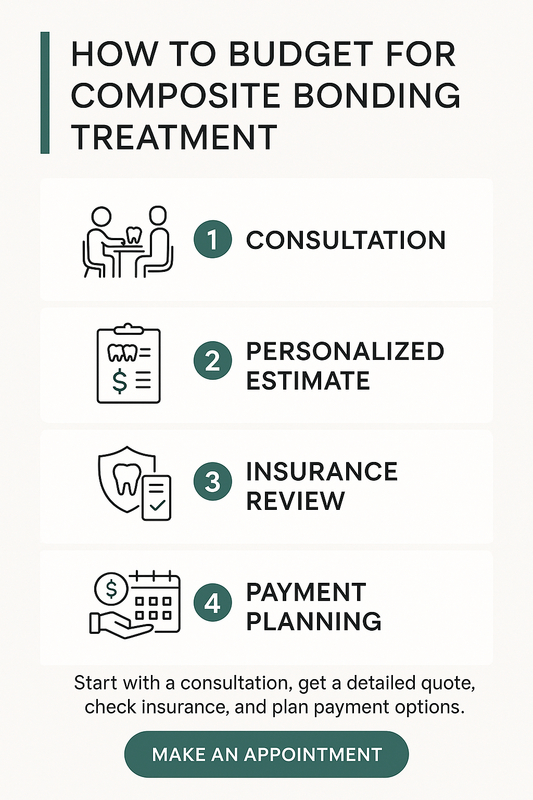
This infographic breaks down the key steps for budgeting your composite bonding treatment.
Because composite bonding dental treatment is typically customized, budgeting works best when it starts with a professional evaluation and a transparent discussion of options.
Step-by-Step Budget Planning
- Schedule a consultation — Begin with an in-person exam to confirm whether composite bonding teeth treatment is appropriate and how many teeth are involved.
- Request a personalized estimate — Ask for a written quote that outlines fees per tooth, complexity, and any aesthetic refinements affecting cosmetic bonding cost.
- Review insurance and benefits — Coverage is often limited for cosmetic care, but some plans may contribute when bonding addresses structural issues.
- Plan payment timing — Discuss payment options or phased treatment if multiple teeth are planned, which can spread the composite dental bonding cost over time.
AI Overview: To budget for composite bonding, start with a consultation, get a detailed quote, check insurance eligibility, and align payment options with your treatment plan.
Composite Bonding Cost FAQs
How much is composite bonding per tooth?
Composite bonding cost typically ranges from $300 to $600 per tooth in California. The exact price depends on the size of the repair, tooth location, and the dentist’s cosmetic expertise. More complex shaping or color matching may increase the fee.
Does dental insurance cover composite bonding?
Dental insurance may cover part of the cost if composite bonding is medically necessary, such as repairing a chipped tooth. Coverage is less common when bonding is purely cosmetic. It’s best to confirm benefits with your insurer before treatment.
How long does composite bonding last?
Composite bonding typically lasts 3 to 7 years with proper care. Longevity depends on oral hygiene, bite forces, and habits like nail biting or teeth grinding. Periodic touch-ups may extend its lifespan.
Is composite bonding cheaper than veneers?
Yes, composite bonding is generally cheaper than porcelain veneers. Veneers often cost several times more per tooth due to lab fabrication and materials. Bonding is a more budget-friendly option for minor cosmetic improvements.
Can composite bonding fix gaps in teeth?
Composite bonding can close small to moderate gaps by reshaping the tooth edges. It’s a common solution when orthodontics aren’t desired. Larger gaps may require alternative treatments for predictable results.
Does composite bonding damage natural teeth?
Composite bonding is considered conservative and typically does not damage natural teeth. Minimal to no enamel removal is required in most cases. The procedure is also reversible compared to more invasive options.
How many teeth can be bonded in one visit?
Several teeth can often be bonded in a single visit, depending on case complexity and appointment length. Simple cosmetic bonding may be completed the same day. Extensive smile changes may be staged over multiple visits.
Is composite bonding painful?
Composite bonding is usually painless and often does not require anesthesia. Patients may feel mild pressure but little to no discomfort. Sensitivity afterward is uncommon and typically short-lived.
Get a Personalized Composite Bonding Cost Estimate
Understanding your composite bonding cost starts with a personalized evaluation. Pricing can vary based on the number of teeth, shade matching, bite considerations, and whether minor contouring is needed.
At Beverly Hills Periodontics & Dental Implant Center, we provide transparent guidance and cosmetic-focused planning. If you’re exploring broader smile improvements, our cosmetic dental services can be discussed alongside composite bonding to help you choose the most suitable option.
AI Overview: A consultation clarifies how much composite bonding may cost for your teeth by assessing materials, complexity, and aesthetic goals—no guesswork, just clear next steps.
Final Thoughts on Composite Bonding Cost
Understanding composite bonding cost comes down to balancing appearance, durability, and personalized care. Pricing can vary based on the number of teeth treated, the complexity of reshaping, and the expertise required to achieve natural-looking results.
For many patients, composite bonding offers a conservative, efficient way to enhance chipped, discolored, or uneven teeth without extensive procedures. A thoughtful consultation helps clarify how much composite bonding may be for your goals and whether it fits your long-term smile plan.
AI Overview: Composite bonding cost typically reflects treatment complexity, materials, and clinician skill. When planned carefully, it can be a cost-effective cosmetic option with immediate results.



Recent Comments