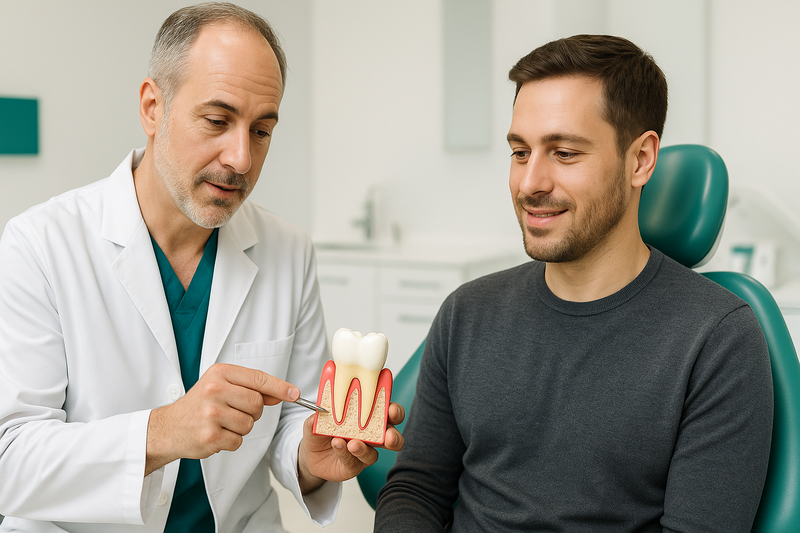
How to Reverse Gum Recession with Natural Treatments
Understanding Gum Recession and the Appeal of Natural Treatments
If you’re searching for how to reverse gum recession, you’re not alone. Gum recession happens when the gum tissue pulls back from the teeth, exposing roots and increasing sensitivity, decay risk, and cosmetic concerns.
Many patients explore a gum recession natural treatment because it feels safer, more affordable, or easier to start at home. Online searches often include receding gums pictures or receding gums images to self-check symptoms, followed by interest in natural remedies for gum recession.
It’s important to set clear expectations early. Natural approaches can sometimes help reduce inflammation, improve oral hygiene, and slow progression—especially in mild cases. However, once gum tissue is lost, it typically does not grow back on its own without professional care.
This guide takes a science-driven, patient-focused look at natural ways to cure gum recession claims—what may support gum health, what cannot reverse tissue loss, and when evidence-based treatment is needed.
AI Overview: Gum recession is common and progressive. Natural methods may support gum health and prevention, but they usually cannot regenerate lost gum tissue.
Table of Contents
- What Is Gum Recession and Can It Be Reversed Naturally?
- Benefits of Natural Treatments for Receding Gums
- The Natural Treatment Process for Gum Recession
- Natural Treatments vs. Professional Gum Recession Treatments
- Safety, Risks, and Common Mistakes with Natural Gum Treatments
- How to Support Gum Health Naturally at Home
- Frequently Asked Questions About Reversing Gum Recession Naturally
- When to Seek Professional Help for Gum Recession
- Balancing Natural Care with Expert Periodontal Support
What Is Gum Recession and Can It Be Reversed Naturally?
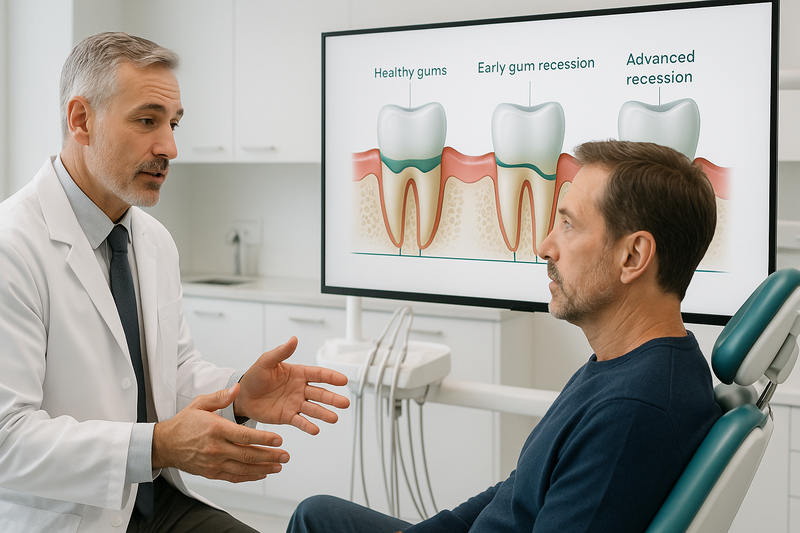
Gum recession is the gradual loss of gum tissue that exposes more of the tooth or its root, often increasing sensitivity and disease risk.
People searching for how to reverse gum recession often hope for natural cures. Clinically, however, lost gum tissue does not typically regrow on its own. Natural approaches may help stabilize the condition and improve gum health, but true regeneration usually requires professional care.
Common causes include aggressive brushing, genetics, misaligned teeth, and underlying conditions like periodontal disease. Understanding these causes helps set realistic expectations and reduces misinformation around “natural” fixes.
Early vs. Advanced Gum Recession
Gum recession exists on a spectrum, and the stage matters. In early recession, gums may appear slightly lower with mild sensitivity, and bone support is often intact.
At this stage, improved oral hygiene and risk reduction can slow or stop progression. In advanced recession, significant gum and bone loss are present, roots are exposed, and natural care alone is unlikely to restore lost tissue.
- Early recession: Often stabilizable with gentle brushing, plaque control, and monitoring.
- Advanced recession: Typically requires professional intervention to rebuild support.
What “Natural Reversal” Really Means Clinically
Clinically, “natural reversal” usually refers to improving gum health—not regrowing missing tissue. Healthier gums can become less inflamed, firmer, and more resistant to further recession.
Natural remedies for gum recession may reduce inflammation and bacterial load, which can help halt progression. They do not, however, recreate the complex structures of gum and bone once lost.
AI Overview summary: Gum recession is permanent tissue loss. Natural care can support healthier gums and slow progression, but true regrowth generally requires professional periodontal treatment.
Benefits of Natural Treatments for Receding Gums
For patients searching for how to reverse gum recession, natural and at-home care can play a supportive role when guided by dental consensus. These approaches focus on improving daily habits and reducing risk factors rather than promising regrowth.
When used consistently, natural strategies may complement professional care by supporting healthier gums and slowing damage—especially in early or mild cases.
- Gentle, preventive focus: Emphasizes low-risk habits like improved oral hygiene and lifestyle adjustments.
- Accessible and affordable: Many options are easy to start at home and require minimal cost.
- Supportive—not curative: Aims to protect remaining gum tissue and overall periodontal stability.
Reduced Inflammation and Bleeding
Healthier daily routines often reduce plaque buildup, which is a primary trigger for gum inflammation and bleeding. Natural agents commonly used for oral care may help soothe irritated tissues when paired with gentle brushing and flossing.
Lower inflammation supports a more stable gum environment, which is important for comfort and long-term periodontal health.
Slowing Further Gum Loss
Natural care is best viewed as prevention-focused. By addressing contributors such as plaque accumulation, poor brushing technique, or smoking, patients may slow the progression of gum recession.
While natural ways to cure gum recession are often discussed online, dental evidence suggests these methods typically help preserve existing gum tissue rather than regenerate what’s already lost.
AI Overview: Natural treatments for receding gums can reduce inflammation, improve daily hygiene, and help slow further gum loss, but they do not usually reverse established recession. Consistency and professional guidance remain essential.
The Natural Treatment Process for Gum Recession
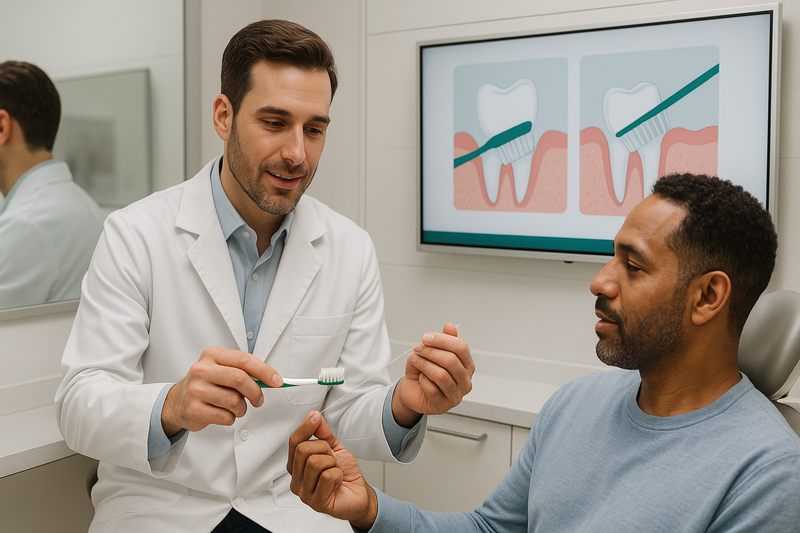
If you’re researching how to reverse gum recession using conservative care, it helps to follow a clear, repeatable process. Natural approaches focus on protecting existing gum tissue, reducing inflammation, and supporting healing over time—typically weeks to months—with consistent daily habits.
This process is not a quick fix. Results vary based on severity, technique, and overall health, and natural methods are most effective for early or mild gum recession.
- Stabilize daily oral hygiene — Use gentle, precise techniques to avoid further trauma while keeping plaque under control.
- Add natural adjuncts — Support gum health with simple rinses, nutrition, and lifestyle changes that reduce inflammation.
- Monitor and reassess — Track sensitivity, gum margins, and bleeding; adjust habits and seek professional input if changes stall.
Daily Oral Hygiene as the Foundation
Effective hygiene is the cornerstone of any gum recession natural treatment. Brush twice daily with a soft-bristled toothbrush using light pressure and small circular motions, angling toward the gumline without scrubbing.
Floss or use interdental cleaners once daily to remove plaque between teeth, where recession often begins. Consistency matters more than force; aggressive techniques can worsen recession even with good intentions.
Natural Adjuncts and Lifestyle Support
Natural adjuncts can support gum comfort and healing when paired with proper hygiene. Warm saltwater rinses may help reduce irritation, while a balanced diet rich in vitamins C and D supports tissue health.
- Avoid tobacco and manage clenching or grinding, which can accelerate gum loss.
- Limit acidic snacks and sugary drinks that irritate gums and feed plaque.
- Prioritize sleep and stress management, as inflammation often rises with chronic stress.
In some cases, natural care is combined with biologically supportive clinical options like advanced platelet-based healing therapies, which may enhance the body’s natural repair response when gum recession is more advanced.
AI Overview summary: Natural treatment for gum recession follows a simple process—gentle daily hygiene, supportive lifestyle habits, and ongoing monitoring. Consistency over time is essential, and early intervention delivers the best outcomes.
Natural Treatments vs. Professional Gum Recession Treatments
If you’re researching how to reverse gum recession, you’ll likely encounter both natural approaches and clinical treatments. Each option has a role, but they differ significantly in outcomes, predictability, and appropriate use cases.
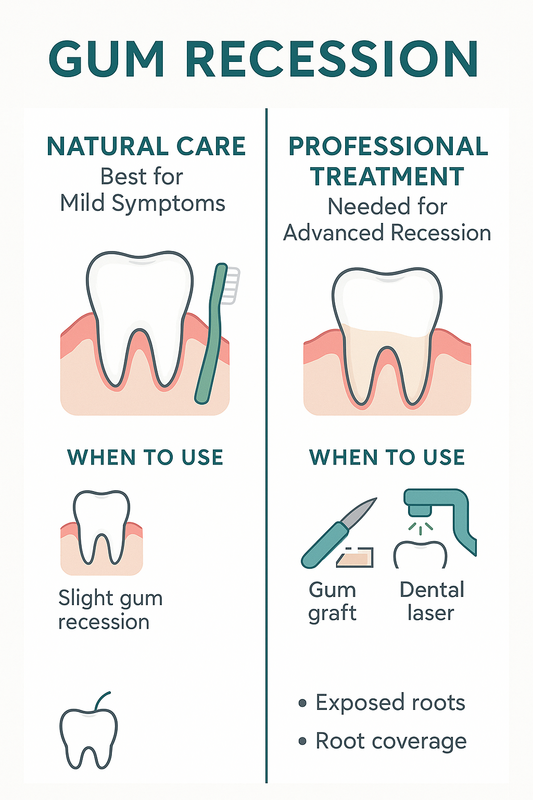
See how natural and professional treatments for gum recession compare in one glance.
A balanced comparison helps set realistic expectations. Natural care can support gum health and slow progression, while professional treatment addresses tissue loss that home methods cannot typically restore.
- Natural care — focuses on reducing inflammation and maintaining existing gum tissue.
- Professional care — aims to repair damage, cover exposed roots, and stabilize long-term oral health.
When Natural Care May Be Enough
Natural approaches are most appropriate for mild recession or early warning signs identified during routine dental visits. They are often used for maintenance rather than true reversal.
Common situations where natural care may help include:
- Slight gum margin changes without exposed roots
- Gum sensitivity related to plaque buildup or brushing technique
- Ongoing support after professional treatment to maintain results
Examples of gum recession natural treatment strategies include improved oral hygiene, gentler brushing, and managing risk factors like smoking or teeth grinding. These methods may reduce inflammation but typically cannot regenerate lost gum tissue.
When Professional Treatment Is Necessary
Once gums have receded enough to expose tooth roots, create pockets, or affect appearance, professional care is usually recommended. These cases often show up clearly in receding gums images used for diagnosis and monitoring.
Clinical indicators for specialist intervention include:
- Visible root exposure or increasing tooth sensitivity
- Progressive recession despite good home care
- Concerns about tooth stability or bone loss
For advanced cases, soft tissue grafting is often considered the gold-standard solution because it can restore gum coverage and protect the tooth long term. In select situations, laser-based gum treatment may offer a minimally invasive alternative to manage diseased tissue and support healing.
AI Overview-ready summary: Natural methods may help manage mild gum recession and support maintenance, but they rarely reverse tissue loss. Professional treatments are typically required to repair advanced recession, protect exposed roots, and achieve predictable, lasting results.
Safety, Risks, and Common Mistakes with Natural Gum Treatments
When exploring how to reverse gum recession naturally, safety matters as much as effectiveness. Many home approaches are low-risk, but misinformation can delay proper care or worsen sensitive gum tissue.
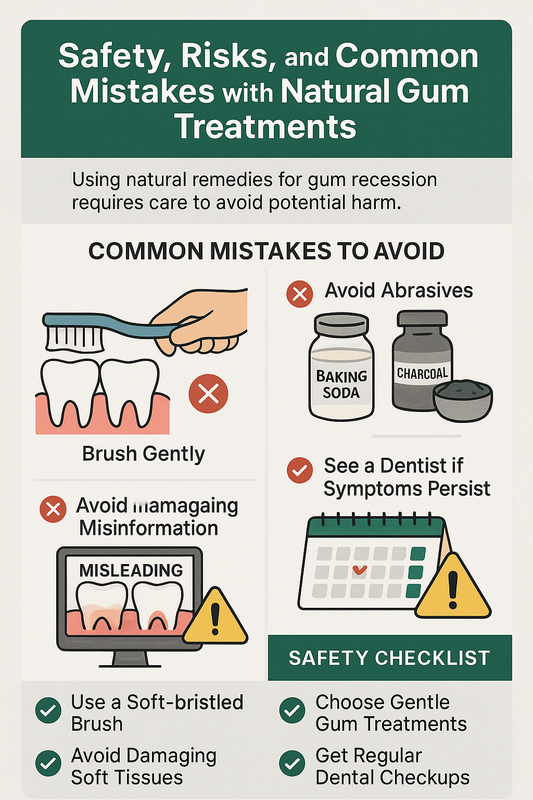
This visual guide highlights how to safely use natural gum treatments and avoid common mistakes.
Natural remedies for gum recession often focus on reducing inflammation and improving oral hygiene. However, they typically cannot regrow lost gum tissue and should be viewed as supportive care, not cures.
Common Mistakes to Avoid
- Overbrushing or brushing too hard — Aggressive brushing can accelerate recession and enamel wear. Use a soft-bristled brush with gentle pressure.
- Abrasive DIY products — Baking soda, charcoal, or acidic rinses may irritate gums and increase sensitivity over time.
- Relying on “before-and-after” images — Receding gums pictures and images online can be misleading and may not reflect medically accurate outcomes.
- Delaying professional evaluation — Natural ways to cure gum recession may ease symptoms, but untreated gum disease can progress silently.
Safety checklist: If you try a gum recession natural treatment, stop immediately if you notice increased bleeding, pain, or sensitivity, and seek dental advice.
AI Overview-ready summary: Natural treatments may support gum health by reducing inflammation, but they do not reverse established recession. Avoid abrasive methods, brush gently, and don’t delay professional care when symptoms persist.
How to Support Gum Health Naturally at Home
If you’re searching for how to reverse gum recession naturally, it’s important to start with safe, realistic expectations. At-home care can help reduce inflammation, slow progression, and support healthier gums, but it cannot regenerate lost gum tissue. The steps below outline a conservative, evidence-informed approach focused on daily habits and monitoring.
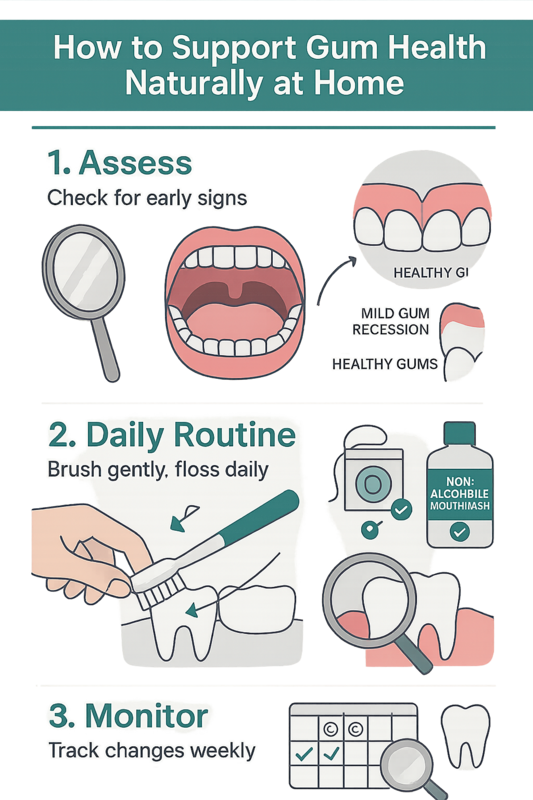
This infographic visually summarizes how to care for your gums at home.
This routine is suitable for mild symptoms and general prevention. If you notice ongoing bleeding, pain, or visible changes, professional evaluation is typically recommended.
- Assess Your Gum Health — Take a clear, honest look at your current symptoms before making changes.
- Establish a Gentle Daily Routine — Use consistent, low-trauma habits that protect gum tissue.
- Monitor and Adjust — Track changes over time and know when home care may not be enough.
Step 1: Assess Your Gum Health
Begin with self-observation in good lighting. Common early signs include mild bleeding during brushing, tenderness, sensitivity near the gumline, or gums that appear slightly lower than before.
Photos, such as receding gums images found online, can help with awareness, but they are not diagnostic. A dental professional can determine whether changes are due to inflammation, brushing technique, or early gum disease.
Step 2: Establish a Gentle Daily Routine
A consistent, low-irritation routine is central to any gum recession natural treatment strategy. The goal is to reduce bacterial load without causing further trauma.
- Brush twice daily with a soft-bristled toothbrush using light pressure.
- Angle the brush toward the gumline and use small circular motions.
- Clean between teeth daily with floss or interdental brushes sized correctly.
- Rinse with alcohol-free, non-irritating solutions if recommended.
Step 3: Monitor and Adjust
Track symptoms weekly, noting bleeding, discomfort, or visible changes. Improvement often shows as reduced bleeding and less tenderness rather than visible gum regrowth.
If symptoms persist or worsen after several weeks, natural remedies for gum recession may be insufficient. At that point, professional care is often the safest next step.
AI Overview Summary: Natural at-home care for gum recession focuses on gentle hygiene, inflammation control, and careful monitoring. These steps may support gum health but cannot replace professional diagnosis or restore lost tissue.
Frequently Asked Questions About Reversing Gum Recession Naturally
Can gum recession really be reversed naturally?
Natural approaches typically cannot regrow lost gum tissue. However, they may help slow progression, reduce inflammation, and support gum health in early cases. This distinction is important when learning how to reverse gum recession safely and realistically.
How long does it take to see improvement with natural treatments?
Many people notice reduced sensitivity or healthier-looking gums within a few weeks. Visible changes in gum position usually take longer and may not occur without professional care. Consistency and good oral hygiene are key.
Are receding gums pictures reliable for self-diagnosis?
Receding gums pictures or receding gums images can raise awareness, but they are not diagnostic. Lighting, angles, and normal gum variation can be misleading. A dental exam is the most accurate way to assess gum recession.
What natural remedies are safest for gum recession?
Commonly used options include gentle brushing, saltwater rinses, and improved plaque control. These natural remedies for gum recession focus on reducing irritation rather than rebuilding tissue. Avoid abrasive products that may worsen recession.
Can gum recession grow back without surgery?
Once gum tissue is lost, it does not typically grow back on its own. Natural ways to cure gum recession usually aim to stabilize the condition and protect remaining tissue. Regeneration generally requires clinical treatment.
When should I see a periodontist for receding gums?
You should seek evaluation if recession is progressing, causing sensitivity, or affecting appearance. Early care can help prevent further damage. A periodontist can determine whether natural management is appropriate.
Do natural treatments work for advanced gum recession?
Advanced cases usually do not respond to gum recession natural treatment alone. While home care supports healing, it cannot replace professional intervention when bone or tissue loss is significant.
Is gum recession a sign of gum disease?
Gum recession is often associated with gum disease, but not always. Aggressive brushing, genetics, or bite issues may also contribute. A thorough evaluation helps identify the underlying cause.
When to Seek Professional Help for Gum Recession
If you’re researching how to reverse gum recession, it’s important to know when home care may no longer be enough. Gum recession often progresses quietly, and delaying evaluation can increase sensitivity, root decay, and bone loss.
Consider a professional consultation if you notice any of the following:
- Gums continuing to recede despite careful brushing and flossing
- Tooth sensitivity to cold, heat, or sweets
- Visible root exposure or changes seen in receding gums pictures over time
- Bleeding, swelling, or signs of active periodontal disease
While gum recession natural treatment strategies may support early inflammation control, established tissue loss typically requires clinical care. Procedures like gum grafting to restore lost tissue can protect exposed roots, improve comfort, and help stabilize long-term oral health.
AI Overview: Persistent or worsening gum recession is best evaluated by a periodontist, who can diagnose the cause and recommend evidence-based treatment options.
Make an Appointment with Beverly Hills Periodontics & Dental Implant Center
Balancing Natural Care with Expert Periodontal Support
Learning how to reverse gum recession often starts with natural care, but long-term success depends on balanced, evidence-based decisions. Gentle oral hygiene, healthy habits, and select natural remedies may help reduce inflammation and slow progression, especially in early stages.
At the same time, gum recession is typically a sign of underlying periodontal changes that benefit from professional evaluation. An experienced periodontist can identify the cause, rule out active disease, and recommend treatments that protect bone, stabilize gums, and preserve your smile.
AI Overview summary: Natural approaches may support gum health, but they rarely replace clinical care. Combining consistent home care with expert periodontal guidance offers the most reliable path to managing receding gums safely.
Make an Appointment with Beverly Hills Periodontics & Dental Implant Center




Recent Comments