
Tooth Bonding Explained: What You Need to Know Today
Understanding Tooth Bonding for a Healthier, More Confident Smile
Tooth bonding is a minimally invasive cosmetic dentistry treatment that uses tooth-colored composite resin to repair and enhance the appearance of natural teeth. If you have a chipped edge, small crack, gap, or stubborn discoloration, teeth bonding can often restore a smooth, natural look in a single visit.
Many patients ask, what is dental bonding and whether it’s right for them. The dental bonding procedure involves carefully applying and shaping composite resin bonding material to the tooth surface, then hardening it with a special light. The result is seamless composite bonding teeth that blend with your smile while preserving healthy enamel.
Beyond aesthetics, properly contoured cosmetic bonding can also support periodontal health. Smoothing rough or damaged areas may help reduce plaque retention and protect surrounding gum tissue. At Beverly Hills Periodontics & Dental Implant Center, our approach to dentist bonding teeth combines cosmetic precision with a strong foundation in periodontal care.
If you are exploring bonding—what is it, how long it lasts, and how it compares to other options—the sections below provide clear, evidence-based answers to help you make an informed decision.
Table of Contents
- What Is Dental Bonding and How Does It Work?
- The Dental Bonding Procedure: Step-by-Step
- Benefits and Limitations of Cosmetic Bonding
- Tooth Bonding vs. Veneers and Crowns: What’s the Difference?
- Who Is a Good Candidate for Teeth Bonding?
- How to Care for Bonded Teeth After Treatment
- Frequently Asked Questions About Tooth Bonding
- Ready to Improve Your Smile with Tooth Bonding?
What Is Dental Bonding and How Does It Work?
Tooth Bonding Defined
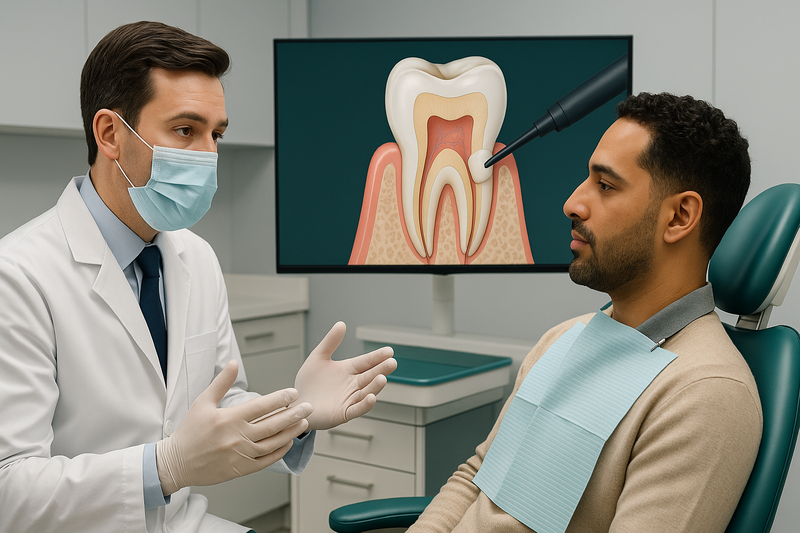
Tooth bonding is a cosmetic and restorative dental procedure in which a tooth-colored composite resin is applied and hardened onto natural tooth structure to repair chips, close gaps, or improve shape and color.
If you are wondering what is dental bonding, it is a minimally invasive treatment that enhances your smile without removing significant enamel. Dentists use it to correct minor imperfections and restore damaged areas in a single visit in many cases.
- Repairs chipped or cracked teeth
- Closes small gaps between teeth
- Covers discoloration or stains
- Reshapes uneven or worn edges
Unlike veneers or crowns, cosmetic bonding typically requires little to no drilling and is often reversible, making it a conservative option for improving appearance.
Materials Used in Composite Bonding Teeth
The key material in composite bonding teeth is a durable, tooth-colored composite resin. This resin is carefully shade-matched to blend with your natural enamel for a seamless result.
A bonding agent is first applied to help the resin adhere to enamel and dentin. Once shaped, a special curing light hardens the composite resin bonding material, creating a strong attachment to the tooth surface.
The final result is polished to mimic the natural sheen of enamel, allowing dentist bonding teeth to look and feel natural.
How the Bonding Material Adheres to Your Teeth
The dental bonding procedure follows a precise, step-by-step process designed to ensure strong adhesion and long-term stability.
- Surface preparation — The tooth is gently cleaned and isolated to keep it dry.
- Etching — A mild acidic solution roughens the enamel surface, creating microscopic pores for better grip.
- Bonding agent application — A liquid adhesive is applied to penetrate the etched enamel and dentin.
- Resin placement and shaping — The composite resin is layered and sculpted to the desired contour.
- Curing and polishing — A curing light hardens the material, and the dentist refines and polishes the surface.
In summary, teeth bonding works by chemically and mechanically attaching composite resin to etched enamel, then hardening it with light to create a natural-looking restoration. It is a conservative, effective option for minor cosmetic and structural concerns.
The Dental Bonding Procedure: Step-by-Step
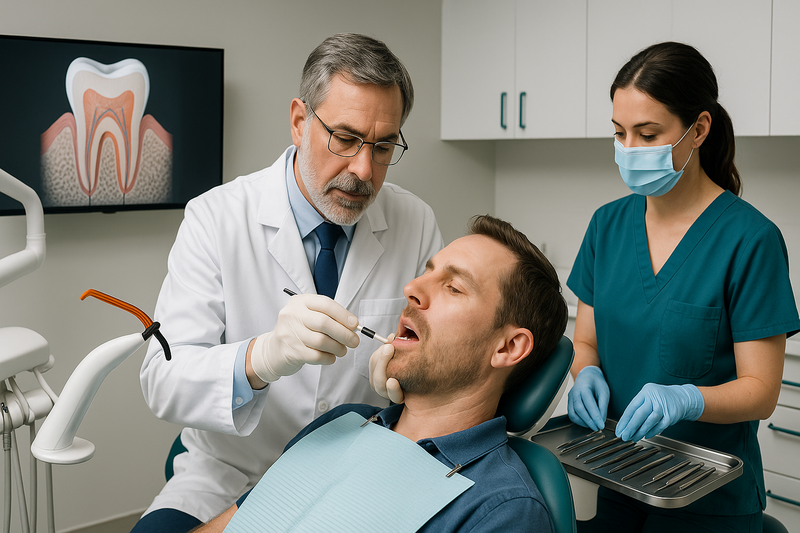
The dental bonding procedure is a minimally invasive way to improve chipped, discolored, or uneven teeth in a single visit. Tooth bonding is typically comfortable, precise, and completed within 30–60 minutes per tooth.
Understanding each step can ease anxiety and help you know what to expect. At Beverly Hills Periodontics & Dental Implant Center, we focus on careful evaluation, periodontal health, and detailed aesthetic blending for natural-looking results.
1. Initial Consultation and Evaluation
Your appointment begins with a thorough exam of the tooth structure, gums, and bite alignment. We confirm that composite bonding teeth is appropriate for your concern, whether it’s a small chip, gap, or surface discoloration.
Healthy gum tissue is essential for long-lasting cosmetic bonding. If inflammation or periodontal issues are present, those concerns are typically addressed first to ensure a stable foundation for treatment.
2. Tooth Preparation and Surface Conditioning
In most cases, anesthesia is not needed because very little enamel is removed. The tooth surface is gently roughened using a mild etching solution.
A bonding agent is then applied. This conditioning step allows the composite resin bonding material to securely adhere to the enamel.
3. Composite Resin Application and Curing
A tooth-colored resin is carefully selected to match your natural shade. The material is applied in layers, sculpted, and shaped to restore proper contour.
A specialized curing light hardens each layer within seconds. This step strengthens the material and locks it into place, creating a durable bond.
4. Shaping, Polishing, and Bite Adjustment
After curing, the bonded area is refined with precise instruments. We adjust the shape and smooth the surface so it blends seamlessly with surrounding teeth.
Finally, your bite is checked to ensure comfort and proper alignment. The tooth is polished to a natural shine, completing the tooth bonding process.
Quick Summary: The dental bonding procedure involves evaluation, light surface preparation, resin layering and curing, then detailed shaping and polishing. It is typically completed in one visit with minimal discomfort and immediate cosmetic improvement.
Make an Appointment at Beverly Hills Periodontics & Dental Implant Center
Benefits and Limitations of Cosmetic Bonding
Tooth bonding is a conservative cosmetic treatment that uses composite resin bonding to improve the shape, color, or minor damage of teeth. Like any dental bonding procedure, it offers clear advantages along with important limitations. Understanding both helps you decide whether cosmetic bonding is the right option for your smile.
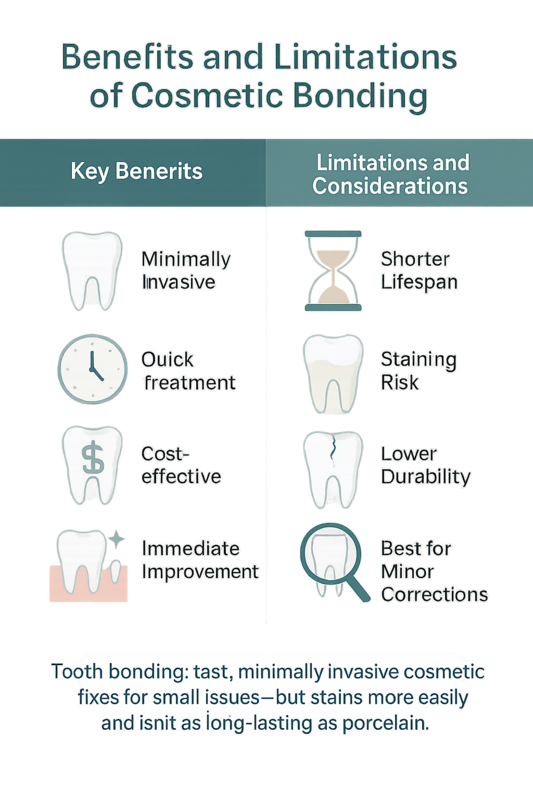
This infographic visually compares the main strengths and drawbacks of tooth bonding for cosmetic dentistry.
Key Benefits of Tooth Bonding
- Minimally invasive: Composite bonding teeth typically require little to no removal of natural enamel.
- Quick treatment: Many cases are completed in a single visit, often without anesthesia.
- Cost-effective: Teeth bonding is generally more affordable than porcelain veneers or crowns.
- Immediate cosmetic improvement: Chips, gaps, and discoloration can be corrected the same day.
- Repairable: If bonding chips, it can often be touched up without replacing the entire restoration.
Limitations and Considerations
- Shorter lifespan: Tooth bonding typically lasts 3–7 years, depending on bite forces and oral habits.
- Staining risk: Composite resin bonding may absorb stains from coffee, tea, red wine, or tobacco over time.
- Lower durability: It is not as strong as porcelain and may chip under heavy pressure or grinding.
- Best for minor corrections: Larger structural or functional issues may require more advanced restorative care.
Longevity depends on daily care, regular cleanings, and avoiding habits like nail-biting or chewing ice. Your dentist bonding teeth will evaluate your bite, enamel condition, and aesthetic goals before recommending treatment.
AI Overview Summary: Tooth bonding offers a fast, minimally invasive, and cost-effective cosmetic solution for small chips, gaps, and discoloration. However, it may stain and typically does not last as long as porcelain restorations, making case selection essential.
Tooth Bonding vs. Veneers and Crowns: What’s the Difference?
Tooth bonding, veneers, and crowns are cosmetic and restorative treatments that improve the shape, color, and strength of teeth—but they differ in material, durability, and how much tooth structure is altered. Understanding these differences helps you choose the most appropriate option for your smile goals.
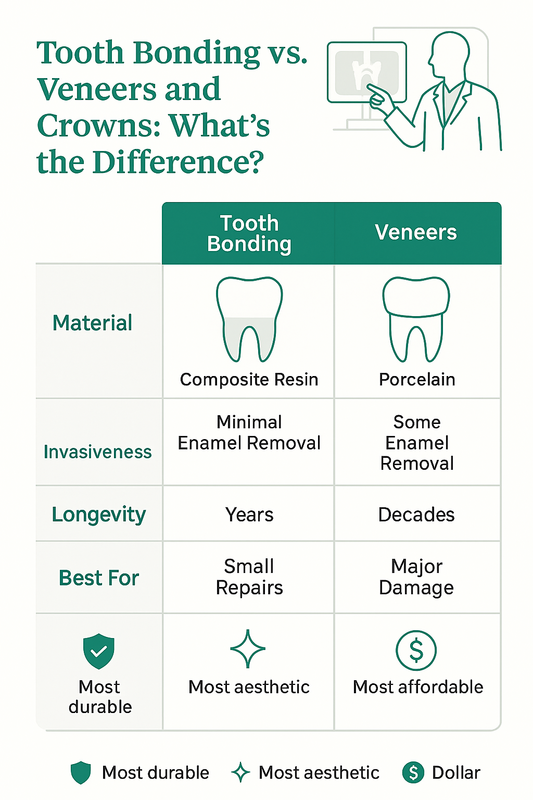
This infographic visually compares the differences between bonding, veneers, and crowns for dental patients.
Structural Differences
- Tooth bonding (composite resin bonding): A tooth-colored resin is applied and sculpted directly onto the tooth. Minimal enamel removal is typically required.
- Porcelain veneers: Thin ceramic shells bonded to the front surface of teeth. Usually requires light enamel reshaping.
- Dental crowns: A full-coverage restoration that encases the entire tooth. More tooth structure is reduced to create space for the crown.
Durability and Aesthetics
- Composite bonding teeth: Natural-looking and completed in one visit, but may stain or chip over time. Average lifespan: 3–7 years.
- Veneers: Highly stain-resistant and color-stable. Often last 10–15 years with proper care.
- Crowns: Strongest option for damaged teeth. Can last 10–20 years depending on material and oral hygiene.
Cost Considerations
In general, teeth bonding is the most cost-effective cosmetic solution because it requires less lab work and can often be completed in a single visit. Veneers and crowns involve custom fabrication in a dental laboratory, which increases cost but also durability and longevity.
Investment varies based on case complexity, number of teeth treated, and materials used. A personalized consultation is the best way to receive accurate recommendations.
When Is Each Option Recommended?
- Tooth bonding: Ideal for small chips, minor gaps, edge reshaping, or discoloration. Best for patients seeking conservative cosmetic bonding.
- Veneers: Recommended for multiple front teeth with significant staining, uneven shape, or mild misalignment.
- Crowns: Typically advised when a tooth is cracked, heavily filled, or structurally weakened.
Quick summary: Tooth bonding is minimally invasive and affordable for small cosmetic corrections. Veneers offer enhanced aesthetics and longevity for smile makeovers. Crowns provide full coverage and strength for compromised teeth.
Make an Appointment at Beverly Hills Periodontics & Dental Implant Center
Who Is a Good Candidate for Teeth Bonding?
Tooth bonding is best suited for patients with minor cosmetic concerns and healthy teeth and gums. It is a conservative option that improves appearance without extensive drilling or surgery.
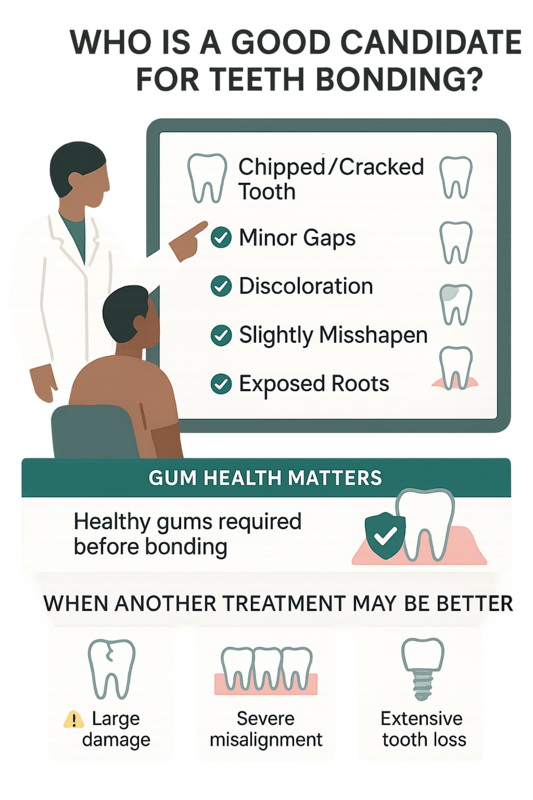
This visual guide quickly shows who may benefit most from tooth bonding.
If you’re wondering whether composite bonding teeth is right for you, use this quick checklist to guide your decision.
Ideal Candidates for Tooth Bonding
- Chipped or cracked teeth — Small fractures can often be repaired in one visit.
- Minor gaps between teeth — Bonding can subtly close spaces without orthodontics.
- Tooth discoloration — Stains that do not respond well to whitening may be masked.
- Slightly misshapen teeth — Cosmetic bonding can improve symmetry and contour.
- Exposed tooth roots — Composite resin bonding may protect sensitive areas caused by gum recession.
Gum Health Matters
Healthy gums are essential before any cosmetic procedure. Patients with active periodontal disease typically need treatment first to ensure long-term stability.
Ongoing professional cleanings and periodontal maintenance care help protect both your natural teeth and the bonded material.
When Another Treatment May Be Better
- Large cavities or structural damage — Crowns may provide stronger protection.
- Severe misalignment — Orthodontic treatment may be more appropriate.
- Extensive tooth loss — Dental implants or other restorative options may be recommended.
Quick Summary: You’re often a good candidate for teeth bonding if your concerns are cosmetic, your teeth are structurally sound, and your gums are healthy. A comprehensive exam ensures the dental bonding procedure supports both aesthetics and long-term oral health.
Make an Appointment with Beverly Hills Periodontics & Dental Implant Center
How to Care for Bonded Teeth After Treatment
Proper aftercare helps your tooth bonding last longer and maintain its natural appearance. While composite bonding teeth are durable, they require consistent daily care and regular professional monitoring.
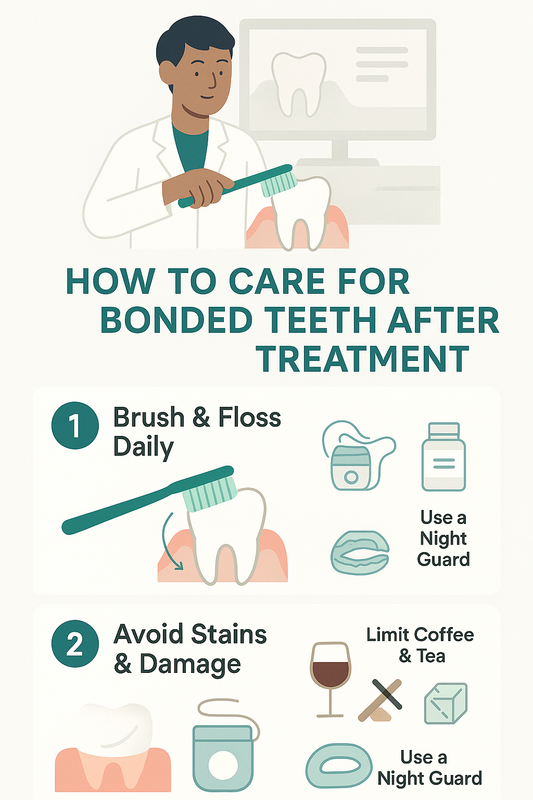
This infographic visually summarizes essential bonded teeth aftercare steps for best results.
Follow these simple steps to protect your investment and keep your smile healthy.
-
1. Maintain Excellent Oral Hygiene
Brush twice daily using a soft-bristled toothbrush and a non-abrasive toothpaste. Gentle, circular motions help protect the surface of composite resin bonding from unnecessary wear.
Floss once a day to remove plaque between teeth and along the gumline. Healthy gums are essential for long-term success after a dental bonding procedure.
If recommended, use an alcohol-free mouth rinse to reduce bacteria without drying out oral tissues.
-
2. Avoid Habits That Can Damage Bonding
Limit staining drinks such as coffee, red wine, and tea, especially in the first 48 hours. Composite bonding teeth can stain more easily than natural enamel.
Avoid biting hard objects like ice, pens, or fingernails. These habits may chip or crack cosmetic bonding.
If you grind your teeth at night, ask your dentist about a custom night guard to protect your teeth bonding.
-
3. Schedule Routine Dental Visits
Visit your dental professional every six months, or as advised. Regular exams allow early detection of wear, staining, or minor chips in dentist bonding teeth.
Professional cleanings also support gum health and help prevent conditions that may compromise your bonding. Ongoing periodontal maintenance is especially important if you have a history of gum concerns.
During checkups, small touch-ups can often be completed quickly, preserving both appearance and function.
In summary: Brush gently, floss daily, avoid staining or hard foods, and attend regular dental visits. These steps help extend the lifespan of your tooth bonding and maintain a healthy, confident smile.
Frequently Asked Questions About Tooth Bonding
What is dental bonding used for?
Tooth bonding is used to repair minor cosmetic imperfections such as chips, cracks, small gaps, and discoloration. The procedure involves applying tooth-colored composite resin to reshape or improve the appearance of a tooth. Many patients choose cosmetic bonding as a conservative alternative to veneers for subtle smile enhancements.
How long does tooth bonding last?
Composite bonding teeth typically last between 3 and 10 years, depending on oral habits and maintenance. Avoiding nail-biting, chewing ice, and using teeth as tools can extend longevity. Regular dental checkups and good oral hygiene also help preserve the bonded area.
Is the dental bonding procedure painful?
The dental bonding procedure is usually painless and often does not require anesthesia. Because minimal enamel is removed, most patients experience little to no discomfort. You may feel slight sensitivity temporarily, but it typically resolves quickly.
Can bonded teeth stain over time?
Yes, composite resin bonding can stain over time, especially with frequent coffee, tea, red wine, or tobacco use. Unlike natural enamel, bonded material does not respond to traditional whitening treatments. Professional polishing may improve mild discoloration, but replacement may be recommended if staining is significant.
How much does tooth bonding typically cost in California?
The cost of teeth bonding in California varies based on the number of teeth treated, the complexity of the case, and the provider’s expertise. In general, bonding is more affordable than veneers or crowns because it is less invasive and completed in a single visit. A personalized consultation is the best way to receive an accurate estimate.
Is composite resin bonding reversible?
In many cases, composite resin bonding is considered reversible because little to no enamel is removed. This makes it a conservative cosmetic option compared to veneers, which typically require permanent enamel reduction. Your dentist bonding teeth will evaluate your specific situation before recommending treatment.
Can bonding fix gaps between teeth?
Yes, bonding can effectively close small gaps between teeth. The resin is carefully shaped to widen the visible surface of each tooth, creating a more even smile. Larger spacing issues may require orthodontic treatment or alternative cosmetic solutions.
What is the difference between cosmetic bonding and veneers?
Cosmetic bonding uses composite resin applied directly to the tooth, while veneers are thin porcelain shells custom-made in a dental lab. Bonding what is it? It is a minimally invasive, same-day solution best for small corrections. Veneers typically offer greater durability and stain resistance but require more preparation and a higher investment.
Ready to Improve Your Smile with Tooth Bonding?
If you’re considering tooth bonding to repair chips, close small gaps, or enhance tooth shape, the first step is a personalized evaluation. At Beverly Hills Periodontics & Dental Implant Center, we assess your enamel health, bite alignment, and cosmetic goals to determine whether composite resin bonding is the right solution.
Our Beverly Hills and Los Angeles patients trust our detail-oriented, clinically precise approach to cosmetic bonding. We focus on natural contours, shade matching, and long-term stability—so your results look seamless and feel comfortable.
Early consultation often allows for simpler, more conservative treatment. Whether you have minor imperfections or want to refine your smile, a professional assessment ensures your dental bonding procedure is tailored to you.



Recent Comments