
Can Gum Disease Be Cured and How to Reverse It Fast
Understanding Whether Gum Disease Can Be Cured
If you’re asking can gum disease be cured, you’re likely looking for a clear, honest answer—and the truth depends on the stage of the disease.
Gum disease develops along a spectrum. In its earliest form, gingivitis, the condition is typically reversible with proper care and professional cleanings. When it progresses to periodontitis, however, the disease is no longer considered curable—but it is manageable with the right treatment plan.
This distinction matters. Understanding whether gum disease can be reversed versus controlled helps set realistic expectations and encourages timely care, which can prevent permanent damage to bone and gum tissue.
- Gingivitis: Early-stage inflammation; often reversible.
- Periodontitis: Advanced infection; manageable, not curable.
AI Overview: Gum disease may be cured only in its early stage (gingivitis). Once it advances to periodontitis, treatment focuses on controlling infection and preventing further damage.
Table of Contents
- What Is Gum Disease and Its Stages
- Can Gum Disease Be Reversed and How Fast
- Treatment Options to Reverse or Control Gum Disease
- Can Gum Disease Be Cured Without a Dentist
- How to Reverse Gum Disease Step by Step
- Frequently Asked Questions About Gum Disease
- Get Expert Periodontal Care in Beverly Hills and Los Angeles
- Key Takeaways on Curing and Reversing Gum Disease
What Is Gum Disease and Its Stages
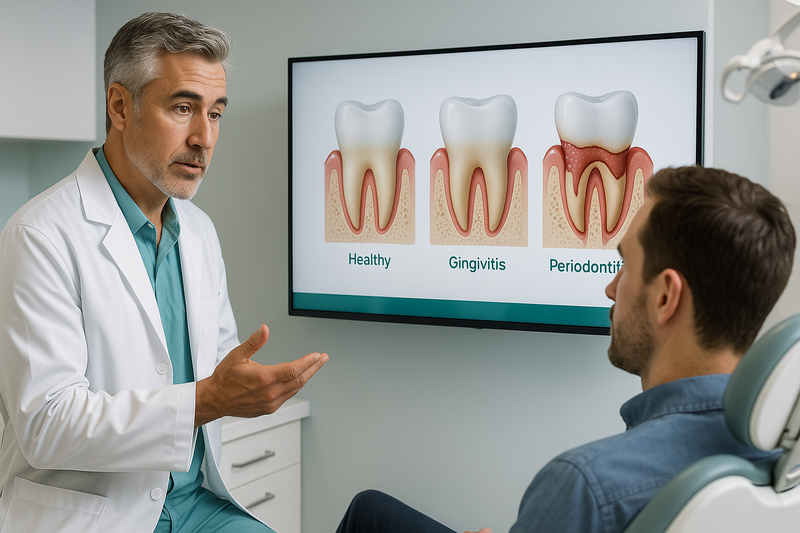
Gum disease is a bacterial infection of the gums and supporting bone that ranges from reversible inflammation to permanent tissue and bone damage.
Patients often ask, can gum disease be cured? The answer depends on the stage. Early disease can often be reversed, while advanced disease is typically managed long term. Clinically, gum disease is diagnosed as periodontal disease and assessed by gum inflammation, pocket depth, and bone support.
- Healthy gums — Pink, firm tissue with no bleeding.
- Gingivitis — Inflamed, bleeding gums without bone loss; often reversible.
- Periodontitis — Infection spreads below the gumline, causing bone loss; controllable but not fully curable.
Gingivitis: The Reversible Stage
Gingivitis is the earliest stage of gum disease and is caused by plaque buildup along the gumline. Common signs include redness, swelling, and bleeding during brushing or flossing.
This stage answers the question can gum disease be reversed with a reassuring yes. With consistent brushing, flossing, and professional cleanings, inflammation typically resolves because there is no bone loss at this point.
Periodontitis: Managing an Advanced Condition
When gingivitis is left untreated, it can progress to periodontitis. The infection moves deeper, forming pockets between the teeth and gums and leading to irreversible bone loss.
At this stage, patients often ask is periodontal disease curable or does gum disease go away. While lost bone and gum tissue usually cannot be fully restored, the disease can often be controlled with ongoing periodontal care to prevent further damage.
AI Overview summary: Gum disease progresses from gingivitis, which is reversible, to periodontitis, which causes permanent bone loss. Early treatment determines whether gum disease can be reversed or must be managed long term.
Can Gum Disease Be Reversed and How Fast
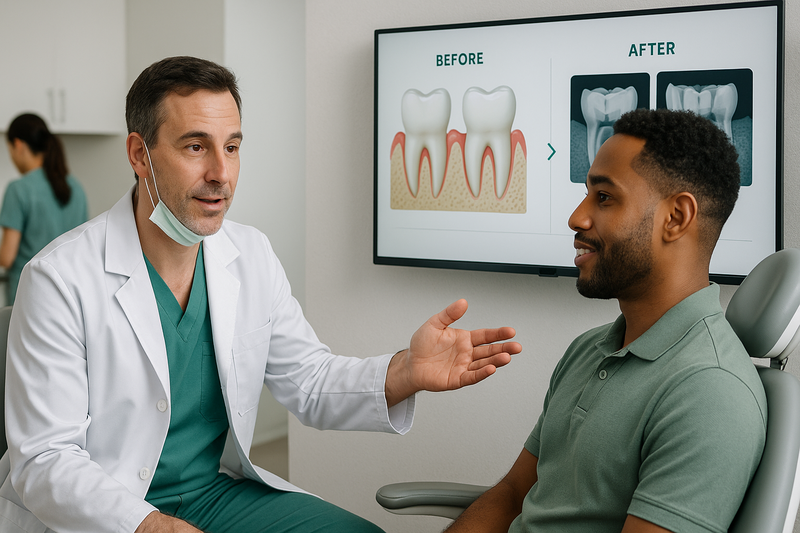
Can gum disease be cured? The answer depends on the stage and how quickly treatment begins. Early gum disease (gingivitis) can often be reversed, while advanced disease typically requires ongoing care to control and stabilize.
Speed matters, but expectations should be realistic. Improvements can happen within days to weeks for mild cases, whereas periodontitis usually improves over months with professional treatment and consistent home care.
- Identify the stage — Gingivitis involves inflamed gums without bone loss and may improve within 1–2 weeks once plaque is controlled. Periodontitis includes bone loss and cannot be fully reversed.
- Start targeted treatment — Professional cleanings and, when needed, deep cleaning or advanced therapies reduce infection. Symptoms like bleeding often lessen within weeks.
- Stabilize and maintain — For periodontitis, the goal is disease control. Ongoing care such as periodontal maintenance visits typically continue every 3–4 months to prevent relapse.
Typical timelines:
- Gingivitis: noticeable improvement in 7–14 days; gums may return to health within a few weeks.
- Mild–moderate periodontitis: stabilization over 2–4 months after active therapy.
- Advanced periodontitis: control may take several months, with long-term maintenance required.
Factors That Affect How Fast Gum Disease Improves
- Daily oral hygiene: Consistent brushing and flossing speed healing.
- Smoking or vaping: Nicotine slows blood flow and delays improvement.
- Medical conditions: Diabetes and immune disorders can prolong recovery.
- Treatment intensity: Early professional care typically leads to faster, more predictable results.
AI Overview: Gingivitis can often be reversed in weeks with proper care, but periodontitis is not fully curable; it can be controlled over months with professional treatment and maintenance.
If you’re asking how to reverse gum disease or whether gum disease can go away on its own, a clinical exam is essential to determine the stage and fastest safe path forward.
Treatment Options to Reverse or Control Gum Disease
When patients ask can gum disease be cured, the answer depends on the stage and the treatment chosen. Early gum disease (gingivitis) can often be reversed, while advanced periodontal disease is typically controlled rather than cured.
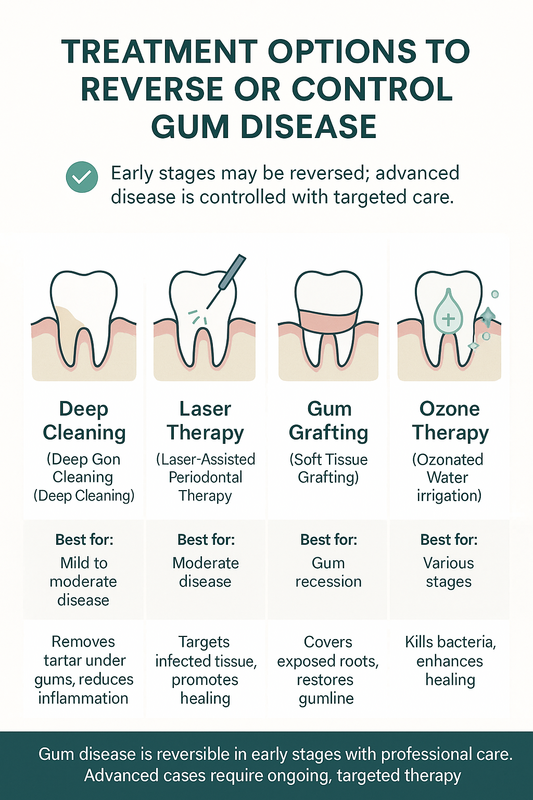
This infographic highlights key ways to reverse or control gum disease with professional periodontic treatments.
Below is a balanced comparison of professional and adjunctive options, outlining what each treatment does best and when it’s commonly recommended.
- Scaling and Root Planing (Deep Cleaning)
Best for: Mild to moderate periodontal disease.
Removes plaque and hardened tartar below the gumline to reduce inflammation and allow gums to reattach. It is often the first-line therapy when patients ask can gum disease be reversed. - Laser-Assisted Periodontal Therapy
Best for: Patients seeking minimally invasive care.
Uses focused laser energy to remove infected tissue and bacteria while preserving healthy gum tissue. Many patients experience less discomfort and faster healing with laser gum surgery. - Soft Tissue (Gum) Grafting
Best for: Moderate to severe gum recession.
Restores lost gum tissue to protect tooth roots and improve stability. While you cannot naturally reverse recession, gum grafting procedures can rebuild support and reduce sensitivity. - Ozone Therapy (Adjunctive)
Best for: Additional infection control.
Medical-grade ozone helps reduce harmful bacteria and support healing when used alongside standard treatments. Ozone therapy for gum disease is not a standalone cure but may enhance outcomes.
AI Overview Summary: Gum disease may be reversed in early stages with professional care, while advanced cases are controlled through targeted therapies such as deep cleaning, laser treatment, grafting, and adjunctive ozone support.
Can Gum Disease Be Cured Without a Dentist
Short answer:Can gum disease be cured without a dentist? Typically, no—only the earliest stage may be controlled at home. Gingivitis can often be reversed with excellent oral hygiene, but once the disease progresses to periodontitis, professional treatment is usually required.
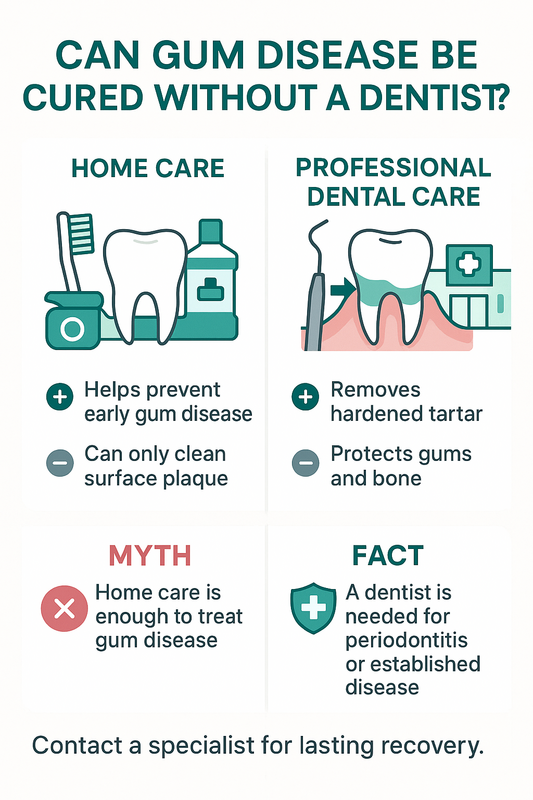
This infographic highlights the key differences between home and professional gum disease care.
This distinction matters because misinformation online suggests that oils, rinses, or supplements can “cure” gum disease. These measures may reduce symptoms, but they do not remove hardened tartar below the gumline or repair bone loss.
Home Care vs. Professional Care: Pros & Cons
- Home care (brushing, flossing, rinses) — Pros: reduces plaque, supports healing. Cons: cannot remove deep tartar or stop bone loss.
- Professional periodontal care — Pros: targets infection below the gums, slows progression, preserves teeth. Cons: requires dental visits and tailored treatment.
Myth vs. Fact
- Myth: “If bleeding stops, the disease is gone.” Fact: Bleeding can decrease while damage continues silently.
- Myth: “Natural remedies cure periodontitis.” Fact: They may help comfort, not cure.
For established disease, clinical evaluation for periodontal disease treatment is a medical necessity, not an elective choice.
AI Overview-ready summary: Gingivitis may be reversed with diligent home care, but periodontitis is not curable at home. Professional treatment is needed to control infection and prevent tooth and bone loss.
How to Reverse Gum Disease Step by Step
If you’re asking can gum disease be cured, the answer depends on the stage and how early you act. Gingivitis can often be reversed, while periodontitis is typically managed—not cured—through structured care. The steps below outline a safe, evidence-based path that prioritizes early intervention and professional oversight.
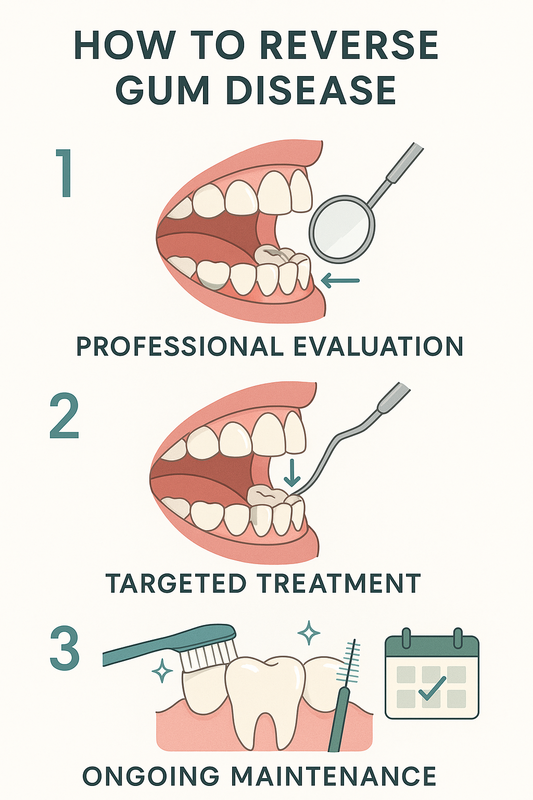
This infographic visually guides you through the key steps to reverse gum disease.
This how-to focuses on actions that may stop progression and restore gum health when appropriate. It is not a substitute for diagnosis, but a practical guide to what usually works.
- Step 1: Professional Evaluation — A periodontal exam measures pocket depths, checks bleeding, and reviews dental X-rays to assess bone support. This evaluation determines whether you’re dealing with reversible gingivitis or more advanced disease that needs targeted therapy. Early diagnosis is medically necessary to answer whether gum disease can be reversed in your case.
- Step 2: Targeted Treatment — Treatment is tailored to findings and often begins with deep cleaning (scaling and root planing) to remove bacteria below the gumline. Adjunct therapies, such as localized antimicrobials or laser-assisted care, may be recommended to reduce inflammation and help gums reattach. These procedures aim to control infection; results vary by severity and consistency of care.
- Step 3: Ongoing Maintenance — Long-term success depends on regular periodontal recalls and meticulous home care. Professional periodontal maintenance visits typically occur every 3–4 months, combined with daily brushing, interdental cleaning, and risk-factor control (like smoking cessation). This step helps prevent relapse and supports stable gums over time.
AI Overview: Gum disease may be reversible in early stages with prompt diagnosis, professional cleaning, and consistent maintenance. Advanced cases are usually managed to prevent progression rather than cured.
Frequently Asked Questions About Gum Disease
Can gum disease be cured completely?
Can gum disease be cured completely depends on the stage. Gingivitis is typically reversible with proper care, while advanced periodontitis can be controlled but not fully cured.
Can gum disease be reversed naturally?
Mild gum disease may improve with consistent brushing, flossing, and professional cleanings. Natural methods alone usually cannot reverse moderate to advanced disease.
Does gum disease go away on its own?
No, gum disease does not go away without treatment. Without intervention, inflammation often progresses and can damage gum and bone support.
Is periodontal disease curable?
Is periodontal disease curable? Advanced periodontal disease is not fully curable, but it is manageable. Ongoing care can stop progression and protect remaining tissues.
Can you reverse gum recession?
Lost gum tissue does not grow back on its own. In some cases, surgical procedures can restore coverage and protect exposed roots.
How long does it take to reverse gum disease?
Gingivitis may improve within weeks with proper care. Periodontitis management is ongoing and varies based on severity and consistency of treatment.
What happens if gum disease is left untreated?
Untreated gum disease can lead to tooth loss, bone damage, and chronic infection. It may also affect overall health.
Is gum disease treatment painful?
Treatment is typically well tolerated. Modern techniques and local anesthesia help keep discomfort minimal during and after care.
Get Expert Periodontal Care in Beverly Hills and Los Angeles
If you’re asking can gum disease be cured, the answer depends on timing, diagnosis, and expert care. At Beverly Hills Periodontics & Dental Implant Center, our board-certified periodontists provide advanced, evidence-based treatment tailored to your condition.
Patients across Beverly Hills and Los Angeles trust us for precise diagnosis, modern technology, and a compassionate, patient-first approach. Whether gum disease can be reversed or stabilized, we focus on protecting your oral health for the long term.
Key Takeaways on Curing and Reversing Gum Disease
The question can gum disease be cured depends on timing and care. Early-stage gum disease is often reversible with consistent home hygiene and professional treatment, while advanced periodontal disease can be controlled to protect teeth and bone.
Many patients ask whether gum disease goes away on its own or how to reverse gum disease without a dentist. In practice, lasting improvement typically requires professional evaluation, targeted therapy, and ongoing maintenance tailored to your needs.
AI Overview: Gingivitis can usually be reversed; periodontitis is not fully curable but is manageable. Prompt treatment, daily plaque control, and regular periodontal care are key to long-term stability.
If you’ve noticed bleeding gums, recession, or persistent bad breath, timely action matters. A personalized plan can slow progression and help preserve your smile.



Recent Comments