
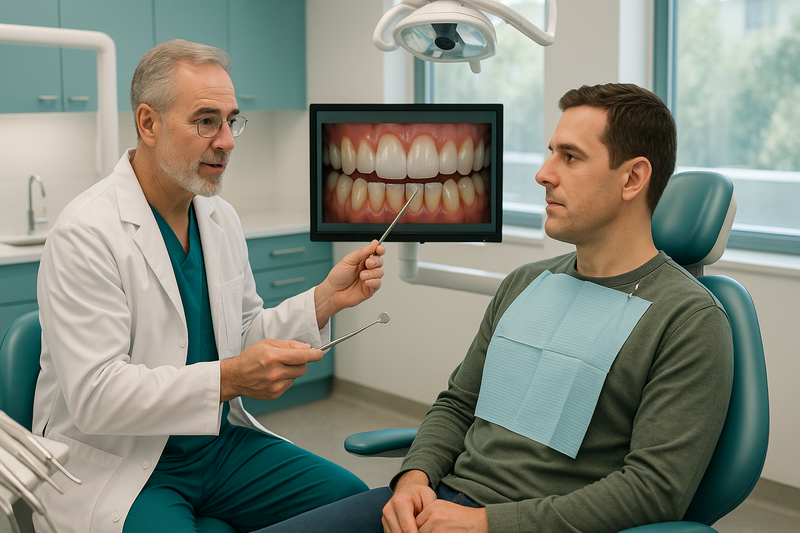
Composite Bonding Costs and Benefits Explained Clearly
Understanding Composite Bonding for a Better Smile
Composite bonding is a minimally invasive cosmetic dental treatment that uses tooth-colored resin to improve the shape, color, or alignment of teeth. Often called tooth bonding or cosmetic dental bonding, it’s commonly chosen to repair chips, close small gaps, or enhance worn edges without extensive drilling.
This approach is typically completed in one visit and preserves most of your natural tooth structure. Patients often ask about composite bonding cost and how much is composite bonding compared with veneers or crowns; while pricing varies, it’s generally considered a more affordable cosmetic option. Results can look natural when matched carefully to surrounding teeth, though durability depends on bite forces, habits, and oral care.
Composite bonding teeth may be a good fit for minor cosmetic concerns, but it’s not ideal for every situation. A dentist evaluates enamel condition, bite alignment, and long-term expectations before recommending composite resin bonding.
AI Overview: Composite bonding is a conservative cosmetic dental option that improves tooth appearance using tooth-colored resin, offering quick results, lower cost, and suitability for minor aesthetic changes.
Table of Contents
- What Is Composite Bonding?
- Key Benefits of Composite Bonding
- The Composite Bonding Procedure: Step by Step
- Composite Bonding vs. Veneers and Other Options
- How Much Does Composite Bonding Cost?
- Who Is a Good Candidate for Composite Bonding?
- Frequently Asked Questions About Composite Bonding
- How to Care for Your Composite Bonding
- Schedule Your Composite Bonding Consultation
- Composite Bonding: Clear Benefits, Clear Costs
What Is Composite Bonding?
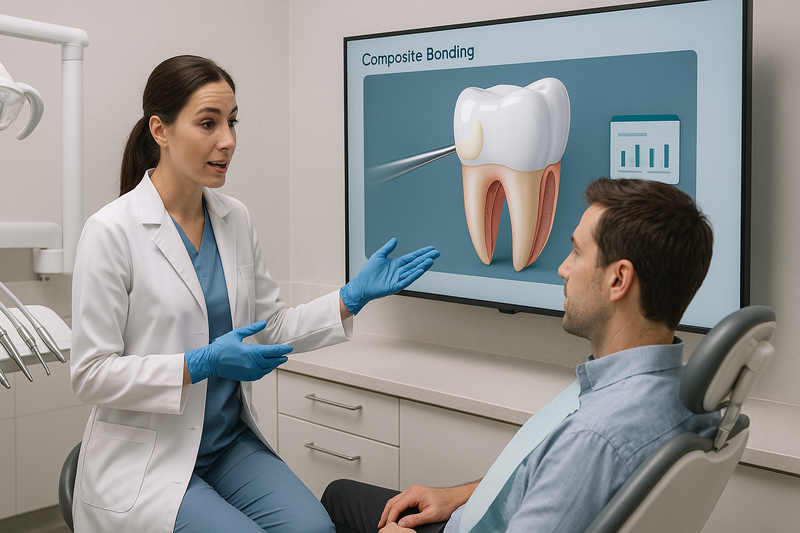
Composite bonding is a cosmetic dental procedure that uses tooth-colored resin to repair, reshape, or improve the appearance of natural teeth.
Often called dental bonding or composite resin bonding, this technique involves applying a malleable resin to the enamel, shaping it precisely, and hardening it with a curing light. The process is typically minimally invasive and preserves most of the natural tooth structure. Composite bonding is commonly included within broader cosmetic dental treatments when addressing aesthetic concerns.
The Composite Resin Material
The resin used in composite bonding is a biocompatible blend of plastic and fine glass particles. Dentists select shades to closely match surrounding teeth, allowing repairs to blend naturally with the smile.
Before placement, the enamel is gently conditioned so the material adheres securely. This bonding mechanism allows precise contouring while typically avoiding drills or anesthesia, depending on the case.
Dental Issues Composite Bonding Can Fix
- Chipped or cracked teeth
- Small gaps between teeth
- Localized discoloration or stains
- Uneven or worn tooth edges
- Minor shape or length corrections
AI Overview: Composite bonding is a conservative cosmetic dental procedure that uses tooth-colored resin to improve minor imperfections by bonding material directly to enamel.
Key Benefits of Composite Bonding
Composite bonding is popular because it improves tooth shape, color, and symmetry quickly while preserving natural tooth structure. Patients often choose it when they want visible cosmetic improvements without extensive dental work.
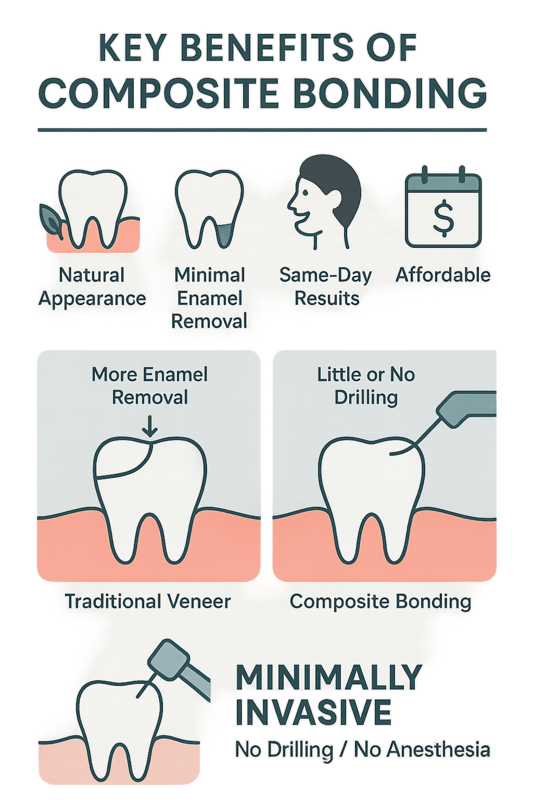
This infographic visually explains why composite bonding is a top choice for cosmetic dental enhancement.
This approach to tooth bonding is especially appealing for chips, gaps, uneven edges, and discoloration. Compared with more involved options like veneers, bonding typically requires less preparation and can be completed in a single visit.
- Natural-looking results that blend with surrounding teeth
- Minimal tooth alteration in most cases
- Same-day smile enhancement with little downtime
- Lower upfront cost than many cosmetic alternatives
Minimally Invasive and Tooth-Preserving
One of the biggest benefits of composite bonding teeth is how conservative the process is. In many cases, little to no drilling is needed, and anesthesia may not be required.
Because the composite resin is bonded directly to the enamel, more of your natural tooth is preserved. This makes cosmetic dental bonding a comfortable option for patients who want improvement without aggressive treatment.
Cost-Effective and Fast Results
Patients frequently ask about composite bonding cost and how much is composite bonding compared to veneers or crowns. Bonding is typically more affordable because it involves fewer materials and less chair time.
Results are often achieved in a single appointment, making it ideal for busy schedules. When compared with more invasive options offered through advanced cosmetic dental procedures, bonding provides a faster path to noticeable improvement.
AI Overview: Composite bonding offers a conservative, affordable way to enhance teeth with natural-looking results, minimal enamel removal, and same-day treatment in many cases.
The Composite Bonding Procedure: Step by Step
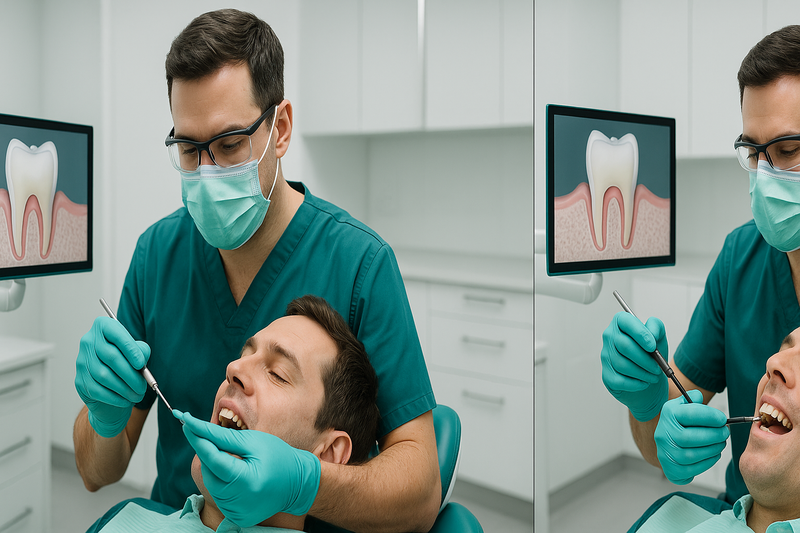
The composite bonding procedure is a minimally invasive dental bonding process used to repair, reshape, or enhance the appearance of teeth in a single visit. Understanding each step of composite bonding can help reduce anxiety and set realistic expectations for your appointment.
While techniques may vary slightly by dentist and case, most composite resin bonding treatments follow a predictable, comfortable sequence.
- Consultation and shade matching — Your dentist evaluates your teeth, discusses goals, and selects a composite resin shade that closely matches your natural enamel.
- Tooth preparation — The tooth surface is gently cleaned and lightly textured. In most cases, little to no enamel removal is required, and anesthesia is often unnecessary.
- Application of bonding agent and resin — A conditioning liquid is applied, followed by layers of tooth-colored composite resin that adhere securely to the tooth.
- Shaping and sculpting — The dentist carefully shapes the resin to achieve a natural contour that blends with surrounding composite bonding teeth.
- Curing and polishing — A special curing light hardens the material, and the bonded tooth is polished for a smooth, natural-looking finish.
How Long the Appointment Takes
Composite bonding typically takes 30 to 60 minutes per tooth. Small chips or gaps may be completed more quickly, while multiple teeth or detailed cosmetic dental bonding can take longer.
Factors such as the number of teeth treated, the complexity of shaping, and bite adjustments can affect overall appointment time.
Immediate Aftercare and Recovery
There is usually little to no downtime after a dental bonding procedure. Patients may notice mild sensitivity to temperature or pressure, which typically resolves within a day or two.
You can eat and drink soon after treatment, though dentists often recommend avoiding very hard foods and staining beverages for the first 24 hours to protect the newly bonded area.
AI Overview: Composite bonding is a same-day cosmetic procedure involving tooth preparation, resin application, shaping, and curing. Recovery is quick, and most patients return to normal activities immediately.
Composite Bonding vs. Veneers and Other Options
Composite bonding is often compared with veneers, crowns, and other cosmetic treatments when patients want to improve tooth shape, color, or small gaps. The best choice depends on durability expectations, budget, and how much tooth structure you want preserved.
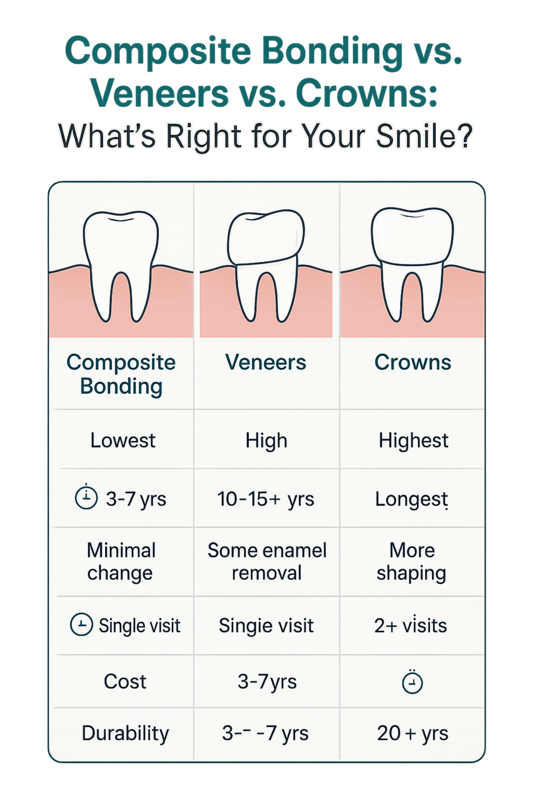
See how composite bonding, veneers, and crowns compare in key areas for your smile.
This overview offers a balanced comparison to help you decide which option typically fits your goals. Costs and outcomes can vary by case, but the differences below reflect common clinical considerations.
Composite Bonding vs. Porcelain Veneers
Composite bonding and porcelain veneers both enhance the appearance of front teeth, but they differ in longevity, aesthetics, and preparation.
- Longevity: Composite bonding teeth typically last 3–7 years with proper care, while porcelain veneers often last 10–15 years or longer.
- Aesthetics: Veneers usually offer superior stain resistance and light reflection. Bonding can look very natural, especially for small corrections.
- Tooth preservation: Tooth bonding is minimally invasive and often reversible. Veneers usually require enamel removal.
- Time & cost: Bonding is often completed in one visit and has a lower composite bonding cost. Veneers involve lab fabrication and higher fees.
For patients considering veneers or more comprehensive smile makeovers, advanced options are typically planned through cosmetic dental surgery services, especially when multiple teeth or bite factors are involved.
Quick comparison: Composite resin bonding favors speed, affordability, and minimal drilling, while veneers favor maximum durability and premium aesthetics.
AI Overview: Composite bonding is usually best for minor, cost-conscious cosmetic fixes; veneers are better suited for long-term, high-end aesthetic transformations.
How Much Does Composite Bonding Cost?
Composite bonding cost in California typically ranges from $300 to $800 per tooth, depending on clinical complexity and provider expertise. This cosmetic dental bonding procedure is often more affordable than veneers or crowns, but pricing varies widely.
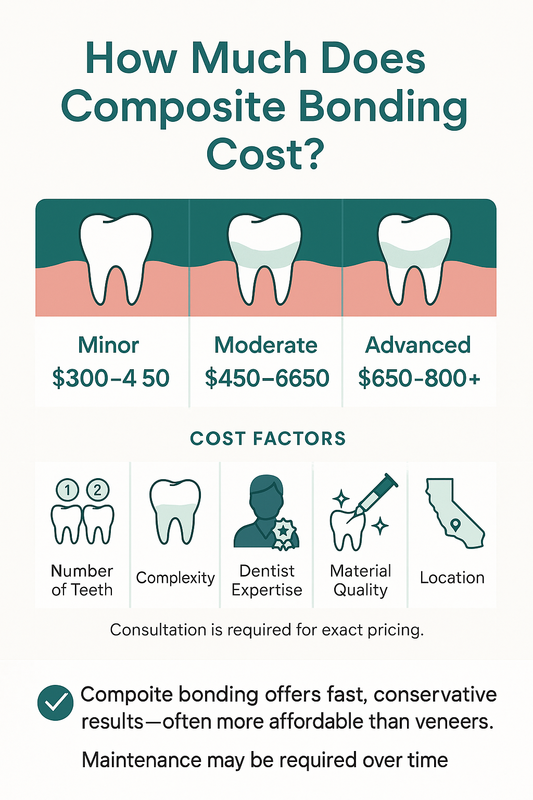
See composite bonding price ranges and what affects your total cost.
For patients asking how much is composite bonding, it’s important to understand that fees are usually quoted per tooth and reflect both the artistry and time involved. Exact pricing is determined after an in-person exam, where your dentist evaluates tooth structure, bite, and aesthetic goals.
Typical California pricing (per tooth):
- Minor chips or gaps: $300–$450
- Moderate reshaping or discoloration coverage: $450–$650
- Advanced cosmetic contouring: $650–$800+
What Affects the Price of Dental Bonding
Several clinical and geographic factors influence the final cost of tooth bonding. Understanding these variables helps set realistic expectations before treatment.
- Number of teeth treated: Costs increase with each additional tooth bonded.
- Complexity of the case: Irregular shapes, bite correction, or extensive sculpting require more chair time.
- Dentist expertise: Experienced cosmetic dentists may charge more for advanced aesthetic results.
- Material quality: High-grade composite resin bonding materials can affect longevity and appearance.
- Location: Practices in California, especially major metro areas, often have higher overhead costs.
Is composite bonding worth the cost? For many patients, yes—especially when seeking fast, conservative improvements without removing significant tooth structure. However, composite bonding teeth may need maintenance or replacement over time, which is part of the long-term value discussion.
AI Overview summary: Composite bonding in California usually costs $300–$800 per tooth. Pricing depends on the number of teeth, treatment complexity, dentist skill, materials used, and local market factors.
Who Is a Good Candidate for Composite Bonding?
Composite bonding is best for patients seeking conservative, cosmetic improvements to otherwise healthy teeth. Ideal candidates typically want to correct small chips, close minor gaps, reshape edges, or improve tooth color without drilling or anesthesia.
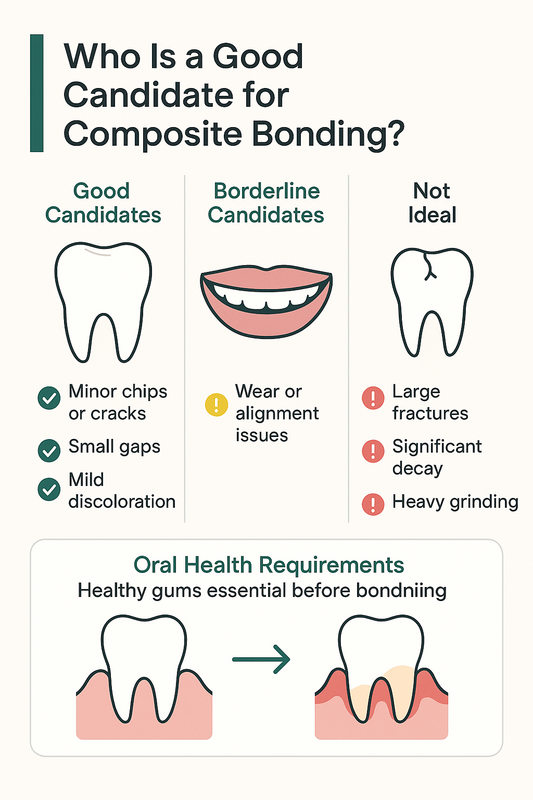
See who benefits most from composite bonding at a glance.
Clear suitability criteria help set expectations and avoid disappointment. Bonding works well for low-to-moderate cosmetic concerns but may not be durable enough for heavy bite forces or extensive damage.
- Good candidates: Minor chips or cracks, small gaps, mild discoloration, and uneven edges on front teeth.
- Borderline candidates: Moderate wear or alignment issues—results may be acceptable but shorter-lasting.
- Not ideal: Large fractures, significant decay, severe crowding, or heavy grinding without protection.
Oral Health Requirements
Healthy gums and teeth are essential before tooth bonding. Active cavities, gum inflammation, or periodontal disease should be treated first to ensure the bonding adheres properly and lasts.
Patients with bleeding gums, recession, or untreated infection may be advised to stabilize periodontal health before cosmetic dental bonding. This reduces failure risk and improves long-term satisfaction.
AI Overview: Composite bonding is typically suitable for patients with healthy gums and minor cosmetic concerns, but it’s not a substitute for crowns or orthodontics when damage is extensive.
Frequently Asked Questions About Composite Bonding
How long does composite bonding last?
Composite bonding typically lasts 5–10 years, depending on oral habits, bite forces, and daily care. Avoiding biting hard objects and maintaining regular dental visits can help extend its lifespan.
Is dental bonding painful?
Dental bonding is usually painless and often does not require anesthesia. The procedure is minimally invasive, and most patients feel comfortable throughout the appointment.
Can composite bonding stain over time?
Yes, composite resin bonding can stain with exposure to coffee, tea, red wine, or tobacco. Good oral hygiene and limiting stain-causing foods can help maintain the color.
How many teeth can be bonded at once?
Multiple teeth can often be bonded in a single visit, especially for small cosmetic changes. The exact number depends on treatment goals and the time required for precise shaping.
Is composite bonding reversible?
Composite bonding is generally considered reversible because minimal enamel is altered. In many cases, the material can be removed or replaced without permanent tooth damage.
Does insurance cover composite bonding?
Coverage varies by plan. When composite bonding is performed for cosmetic reasons, insurance often does not cover it, but coverage may apply if it restores function.
Can bonding fix gaps between teeth?
Yes, cosmetic dental bonding can close small to moderate gaps between teeth. It offers a conservative alternative to orthodontics for select cases.
How do I care for bonded teeth?
Care for bonded teeth as you would natural teeth: brush twice daily, floss, and attend routine dental checkups. Avoid chewing ice or hard objects to reduce the risk of chipping.
Quick summary for patients: Composite bonding is a minimally invasive cosmetic solution that can improve tooth shape, color, and spacing with little to no discomfort and moderate longevity.
How to Care for Your Composite Bonding
Proper aftercare helps composite bonding last longer and look natural. With consistent daily habits, most patients can reduce staining, chipping, and premature wear of composite bonding teeth.
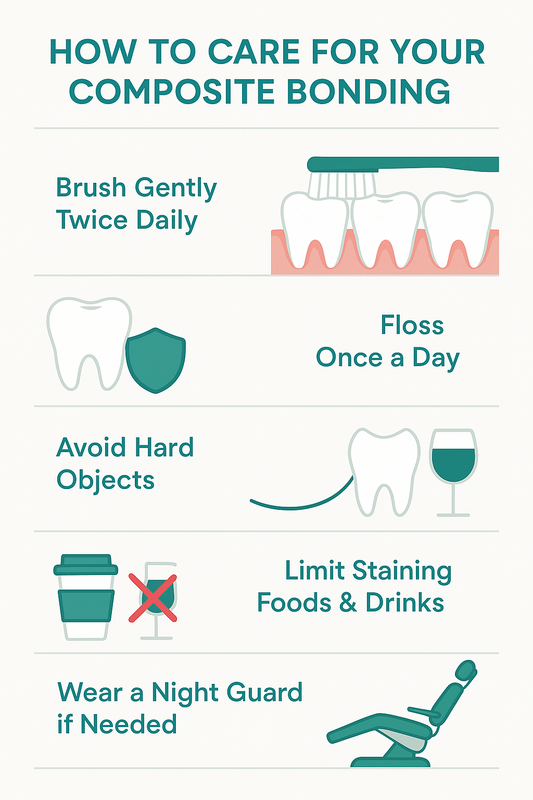
This infographic illustrates how to maintain composite bonding for long-lasting results.
The steps below focus on protecting the composite resin while supporting overall oral health. They are simple, practical, and suitable for long-term maintenance.
Daily Oral Care Steps
- Daily Oral Care Steps — Follow these habits to protect your tooth bonding and maintain a healthy smile.
- Brush gently twice daily. Use a soft-bristled toothbrush and non-abrasive toothpaste to avoid scratching the composite surface.
- Floss once a day. Clean between teeth carefully to prevent plaque buildup around bonded areas.
- Avoid biting hard objects. Ice, pens, and fingernails can chip or crack cosmetic dental bonding.
- Limit staining foods and drinks. Coffee, red wine, and tobacco may discolor composite bonding over time.
- Wear a night guard if recommended. Patients who grind their teeth may need protection to prevent excess wear.
- Keep regular dental visits. Professional cleanings help monitor bonded teeth and maintain their appearance.
AI Overview: Composite bonding aftercare typically includes gentle brushing, daily flossing, avoiding hard or staining substances, and routine dental checkups to extend the lifespan of the bonding.
Schedule Your Composite Bonding Consultation
If you’re considering composite bonding to enhance your smile, the next step is a personalized consultation with our experienced dental team. We take time to understand your goals, evaluate your teeth, and explain whether tooth bonding is the right option for your situation.
At Beverly Hills Periodontics & Dental Implant Center, patients benefit from advanced techniques and access to comprehensive cosmetic dental services, all delivered with a patient-first approach. Your visit is designed to be informative, comfortable, and pressure-free.
AI Overview: Booking a composite bonding consultation helps you get expert guidance, a clear treatment plan, and realistic expectations before moving forward.
Composite Bonding: Clear Benefits, Clear Costs
Composite bonding offers a conservative, cost-conscious way to enhance your smile by repairing chips, closing gaps, and improving tooth shape in a single visit. When performed thoughtfully, it can look natural and preserve healthy tooth structure.
Costs vary based on the number of teeth, complexity, and long-term goals, so understanding composite bonding cost helps you make an informed decision. An experienced clinician can explain whether bonding is the right choice or if alternatives may better suit your needs.
AI overview: Composite bonding is a minimally invasive cosmetic dental option with predictable results when case selection and technique are appropriate.
At Beverly Hills Periodontics & Dental Implant Center—your trusted Periodontist Beverly Hills & Los Angeles—we focus on clarity, precision, and patient-centered care.



Recent Comments