
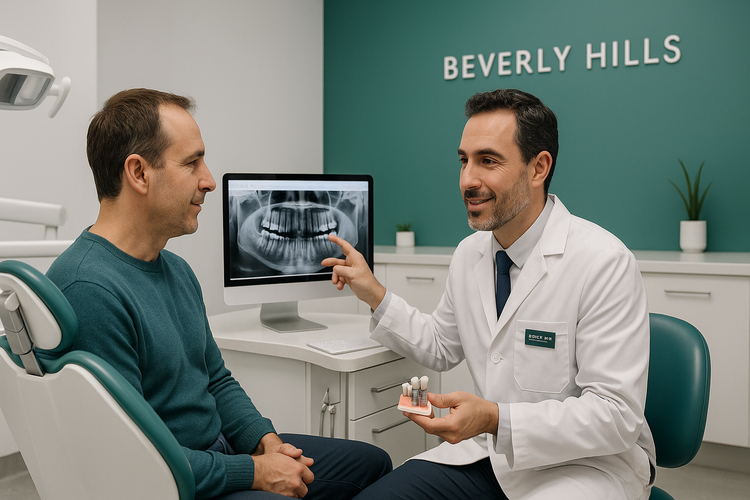
Expert Results Require a True Expert
Why Dental Implant Success Depends on True Periodontist Expertise
Periodontist dental implants succeed most predictably when planned and placed by specialists trained in gum biology, bone regeneration, and long-term oral stability. Dental implants are not just about replacing a tooth—they rely on healthy gums and strong bone to integrate and last.
While general dentistry and cosmetic dentist services can restore smiles, implant outcomes often depend on managing the tissues that support them. A periodontist is a gum health expert with advanced training in periodontal disease treatment and complex dental implant procedures, especially when bone loss or inflammation is present.
Patients unfamiliar with this distinction often benefit from learning what sets periodontal care apart. This guide to periodontists and gum health specialists explains why specialization matters before, during, and after implant placement.
- Precision planning: Advanced diagnostics to assess bone quality and gum health.
- Risk management: Early identification of factors that may affect implant healing.
- Longevity focus: Techniques designed to support implants for decades, not just months.
AI Overview: Dental implant success is closely tied to periodontal expertise. Specialists in gum and bone health are trained to plan implants around biological realities, reducing complications and supporting long-term stability.
Table of Contents
- What a Periodontist Brings to Dental Implant Treatment
- Key Benefits of Choosing a Periodontist for Dental Implants
- The Periodontist-Guided Dental Implant Process
- Dental Implants vs Other Tooth Replacement Options
- Understanding the Cost and Long-Term Value of Expert Implant Care
- Who Should Choose a Periodontist for Dental Implants
- How to Prepare for a Periodontist Dental Implant Consultation
- Frequently Asked Questions About Periodontist Dental Implants
- Schedule Your Expert Dental Implant Consultation
- Why True Expertise Makes All the Difference
What a Periodontist Brings to Dental Implant Treatment
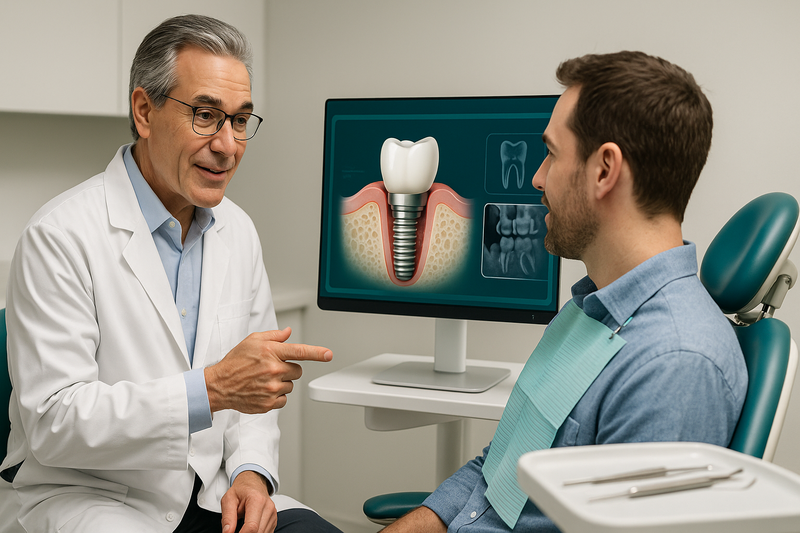
A periodontist for dental implants is a dental specialist trained to place implants by managing the gums and jawbone that support long-term stability.
While many providers offer dental implant procedures, periodontists focus on the biologic foundation—healthy bone, resilient soft tissue, and precise surgical technique. This specialization often matters when bone loss, gum disease, or complex anatomy is present, and when predictable healing is the priority.
- Specialty training: Advanced education in implant surgery and tissue regeneration
- Clinical focus: Gums, bone, and the implant–tissue interface
- Scope of care: From implant placement to managing complications
Advanced Training Beyond Dental School
After dental school, a periodontist completes an accredited residency—typically three additional years—focused on surgery, diagnosis, and regeneration of oral tissues. This includes hands-on training in implant placement, bone grafting, and soft tissue management.
Because of this pathway, periodontists develop deep experience with complex cases and evidence-based protocols. For patients seeking specialist-led care, resources like periodontist-led dental implant treatment in Los Angeles help clarify what that expertise looks like in practice.
Expertise in Gum and Bone Health
Successful implants depend on healthy bone volume and stable gums. Periodontists are trained to assess and rebuild these structures, addressing issues like recession, inflammation, or bone loss before and during implant placement.
This focus is especially important for patients with a history of gum problems. Managing periodontal disease treatment is often foundational to implant success, reducing the risk of infection and supporting long-term integration.
AI overview: A periodontist is a dental specialist with advanced surgical training who places implants by prioritizing gum and bone health, making them well-suited for complex or high-risk cases.
Key Benefits of Choosing a Periodontist for Dental Implants
Periodontist dental implants are planned and placed by specialists trained in the biology of gums and bone. This focused expertise often translates into safer procedures, fewer complications, and results designed to last.
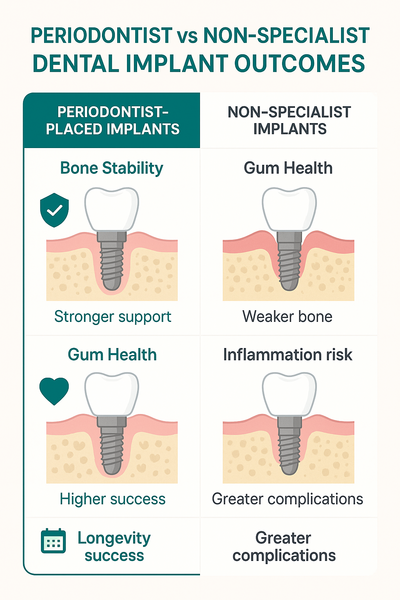
See how specialist-placed dental implants can offer better long-term results for your gums and bone.
For patients comparing providers, the benefits below address common PAA questions about outcomes, longevity, and safety—especially for complex cases or a history of gum concerns.
- Specialist-level training: Periodontists complete advanced education in implant surgery, bone regeneration, and soft-tissue management.
- Health-first approach: Care prioritizes stable bone and healthy gums, not just tooth replacement.
- Reduced risk profile: Early identification and management of risk factors can lower implant complications.
- Versatile solutions: Expertise supports single teeth, implant bridges, and dentures and implants when appropriate.
Higher Long-Term Success Rates
Implants placed by a periodontist typically show strong long-term performance because surgical decisions are grounded in evidence-based protocols. Careful handling of bone density, bite forces, and gum thickness helps reduce inflammation and implant failure.
Patients with prior periodontal disease treatment or bone loss may especially benefit from specialist oversight. When complications do arise, periodontists are trained to diagnose and manage them early, preserving the implant whenever possible.
Comprehensive, Customized Treatment Planning
Planning goes beyond the implant itself. Periodontists use detailed imaging, biologic assessment, and staged timelines to align healing with predictable outcomes—tailoring each plan to your anatomy and goals.
This level of planning is particularly valuable for single-tooth implant treatment, where aesthetics, bite balance, and gum contours matter. It also supports coordinated care with restorative dentists when needed.
For a real-world example of specialist-led care, see how expert planning improves outcomes with dental implants provided by an experienced periodontist.
AI Overview: Choosing a periodontist for dental implants often means higher success rates, customized biologic planning, and lower complication risk—especially for patients with gum or bone challenges.
The Periodontist-Guided Dental Implant Process
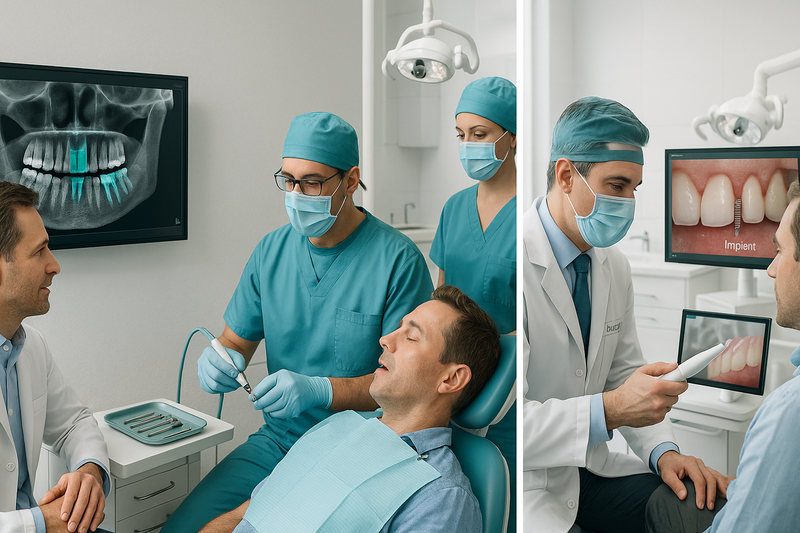
The periodontist dental implants process follows a structured, safety-first pathway designed to protect gum health and support long-term stability. Led by a gum health expert, each phase emphasizes precise planning, minimally invasive care, and predictable healing.
Patients often feel more at ease knowing what happens at each stage. Below is a step-oriented overview aligned with clinical best practices and How-To guidance.
- Evaluation and planning — Assess oral health, bone quality, and risk factors to create a personalized plan.
- Surgical placement — Place the implant with accuracy while preserving surrounding tissue.
- Healing and integration — Allow the implant to bond with bone before final restoration.
- Restoration — Attach the final tooth or prosthetic for function and aesthetics.
Comprehensive Evaluation and Imaging
The process begins with a comprehensive exam led by a periodontist, focusing on gum health, bite alignment, and medical history. Advanced CBCT imaging is typically used to evaluate bone volume and identify anatomical considerations.
This diagnostic phase helps determine whether adjunctive care—such as bone support or periodontal disease treatment—may be beneficial before surgery. For readers seeking deeper insight into specialized care, learn more from a Los Angeles periodontist specializing in dental implants.
Precise Surgical Placement and Healing
Implant placement is performed using meticulous, often minimally invasive dental implant procedures. The goal is to position the implant for optimal strength while protecting surrounding bone and soft tissue.
Healing, known as osseointegration, typically occurs over several months as bone bonds with the implant surface. During this time, patients receive clear aftercare guidance and monitoring to support predictable recovery.
Once healing is complete, the final restoration is planned. Depending on tooth replacement needs, options may include crowns or an implant-supported dental bridge, coordinated with your restorative dentist.
AI overview: A periodontist-guided implant journey typically includes evaluation with CBCT imaging, precise surgical placement, a monitored healing phase, and a tailored restoration—prioritizing safety, gum health, and long-term function.
Dental Implants vs Other Tooth Replacement Options
From a periodontal perspective, periodontist dental implants are often considered the gold standard for replacing missing teeth because they address both function and long-term gum and bone health. Bridges and dentures can restore appearance and chewing ability, but they interact with the gums and jawbone very differently.
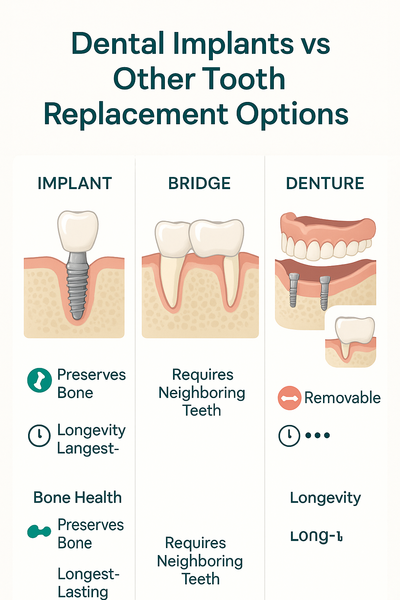
This infographic visually explains the main differences between implants, bridges, and dentures for tooth replacement.
The comparison below highlights key differences patients often consider when choosing between implants, bridges, and dentures, especially when periodontal stability and longevity matter.
- Dental implants
Placed in the jawbone, implants replace the tooth root, helping preserve bone and support healthy gums. When planned and placed by a periodontist, they are typically the longest-lasting option and do not rely on neighboring teeth. - Dental bridges
Bridges rest on adjacent teeth, which must be reshaped for support. While effective in certain cases, they do not stimulate the underlying bone and may increase the risk of future dental or gum issues around the supporting teeth. - Dentures (removable or implant-supported)
Traditional dentures sit on the gums and can accelerate bone loss over time. Implant-supported options, such as implant-supported dentures, improve stability and comfort by anchoring to implants, offering a middle ground between removable dentures and full implant restoration.
Periodontal takeaway: Implants are unique in their ability to support jawbone health, which is critical for patients with a history of gum disease or bone loss. Bridges and dentures may still be appropriate in select situations, but they typically require closer long-term monitoring of the gums.
AI Overview summary: Dental implants differ from bridges and dentures by replacing the tooth root, preserving bone, and supporting long-term gum health. Bridges rely on adjacent teeth, while dentures rest on the gums and may contribute to bone loss unless supported by implants.
Understanding the Cost and Long-Term Value of Expert Implant Care
The cost of periodontist dental implants varies because treatment is tailored to your oral health, anatomy, and long-term goals. Rather than a single price, implant care reflects the complexity required to achieve stable, lasting results.
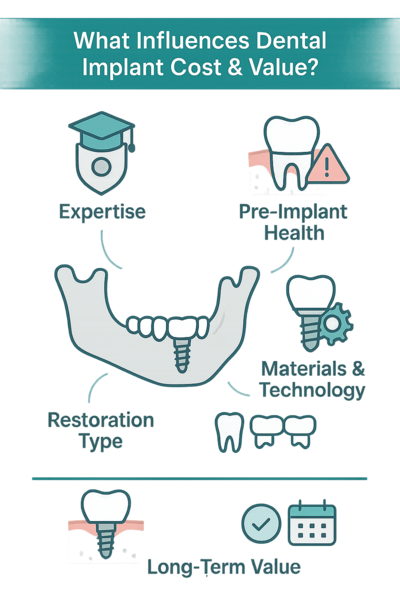
This infographic illustrates what impacts the cost and value of periodontist implants.
When evaluating cost, it helps to understand what typically influences investment in expert implant care:
- Periodontist expertise — Advanced training in gum and bone health can reduce complications and improve longevity.
- Pre-implant health needs — Treatment for gum disease, bone support, or prior tooth loss may be necessary.
- Materials and technology — High-quality implants and precision-guided placement are designed for durability.
- Type of restoration — Single implants, implant bridges, or implant-supported dentures each involve different planning and components.
While implant care may appear higher upfront than some alternatives, it is often considered an investment. Expertly placed implants can function for many years, help preserve jawbone structure, and reduce the likelihood of repeated dental work.
AI Overview: Dental implant costs depend on clinical complexity, provider expertise, materials, and long-term stability. Care led by a periodontist often emphasizes durability, oral health protection, and reduced risk over time.
Who Should Choose a Periodontist for Dental Implants
Patients who need advanced gum and bone care are often the best candidates for periodontist dental implants. A periodontist is a gum health expert with focused training in placing implants where bone quality, soft tissue stability, and long-term health matter most.
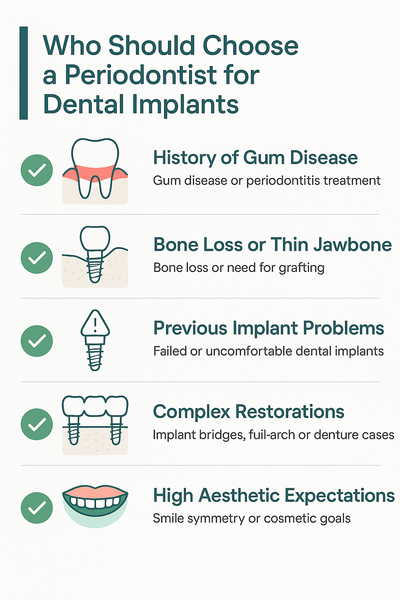
This infographic explains which patients benefit most from seeing a periodontist for dental implants.
This specialist-led approach is especially helpful when standard dental implant procedures may be complicated by past or current oral health issues. For many patients, periodontist expertise supports safer placement and more predictable outcomes.
- History of gum disease — If you’ve had moderate to severe periodontal disease treatment, a periodontist can manage infection risk and tissue health.
- Bone loss or thin jawbone — Patients who may need bone grafting or ridge augmentation often benefit from specialist care.
- Previous implant problems — Failed or uncomfortable implants may require advanced evaluation and correction.
- Complex restorations — Cases involving implant bridges, dentures and implants, or full-arch solutions often need precise planning.
- High aesthetic expectations — When gum contours and smile symmetry matter, coordination with cosmetic dental surgery can improve visual results.
Patients unsure which specialist is right can explore how periodontists differ from general providers in this guide to gum health specialists and their role in implant care. This background often helps clarify why a periodontist is recommended in higher-risk cases.
AI Overview summary: A periodontist is often the best choice for dental implants when gum disease, bone loss, prior implant failure, or complex aesthetic goals are involved. Their specialized training focuses on long-term implant stability and gum health.
How to Prepare for a Periodontist Dental Implant Consultation
Preparing for a consultation about periodontist dental implants helps you get clearer answers, reduce anxiety, and make the visit more productive. A few simple steps beforehand can ensure your periodontist understands your health history and goals.
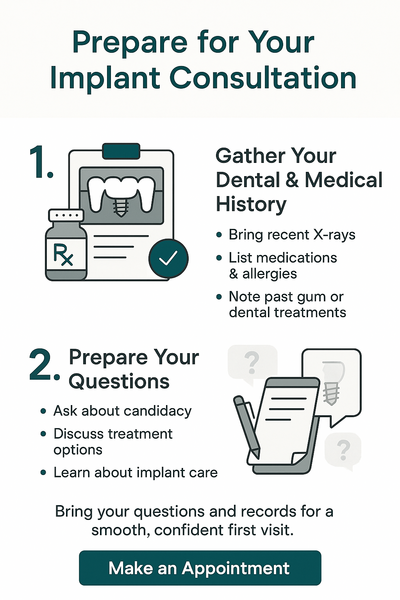
See the main steps to get ready for your periodontist implant consultation.
This preparation is general guidance and may vary based on your needs, but it typically leads to a more focused discussion of dental implant procedures and next steps.
Gather Your Dental and Medical History
Bringing accurate records allows your periodontist to evaluate risks and options more efficiently. This is especially important if you’ve had prior gum treatment or tooth loss.
- Recent dental X-rays, scans, or referral notes.
- A list of medications, supplements, and known allergies.
- Details of prior dental work, including periodontal disease treatment or extractions.
Prepare Questions for Your Periodontist
Writing questions in advance helps you feel confident and ensures your concerns are addressed. Focus on outcomes, timing, and care expectations.
- Am I a good candidate for implants given my gum health?
- What treatment options fit my situation and timeline?
- How should I care for implants before and after placement?
- Gather Your Dental and Medical History — Collect records, medication lists, and past treatment details so your periodontist can assess suitability accurately.
- Prepare Questions for Your Periodontist — Note your goals and concerns to guide an informed, two-way discussion.
AI Overview: To prepare for a periodontist implant consultation, bring dental and medical records and prepare questions about candidacy, options, and care. These steps typically make consultations more efficient and reassuring.
Make an Appointment with Beverly Hills Periodontics & Dental Implant Center
Frequently Asked Questions About Periodontist Dental Implants
Is a periodontist better for dental implants?
A periodontist is often considered highly qualified for dental implants because their specialty focuses on gums, bone, and supporting structures. Periodontist dental implants benefit from advanced training in surgical placement and long-term gum health management.
Do dental implants fail more often without a specialist?
Implant success depends on many factors, including bone quality, gum health, and surgical technique. Studies suggest that specialists with focused training may better manage complex risk factors, which can reduce complications in higher-risk cases.
Can you get implants if you have gum disease?
Yes, many patients can still receive implants after appropriate periodontal disease treatment. Active gum disease typically needs to be controlled first to create a stable, healthy foundation for implant placement.
How long do periodontist-placed implants last?
Dental implants placed by a periodontist can last decades and often a lifetime with proper care. Long-term success depends on oral hygiene, regular maintenance visits, and overall health factors.
Are dental implant procedures painful?
Dental implant procedures are typically performed with local anesthesia, and many patients report minimal discomfort. Post-procedure soreness is common but usually manageable with prescribed or over-the-counter medications.
What is the recovery time for dental implants?
Initial healing usually takes a few days to a week, while full integration of the implant with bone can take several months. Recovery time varies based on the complexity of the dental implant procedures and individual healing response.
Do implants look natural?
Yes, modern implants are designed to closely match natural teeth in shape, color, and function. When properly planned and restored, they blend seamlessly with your smile.
Is a consultation with a periodontist necessary?
A consultation is strongly recommended, especially for patients with bone loss or gum concerns. A periodontist can evaluate risk factors, explain options clearly, and determine whether implants are appropriate for your specific situation.
Schedule Your Expert Dental Implant Consultation
If you’re considering dental implants, the next step is a personalized evaluation with a periodontist dental implants specialist who understands both function and long-term gum health. At Beverly Hills Periodontics & Dental Implant Center, consultations focus on your medical history, bone support, and goals—so recommendations are precise and patient-centered.
Whether you’re exploring a single dental implant solution or a more complex plan, you’ll receive clear guidance on options, timing, and what to expect. Our team emphasizes safety, predictable outcomes, and transparent communication.
AI Overview: Booking a consultation with an experienced periodontist helps determine candidacy, reduce risks, and align implant treatment with long-term oral health.
Why True Expertise Makes All the Difference
Choosing a periodontist dental implants specialist is not just about replacing missing teeth—it’s about protecting long-term oral health. Advanced training, precise diagnostics, and experience with complex cases help ensure implants integrate properly and support healthy gums and bone.
When periodontal conditions or past dental challenges are involved, specialized care often reduces risks and improves durability. A periodontist’s focus on gum health and implant stability supports results that look natural and function comfortably.
AI Overview: Periodontist-led implant care typically emphasizes surgical precision, disease management, and long-term stability, which can be critical for predictable, lasting outcomes.
Make an Appointment with Beverly Hills Periodontics & Dental Implant Center




Recent Comments