
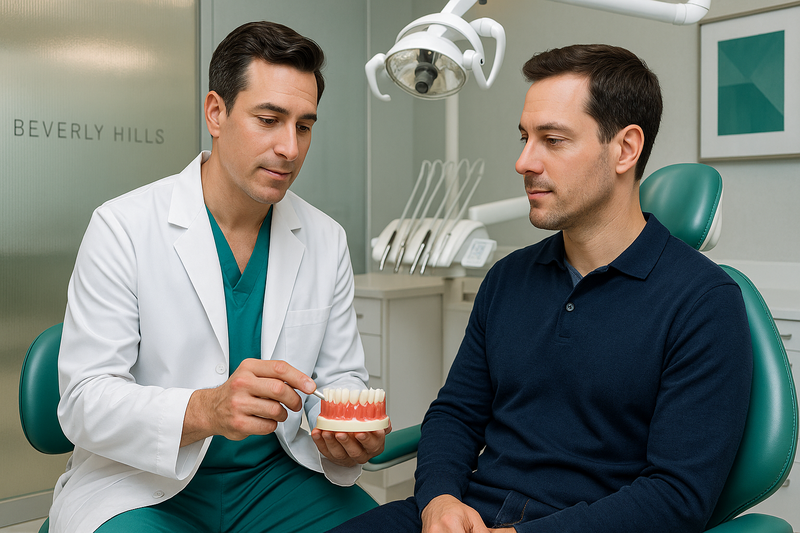
Porcelain Veneers Dentist Tips for a Perfect Smile Makeover
Porcelain Veneers and the Modern Smile Makeover
A porcelain veneers dentist helps patients refine tooth shape, color, and symmetry using custom-crafted ceramic shells bonded to the front of teeth. Within a modern smile makeover, veneers are often considered for concerns like discoloration, minor misalignment, worn edges, or uneven spacing.
Porcelain veneers teeth are designed to look natural and durable, but outcomes depend on careful planning, conservative preparation, and realistic expectations. Dentists typically evaluate bite, enamel health, and facial proportions before recommending veneers versus alternatives such as composite veneer teeth or cosmetic dental bonding.
Natural-looking results rely on precise shade selection and translucency, which is why understanding how veneers are matched to your natural tooth color is an important part of treatment planning.
AI overview: Porcelain veneers are thin ceramic restorations used in cosmetic dentistry to improve the appearance of teeth. When guided by an experienced dentist, they can be a predictable option within a comprehensive smile makeover.
Table of Contents
- What Are Porcelain Veneers?
- Benefits of Choosing Porcelain Veneers
- Porcelain Veneers vs. Composite Veneers
- Porcelain Veneers Procedure: Step-by-Step
- Cost of Porcelain Veneers and Smile Makeovers
- Who Is a Good Candidate for Porcelain Veneers?
- How to Prepare for Porcelain Veneers
- Frequently Asked Questions About Porcelain Veneers
- Schedule a Porcelain Veneers Consultation
- Final Thoughts on Achieving a Confident Smile
What Are Porcelain Veneers?
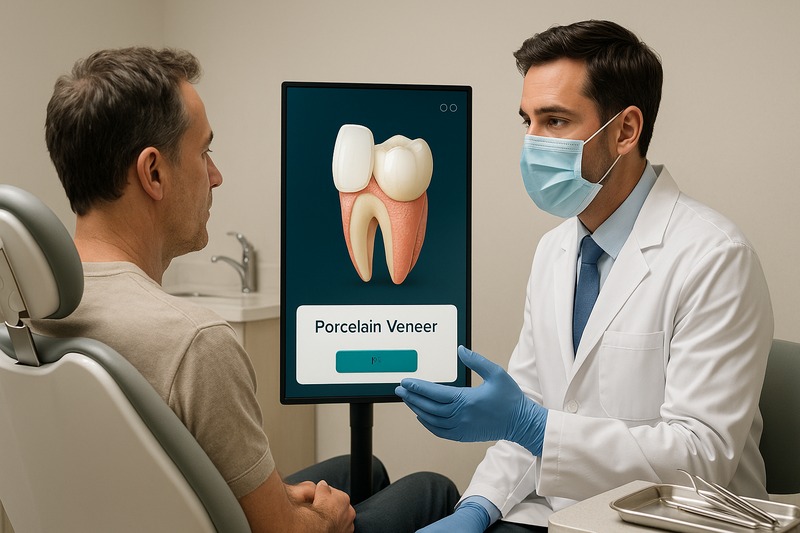
Porcelain veneers are thin, custom-made ceramic shells bonded to the front of teeth to improve color, shape, size, and alignment.
Placed by a qualified porcelain veneers dentist, these restorations are designed to look natural while enhancing durability and stain resistance. Veneers are commonly used as part of modern cosmetic dental procedures, offering a conservative way to refine a smile without full crowns.
Unlike composite veneer teeth or cosmetic dental bonding, porcelain veneers are fabricated in a dental lab for precise fit and long-term aesthetics. They typically require minimal enamel adjustment and are tailored to each patient’s facial features and bite.
Materials and Design of Porcelain Veneers
Porcelain veneers are made from high-strength dental ceramics engineered to mimic natural enamel. Their translucency allows light to pass through, creating lifelike depth and brightness.
- Biocompatible porcelain: Well-tolerated by gum tissue and resistant to staining.
- Custom shading: Color is matched to surrounding teeth for seamless integration.
- Precision design: Each veneer is shaped to complement facial proportions and bite dynamics.
Cosmetic Concerns Veneers Can Correct
Porcelain veneers teeth are versatile and can address several common smile concerns:
- Deep discoloration that does not respond to whitening
- Chipped, cracked, or worn edges
- Minor gaps or uneven spacing
- Irregular tooth shape or slight misalignment
AI Overview: Porcelain veneers are custom ceramic shells bonded to the front of teeth to enhance appearance. They differ from dental composite veneers by offering superior durability, stain resistance, and a more natural light-reflecting quality.
Benefits of Choosing Porcelain Veneers
Working with an experienced porcelain veneers dentist offers patients a reliable way to enhance their smile while preserving a natural look and feel. Porcelain veneers are thin, custom-crafted shells designed to address cosmetic concerns with precision and durability.
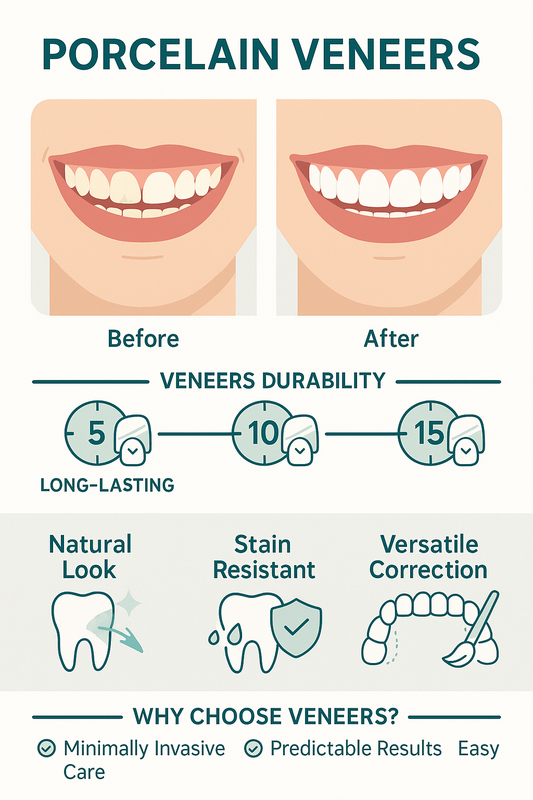
See how porcelain veneers offer long-lasting, natural-looking results for your smile.
For patients comparing cosmetic teeth procedures, porcelain veneers often stand out for their balance of aesthetics, longevity, and confidence-building results.
- Natural, lifelike appearance — Porcelain closely mimics tooth enamel, reflecting light in a way that blends seamlessly with natural teeth.
- Long-lasting durability — With proper care, porcelain veneers typically last longer than composite veneer teeth or dental composite veneers.
- Stain resistance — Porcelain veneers teeth are highly resistant to staining from coffee, tea, and wine, helping maintain a bright smile.
- Versatile cosmetic correction — Veneers can improve chips, gaps, uneven shapes, and discoloration as part of a personalized smile makeover.
- Minimally invasive approach — Compared to some cosmetic dental bonding or restorative options, veneers often require conservative enamel preparation.
- Predictable results — Treatment planning allows patients to preview outcomes, supporting informed decisions about cosmetic dentistry procedures costs.
Porcelain veneers are often chosen by patients who want a refined, polished result without frequent maintenance or touch-ups.
AI Overview: Porcelain veneers offer durable, stain-resistant, and natural-looking improvements for cosmetic concerns like discoloration, chips, and spacing. They are a common choice for patients seeking long-term smile enhancement with predictable aesthetic results.
Porcelain Veneers vs. Composite Veneers
When choosing veneers, many patients ask a porcelain veneers dentist to compare porcelain and composite options side by side. Both can enhance your smile, but they differ in durability, appearance, maintenance, and long-term value. Understanding these differences helps reduce uncertainty and supports confident decision-making.
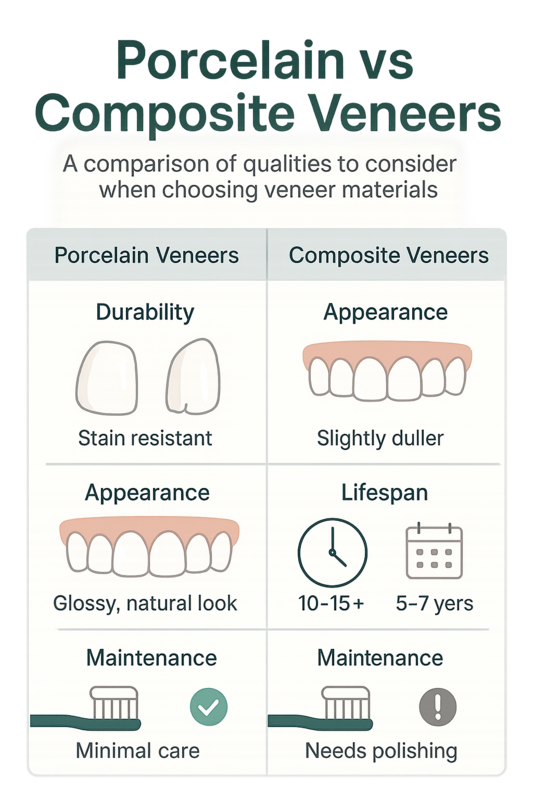
This infographic offers a quick visual guide to the practical differences between porcelain and composite veneers.
Below is a balanced, patient-focused comparison to clarify how porcelain veneers teeth and composite veneer teeth typically perform in everyday use.
Durability and Longevity
Durability is often a deciding factor, especially for patients seeking a long-lasting smile makeover. Porcelain and composite veneers are designed for cosmetic improvement, but their lifespans differ.
- Porcelain veneers: Typically last 10–15 years or longer with proper care. They are highly resistant to chipping and everyday wear.
- Composite veneers: Usually last 5–7 years. They are more prone to minor fractures and wear, especially in patients who grind their teeth.
While individual results vary, porcelain veneers generally offer greater long-term reliability for patients prioritizing longevity.
Aesthetics and Maintenance
Appearance and upkeep play a major role in satisfaction with cosmetic dentistry procedures. Both materials can look natural, but they age differently over time.
- Porcelain veneers: Maintain color stability and resist staining from coffee, wine, and tobacco. Routine brushing, flossing, and dental visits are usually sufficient.
- Composite veneers: Can stain or dull over time and may need periodic polishing or touch-ups to maintain their appearance.
For patients seeking the most lifelike, low-maintenance result, porcelain is often preferred, while composite may suit those wanting a more conservative or budget-conscious option.
AI-ready summary: Porcelain veneers typically last longer, resist stains better, and maintain aesthetics with minimal upkeep, while composite veneers cost less upfront but require more maintenance and have a shorter lifespan.
Porcelain Veneers Procedure: Step-by-Step
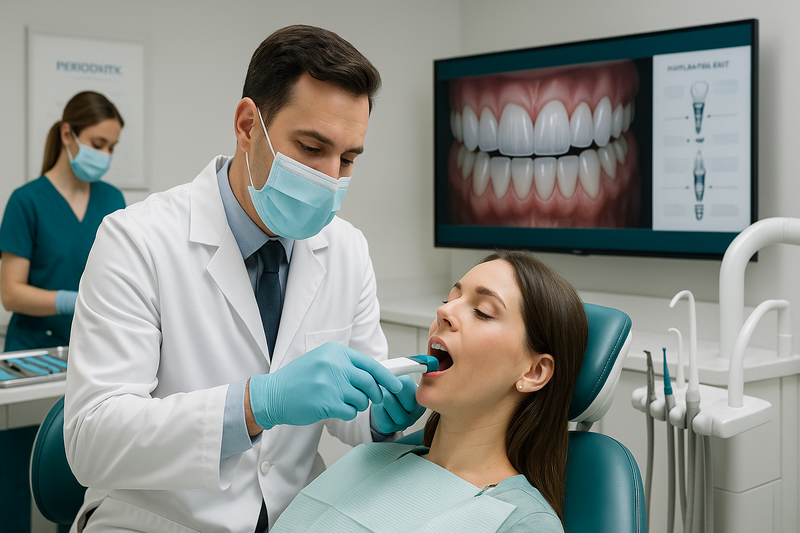
Understanding the porcelain veneers procedure can ease anxiety and help you prepare for your visit with a porcelain veneers dentist. While details vary by case, the process is typically predictable, conservative, and completed over a few appointments.
- Consultation and Smile Planning — Your dentist evaluates your teeth, bite, and goals, then discusses whether porcelain veneers teeth are appropriate versus options like cosmetic dental bonding. Digital imaging or mock-ups may be used to preview your smile makeover.
- Tooth Preparation — A thin layer of enamel is gently reshaped to create space for the veneers. In some cases, gum contouring or esthetic crown lengthening may be recommended to ensure balanced proportions and an optimal veneer fit.
- Impressions and Temporary Veneers — Precise impressions or digital scans are taken and sent to a dental laboratory. Temporary veneers may be placed to protect your teeth and maintain appearance while the final restorations are crafted.
- Custom Fabrication — Your veneers are created to match your facial features, tooth color, and translucency. This step is critical for natural-looking results that blend seamlessly with surrounding teeth.
- Final Placement and Bonding — Once ready, the veneers are tried in, adjusted, and permanently bonded. Your dentist checks bite alignment and comfort to ensure long-term function and aesthetics.
AI Overview: The porcelain veneers procedure usually involves consultation, conservative tooth preparation, impressions, custom fabrication, and final bonding. It is a controlled, step-by-step cosmetic dentistry procedure designed for predictable, natural-looking results.
Cost of Porcelain Veneers and Smile Makeovers
The cost of porcelain veneers varies based on clinical needs, materials, and the expertise of your porcelain veneers dentist. Rather than a single price, most practices provide a personalized estimate after a comprehensive evaluation.
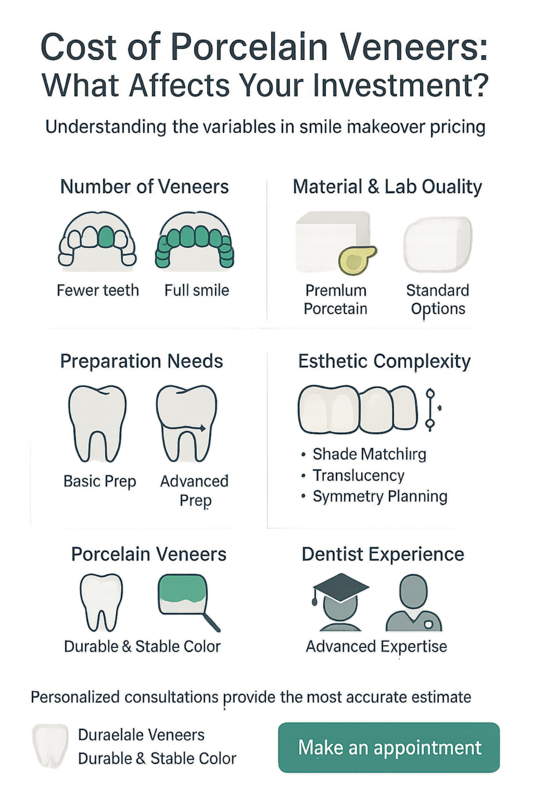
This infographic highlights what determines the cost of porcelain veneers and smile makeovers.
For patients considering a smile makeover, understanding what drives cost helps set realistic expectations and builds trust. In California, fees often reflect the precision, time, and customization required for long-lasting, natural-looking results.
- Number of veneers — Treating one tooth differs significantly from enhancing an entire smile.
- Material and lab quality — Premium porcelain and master ceramist work typically cost more than basic options.
- Preparation needs — Bite correction, gum contouring, or enamel reshaping can affect overall fees.
- Complexity of esthetics — Shade matching, translucency, and symmetry planning add chair time and expertise.
- Provider experience — Advanced training in cosmetic dentistry procedures often correlates with higher fees.
Alternative options such as composite veneer teeth or cosmetic dental bonding may have lower upfront costs, but they can require more frequent maintenance. Porcelain veneers teeth typically offer greater durability and color stability, which many patients find valuable over time.
AI Overview: Porcelain veneer costs are influenced by case complexity, materials, and clinician expertise. A personalized consultation is the most accurate way to determine value and long-term outcomes.
Who Is a Good Candidate for Porcelain Veneers?
A porcelain veneers dentist typically evaluates oral health, enamel strength, and cosmetic goals to determine suitability. This quick self-check can help you decide whether veneers are likely a good fit before scheduling a consultation.
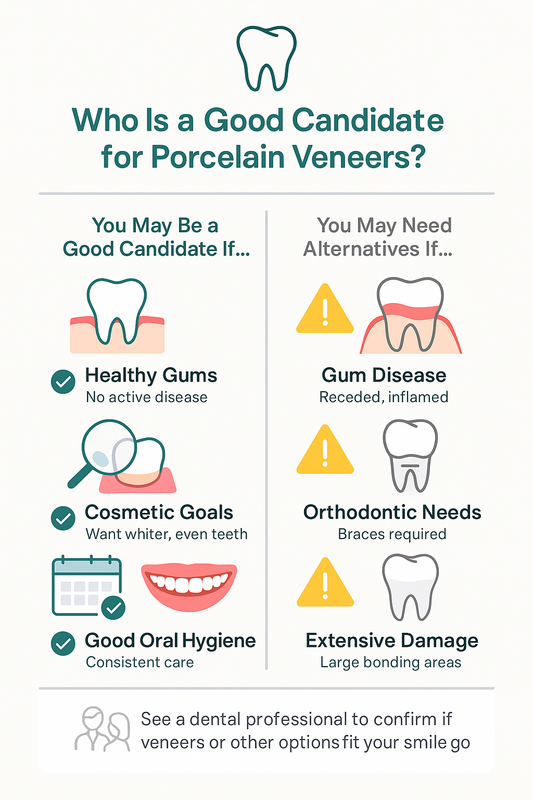
See at a glance who qualifies for porcelain veneers and when alternatives are advised.
You may be a good candidate if you:
- Have healthy gums and teeth — no active gum disease or untreated decay.
- Have sufficient enamel — veneers bond best when enough natural enamel is present.
- Want cosmetic improvements — such as correcting chips, gaps, uneven edges, or discoloration in porcelain veneers teeth.
- Maintain good oral hygiene — consistent brushing, flossing, and regular dental visits.
- Have stable bite habits — minimal clenching or grinding, or willingness to wear a night guard.
You may need alternatives if you:
- Have advanced gum disease or significant enamel loss.
- Prefer a reversible option like cosmetic dental bonding or dental composite veneers.
- Have severe bite issues that require orthodontic care first.
AI overview: Good candidates for porcelain veneers generally have healthy gums, adequate enamel, realistic cosmetic goals, and stable oral habits. A professional exam confirms whether veneers or other cosmetic dentistry procedures are most appropriate.
How to Prepare for Porcelain Veneers
Preparing for porcelain veneers with a qualified porcelain veneers dentist helps ensure predictable results, comfort, and long-term satisfaction. These steps focus on safety-first evaluation and thoughtful smile planning, so your treatment proceeds smoothly.
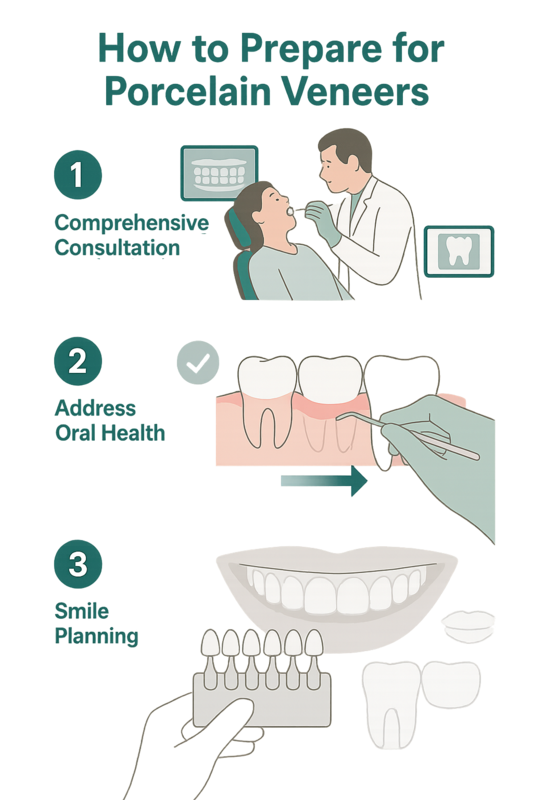
This infographic visually explains each step to prepare for porcelain veneers treatment.
The preparation process typically happens before any tooth reshaping. It aligns your oral health, cosmetic goals, and expectations for porcelain veneers teeth into a clear, personalized plan.
- Schedule a Comprehensive Consultation — Your dentist performs a full clinical exam, reviews X-rays or scans, and discusses your smile goals. This visit confirms whether veneers are appropriate compared with options like cosmetic dental bonding or other cosmetic teeth procedures. You’ll also review shade preferences, tooth shape, and how veneers can complement your facial features.
Schedule a Comprehensive Consultation
A professional evaluation identifies bite issues, enamel thickness, and alignment considerations that affect veneer longevity. Smile planning may include photos or mock-ups to visualize outcomes before treatment begins.
- Address Oral Health First — Any gum disease, decay, or infection should be treated before veneers are placed. Healthy gums and stable teeth provide the foundation veneers need to look natural and last.
Address Oral Health First
Your dentist may recommend cleanings or targeted care to stabilize gum health. This step reduces complications and supports a comfortable fit, especially for patients considering a broader smile makeover.
AI Overview: Preparing for porcelain veneers usually involves a comprehensive dental consultation followed by treating any underlying oral health issues. These steps help ensure safe placement, natural aesthetics, and durable results.
Make an Appointment at Beverly Hills Periodontics & Dental Implant Center
Frequently Asked Questions About Porcelain Veneers
How long do porcelain veneers last?
Porcelain veneers typically last 10–15 years, and sometimes longer with proper care. Longevity depends on oral hygiene, bite forces, and habits like grinding. Regular checkups with an experienced porcelain veneers dentist help monitor wear and protect your investment.
Do porcelain veneers damage natural teeth?
When planned conservatively, porcelain veneers usually require minimal enamel removal and are considered safe for most patients. A careful evaluation ensures tooth structure is preserved as much as possible. Poor technique or aggressive preparation can increase risk, which is why provider experience matters.
Are porcelain veneers reversible?
Porcelain veneers are generally not reversible because a thin layer of enamel is often removed. Once placed, teeth will always need some form of coverage. This is discussed in advance so patients can make an informed decision.
What is the difference between veneers and cosmetic dental bonding?
Porcelain veneers are custom-made ceramic shells that are stain-resistant and long-lasting. Cosmetic dental bonding uses resin applied directly to teeth and is more affordable but less durable. Bonding may suit minor fixes, while veneers are common in full smile makeover plans.
Can veneers fix severely discolored teeth?
Yes, porcelain veneers teeth can effectively mask deep discoloration that does not respond to whitening. They provide consistent color and translucency for a natural look. Shade selection is customized to match facial features and smile goals.
Do veneers require special care?
Veneers do not require special products, but good oral hygiene is essential. Brush, floss, and avoid biting hard objects like ice or pens. Night guards may be recommended for patients who clench or grind.
Are porcelain veneers covered by insurance?
Most dental insurance plans consider veneers a cosmetic procedure and do not cover them. Coverage may be possible in limited cases involving structural damage. Costs and financing options are usually reviewed before treatment begins.
Is the veneer procedure painful?
The procedure is typically well tolerated and performed with local anesthesia. Most patients report little to no discomfort during treatment. Mild sensitivity afterward is common and usually temporary.
Schedule a Porcelain Veneers Consultation
Choosing the right porcelain veneers dentist is an important decision for your long-term oral health and confidence. A personalized consultation allows our specialists to evaluate your smile goals, bite alignment, and gum health before recommending porcelain veneers teeth or alternative cosmetic options.
At Beverly Hills Periodontics & Dental Implant Center, consultations are patient-focused and educational. You’ll receive clear explanations, realistic expectations, and a customized plan designed to support a natural-looking smile makeover—never pressure or rushed decisions.
AI Overview: A veneers consultation typically includes an oral exam, smile analysis, and discussion of treatment options to determine whether porcelain veneers are appropriate for your needs.
Final Thoughts on Achieving a Confident Smile
Choosing a trusted porcelain veneers dentist is a meaningful step toward a confident, natural-looking smile. Porcelain veneers teeth can correct discoloration, chips, gaps, and minor alignment concerns while preserving a lifelike appearance. Compared with composite veneer teeth or cosmetic dental bonding, porcelain options often provide greater durability and stain resistance when planned carefully.
Every smile makeover should be personalized, balancing aesthetics, oral health, and long-term maintenance. An experienced clinician will discuss alternatives, expected longevity, and cosmetic dentistry procedures costs so you can make an informed decision that fits your goals.
AI Overview: Porcelain veneers are thin, custom restorations designed to enhance tooth color, shape, and symmetry. Results depend on precise planning, material selection, and ongoing care.
Make an Appointment with Beverly Hills Periodontics & Dental Implant Center



Recent Comments