
Porcelain Veneers Guide for a Perfect Smile Makeover
Porcelain Veneers and the Modern Smile Makeover
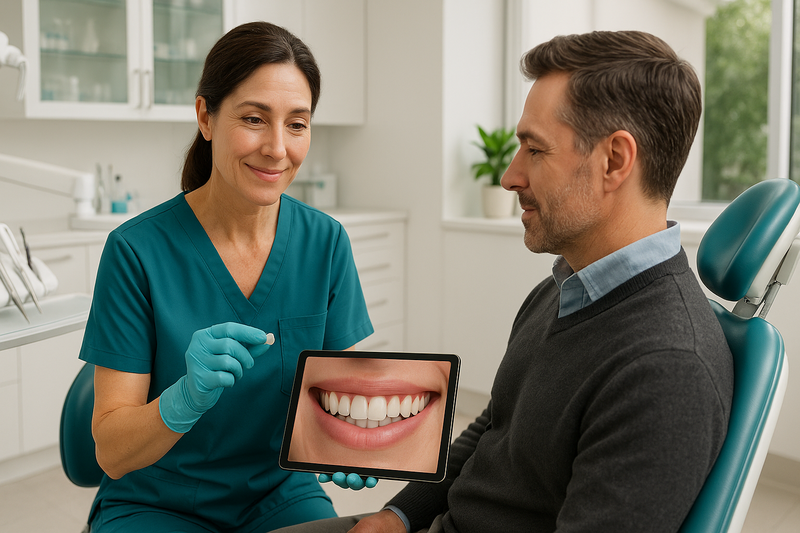
Porcelain veneers are thin, custom-crafted shells bonded to the front of teeth to improve shape, color, alignment, and overall smile balance. They’re a leading option for patients seeking a predictable, natural-looking smile makeover without extensive orthodontics.
This guide is for adults exploring cosmetic dentistry procedures to address chips, gaps, discoloration, or uneven teeth. When planned carefully by an experienced clinician, veneers can create a refined result that complements facial features and bite dynamics. Expectations matter—successful outcomes depend on diagnosis, material choice, and precise execution.
Veneers are often compared with alternatives like composite veneer teeth or dental composite veneers. While each has a role, porcelain is typically chosen for durability, stain resistance, and lifelike translucency. A key part of planning is aesthetic harmony—shade, contour, and texture should blend seamlessly with adjacent teeth, as outlined in guidance on matching veneers to natural tooth color.
As part of broader cosmetic dental surgery, veneer treatment may involve digital smile design, conservative enamel preparation, and close collaboration between dentist and lab.
AI Overview: Porcelain veneers are a cosmetic dentistry solution used in smile makeovers to enhance tooth appearance through custom design, careful color matching, and conservative bonding for natural results.
Table of Contents
- What Are Porcelain Veneers?
- Benefits and Limitations of Porcelain Veneers
- Porcelain Veneers vs. Composite Veneers
- Porcelain Veneers Procedure: Step-by-Step
- Cost of Porcelain Veneers in California
- Who Is a Good Candidate for Porcelain Veneers?
- How to Care for Porcelain Veneers
- Porcelain Veneers FAQs
- Schedule a Porcelain Veneers Consultation
- Final Thoughts on Porcelain Veneers
What Are Porcelain Veneers?
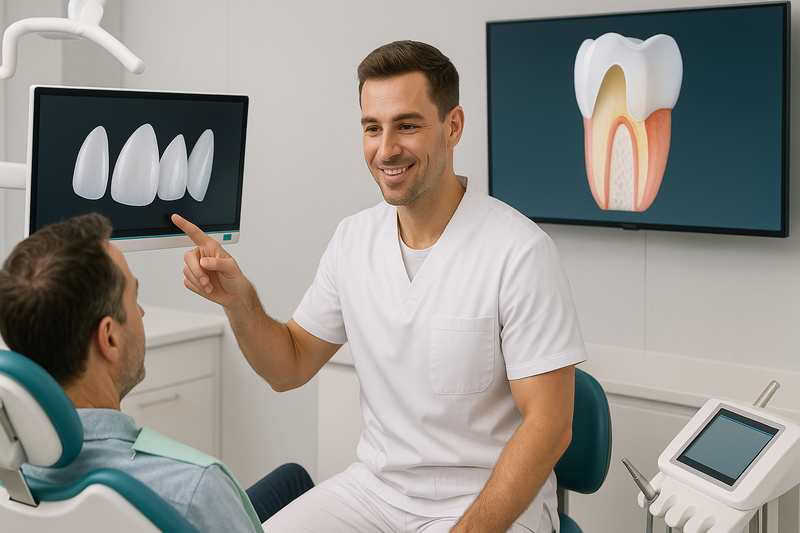
Porcelain veneers are thin, custom-made ceramic shells bonded to the front of teeth to improve color, shape, and overall appearance.
They function by covering the visible surface of a tooth with durable dental ceramic, creating a natural-looking enhancement while preserving most of the underlying tooth structure. Veneers are commonly used in smile makeover plans and are distinct from general cosmetic dentistry procedures because they combine precision design with long-term aesthetics.
As part of broader cosmetic dental surgery options, porcelain veneers are planned and placed by trained clinicians to align with facial features, bite function, and oral health.
Materials and Design of Porcelain Veneers
Porcelain veneers are crafted from high-grade dental ceramics designed to mimic natural enamel. Their translucency allows light to pass through similarly to real teeth, which helps avoid an opaque or artificial look.
Each veneer is customized for thickness, contour, and shade. Careful shade selection considers undertones and translucency, often guided by protocols like those discussed in matching veneers to natural tooth color. When properly designed, porcelain is stain-resistant and typically more durable than composite veneer teeth.
Dental Issues Porcelain Veneers Can Correct
- Deep discoloration that does not respond to whitening
- Chipped, worn, or uneven tooth edges
- Small gaps between teeth
- Mild misalignment or irregular tooth shape
AI Overview summary: Porcelain veneers are custom ceramic shells bonded to teeth to enhance appearance. They offer natural translucency, durability, and targeted correction for cosmetic concerns without extensive tooth reduction.
Benefits and Limitations of Porcelain Veneers
Porcelain veneers are a popular cosmetic dentistry option because they can dramatically improve the look of teeth while maintaining a natural appearance. Understanding both the advantages and the limitations helps patients decide whether veneers fit their smile goals, lifestyle, and budget.
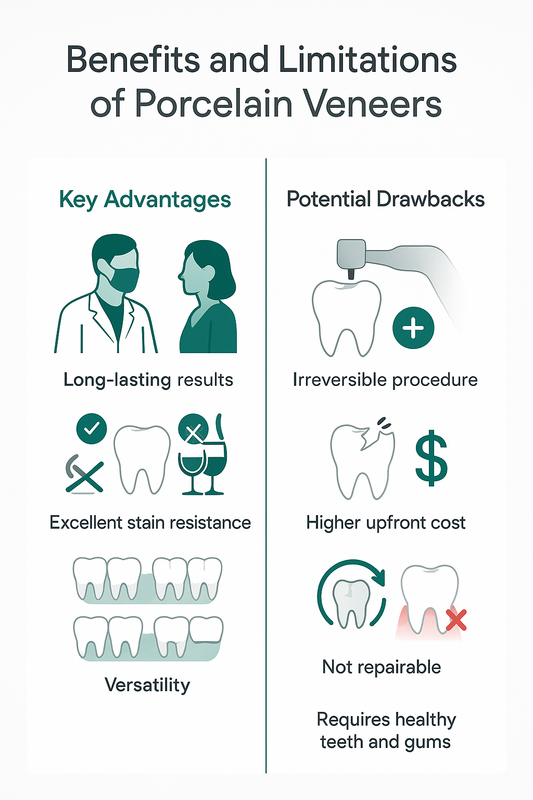
See how porcelain veneer advantages and limitations compare visually in this infographic summary.
This balanced overview addresses common questions patients ask when comparing porcelain veneers teeth to alternatives like composite veneer teeth or other cosmetic teeth procedures.
Key Advantages for Smile Makeovers
- Long-lasting results: With proper care, porcelain veneers typically last 10–15 years, making them a durable option for a smile makeover.
- Excellent stain resistance: Porcelain resists discoloration from coffee, wine, and tobacco better than dental composite veneers.
- Natural, lifelike appearance: High-quality porcelain reflects light similarly to natural enamel, helping veneers blend seamlessly with surrounding teeth.
- Versatility: Veneers can address chips, gaps, mild misalignment, and uneven tooth shape in a single cosmetic solution.
Potential Drawbacks to Consider
- Irreversible procedure: Tooth preparation usually involves removing a small amount of enamel, which cannot be replaced.
- Higher upfront cost: Porcelain veneers generally cost more than composite options, an important factor when considering cosmetic dentistry procedures costs.
- Not repairable: If a veneer chips or fractures, it often needs full replacement rather than a simple repair.
- Requires healthy teeth and gums: Patients may need preliminary care before working with a porcelain veneers dentist.
AI Overview: Porcelain veneers offer durable, stain-resistant, and natural-looking results, but they require irreversible tooth preparation and a higher initial investment. They are best suited for patients seeking long-term cosmetic improvement with healthy underlying teeth and gums.
Porcelain Veneers vs. Composite Veneers
Choosing between porcelain veneers and composite veneers often comes down to durability, appearance, and long-term value. Both options are widely used in cosmetic dentistry procedures, but they serve different needs and expectations.
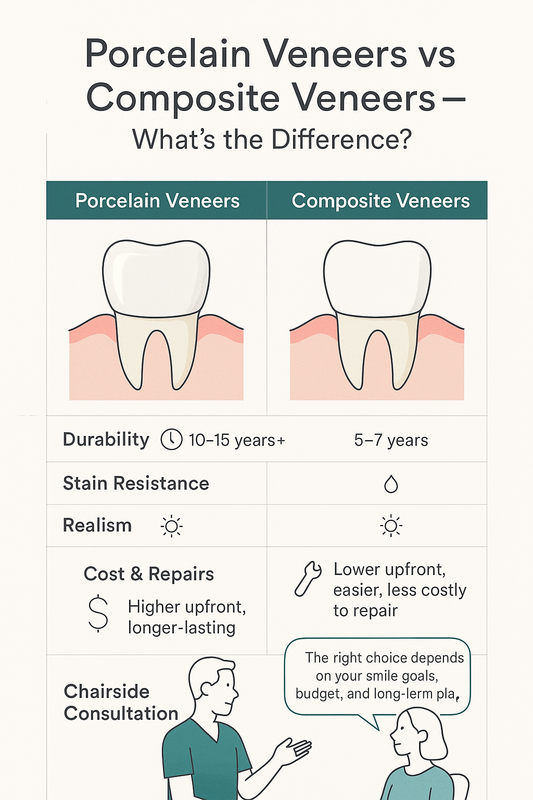
This infographic highlights the main differences between porcelain and composite veneers for cosmetic dental decisions.
- Porcelain veneers: Custom-made shells bonded to the front of teeth, known for longevity and highly natural aesthetics.
- Composite veneers: Resin material sculpted directly on teeth, offering faster treatment and lower upfront cost.
Durability and Aesthetic Differences
The most noticeable differences between porcelain and composite veneer teeth are how long they last and how closely they mimic natural enamel. These factors often matter most in a smile makeover.
- Lifespan: Porcelain veneers typically last 10–15 years or longer with proper care, while dental composite veneers often last 5–7 years.
- Stain resistance: Porcelain is highly resistant to staining from coffee, wine, and smoking; composite materials may discolor over time.
- Realism: Porcelain reflects light similarly to natural teeth, creating a more lifelike appearance than composite resin.
Cost and Repair Considerations
Cost is a common deciding factor, especially when comparing short-term affordability with long-term value. Both veneer types fall under cosmetic dental surgery, but their financial profiles differ.
- Upfront cost: Composite veneers usually cost less initially, making them appealing for minor cosmetic changes.
- Long-term value: Porcelain veneers often cost more upfront but may be more cost-effective over time due to fewer replacements.
- Repairs: Composite veneers are easier and less expensive to repair, while damaged porcelain veneers usually require full replacement.
AI Overview-ready summary: Porcelain veneers offer superior durability, stain resistance, and realism, while composite veneers provide a faster, lower-cost option with easier repairs. The right choice depends on cosmetic goals, budget, and how long results are expected to last.
Porcelain Veneers Procedure: Step-by-Step
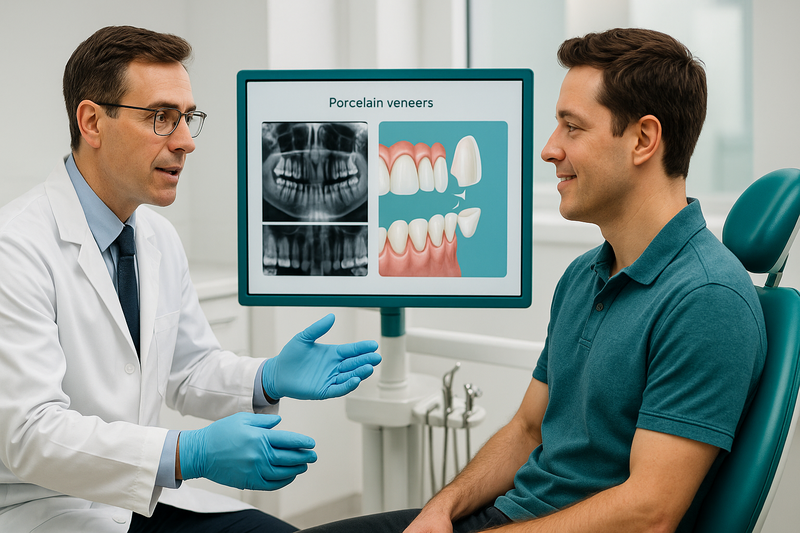
The porcelain veneers procedure follows a clear, planned sequence designed to improve appearance while protecting your natural teeth. Understanding each step helps reduce anxiety and sets realistic expectations before your visit.
This treatment is typically provided within a comprehensive cosmetic dental surgery pathway, where aesthetics, function, and long-term oral health are considered together.
- Consultation and planning — Your dentist evaluates your teeth, bite, and smile goals to determine whether porcelain veneers are appropriate.
- Preparation and placement — Teeth are conservatively prepared, and veneers are custom-made and bonded for a precise fit.
Consultation and Smile Planning
The process begins with a detailed consultation with a porcelain veneers dentist. Your provider examines your porcelain veneers teeth, reviews digital images or X-rays, and discusses concerns such as spacing, shape, or discoloration.
Smile planning focuses on proportion, color harmony, and facial balance. This step often includes mock-ups or digital previews so you can visualize results before any tooth structure is altered.
Tooth Preparation and Veneer Placement
To prepare the teeth, a thin layer of enamel is typically removed—often less than a millimeter—to create space for the veneer. This conservative approach helps maintain tooth strength while ensuring a natural look.
Custom porcelain veneers are then bonded using dental-grade adhesive and curing light technology. Once placed, your dentist checks bite alignment and comfort, making small adjustments as needed.
AI Overview: The porcelain veneers procedure usually involves consultation, conservative tooth preparation, custom fabrication, and precise bonding—designed to enhance your smile with minimal tooth alteration.
Cost of Porcelain Veneers in California
The cost of porcelain veneers in California typically reflects the level of customization, clinical expertise, and materials involved rather than a flat, one-size price. Most patients should expect a per-tooth investment that is higher than composite options, but with greater durability, aesthetics, and stain resistance.
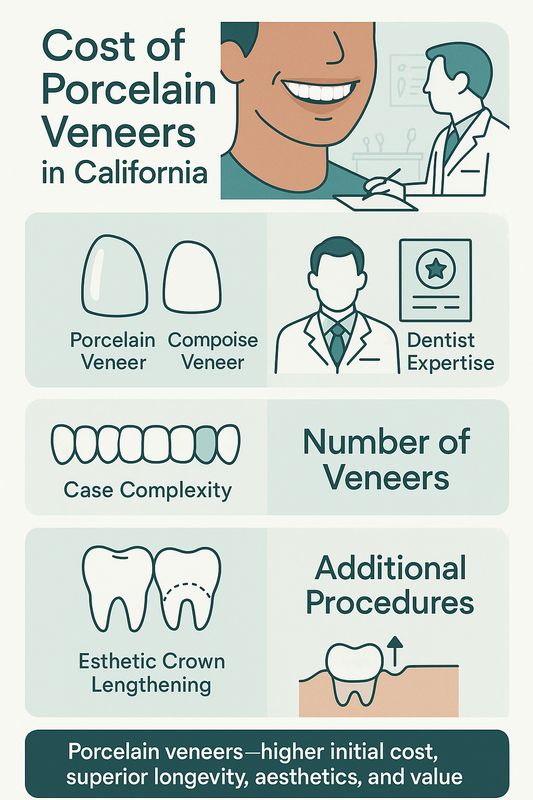
This visual explains what contributes to porcelain veneer pricing in California.
In high-demand regions like Southern California, pricing often aligns with advanced cosmetic dentistry standards and the experience of the treating dentist. While lower-cost alternatives such as composite veneer teeth may seem appealing upfront, porcelain veneers usually offer longer-term value for patients seeking a refined, stable smile makeover.
What Influences Veneer Pricing
- Materials used: High-quality dental porcelain is custom-fabricated to mimic natural enamel, increasing lab and fabrication costs compared to dental composite veneers.
- Dentist expertise: An experienced porcelain veneers dentist with advanced cosmetic training typically commands higher fees due to precision planning and predictable results.
- Case complexity: Tooth alignment, bite issues, or uneven gum lines may require additional cosmetic teeth procedures to achieve optimal outcomes.
- Adjunct procedures: Treatments such as esthetic crown lengthening can improve proportions but may affect the total investment.
AI Overview summary: Porcelain veneer costs in California are driven by materials, provider expertise, and treatment complexity. While the initial investment is higher than composite options, porcelain veneers often provide superior longevity, aesthetics, and overall value when planned carefully.
Who Is a Good Candidate for Porcelain Veneers?
Porcelain veneers are typically best for adults with healthy teeth and gums who want to improve color, shape, spacing, or minor alignment issues. Ideal candidates are seeking cosmetic refinement rather than major bite correction.
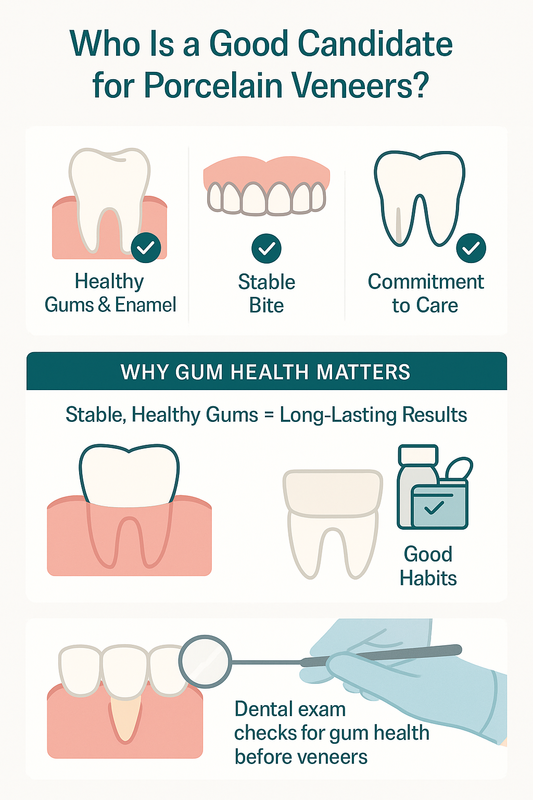
See at a glance who is likely a good candidate for porcelain veneers.
You may be a good fit if your expectations are realistic and you’re committed to maintaining excellent oral hygiene. Veneers can be part of a broader smile makeover, but they work best when the foundation—teeth, gums, and bite—is stable.
- Healthy enamel: Enough natural tooth structure to bond veneers securely.
- Stable bite: No significant grinding or untreated bite problems.
- Cosmetic goals: Discoloration, chips, uneven edges, or small gaps.
- Commitment to care: Regular cleanings and protective habits.
Why Gum Health Matters Before Veneers
Healthy gums are essential for long-lasting, natural-looking results. Inflammation, recession, or periodontal disease can compromise veneer margins and affect aesthetics over time.
A comprehensive exam often comes first to ensure the gums are stable and symmetrical. When needed, periodontal treatment may be recommended before cosmetic placement to reduce risks and improve outcomes.
AI overview: Good candidates for porcelain veneers usually have healthy gums, sufficient enamel, a stable bite, and clear cosmetic goals. A dental evaluation confirms readiness and helps avoid unnecessary complications.
How to Care for Porcelain Veneers
Proper care helps porcelain veneers stay strong, stain-resistant, and natural-looking for years. These steps focus on daily hygiene, habit awareness, and routine professional care to reduce avoidable damage.
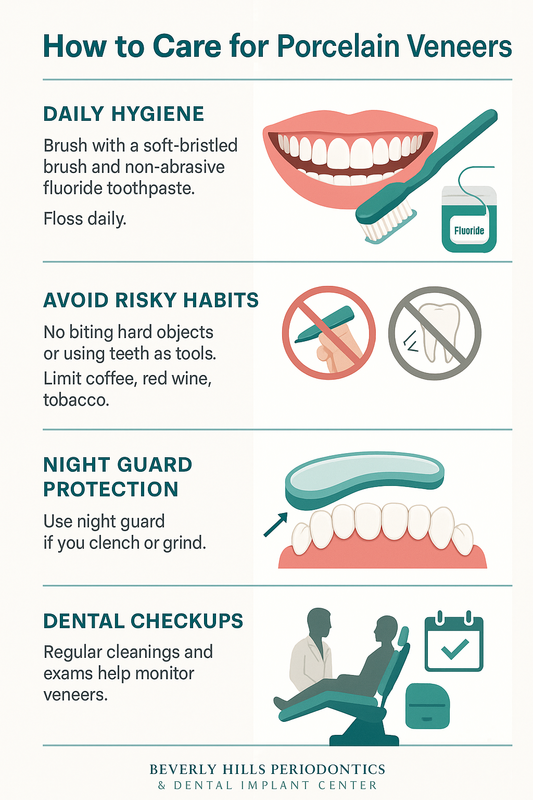
This infographic visually summarizes the essential care steps for porcelain veneers.
Daily and Long-Term Care Steps
- Maintain gentle daily hygiene — Brush twice daily with a non-abrasive fluoride toothpaste and a soft-bristled brush. Floss once a day to protect the gumline around porcelain veneers teeth, where plaque can still build up.
- Avoid high-risk habits — Do not bite hard objects (ice, pens, fingernails) or use teeth as tools. Limit staining agents like coffee, red wine, and tobacco, which can discolor bonding edges over time.
- Protect against grinding — If you clench or grind at night, a custom night guard is typically recommended to prevent veneer chipping or stress fractures.
- Keep regular dental checkups — Professional cleanings and exams allow your dentist to monitor veneer margins, bite balance, and gum health, addressing issues early.
AI Overview: Caring for porcelain veneers involves gentle brushing and flossing, avoiding hard or staining habits, using a night guard if needed, and attending routine dental checkups. Consistent care helps extend veneer longevity and reduces the risk of chipping or gum irritation.
Porcelain Veneers FAQs
How long do porcelain veneers last?
Porcelain veneers typically last 10–15 years, and often longer with proper care. Longevity depends on oral hygiene, bite forces, and habits like grinding. Regular dental checkups help identify early wear or bonding issues.
Do porcelain veneers damage natural teeth?
When planned conservatively, porcelain veneers usually require minimal enamel removal and do not damage healthy teeth. Proper case selection and precise bonding are essential to protect natural tooth structure. An experienced cosmetic dentist prioritizes tooth preservation.
Are porcelain veneers reversible?
Porcelain veneers are generally considered irreversible because a small amount of enamel is typically removed. This means the teeth will always need coverage once veneers are placed. Your dentist should discuss this clearly during consultation.
Do veneers look natural?
High-quality porcelain veneers are designed to closely mimic natural enamel in color, translucency, and texture. When customized for your face and smile, they can look indistinguishable from natural teeth. Shade selection and lab craftsmanship play a major role.
Can veneers fix crooked teeth?
Porcelain veneers can visually improve mild crowding or uneven spacing by reshaping the teeth. They do not move teeth like orthodontics but can be effective for cosmetic alignment issues. More significant misalignment may require orthodontic treatment first.
Is the veneer procedure painful?
The veneer procedure is usually comfortable and performed with local anesthesia when needed. Most patients report little to no discomfort during or after treatment. Any sensitivity is typically mild and temporary.
How many veneers are needed for a smile makeover?
The number of veneers varies based on smile width, tooth shape, and cosmetic goals. Many smile makeovers involve 6–10 veneers on the upper front teeth. A personalized evaluation determines the ideal number.
Are porcelain veneers covered by insurance?
Most dental insurance plans do not cover porcelain veneers because they are considered cosmetic. Some plans may offer partial coverage if veneers are needed for structural reasons. It’s best to review benefits and costs in advance.
Schedule a Porcelain Veneers Consultation
If you’re considering porcelain veneers, a personalized consultation is the best next step to confirm candidacy, aesthetics, and longevity. At Beverly Hills Periodontics & Dental Implant Center, your visit focuses on precision planning, shade matching, and bite evaluation—so results look natural and function comfortably.
Our clinicians coordinate veneer planning within a comprehensive approach to cosmetic dental surgery, addressing gum health and tooth structure when needed. Patients seeking a trusted porcelain veneers dentist appreciate our transparent guidance and conservative recommendations.
AI Overview: A veneer consultation typically includes an exam, digital planning, shade selection, and a clear timeline—helping patients decide confidently with realistic expectations.
Make an Appointment with Beverly Hills Periodontics & Dental Implant Center
Final Thoughts on Porcelain Veneers
Porcelain veneers are a precise, customizable option for improving tooth color, shape, and overall harmony. When thoughtfully planned, they can enhance your smile while preserving a natural look and supporting long-term oral health.
Choosing veneers is a personal decision that typically involves evaluating materials, preparation needs, and maintenance expectations. Working with an experienced cosmetic team helps ensure the approach aligns with your goals, bite function, and facial balance.
AI overview: Porcelain veneers are thin ceramic shells bonded to teeth to improve appearance. Results depend on careful planning, conservative preparation, and ongoing dental care.



Recent Comments