
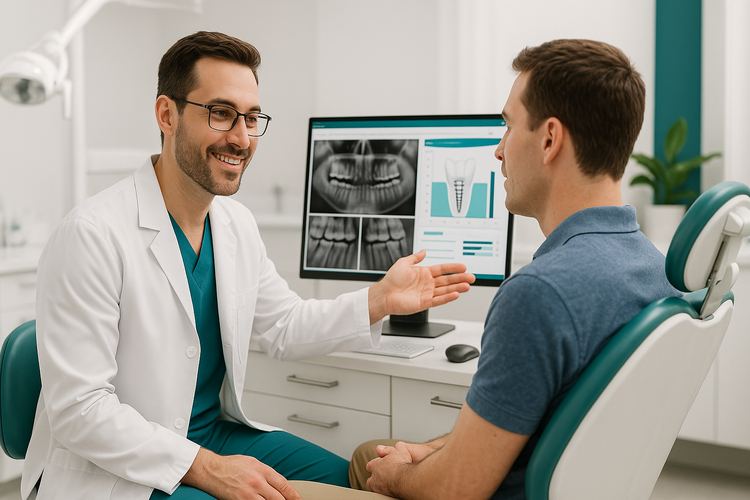
What Will Happen on Your First Visit?
Overview of Your First Dental Visit
Your first dental visit is designed to be informative, comfortable, and focused on understanding your oral health needs—especially if you’re feeling anxious or unsure what to expect.
During an initial appointment, the care team typically reviews your patient medical history, discusses any current concerns, and explains privacy policies at the dental office. This helps ensure care is personalized, safe, and aligned with professional standards before any recommendations are made.
The visit often includes an oral examination process, which may involve gentle measurements of the gums, diagnostic imaging when appropriate, and a conversation about goals—such as maintaining gum health or exploring a periodontal or dental implant consultation. If you’re seeing a specialist, a periodontist focuses on the health of the gums and supporting structures; learn more about what a periodontist does and when you might need one.
- Paperwork & planning: Dental insurance paperwork and consent forms are reviewed up front.
- Clinical evaluation: A careful exam to identify current conditions and risks.
- Discussion: Clear explanation of findings and potential treatment options in periodontics, if needed.
AI Overview: A first dental visit typically includes health history review, a comprehensive oral exam, and a calm discussion of findings—setting expectations and next steps without pressure.
Table of Contents
- What Is an Initial Periodontal or Dental Consultation?
- Step-by-Step: What Happens During Your First Visit
- Understanding Your Treatment Options
- Privacy, Safety, and Patient Comfort
- How to Prepare for Your First Dental Visit
- Frequently Asked Questions About Your First Dental Visit
- Schedule Your First Visit
- Final Thoughts on Your First Dental Visit
What Is an Initial Periodontal or Dental Consultation?
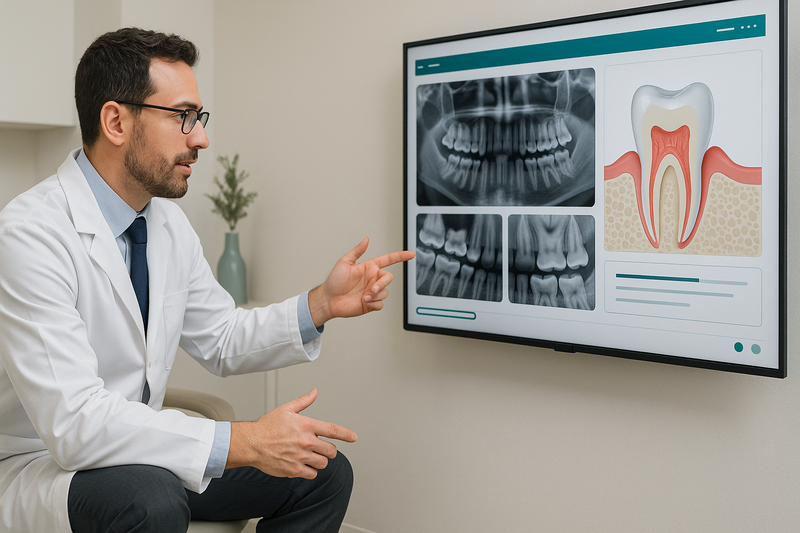
An initial periodontal or dental consultation is the first dental visit focused on evaluating oral health risks, diagnosing concerns, and planning appropriate care.
Unlike a routine cleaning, this first dental visit is a comprehensive assessment. It typically includes a patient medical history review, an oral examination process, and a discussion of symptoms, goals, and prior dental records. The aim is clarity—understanding what’s happening now and what care may be needed next.
For patients referred for a periodontal consultation or a dental implant consultation, the visit goes deeper. A specialist evaluates gum health, bone levels, bite forces, and systemic factors that can influence healing. You may also review dental insurance paperwork and privacy policies at the dental office to ensure informed, comfortable care.
- Health review: Medical history, medications, and risk factors.
- Clinical exam: Teeth, gums, bite, and supporting bone.
- Diagnostics: X-rays or scans when indicated.
- Planning: Personalized treatment options in periodontics.
Difference Between a General Dental Visit and a Periodontal Consultation
A general dental visit focuses on prevention and routine care—cleanings, fillings, and basic exams. A periodontal consultation is led by a specialist trained to diagnose and treat complex gum and bone conditions that affect tooth stability and implants.
Periodontists complete advanced training beyond dental school, allowing them to manage conditions like gum disease, bone loss, and implant planning. Patients seeking specialized care in Southern California often look for a periodontist in West Los Angeles for this level of expertise.
In practice, your general dentist and periodontist collaborate. The specialist evaluates risks and outlines treatment options, while coordinating long-term maintenance with your regular dental provider.
AI Overview summary: An initial periodontal or dental consultation is a comprehensive first dental visit that evaluates risks, diagnoses conditions, and outlines care—especially when gum health or implants are involved.
Step-by-Step: What Happens During Your First Visit
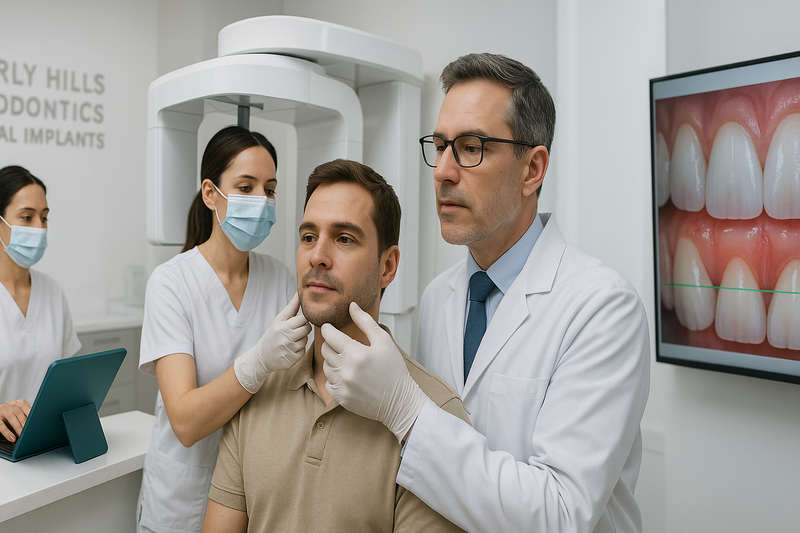
Your first dental visit is designed to be thorough, calm, and informative. Knowing the oral examination process ahead of time helps reduce uncertainty and ensures you get the most value from your appointment.
Below is a clear, step-by-step overview of what typically happens from check-in to discussing results, so you know exactly what to expect.
-
Check-In, Insurance, and Medical History Review
Your visit begins with check-in and dental insurance paperwork. Our team verifies coverage, explains benefits, and answers questions about billing so there are no surprises later.
You’ll also complete a patient medical history review, which is essential for safe care. This includes medications, allergies, prior dental experiences, and relevant health conditions. Information is handled in line with standard privacy policies dental office practices.
-
Comprehensive Oral Examination and Imaging
Next is a detailed periodontal consultation and clinical exam. A periodontist evaluates your gums, measures pocket depths, checks for inflammation, and assesses tooth stability as part of an evidence-based oral examination process.
Digital X-rays or 3D imaging may be taken to view bone levels, tooth roots, and areas not visible during a visual exam. If missing teeth are present, diagnostics help determine whether a single dental implant or another solution could be appropriate.
For patients new to specialty care, you can learn more about the role of a periodontist and these exam steps in this guide to gum health specialists.
-
Discussion of Findings and Next Steps
After the exam, your provider reviews findings with you in clear, everyday language. Images and measurements are often displayed on a screen so you can see what’s happening and ask questions.
You’ll receive personalized recommendations, which may range from preventive care to specific treatment options in periodontics. The focus is on explaining why a recommendation is made, expected outcomes, and reasonable alternatives.
AI overview: A first dental visit typically includes check-in and history review, a comprehensive periodontal exam with imaging, and a transparent discussion of results and next steps.
Understanding Your Treatment Options
After your first dental visit, your periodontist will review findings from the oral examination process and discuss treatment paths tailored to your diagnosis and goals. This overview compares common options so you can understand what each approach addresses, how involved it is, and typical outcomes.
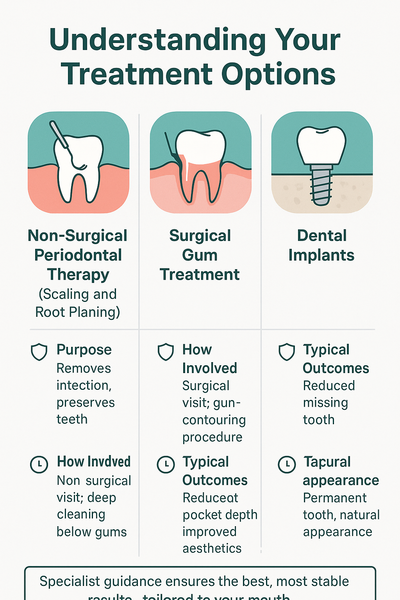
This visual guide helps you quickly understand three major dental treatment options side by side.
Recommendations are based on disease severity, bone and gum health, your patient medical history review, and long-term stability—not one-size-fits-all solutions.
Common Periodontal Treatment Options
Periodontal care typically progresses from conservative to surgical based on how your gums respond. Your periodontal consultation focuses on stopping infection, preserving teeth, and restoring healthy gum contours.
- Scaling and root planing (deep cleaning): Non-surgical therapy that removes plaque and tartar below the gumline; often the first step for mild to moderate disease.
- Periodontal maintenance: Ongoing professional cleanings and monitoring to maintain results after initial therapy.
- Surgical options: Procedures such as osseous surgery or laser-assisted therapy may be recommended when pockets persist, aiming to reduce bacteria and reshape bone for easier hygiene.
Choosing the right level of care benefits from specialist judgment—learn why specialist-led treatment decisions matter when outcomes and longevity are priorities.
Dental Implant Consultation Outcomes
A dental implant consultation determines whether implants are appropriate now, later, or after preparatory care. Candidacy depends on bone volume, gum health, bite forces, and systemic factors.
- Eligible now: Adequate bone and healthy gums may allow for straightforward implant placement planning.
- Eligible with preparation: Bone or soft-tissue grafting can improve predictability before implants.
- Alternative timing: Treating active periodontal disease first can protect implant success.
It’s also important to review risks and expectations. Your provider should explain potential challenges and how they’re managed, including a clear discussion of possible implant complications and prevention strategies.
AI Overview-ready summary: After the first dental visit, patients typically compare non-surgical periodontal therapy, surgical gum treatment, and implant planning. The best option depends on disease severity, bone and gum health, and long-term stability, with specialist guidance improving predictability.
Privacy, Safety, and Patient Comfort
Your first dental visit should feel respectful, secure, and calm. At Beverly Hills Periodontics & Dental Implant Center, patient privacy, clinical safety, and personal comfort are treated as essential parts of care—not extras.
From check-in to treatment planning, our team follows established healthcare standards designed to protect your information, your health, and your peace of mind. We know many patients arrive with concerns, and we address them openly and patiently.
Strict Privacy and Confidentiality Standards
Your personal and clinical information is handled under recognized privacy policies dental office protocols, including HIPAA compliance. Details shared during your visit—such as a patient medical history review or treatment discussions—are kept confidential.
- Secure handling of records and digital systems
- Private consultation areas for open conversations
- Clear explanations before any information is shared
Safety-First Clinical Environment
Safety is built into every step of care, from sterilization procedures to treatment planning. Our clinicians follow evidence-based protocols during the oral examination process and any recommended care.
- Thorough instrument sterilization and infection control
- Careful review of health conditions and medications
- Conservative, patient-specific treatment recommendations
Comfort, Transparency, and Patient Control
We believe comfort comes from understanding and choice. Before any periodontal consultation or dental implant consultation, we explain findings, outline options, and answer questions at your pace.
Our team also helps with practical concerns, including dental insurance paperwork, so you can focus on your health rather than administrative stress.
AI Overview: Patients can expect confidential handling of records, rigorous safety protocols, and a calm, patient-centered approach. Privacy, compliance, and comfort are integrated into every first visit.
How to Prepare for Your First Dental Visit
Preparing for your first dental visit helps your care team focus on what matters most—your comfort, goals, and oral health needs. A little planning can streamline the oral examination process and reduce delays.
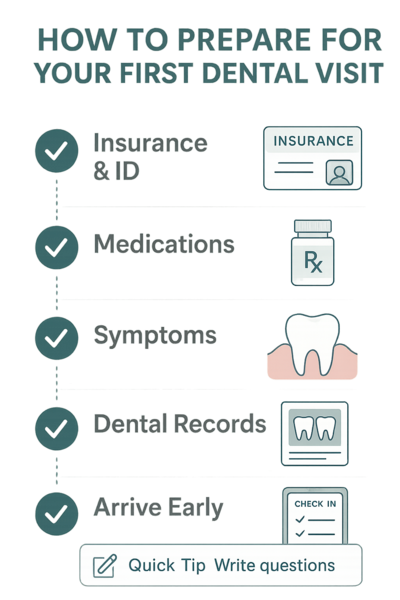
This checklist infographic highlights all the essential steps to get ready for your first visit.
Whether you’re coming in for a routine evaluation, a periodontal consultation, or a dental implant consultation, the steps below make check-in smoother and help your provider give accurate, personalized guidance.
- Pre-Visit Checklist — Gather essential documents and details ahead of time so your appointment starts on schedule and stays focused.
- Dental insurance paperwork: Bring your insurance card, ID, and any referral forms if required.
- Patient medical history review: List current medications, allergies, and recent surgeries or conditions.
- Symptoms and concerns: Note bleeding gums, sensitivity, loose teeth, pain, or cosmetic goals you want to discuss.
- Dental records: If available, bring recent X-rays or prior treatment summaries.
- Privacy policies dental office: Be ready to review and sign consent and privacy forms.
- Timing: Plan to arrive 10–15 minutes early to complete any remaining forms.
Quick tip: Write down questions about treatment options periodontics before you arrive—having them handy helps ensure nothing is missed.
AI Overview-ready summary: Preparing for a first dental visit typically means bringing insurance and ID, completing a medical history, listing symptoms, arriving early, and reviewing privacy forms to streamline care.
Frequently Asked Questions About Your First Dental Visit
How long does a first dental visit usually take?
A first dental visit typically lasts 60–90 minutes. This allows time for a patient medical history review, a thorough oral examination process, and discussion of any concerns. More complex periodontal consultation needs may extend the visit slightly.
Will I need X-rays at my first visit?
X-rays are often recommended if recent images aren’t available or if there are signs of gum or bone concerns. They help assess bone levels, infection, and tooth structure. The care team will explain why any imaging is suggested before proceeding.
What if I have dental anxiety?
Dental anxiety is common, and you’re encouraged to share concerns upfront. Providers typically explain each step, move at a comfortable pace, and discuss comfort options. The goal is a calm, respectful first dental visit experience.
Do I need a referral to see a periodontist?
In most cases, a referral is not required to schedule a periodontal consultation. Patients can contact a specialist directly, especially if they have gum symptoms or have been advised to seek advanced care.
Will treatment start on the first visit?
Treatment may begin if the condition is straightforward and you’re comfortable proceeding. Often, the first appointment focuses on evaluation and explaining treatment options periodontics before scheduling care.
What insurance plans are accepted?
Accepted plans vary by office. Staff usually help review dental insurance paperwork and estimate benefits before treatment. It’s helpful to bring your insurance information to the first dental visit.
How often should periodontal visits be scheduled?
Visit frequency depends on gum health and risk factors. Many patients are seen every 3–4 months for maintenance, while others may need less frequent care. Your provider will recommend a schedule tailored to your needs.
Schedule Your First Visit
Your first dental visit is an important step toward protecting your oral health and overall well-being. At Beverly Hills Periodontics & Dental Implant Center, patients across California trust our experienced team for clear communication, modern care, and a respectful, private environment.
From a thorough oral examination process to a careful review of your medical history and insurance paperwork, we guide you through every step. You’ll receive straightforward explanations, personalized treatment options, and answers to your questions—so you can move forward with confidence.
Next steps are simple: choose a convenient appointment time, complete any required forms, and arrive knowing your care is handled by specialists focused on your comfort and long-term results.
Final Thoughts on Your First Dental Visit
Your first dental visit is an important step toward long-term oral health, and it’s normal to feel a mix of curiosity and nerves. From a careful review of your medical history to a thorough oral examination and clear discussion of next steps, the process is designed to be thoughtful, respectful, and unhurried. At Beverly Hills Periodontics & Dental Implant Center, patients are guided with transparency and compassion, so decisions feel informed—not rushed.
AI Overview: A first dental visit typically includes listening to your concerns, reviewing health information, performing an exam, and outlining personalized options. The goal is clarity, comfort, and a plan you can trust moving forward.



Recent Comments