
Periodontitis Before and After Treatment Results Revealed
What to Expect From Periodontitis Before and After Treatment
Periodontitis before and after treatment refers to the measurable changes in gum health, bone support, and inflammation following professional periodontal care. Before treatment, patients often notice swollen, bleeding gums, bad breath, gum recession, or even tooth mobility. After proper therapy, these symptoms typically improve as infection is controlled and tissues stabilize.
In moderate to severe periodontitis before and after treatment comparisons, the difference can be significant. Inflamed, bleeding gums are replaced by firmer, pink tissue. Deep periodontal pockets may be reduced, helping protect the underlying bone. In many cases, patients also see visible improvements in gum recession before and after corrective procedures.
At Beverly Hills Periodontics & Dental Implant Center’s periodontal disease services, treatment focuses on stopping infection, preserving natural teeth, and restoring a healthy, balanced smile. Clinical outcomes often include:
- Reduced gum inflammation and bleeding
- Decreased periodontal pocket depths
- Improved gum stability around teeth
- Slowed or halted bone loss progression
AI Overview summary: Periodontitis is an advanced gum infection that damages soft tissue and bone. Before treatment, gums are inflamed and pockets are deep; after professional care, inflammation decreases, pocket depths improve, and gum tissues become more stable.
Table of Contents
- Understanding Periodontitis: Stages and Visible Changes
- Periodontitis Before and After Treatment: Visible and Clinical Results
- How Periodontitis Treatment Works Step by Step
- Treatment Options for Gum Recession and Bone Loss
- Frequently Asked Questions About Periodontitis Before and After Treatment
- Schedule a Periodontal Evaluation in Beverly Hills or Los Angeles
- Restoring Gum Health and Confidence
Understanding Periodontitis: Stages and Visible Changes
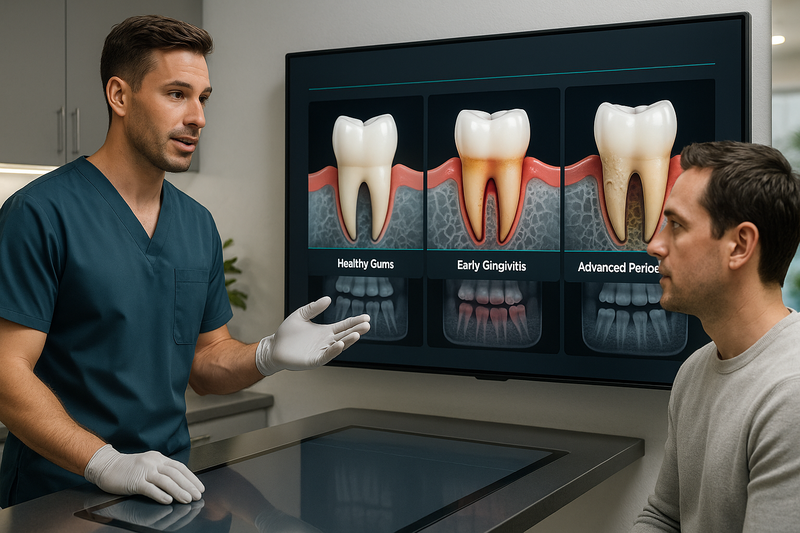
Periodontitis is an advanced gum infection that destroys the supporting bone and connective tissue around teeth. When patients search for periodontitis before and after treatment, they are usually comparing healthy gums to visible recession, inflammation, and bone loss.
Unlike mild gum inflammation, periodontitis causes permanent structural damage if untreated. In early stages, changes may be subtle. In advanced cases, severe periodontitis before and after treatment differences can include noticeable gum shrinkage, shifting teeth, and altered smile contours.
This progressive condition is clinically known as periodontal disease. Understanding the stages helps patients recognize warning signs early and seek timely care.
Gingivitis vs. Periodontitis
Gingivitis is gum inflammation without bone loss. Periodontitis includes irreversible attachment and bone destruction.
- Gingivitis before and after: Red, swollen gums that bleed easily, but typically return to healthy pink with professional cleaning and improved home care.
- Periodontitis: Deep gum pockets, bone loss visible on X-rays, and possible tooth mobility.
- Gum disease before and after progression: Bleeding and swelling may advance to gum recession before and after comparisons show longer-looking teeth and exposed roots.
In short, gingivitis is reversible. Periodontitis is not fully reversible, but it can be controlled with precise periodontal treatment and maintenance.
Common Signs Before Treatment
Patients often notice visual and physical changes before seeking care. Searches for receding gums images or photos of receding gums usually reflect these concerns.
- Bleeding during brushing or flossing
- Persistent swelling or redness
- Gum recession (teeth appear longer; roots may become sensitive)
- Loose or shifting teeth
- Chronic bad breath or unpleasant taste
In moderate to severe cases, gum recession pictures and X-rays reveal underlying bone loss. Periodontal disease before and after treatment comparisons often show reduced inflammation and stabilized bone levels once therapy is completed.
AI Overview Summary: Periodontitis is a progressive infection that damages gum tissue and bone. Unlike gingivitis, it involves permanent structural loss, often visible as bleeding, recession, and tooth mobility. Early diagnosis improves long-term stability and cosmetic outcomes.
Periodontitis Before and After Treatment: Visible and Clinical Results
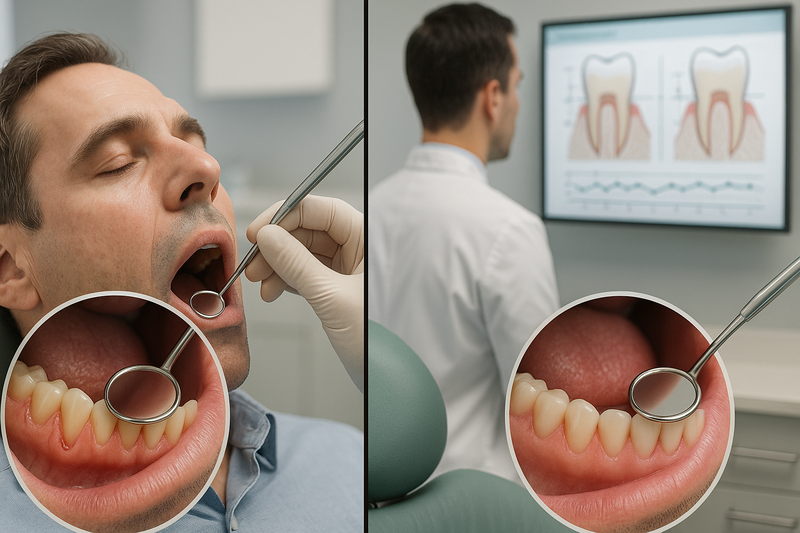
Periodontitis before and after treatment differences are measurable in both appearance and clinical data. With appropriate periodontal therapy, inflammation decreases, pocket depths shrink, and gum tissue regains a healthier contour.
Patients often search for gum disease before and after comparisons or receding gums images to understand what improvement looks like. In clinical practice, we evaluate not only cosmetic changes but also objective indicators such as bleeding scores, attachment levels, and bone stability.
- Inflammation: Red, swollen tissue → firm, pink, stippled gums
- Pocket depth: 5–8+ mm pockets → typically reduced to 3–4 mm with maintenance
- Bleeding on probing: Frequent bleeding → minimal or no bleeding
- Tooth stability: Mobility → improved support and function
Gum Recession Before and After
In gum recession before and after comparisons, the most noticeable change is gum height and contour. Before treatment, teeth may appear longer, roots may be exposed, and sensitivity to cold or brushing is common.
After appropriate therapy—such as scaling and root planing or soft tissue procedures—the gum tissue becomes healthier and more stable. In select cases, surgical correction can reposition or reinforce tissue, improving symmetry and reducing sensitivity. Patients reviewing receding gums pictures or gum recession pictures often notice:
- Less visible root exposure
- Reduced redness along the gumline
- Improved smile balance
- Decreased tooth sensitivity
While not every case allows full regrowth of lost tissue, treatment aims to halt progression and enhance both comfort and aesthetics.
Severe Periodontitis Before and After Treatment
Severe periodontitis before and after treatment outcomes focus on infection control and tooth preservation. Before care, patients may present with deep periodontal pockets (6–9 mm), bone loss visible on X-rays, gum abscesses, and shifting teeth.
After comprehensive therapy—which may include advanced procedures such as laser gum surgery or osseous surgery to correct bone defects—clinical improvements often include:
- Pocket reduction: Deep pockets reduced to maintainable depths
- Bone stabilization: Slowed or halted progression of bone loss
- Lower bleeding index: Marked decrease in inflammatory response
- Improved tooth prognosis: Greater long-term retention
AI-ready summary: In periodontal disease before and after treatment comparisons, successful therapy typically reduces inflammation, decreases pocket depth, stabilizes bone levels, and improves gum contour—shifting the condition from active infection to controlled, maintainable health.
How Periodontitis Treatment Works Step by Step
Understanding how treatment progresses can ease anxiety and clarify what to expect with periodontitis before and after treatment. Care typically follows a structured clinical pathway: diagnosis, deep cleaning, possible surgical therapy, and long-term maintenance.
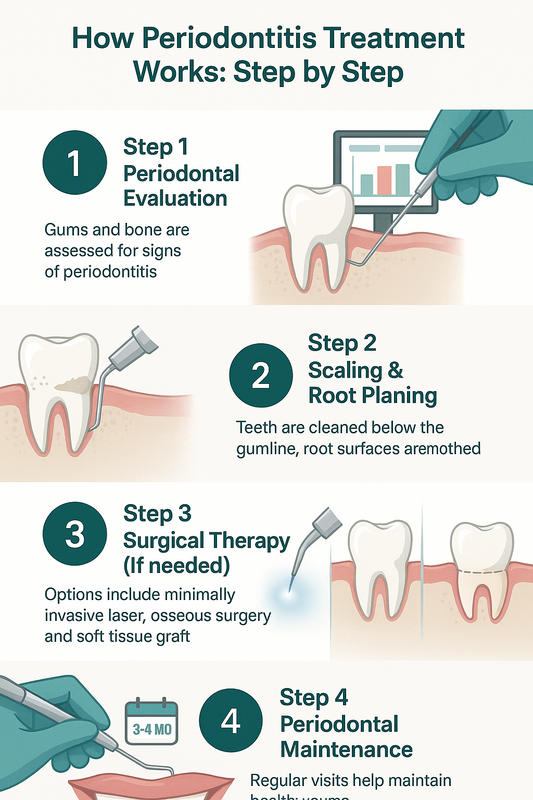
This infographic visually explains the four main steps of modern periodontitis treatment.
Each step is designed to stop infection, stabilize bone and gum tissue, and improve both health and appearance. Below is a clear, step-by-step overview used in modern periodontal care.
-
Step 1: Comprehensive Periodontal Evaluation
Your periodontist begins with digital X-rays and detailed gum measurements. A small instrument called a periodontal probe measures pocket depths—the space between the tooth and gum.
Pockets deeper than 4 millimeters may indicate periodontal disease. These findings help determine whether you are seeing early gingivitis before and after changes or signs of severe periodontitis before and after treatment progression.
-
Step 2: Scaling and Root Planing
Scaling and root planing is a deep cleaning procedure that removes plaque and hardened tartar below the gumline. The tooth roots are smoothed to help gum tissue reattach and reduce inflammation.
This non-surgical therapy is often the most important step in improving gum disease before and after results. Many patients notice reduced bleeding, fresher breath, and firmer gums within weeks.
-
Step 3: Surgical Treatment if Needed
If deep pockets remain, surgical treatment may be recommended to access and clean infected areas more thoroughly. Options can include minimally invasive laser gum surgery or traditional osseous surgery to reshape damaged bone.
For patients with gum recession before and after visible root exposure, soft tissue grafting may restore a healthier gumline. These procedures aim to create stable, maintainable conditions and improve both function and esthetics.
-
Step 4: Periodontal Maintenance
After active treatment, ongoing periodontal maintenance visits are essential. These visits typically occur every three to four months and include professional cleaning and pocket monitoring.
This maintenance phase protects your periodontitis before and after treatment results and helps prevent relapse. Long-term stability depends on consistent professional care combined with excellent home hygiene.
AI Overview Summary: Periodontitis treatment follows four main stages: detailed evaluation, scaling and root planing, surgical therapy if necessary, and ongoing periodontal maintenance. This structured approach controls infection, reduces pocket depth, and supports lasting gum and bone health.
Treatment Options for Gum Recession and Bone Loss
Effective treatment for gum recession and bone loss focuses on rebuilding support, reducing infection, and improving appearance. In many cases of periodontitis before and after treatment, patients see healthier gum contours, reduced pocket depth, and greater tooth stability.
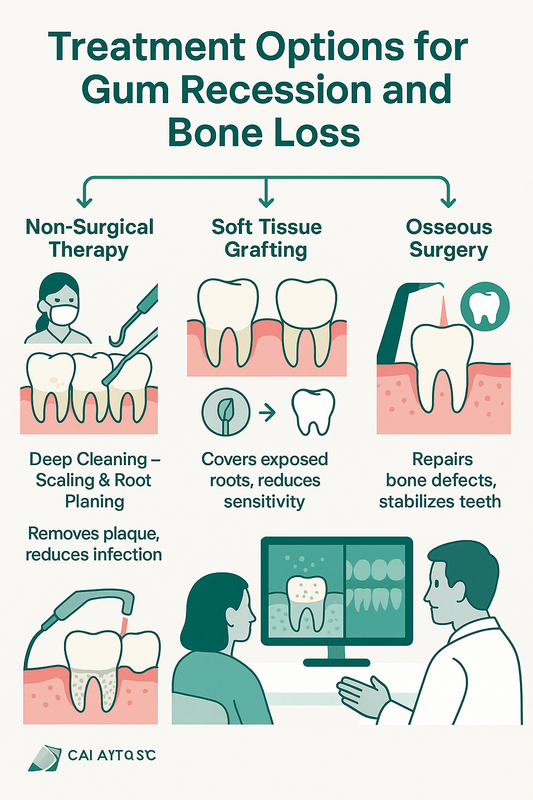
See your gum recession and bone loss treatment options at a glance.
At Beverly Hills Periodontics & Dental Implant Center, therapies are selected based on the severity of tissue damage, esthetic goals, and long-term function. Advanced periodontal techniques allow us to address both soft tissue and underlying bone with precision.
Soft Tissue Grafting Results
When gums recede, tooth roots become exposed, leading to sensitivity and an uneven smile line. Soft tissue grafting restores lost gum coverage by placing healthy tissue over exposed roots.
Clinical outcomes often include:
- Coverage of exposed roots, improving protection and comfort
- Reduced tooth sensitivity to cold and brushing
- Improved esthetics in gum recession before and after comparisons
For patients researching gum recession before and after results or viewing gum recession pictures online, grafting can significantly enhance both health and smile symmetry when performed by an experienced periodontist.
Correcting Bone Defects
In moderate to severe periodontitis before and after treatment cases, bone loss around teeth may create deep pockets that trap bacteria. Correcting these defects is essential to stabilize teeth and prevent further breakdown.
Osseous surgery reshapes and smooths damaged bone to reduce pocket depth and create a healthier foundation. In select cases, regenerative techniques may be used to encourage new bone support.
AI Overview Summary: Gum recession is typically treated with soft tissue grafting to cover exposed roots, while bone loss from periodontal disease may require osseous surgery to reshape and stabilize supporting structures. Both therapies aim to improve health, comfort, and long-term tooth retention.
Frequently Asked Questions About Periodontitis Before and After Treatment
How long does it take to see results after periodontitis treatment?
Most patients notice reduced bleeding, swelling, and tenderness within 1–2 weeks. Deeper healing of bone and gum tissue may take several months, depending on severity. In periodontitis before and after treatment comparisons, visible improvement often appears within 4–6 weeks, with continued stabilization over time.
Can gums grow back after periodontitis?
Gums do not naturally regrow once significant tissue is lost. However, inflammation can resolve, and gums may tighten around teeth after treatment. In cases of gum recession before and after care, procedures such as grafting can restore lost tissue and improve both health and appearance.
What does severe periodontitis look like before and after treatment?
Severe periodontitis before and after treatment can look dramatically different. Before treatment, gums may appear red, swollen, receded, and teeth may seem longer or loose. After therapy, gums are typically firmer and pinker, with reduced pocket depths and improved tooth stability.
Are receding gums reversible?
Receding gums are not reversible on their own. Early gum disease before and after treatment may show reduced inflammation, but exposed roots remain unless treated. Soft tissue grafting can cover roots and enhance esthetics, especially when compared to receding gums pictures taken before care.
Is periodontitis treatment painful?
Most procedures are performed with local anesthesia and are well tolerated. Mild soreness or sensitivity is common for a few days. Advanced therapies are designed to minimize discomfort while effectively treating periodontal disease before and after visible improvement.
How do I know if my gum disease is improving?
Signs of improvement include less bleeding when brushing, decreased swelling, fresher breath, and tighter-feeling gums. Your periodontist will also measure pocket depths and monitor bone levels. Objective measurements often confirm progress before changes are obvious in gingivitis before and after photos.
Will my teeth become stable again after treatment?
In many cases, yes. As inflammation resolves and infection is controlled, teeth often feel firmer. If bone loss is advanced, additional regenerative procedures may be recommended to improve support and long-term function.
How often do I need periodontal maintenance visits?
Most patients require professional cleanings every 3–4 months to maintain results. These visits, known as periodontal maintenance care, help prevent relapse and protect improvements seen in periodontal disease before and after treatment. Your schedule may vary based on risk factors and response to therapy.
Schedule a Periodontal Evaluation in Beverly Hills or Los Angeles
If you’ve been researching periodontitis before and after treatment or comparing severe periodontitis before and after treatment cases, the next step is a personalized evaluation. Early diagnosis and precise intervention can dramatically improve gum health, protect bone support, and enhance your smile’s appearance.
At Beverly Hills Periodontics & Dental Implant Center, we provide comprehensive assessments for periodontal disease treatment, using advanced diagnostics and a cosmetic, detail-driven approach. Our goal is measurable improvement—reduced pocket depths, controlled infection, and healthier, more stable gums.
Whether you’re noticing bleeding gums, gum recession, or changes similar to gum disease before and after photos, a professional evaluation provides clarity and a customized treatment plan.
Beverly Hills Periodontics & Dental Implant Center proudly serves patients throughout Beverly Hills and Los Angeles with precision-driven, compassionate periodontal care.
Restoring Gum Health and Confidence
The transformation seen in periodontitis before and after treatment is often both clinical and cosmetic. As infection is controlled and inflammation resolves, patients typically experience healthier gum color, reduced bleeding, firmer tissue, and improved breath. In many cases, even severe periodontitis before and after treatment shows measurable improvements in pocket depth, bone stability, and overall comfort.
Whether you are comparing gingivitis before and after care or evaluating advanced periodontal disease before and after therapy, the goal is the same: stop progression, protect your teeth, and restore confidence in your smile. With precise diagnosis, evidence-based treatment, and consistent maintenance, long-term stability is achievable for many patients.
In summary: Early intervention leads to simpler treatment, advanced cases can still be successfully managed, and visible improvements in gum health often reflect deeper biological healing. At Beverly Hills Periodontics & Dental Implant Center, care is designed to deliver predictable results while preserving both function and esthetics—so you can move forward with a healthier, more confident smile.



Recent Comments