One-Day Implants
Understanding One-Day Dental Implants
One day dental implants typically refer to a treatment approach where a dental implant and a temporary tooth are placed during a single visit. Patients often use this term to describe same-day tooth replacement that avoids a visible gap after extraction.
It’s important to align expectations. While the implant post may be placed immediately, the final dental implant restoration is usually completed after healing. This approach is also called immediate dental implants and commonly includes a provisional dental restoration designed for appearance—not full chewing force.
Advances in dental implant technology, careful planning, and techniques like atraumatic extraction can make same-day placement possible for some patients. Candidacy depends on bone quality, gum health, bite forces, and overall oral health, including periodontal dental care needs.
For a deeper explanation of how same-day placement works and who may qualify, see our guide on same-day dental implant options.
AI Overview: One day dental implants usually mean placing an implant and temporary tooth in one visit. Final teeth are added later, and eligibility depends on bone, gums, and clinical stability.
Table of Contents
- What Are One-Day Dental Implants?
- Benefits of One-Day Dental Implants
- How the One-Day Implant Procedure Works
- One-Day Implants vs. Traditional Dental Implants
- Cost Considerations for One-Day Dental Implants
- Who Is a Good Candidate and What Are the Risks?
- How to Prepare for One-Day Dental Implants
- Frequently Asked Questions About One-Day Dental Implants
- Schedule Your One-Day Implant Consultation
- Final Thoughts on One-Day Dental Implants
What Are One-Day Dental Implants?
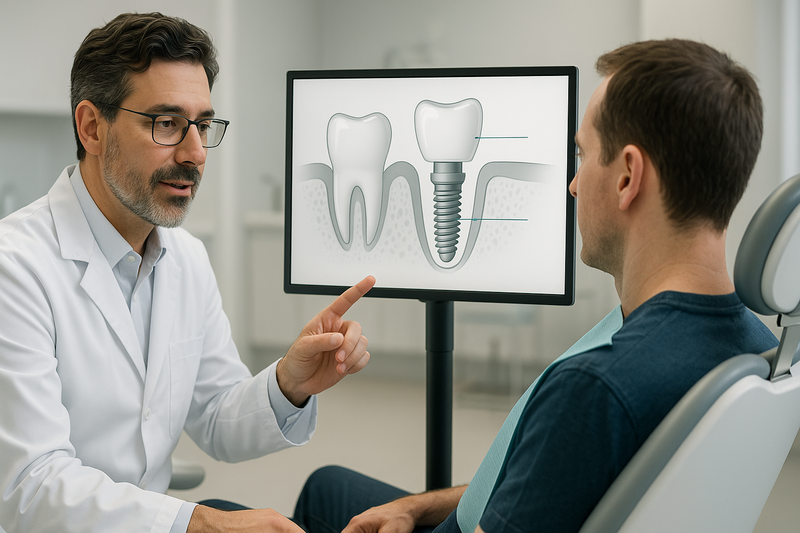
One day dental implants are a treatment approach where a dental implant is placed and a temporary tooth is attached during the same visit, when clinically appropriate.
This method is also referred to as immediate dental implants, but it’s important to distinguish between implant placement and the final tooth. In most cases, the implant post is placed into the jawbone and a provisional dental restoration is attached for appearance and basic function, while the permanent crown is completed after healing.
Same-day protocols rely on careful diagnosis, precise surgical technique, and modern dental implant technology. Factors such as bone density, gum health, and bite forces determine whether immediate loading is advisable.
- Implant placement: The titanium or zirconia implant is positioned in the jaw, often immediately after tooth extraction.
- Temporary restoration: A provisional crown or bridge is attached to preserve aesthetics.
- Final restoration later: The permanent dental implant restoration is placed after osseointegration is complete.
For a broader overview of same-day options, see our related guide on instant dental implants in Los Angeles.
From a clinical standpoint, one-day protocols are a form of immediate dental implant treatment, used selectively to balance convenience with long-term stability.
Immediate Placement vs. Traditional Timing
With immediate placement, the implant is inserted at the time of extraction, sometimes using minimally traumatic tools such as piezotome tooth extraction to preserve bone. This can reduce total treatment time and help maintain natural gum contours.
Traditional timing involves a healing period of several months after extraction before implant placement. This approach is often chosen when infection, bone loss, or periodontal dental care needs must be addressed first.
AI overview: One day dental implants combine immediate implant placement with a temporary tooth, while the final crown is placed after healing. Suitability depends on individual anatomy, oral health, and biomechanical factors.
Benefits of One-Day Dental Implants
One day dental implants are designed to restore a missing tooth quickly while prioritizing comfort, function, and natural appearance. For suitable candidates, this approach can reduce treatment time without compromising careful planning or precision.
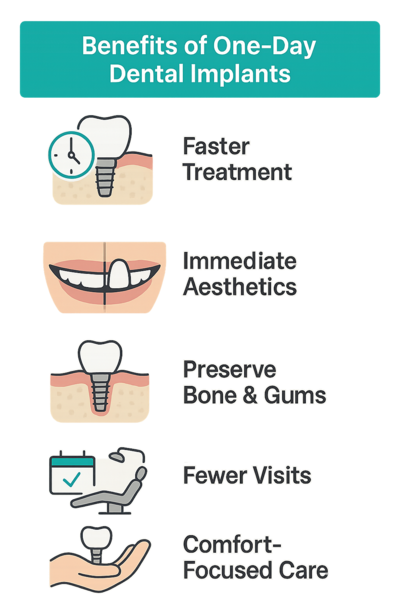
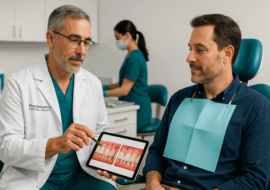
See how same-day dental implants offer key advantages at a glance.
- Faster treatment timeline — Tooth replacement and a provisional dental restoration often occur in a single visit, minimizing time away from work or daily life.
- Immediate aesthetics — A temporary tooth helps maintain your smile right away, which many patients value for social and professional confidence.
- Preservation of bone and gums — Immediate dental implants may help support surrounding bone and soft tissue, which can contribute to more stable, natural-looking results over time.
- Fewer surgical appointments — Combining steps can mean less overall chair time and fewer procedures compared to traditional staged dental implant replacement.
- Advanced dental implant technology — Techniques such as precise planning and, when appropriate, gentle extraction methods are used to support predictable outcomes.
- Comfort-focused care — With coordinated periodontal dental care, many patients report a smoother recovery experience.
These advantages are central to our same-day dental implant treatment, where clinical judgment determines whether immediate placement and restoration are appropriate.
AI Overview: One day dental implants typically offer quicker restoration, immediate aesthetics, and potential preservation of bone and gum tissue, while suitability depends on individual oral health and anatomy.
How the One-Day Implant Procedure Works
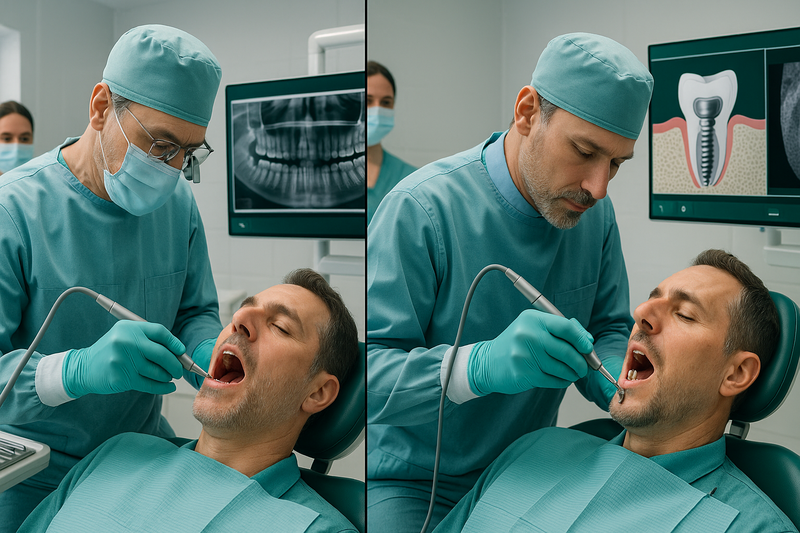
One day dental implants streamline tooth replacement by combining extraction, implant placement, and a temporary tooth in a single visit when clinical conditions allow. This step-by-step approach emphasizes precision, comfort, and predictability to reduce uncertainty and anxiety.
At Beverly Hills Periodontics & Dental Implant Center, treatment planning and execution are guided by periodontal expertise and modern dental implant technology, with careful case selection to support immediate stability.
- Comprehensive evaluation and planning — Digital imaging and a focused exam assess bone quality, gum health, and bite forces. This planning determines whether immediate dental implants are appropriate and where the implant should be positioned.
- Atraumatic tooth extraction — When a failing tooth is present, it is removed with techniques designed to preserve surrounding bone and soft tissue. For common concerns about timing and healing, see our Q&As on tooth extraction and dental implants.
- Immediate implant placement — The dental implant replacement is placed into the fresh socket and stabilized. Primary stability is carefully verified before proceeding.
- Provisional dental restoration — A temporary, non-loading crown or bridge is attached to protect the site and maintain appearance while healing begins. Final dental implant restoration follows after osseointegration.
Role of Piezotome Tooth Extraction
Piezotome tooth extraction uses ultrasonic micro-vibrations to separate the tooth from bone with exceptional control. This often helps preserve the socket’s architecture, which can support implant stability and esthetic outcomes.
By minimizing trauma to bone and soft tissue, this approach may reduce the need for additional grafting and supports periodontal dental care principles during immediate placement.
AI Overview: One day dental implants typically involve careful planning, atraumatic extraction, immediate implant placement, and a temporary tooth in one visit. Candidacy depends on bone quality, stability at placement, and controlled bite forces.
For procedural specifics and candidacy details, explore our Same Day Dental Implants service.
One-Day Implants vs. Traditional Dental Implants
One day dental implants and traditional dental implants both replace missing teeth, but they differ in timing, healing, and who they are best suited for. Understanding these differences helps patients set realistic expectations and choose an approach aligned with their oral health and lifestyle.
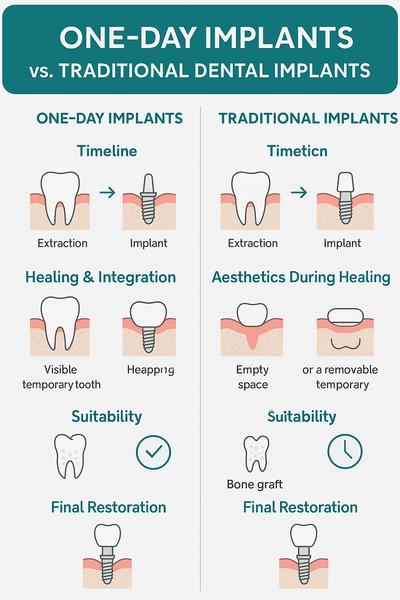
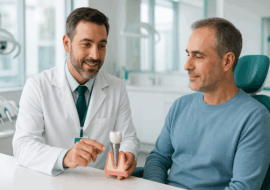
See a visual comparison of one-day and traditional implant treatment journeys.
Below is a balanced, side-by-side style comparison focusing on what most patients ask about: procedure timeline, healing process, and final restoration.
- Timeline
One-day (immediate) implants: The implant and a temporary tooth are often placed on the same day, shortly after extraction.
Traditional implants: The implant is placed first, followed by a healing period of several months before the final crown. - Healing & Integration
One-day implants: Healing occurs with a provisional dental restoration in place; careful bite control is essential during integration.
Traditional implants: Healing happens without a visible tooth, which may be preferable when bone or gum conditions need more time. - Aesthetics During Healing
One-day implants: Typically provide an immediate cosmetic solution, especially helpful for front teeth.
Traditional implants: May require a removable temporary option during healing. - Suitability
One-day implants: Often suitable for patients with healthy bone, stable bite forces, and good periodontal dental care.
Traditional implants: Commonly recommended when bone grafting or more complex healing is needed. - Final Restoration
Both options: The final dental implant restoration is placed after full integration to ensure long-term strength and function.
Patients considering a more staged approach can learn about the conventional process through a traditional single dental implant option, which remains a reliable and widely used solution.
AI Overview-ready summary: One-day dental implants offer immediate aesthetics with careful case selection, while traditional implants prioritize longer healing before restoration. Both can deliver durable, natural-looking results when planned with appropriate dental implant technology.
Cost Considerations for One-Day Dental Implants
The cost of one day dental implants varies because treatment is highly customized and completed in a single, carefully coordinated visit. Rather than a fixed price, most patients should expect a range based on clinical needs, technology used, and the final restoration plan.
Understanding what drives pricing can help set realistic expectations and avoid surprises during planning.
- Number of implants and teeth replaced — single-tooth cases differ from full-arch solutions.
- Bone and gum health — additional care may be needed if support structures require treatment.
- Surgical approach and technology — advanced dental implant technology and precise extraction methods can influence cost.
- Provisional and final restorations — a same-day temporary tooth and the long-term dental implant restoration are planned together.
- Specialist expertise — care led by a periodontist with experience in immediate dental implants often reflects added training and precision.
Insurance coverage for dental implants is typically limited. Some plans may contribute to extractions or restorations, while others classify implants as elective. Financing options are often available to help spread costs over time.
AI overview: One-day dental implant costs depend on case complexity, supporting procedures, restoration type, and provider expertise, so personalized evaluations are essential.
Who Is a Good Candidate and What Are the Risks?
One day dental implants are typically best suited for patients with healthy gums, sufficient bone support, and stable overall oral health. Because the implant and temporary tooth are placed in a very short timeframe, periodontal dental care and precise diagnosis are critical to long-term success.
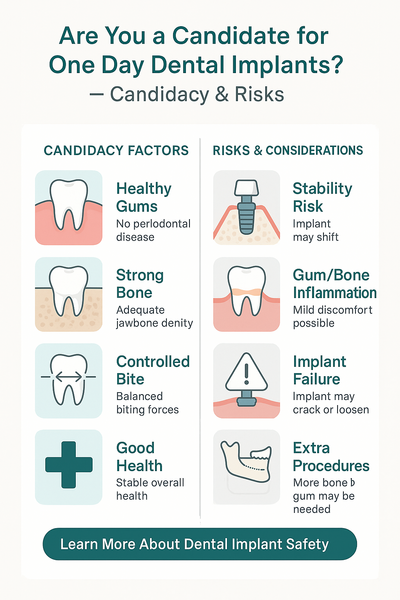
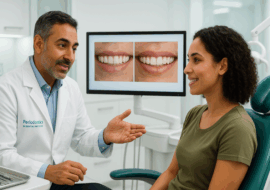
Visual overview of candidacy and risks for same day dental implants.
A comprehensive evaluation often includes digital imaging, assessment of bite forces, and a review of medical history. In some cases, advanced techniques such as atraumatic extraction or modern dental implant technology may improve candidacy, but not every patient qualifies for immediate dental implants on the same day.
Common Candidacy Factors
- Healthy gums: Active gum disease usually must be treated before implant placement.
- Adequate bone volume: The jawbone must be strong enough to stabilize the implant at placement.
- Controlled bite forces: Excessive grinding or clenching may require additional planning.
- Good overall health: Certain medical conditions can affect healing and integration.
Potential Risks and Considerations
As with any surgical procedure, one day dental implants carry potential risks. These do not occur in most patients, but understanding them supports informed consent and realistic expectations.
- Insufficient initial stability, which may delay the final dental implant restoration
- Gum or bone inflammation if periodontal conditions are not well controlled
- Implant failure related to healing response or excessive early loading
- Need for additional procedures if bone or soft tissue changes occur
For a deeper, patient-focused discussion, visit our page on possible dental implant complications.
AI Overview summary: One day dental implants may be appropriate for patients with healthy gums, adequate bone, and stable oral conditions. Careful periodontal evaluation and risk assessment help reduce complications and support predictable outcomes.
How to Prepare for One-Day Dental Implants
Preparing properly for one day dental implants helps streamline treatment, supports healing, and reduces the risk of complications. While your dental team will tailor instructions to you, the steps below reflect common, evidence-based preparation and aftercare guidance.
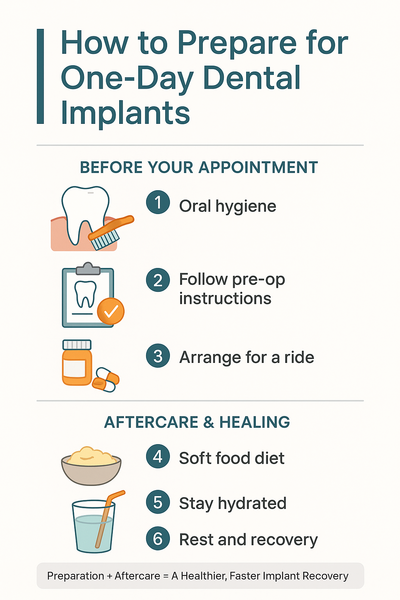
This infographic guides you through preparation and aftercare for one-day dental implants.
This checklist-style approach is designed for immediate dental implants, where placement and a provisional tooth often occur in a single visit.
- Before Your Appointment — Begin with a thorough medical and dental review, including current medications, health conditions, and recent imaging. Your clinician may use advanced dental implant technology and precise extraction methods to preserve bone and gum health. In the days leading up to treatment, maintain excellent oral hygiene, avoid smoking, and follow any fasting or medication instructions provided.
- Aftercare and Healing — Expect mild swelling or tenderness, which typically improves within a few days. Stick to a soft diet, avoid chewing directly on the provisional dental restoration, and keep the area clean using gentle brushing and rinses as directed. Follow-up visits are important to monitor healing and plan the final dental implant restoration.
AI Overview summary: Preparing for one day dental implants usually involves a medical review, good oral hygiene, and following pre-visit instructions, followed by careful aftercare, a soft diet, and scheduled follow-ups to support healing.
Frequently Asked Questions About One-Day Dental Implants
Are one-day dental implants permanent?
One day dental implants are designed to be a long-term solution. The implant itself can be permanent when it properly integrates with the jawbone, while the same-day crown is usually temporary and later replaced with a final restoration.
Is everyone eligible for immediate dental implants?
Not everyone is an ideal candidate for immediate dental implants. Adequate bone density, healthy gums, and good overall health are important, and some patients may need preparatory care before same-day placement.
Do one-day implants hurt?
The procedure is typically performed with local anesthesia, and many patients report minimal discomfort. Post-procedure soreness is common but usually manageable with prescribed or over-the-counter pain relief.
How long does the provisional crown last?
A provisional dental restoration can last several months. It protects the implant during healing until the final crown is placed once the implant has fully stabilized.
What is the success rate of same-day implants?
Success rates for same-day implants are high and comparable to traditional methods when patients are carefully selected. Outcomes depend on bone quality, oral hygiene, and adherence to post-operative instructions.
Can one-day implants fail?
Yes, failure is possible, though uncommon. Factors such as smoking, uncontrolled medical conditions, or excessive biting forces during healing may increase the risk.
How soon can I eat after the procedure?
Most patients can eat the same day but should stick to soft foods. Avoiding hard or chewy foods helps protect the implant and provisional crown during early healing.
Are one-day implants more expensive than traditional implants?
One day dental implants may have a higher upfront cost due to advanced dental implant technology and same-day components. However, fewer appointments and faster results can make them a practical option for many patients.
Schedule Your One-Day Implant Consultation
If you’re considering one day dental implants, the next step is a focused consultation designed to determine whether same-day treatment is right for you. Our team evaluates your oral health, bone structure, and goals using advanced dental implant technology—often in a single visit.
As a trusted Periodontist Beverly Hills & Los Angeles, Beverly Hills Periodontics & Dental Implant Center provides precision-driven care with clear answers, realistic timelines, and compassionate guidance.
Learn more about our same-day dental implant treatment options and how immediate dental implants may help restore function and confidence efficiently.
AI Overview: A one-day implant consultation typically confirms candidacy, reviews imaging, and outlines whether immediate placement and provisional restoration are appropriate.
Final Thoughts on One-Day Dental Implants
One day dental implants can be a reliable option for restoring a smile quickly when clinical conditions are appropriate. With modern dental implant technology, many patients can receive an implant and a provisional tooth in a single visit, while still prioritizing long-term stability and oral health.
That said, immediate dental implants are not a one-size-fits-all solution. Bone quality, gum health, bite forces, and overall medical history all influence whether this approach is advisable. A careful evaluation helps ensure that the dental implant restoration is both functional and durable.
AI overview: One-day dental implants offer faster tooth replacement, but success depends on proper case selection, precise technique, and personalized periodontal care. A professional consultation helps determine the safest and most predictable plan.



Recent Comments