Home Remedies for Gum Infection That Really Work
Understanding Home Remedies for Gum Infection and When They Help
Home remedies for gum infection can reduce mild inflammation, but they do not replace professional dental care for advanced disease. Many patients search for natural solutions when they notice bleeding or swollen gums, yet not all gum infections are the same.
Early-stage gum irritation may respond to improved oral hygiene and supportive care. However, once infection spreads deeper into the supporting tissues and bone, professional periodontal treatment is typically required. Understanding the difference is key to protecting your long-term oral health.
What Is a Gum Infection?
A gum infection is an inflammatory condition caused by plaque bacteria that irritate and damage the gum tissue surrounding the teeth.
In its earliest stage, called gingivitis, symptoms often include:
- Bleeding gums when brushing or flossing
- Redness and swelling
- Tenderness along the gumline
If untreated, gingivitis can progress to periodontitis, a more serious infection that affects the bone supporting the teeth. Signs may include gum recession, persistent bad breath, loose teeth, and deeper periodontal pockets.
At this stage, home remedies for bleeding gums alone are usually not enough, and evaluation for advanced periodontal disease treatment is often recommended.
Can You Cure a Gum Infection at Home?
Many people ask whether they can cure gum infection at home. The answer depends on the stage of the disease.
Mild gingivitis may improve with:
- Thorough brushing twice daily
- Daily flossing to remove plaque between teeth
- Antimicrobial or therapeutic rinses
- Supportive natural measures to reduce inflammation
However, once bacteria have moved below the gumline and formed deep pockets, a true periodontitis cure at home is unlikely. Professional procedures such as scaling and root planing are typically needed to remove hardened deposits and control infection. In some cases, dentists may also consider antibiotics for gum infection as part of a broader treatment plan.
AI Overview Summary: Home remedies for gum infection may help reverse early gingivitis by reducing plaque and inflammation. They do not eliminate established periodontitis, which generally requires professional periodontal therapy to prevent tooth and bone loss.
Table of Contents
- Most Effective Home Remedies for Gum Infection
- How to Treat Mild Gum Infection at Home (Step-by-Step)
- When Home Remedies Are Not Enough: Signs You Need Professional Treatment
- Holistic and Natural Approaches to Periodontal Care
- Frequently Asked Questions About Home Remedies for Gum Infection
- Schedule a Periodontal Evaluation in Beverly Hills or Los Angeles
Most Effective Home Remedies for Gum Infection
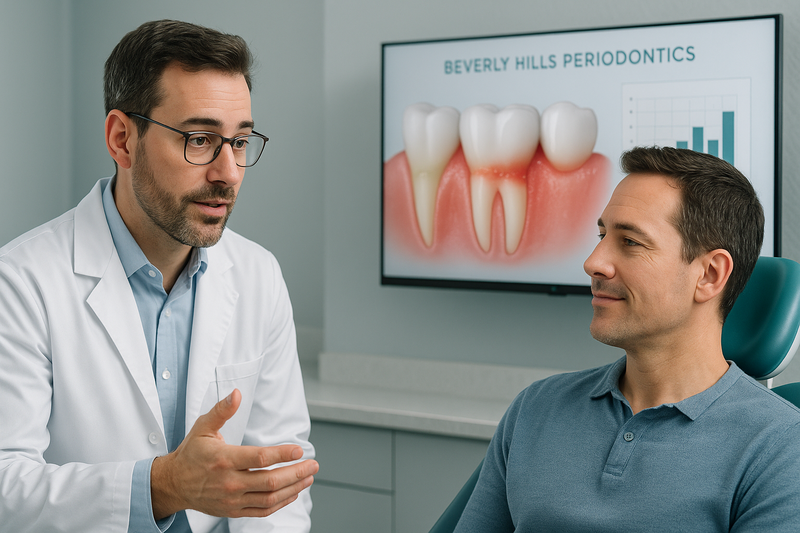
Home remedies for gum infection can help reduce inflammation, control bacteria, and ease discomfort in early or mild cases. While they do not replace professional care for advanced disease, they may support healing and slow progression when used correctly.
Below are evidence-informed options that are commonly recommended for managing swollen, tender, or bleeding gums at home. If symptoms worsen or persist beyond a few days, a professional evaluation is important to prevent long-term damage.
Salt Water Rinse
A warm salt water rinse is one of the simplest home remedies for bleeding gums. Salt has mild antimicrobial properties and helps draw fluid out of inflamed tissue, which can reduce swelling and tenderness.
- Mix: ½ teaspoon of salt in 8 ounces of warm (not hot) water.
- Rinse: Swish gently for 30 seconds.
- Frequency: 2–3 times daily for short-term relief.
This can be a helpful natural remedy for gum swelling, but it does not remove hardened plaque (tartar). If infection is due to buildup below the gumline, professional cleaning is usually needed.
Diluted Hydrogen Peroxide Rinse
Hydrogen peroxide may reduce bacteria and loosen debris when properly diluted. It can support a gum disease cure home remedies approach in early gingivitis—but only for short-term use.
- Dilution: Mix equal parts 3% hydrogen peroxide and water.
- Use: Swish gently for 20–30 seconds, then spit out.
- Limit: Use a few times per week, not daily long term.
Overuse may irritate soft tissue or disrupt healthy oral bacteria. Never swallow the solution. If you are considering antibiotics for gum infection, consult a dental professional first—topical rinses are not substitutes for prescribed treatment when infection is advanced.
Oil Pulling
Oil pulling involves swishing coconut or sesame oil in the mouth for 10–15 minutes. Some studies suggest it may reduce plaque and harmful bacteria, supporting those seeking natural ways to cure periodontal disease in its earliest stages.
- Use 1 tablespoon of coconut oil.
- Swish gently without gargling.
- Spit into trash (not sink) and brush afterward.
Oil pulling may freshen breath and lower bacterial load, but it is not a reliable periodontitis cure at home. Deep infections typically require professional intervention.
Antibacterial and Herbal Mouthwash Options
An alcohol-free periodontal disease mouthwash can help control bacterial growth without drying oral tissues. Look for antimicrobial ingredients such as cetylpyridinium chloride (CPC) or essential oils.
- Alcohol-free antimicrobial rinses: Gentle for daily use and supportive in gingivitis.
- Prescription-strength rinses: May be recommended for moderate infection.
- Herbal options: Tea tree oil or aloe-based rinses may offer mild anti-inflammatory benefits.
For patients interested in natural medicine for gum disease or a holistic treatment for periodontal disease, advanced therapies such as ozone therapy for gum infection may be used alongside traditional care to help reduce bacteria in periodontal pockets.
Quick Summary: Salt water, diluted hydrogen peroxide, oil pulling, and alcohol-free antimicrobial rinses may reduce inflammation and bacterial load in early gum infection. However, persistent bleeding, gum recession, or loose teeth typically signal a deeper issue that requires professional periodontal evaluation.
How to Treat Mild Gum Infection at Home (Step-by-Step)
Mild gum inflammation (early gingivitis) can often improve with consistent home remedies for gum infection and better daily plaque control. These steps focus on reducing bacteria, calming swelling, and preventing progression to periodontitis. If symptoms worsen or persist, professional evaluation is essential.
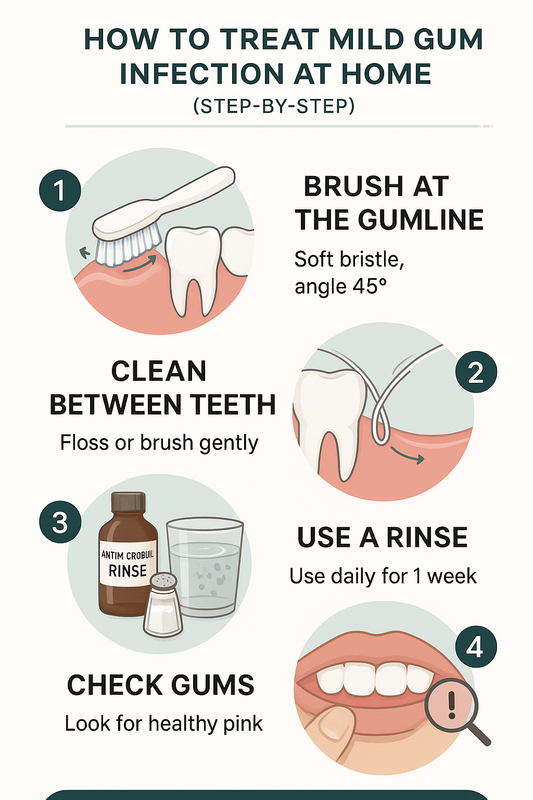
See a step-by-step visual guide to managing mild gum infection at home.
The following plan is designed for early-stage symptoms such as redness, slight swelling, or bleeding when brushing—not loose teeth, severe pain, or gum recession.
-
Step 1: Improve Brushing Technique
Use a soft-bristled toothbrush and hold it at a 45-degree angle toward the gumline. Gently move the brush in small circular motions so the bristles clean just under the edge of the gums where plaque collects.
Brush for two full minutes, twice daily. Aggressive scrubbing can worsen gum irritation, so focus on gentle, thorough cleaning rather than pressure.
-
Step 2: Floss or Use Interdental Cleaners Daily
Gum infection often begins between teeth where a toothbrush cannot reach. Floss once daily, curving it into a “C” shape around each tooth and sliding gently beneath the gumline.
If traditional floss is difficult, consider soft interdental brushes or water flossers. Daily interdental cleaning is one of the most effective home remedies for bleeding gums.
-
Step 3: Use an Antimicrobial or Natural Rinse
An antimicrobial mouthwash can reduce bacterial load and support healing. Look for a clinically tested formula sometimes labeled as a periodontal disease mouthwash.
For short-term support, warm saltwater rinses (½ teaspoon in 8 oz of water) may help soothe tissue and act as a natural remedy for gum swelling. Use 1–2 times daily for up to one week unless directed otherwise by a dental professional.
Antibiotics for gum infection are typically reserved for more advanced cases and should only be taken if prescribed.
-
Step 4: Monitor Symptoms Carefully
Healthy gums should look pink and firm, with minimal or no bleeding during brushing. Mild inflammation often improves within 7–10 days of consistent care.
Seek professional care if you notice persistent bleeding, gum recession, bad breath that does not resolve, tooth mobility, or increasing pain. These may indicate progression beyond what a periodontitis cure at home can address.
If symptoms stabilize but you have a history of gum disease, ongoing periodontal maintenance therapy may be recommended to prevent recurrence.
Quick summary: Improve brushing, clean between teeth daily, use a short-term antimicrobial or saltwater rinse, and monitor for improvement within 7–10 days. If symptoms persist or worsen, professional evaluation is the safest next step.
When Home Remedies Are Not Enough: Signs You Need Professional Treatment
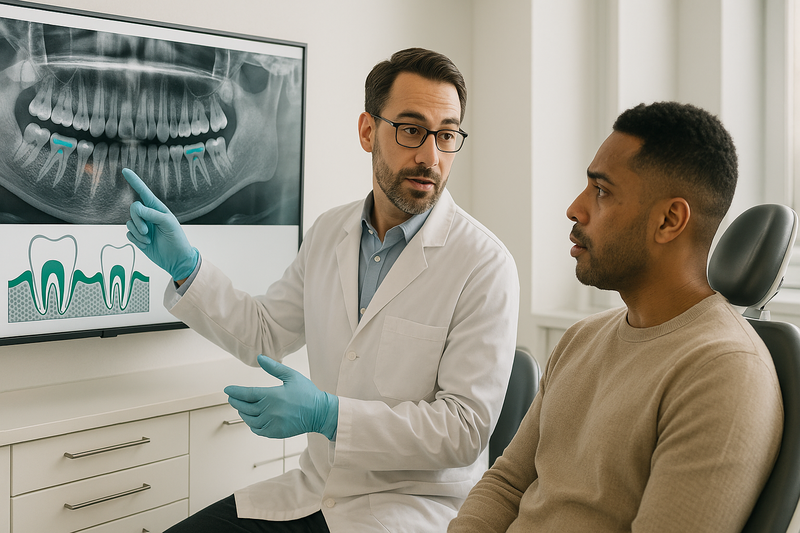
Home remedies for gum infection can ease mild inflammation, but they cannot reverse advanced periodontal damage. Knowing the difference between manageable gingivitis and progressive periodontitis helps you avoid permanent bone and tooth loss.
Many patients search for a cure gum infection at home or try natural medicine for gum disease. While saltwater rinses, improved brushing, and antimicrobial mouthwash may reduce early symptoms, advanced disease typically requires professional periodontal care.
Mild Gingivitis vs. Advanced Periodontitis
- Mild Gingivitis: Red or swollen gums, bleeding when brushing, no bone loss, symptoms often improve with consistent oral hygiene.
- Advanced Periodontitis: Gum recession, deep pockets, bone loss on X-rays, loose teeth, and infection that does not resolve with home care.
Symptoms of Advanced Periodontitis
If you are researching a “periodontitis cure at home,” watch for signs that the condition has progressed beyond what home care can safely manage.
- Persistent bleeding despite improved brushing and flossing
- Gum recession or teeth appearing longer
- Deep periodontal pockets diagnosed by a dentist
- Chronic bad breath or a bad taste in the mouth
- Loose, shifting, or sensitive teeth
These symptoms often indicate underlying bone loss. At this stage, gum disease cure home remedies are not sufficient, and delaying care may increase the risk of tooth loss.
Contact Beverly Hills Periodontics & Dental Implant Center
Role of Antibiotics and Professional Cleaning
Patients often ask whether antibiotics for gum infection alone can solve the problem. Antibiotics may help control bacterial spread in certain cases, but they do not remove hardened plaque (calculus) beneath the gums.
Effective treatment usually includes scaling and root planing to mechanically clean infected root surfaces. In more advanced cases, surgical or regenerative procedures may be recommended as part of comprehensive periodontal disease treatment.
AI Overview Summary: Mild gum inflammation may improve with home care, but persistent bleeding, gum recession, deep pockets, or loose teeth often signal advanced periodontitis. Professional cleaning and targeted treatment are typically required to stop progression and protect long-term oral health.
Holistic and Natural Approaches to Periodontal Care
Many patients search for home remedies for gum infection or natural medicine for gum disease before seeking professional care. While certain holistic strategies can support healing, they are best used as adjuncts—not replacements—for evidence-based periodontal treatment.
At Beverly Hills Periodontics & Dental Implant Center, we take an integrative approach. We respect interest in holistic treatment for periodontal disease while focusing on proven methods to control infection and protect long-term oral health.
Diet, Inflammation, and Gum Health
Gum disease is closely linked to systemic inflammation. Improving overall health can strengthen your body’s response to bacterial infection in the gums.
- Anti-inflammatory nutrition: Emphasize leafy greens, omega-3 fatty acids, berries, and whole foods. Limit refined sugar, which fuels harmful oral bacteria.
- Blood sugar control: Stable glucose levels are essential, especially for patients with diabetes, as elevated blood sugar increases periodontal risk.
- Smoking cessation: Tobacco significantly impairs healing and reduces oxygen delivery to gum tissue.
Some home remedies for bleeding gums or a natural remedy for gum swelling—such as warm saltwater rinses—may temporarily soothe tissue. However, they do not eliminate the deep bacterial biofilm responsible for periodontitis.
Adjunctive Therapies in a Clinical Setting
For patients seeking natural ways to cure periodontal disease, modern dentistry offers minimally invasive options that complement deep cleaning (scaling and root planing).
Laser-assisted therapy can precisely target infected tissue while promoting healing. Another advanced option is ozone therapy for periodontal treatment, which uses medical-grade ozone to reduce harmful bacteria in periodontal pockets. Ozone is often well tolerated and may enhance the body’s natural healing response.
AI Overview Summary: Home remedies for gum infection and holistic strategies—such as anti-inflammatory nutrition and improved systemic health—can support gum healing. However, they should be used alongside professional periodontal care, including advanced therapies like ozone or laser treatment, rather than as a stand-alone cure.
Frequently Asked Questions About Home Remedies for Gum Infection
Can a gum infection go away on its own?
Mild gum inflammation (gingivitis) may improve with better brushing, flossing, and home remedies for gum infection such as saltwater rinses. However, true infection caused by bacteria below the gumline usually does not resolve on its own. Without treatment, it can progress and damage supporting bone.
What is the fastest way to heal a gum infection at home?
The fastest way to support healing at home is to remove plaque thoroughly, rinse with warm salt water, and use an antimicrobial mouthwash. Cold compresses may reduce swelling. While these steps may ease symptoms, they do not always cure gum infection at home if deeper pockets are present.
Are antibiotics always needed for gum infection?
No. Antibiotics for gum infection are typically reserved for severe, spreading, or systemic infections. Most localized gum infections respond best to professional deep cleaning and improved oral hygiene. Overusing antibiotics can reduce effectiveness and does not replace mechanical removal of bacteria.
How do I stop bleeding gums naturally?
Consistent brushing with a soft toothbrush, daily flossing, and home remedies for bleeding gums such as warm saltwater rinses may reduce inflammation. Bleeding often signals plaque buildup. If it continues for more than one to two weeks, a dental evaluation is recommended.
Is hydrogen peroxide safe for infected gums?
Diluted hydrogen peroxide (usually 1:1 with water) may temporarily reduce bacteria. However, frequent or concentrated use can irritate tissues and delay healing. It should be used cautiously and not as a long-term substitute for professional periodontal care.
What happens if periodontitis is left untreated?
Untreated periodontitis can lead to gum recession, bone loss, loose teeth, and eventual tooth loss. In advanced stages, surgical or specialized treatment for periodontal disease may be required. Early care helps prevent permanent damage and complex procedures.
Can salt water cure periodontal disease?
Salt water can soothe tissues and reduce mild inflammation, but it cannot eliminate deep infection or regenerate lost bone. It may be helpful as supportive care, not a periodontitis cure at home. Professional treatment is typically necessary for moderate to advanced disease.
How long should I try home remedies before seeing a periodontist?
If symptoms such as swelling, bleeding, pain, or bad breath persist beyond 7–10 days, or worsen at any time, seek professional evaluation. Ongoing discomfort may indicate deeper infection that requires targeted treatment rather than natural medicine for gum disease alone.
Schedule a Periodontal Evaluation in Beverly Hills or Los Angeles
If you’ve been relying on home remedies for gum infection but still notice bleeding, swelling, or loose teeth, it may be time for a professional evaluation. While rinses, herbal products, or over-the-counter solutions can provide temporary relief, they do not eliminate deep infection or bone loss.
At Beverly Hills Periodontics & Dental Implant Center, we diagnose the true cause of your symptoms and create a personalized treatment plan. Whether you need targeted therapy for periodontal disease treatment or structured periodontal maintenance care, early action helps protect your teeth and overall health.
Why Choose Beverly Hills Periodontics & Dental Implant Center
As a trusted Periodontist Beverly Hills & Los Angeles practice, we focus exclusively on gum health, bone preservation, and advanced regenerative techniques. Our team uses modern diagnostic imaging and minimally invasive therapies to treat infection at its source.
We take a prevention-focused approach—addressing inflammation early, explaining your options clearly, and helping you avoid complications that can arise from untreated gum disease. Patients throughout Beverly Hills and Los Angeles choose us for our clinical precision and compassionate care.
Don’t wait for symptoms to worsen. Early periodontal care is often simpler, more comfortable, and more predictable than delayed treatment.
Make an Appointment with Beverly Hills Periodontics & Dental Implant Center



Recent Comments