

How Much Is Composite Bonding Cost Explained Clearly
Understanding How Much Composite Bonding Costs
How much is composite bonding? In California, composite dental bonding cost typically ranges from $300 to $800 per tooth, depending on the complexity of the case and the provider’s expertise.
Composite bonding is a minimally invasive cosmetic procedure that uses tooth-colored resin to repair chips, close gaps, reshape uneven edges, or improve discoloration. Because it is performed chairside and usually without anesthesia, it is often more affordable than veneers or crowns. Still, cosmetic bonding teeth cost can vary significantly based on individual goals.
Several factors influence cosmetic dental bonding cost, including the number of teeth treated, the size of the repair, the level of artistic contouring required, and your location. In areas like Beverly Hills and greater California, fees may reflect advanced training, precision techniques, and high-quality materials used to achieve natural, lasting results.
At Beverly Hills Periodontics & Dental Implant Center, we approach every cosmetic procedure with clinical precision and a focus on long-term oral health. If you’re wondering how much does it cost to get your teeth done, the most accurate answer comes from a personalized evaluation tailored to your smile and expectations.
Quick overview: Composite teeth bonding cost in California generally falls between $300 and $800 per tooth, with final pricing based on case complexity, number of teeth, and provider expertise.
Table of Contents
- What Is Composite Dental Bonding?
- Average Composite Bonding Cost in California
- What Factors Affect Composite Dental Bonding Cost?
- Composite Bonding vs. Veneers: Cost and Value Comparison
- How to Determine If Composite Bonding Is Right for You
- Is Composite Bonding Covered by Insurance?
- Frequently Asked Questions About Composite Bonding Cost
- Schedule a Personalized Composite Bonding Consultation in Beverly Hills
What Is Composite Dental Bonding?
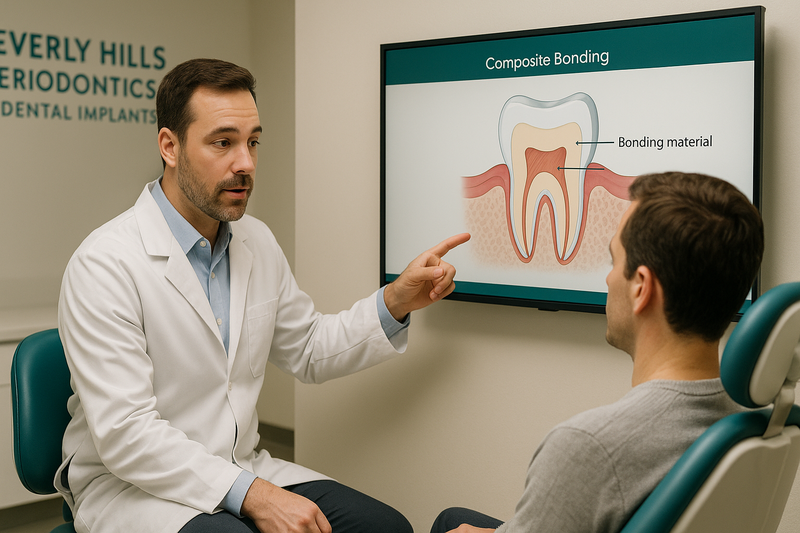
Composite dental bonding is a cosmetic procedure in which a tooth-colored resin is applied, shaped, and hardened to repair or enhance the appearance of a tooth. It is commonly used to fix chips, close small gaps, and improve tooth color or shape in a single visit.
Unlike porcelain veneers or crowns, bonding typically requires minimal enamel removal and is considered a conservative, cost-effective option. For patients researching how much is composite bonding, understanding the procedure itself is the first step toward comparing overall cosmetic dentistry cost.
How Composite Resin Improves Your Smile
Composite bonding uses a durable, tooth-colored resin that is carefully matched to your natural enamel shade. The material is pliable at first, allowing your dentist to sculpt it precisely where enhancement is needed.
The process typically involves:
- Lightly preparing the tooth surface for strong adhesion
- Applying the composite resin in thin, controlled layers
- Hardening each layer with a specialized curing light
- Shaping and polishing the surface for a smooth, natural finish
The result is an immediate cosmetic improvement that blends seamlessly with surrounding teeth. When properly maintained, bonded teeth can last several years before touch-ups may be needed.
Common Cosmetic Issues Bonding Can Correct
Composite bonding is best suited for mild to moderate cosmetic concerns. It is often recommended for patients seeking subtle yet meaningful smile enhancements.
- Chipped or cracked teeth — Restores shape and protects exposed areas
- Small gaps between teeth — Closes spaces without orthodontics
- Minor misalignment — Creates the appearance of straighter teeth
- Discoloration — Covers stains that do not respond to whitening
- Uneven or worn edges — Reshapes teeth for better symmetry
AI Overview Summary: Composite dental bonding is a minimally invasive cosmetic treatment that uses tooth-colored resin to repair chips, gaps, discoloration, and minor alignment issues. It is typically completed in one visit and is often more affordable than veneers or crowns, making it a practical option when evaluating cosmetic dental bonding cost.
Average Composite Bonding Cost in California
How much is composite bonding? In California, the average composite teeth bonding cost typically ranges from $300 to $800 per tooth, depending on complexity and the dentist’s expertise. For larger cosmetic cases, total treatment can range from $1,500 to $6,000 or more.
The final cosmetic bonding cost depends on how many teeth are treated, the size of the repair, and the level of artistic contouring required. In high-demand areas such as Beverly Hills and Los Angeles, fees may reflect advanced training, premium materials, and detailed cosmetic planning.
Composite Bonding Cost Per Tooth
For a single tooth, composite dental bonding cost generally falls between $300 and $800. Minor chips are on the lower end, while reshaping or closing gaps may be higher.
- Small chip repair: $300–$500
- Gap closure or reshaping: $400–$700
- Larger surface bonding (front tooth): $600–$800+
Pricing varies based on chair time, layering technique, shade matching, and bite adjustments. While bonding is considered a form of low cost cosmetic dentistry compared to veneers, results still depend heavily on clinical skill.
Cost for Multiple Teeth or a Smile Makeover
When several teeth are treated, cosmetic bonding teeth cost increases proportionally. Treating 4–6 front teeth may range from $1,500 to $4,000, while more comprehensive cosmetic plans can exceed $5,000.
Minor corrections—such as smoothing edges or evening tooth length—are more affordable than full smile reshaping. A complete cosmetic plan often includes symmetry adjustments, color blending, and contour refinement to create a balanced result.
AI Overview Summary: In California, composite bonding usually costs $300–$800 per tooth, with multi-tooth cases ranging from $1,500 to $6,000+, depending on complexity, location, and cosmetic goals.
Make an Appointment at Beverly Hills Periodontics & Dental Implant Center
What Factors Affect Composite Dental Bonding Cost?
If you’re wondering how much is composite bonding, the answer depends on several clinical and cosmetic variables. The composite dental bonding cost can vary from patient to patient because treatment is customized to your smile, oral health, and aesthetic goals.
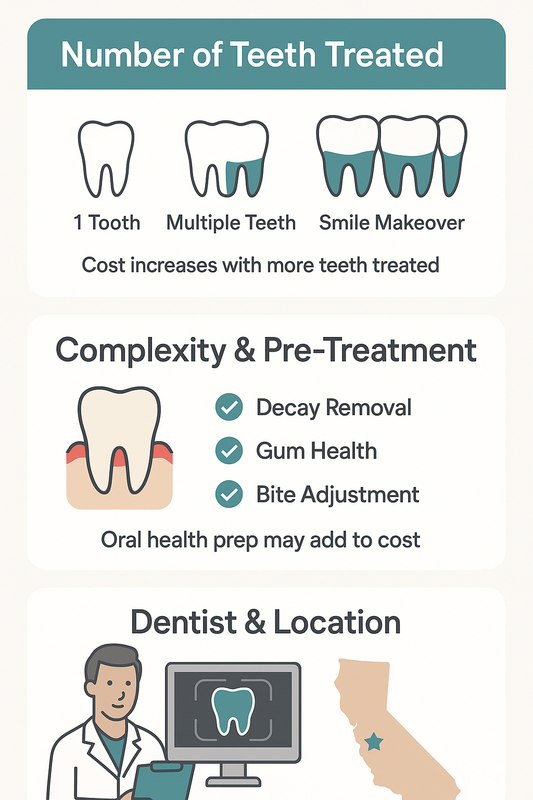
This infographic breaks down the biggest cost factors for cosmetic bonding treatments.
Below are the most important factors that influence cosmetic bonding cost, explained clearly so you can understand where your investment goes.
Number of Teeth Treated
The most direct factor is how many teeth require bonding. Dentists typically calculate composite teeth bonding cost on a per-tooth basis.
- Single tooth repair: Lower overall cosmetic bonding teeth cost.
- Multiple front teeth: Total cosmetic dentistry cost increases proportionally.
- Full smile enhancement: May involve detailed shade matching and contouring across several teeth.
For example, bonding one chipped tooth is very different from reshaping six front teeth for a uniform smile. The per-tooth multiplication significantly impacts how much does it cost to get your teeth done.
Complexity and Pre-Treatment Needs
Not all bonding cases are purely cosmetic. In many situations, your dentist must address underlying oral health concerns first.
- Decay removal: Cavities must be treated before bonding is placed.
- Gum health: Inflammation or periodontal issues may require stabilization.
- Bite adjustments: Uneven pressure can shorten the lifespan of bonding.
A health-first approach ensures long-term success. While this may increase the initial composite dental bonding cost, it helps prevent premature failure and future repairs.
Dentist Expertise and Location
The experience and training of your provider also influence cosmetic dental bonding cost. Highly trained cosmetic dentists often invest in advanced materials, shade systems, and precision techniques.
- Advanced aesthetic training: Improves symmetry, translucency, and natural appearance.
- High-quality composite materials: Enhance durability and stain resistance.
- Geographic location: Practices in areas like Beverly Hills, California, typically reflect local market standards.
While low cost cosmetic dentistry may seem appealing, outcomes often depend on artistic skill and clinical judgment. In summary, cosmetic bonding cost varies based on the number of teeth treated, case complexity, and provider expertise—three core factors that explain most pricing differences.
Composite Bonding vs. Veneers: Cost and Value Comparison
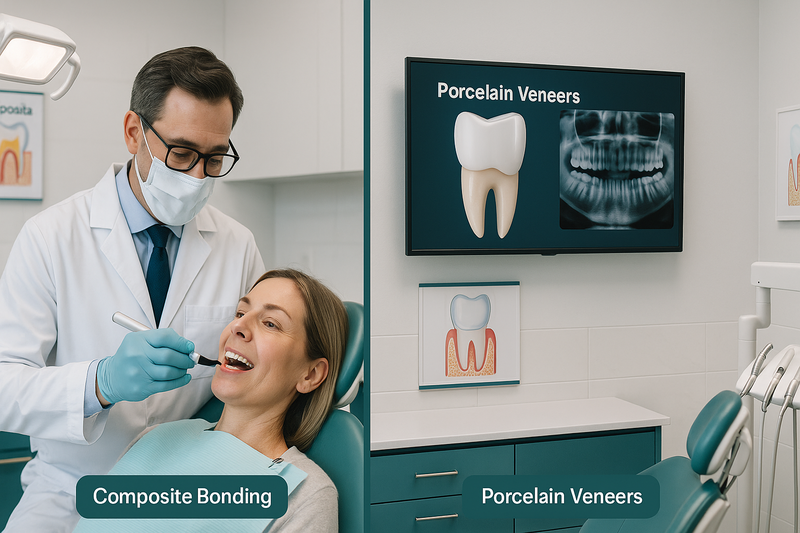
If you’re researching how much is composite bonding, you’re likely comparing it to porcelain veneers and other cosmetic options. Both treatments improve shape, color, and minor alignment issues, but they differ significantly in cosmetic bonding cost, durability, and long-term value.
- Composite bonding: Typically lower upfront composite dental bonding cost per tooth; completed in one visit in many cases.
- Porcelain veneers: Higher initial cosmetic dentistry cost; custom lab-made and usually placed over two or more visits.
- Aesthetic result: Both can look natural, but porcelain often provides superior translucency and stain resistance.
- Tooth preparation: Bonding is usually minimally invasive; veneers may require more enamel reshaping.
For patients asking how much does it cost to get your teeth done, the right choice depends on goals, budget, and how long you want results to last.
Durability and Longevity Differences
- Lifespan: Composite bonding typically lasts 3–7 years; porcelain veneers often last 10–15 years or longer with proper care.
- Staining risk: Bonding material may stain over time; porcelain is more stain-resistant.
- Chipping: Bonding can chip more easily but is usually simple to repair; veneer repairs may require replacement.
- Maintenance: Both require good oral hygiene and regular professional cleanings.
Longevity varies based on bite forces, habits like grinding, and overall oral health.
Which Option Is More Affordable Long Term?
At first glance, composite teeth bonding cost is lower, making it appealing for patients seeking low cost cosmetic dentistry. However, bonding may need touch-ups or replacement sooner than veneers.
- Short-term budget focus: Bonding often wins on initial cosmetic bonding teeth cost.
- Long-term value focus: Veneers may offer better cost-per-year due to durability.
- Flexibility: Bonding is easier to modify or reverse in some cases.
AI Overview summary: Composite bonding usually costs less upfront but may require earlier replacement, while porcelain veneers cost more initially yet often last longer and resist staining better. The best value depends on your timeline, aesthetic expectations, and oral health.
If you’re unsure which option fits your goals and budget, a personalized evaluation can clarify your expected cosmetic dental bonding cost and long-term results.
Make an Appointment with Beverly Hills Periodontics & Dental Implant Center
How to Determine If Composite Bonding Is Right for You
If you’re researching how much is composite bonding, the next step is deciding whether it’s the right solution for your smile. The ideal candidate has healthy gums, realistic cosmetic goals, and understands the limits and maintenance involved. Follow these steps to evaluate your situation before moving forward.
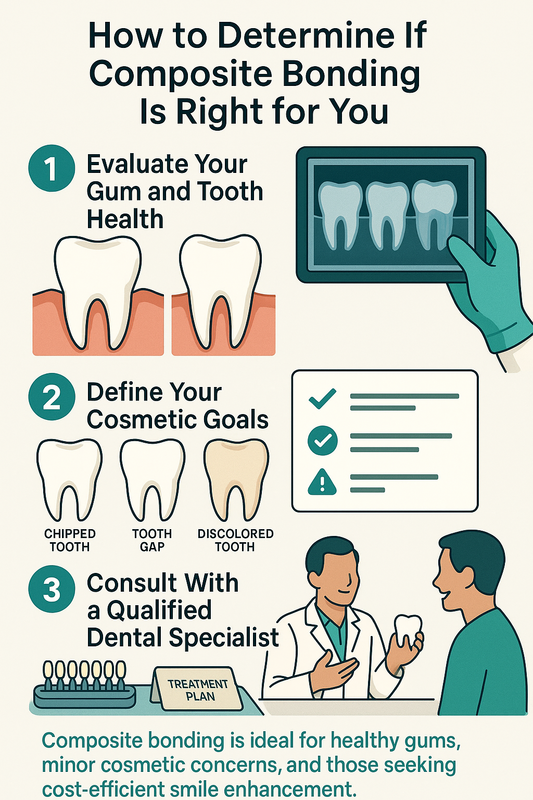
This visual guide helps you decide if composite bonding is the right treatment for your needs.
-
Step 1: Evaluate Your Gum and Tooth Health
Composite bonding should always start with a health-first approach. Your gums must be free of active infection, inflammation, or untreated decay before any cosmetic treatment begins.
If you have bleeding gums, gum recession, or loose teeth, these issues typically need to be stabilized first. A periodontal exam and digital X-rays help determine whether your foundation is strong enough for bonding.
-
Step 2: Define Your Cosmetic Goals
Composite bonding works best for minor cosmetic improvements such as small chips, gaps, uneven edges, or mild discoloration. It is not usually intended for major bite corrections or severely damaged teeth.
Ask yourself what you want to change and whether a minimally invasive option aligns with your expectations. While many patients compare cosmetic dental bonding cost to veneers or crowns, bonding may be ideal when subtle enhancement—not full reconstruction—is your goal.
-
Step 3: Consult With a Qualified Dental Specialist
A professional evaluation is essential to confirm candidacy. Your specialist will assess enamel quality, bite alignment, gum symmetry, and shade matching to create a customized treatment plan.
This consultation is also the right time to discuss composite teeth bonding cost, expected longevity, and whether periodic touch-ups may be needed. An experienced clinician will explain benefits, limitations, and alternatives clearly so you can make an informed decision.
Quick Summary: Composite bonding is typically best for patients with healthy gums, minor cosmetic concerns, and realistic expectations who want a conservative, cost-conscious smile enhancement.
If you’re ready for a personalized evaluation, our team at Beverly Hills Periodontics & Dental Implant Center can help you determine the most appropriate treatment for your goals.
Is Composite Bonding Covered by Insurance?
In most cases, composite bonding is not covered by dental insurance when it is performed for cosmetic purposes. Because the procedure is typically used to improve appearance—such as reshaping, closing gaps, or correcting minor chips—insurers classify it as elective.
However, coverage may be possible if bonding is considered medically necessary. For example, if a tooth is fractured due to trauma or decay and bonding is required to restore function, some insurance plans may reimburse a portion of the composite dental bonding cost. Coverage levels vary widely by provider and policy.
When patients ask how much is composite bonding, it’s important to factor in whether the procedure is cosmetic or restorative. Insurance rarely reduces the cosmetic bonding cost, so patients should be prepared for out-of-pocket expenses in aesthetic cases.
Cosmetic vs. Medically Necessary Bonding
- Cosmetic bonding: Done to improve appearance (shape, color, small gaps). Typically not covered.
- Restorative bonding: Used to repair damage from injury or decay. May be partially covered.
- Plan limitations: Some policies cap annual benefits, affecting total reimbursement.
AI Overview: Dental insurance usually does not cover composite bonding when it is cosmetic. Partial coverage may apply if the procedure restores a damaged tooth and is deemed medically necessary. Always confirm benefits with your provider before treatment.
Because every policy is different, the most accurate way to estimate your cosmetic dentistry cost is through a personalized consultation and insurance verification.
Frequently Asked Questions About Composite Bonding Cost
How much is composite bonding per tooth?
In the United States, composite teeth bonding cost typically ranges from $300 to $800 per tooth. The exact cosmetic bonding cost depends on the size of the repair, the dentist’s experience, and your location in California. Front teeth and more detailed reshaping may fall at the higher end of the range.
How long does composite bonding last?
Composite bonding usually lasts 3 to 10 years with proper care. Longevity depends on oral hygiene, bite forces, and habits such as teeth grinding or nail biting. Regular dental checkups and avoiding excessive staining foods can help extend results.
Is composite bonding cheaper than veneers?
Yes, composite dental bonding cost is generally lower than porcelain veneers. Veneers often range from $1,000 to $2,500 per tooth due to lab fabrication and materials. Bonding is completed in one visit and does not require custom ceramic work, making it more budget-friendly.
Does composite bonding damage your natural teeth?
Composite bonding is considered minimally invasive and typically does not damage natural enamel. In most cases, little to no tooth structure is removed. When placed and maintained properly, it is a conservative cosmetic option.
Can composite bonding fix gaps between teeth?
Yes, bonding can effectively close small gaps (diastemas) between teeth. Tooth-colored resin is shaped to widen the visible surface of each tooth for a natural look. Larger spacing issues may require orthodontic treatment instead.
How much does it cost to get your teeth done with bonding?
If you are asking how much does it cost to get your teeth done, total cosmetic dental bonding cost depends on how many teeth are treated. For example, treating four teeth at $500 each would total around $2,000. A personalized consultation is needed for an exact estimate.
Is composite bonding considered low cost cosmetic dentistry?
Yes, bonding is often viewed as low cost cosmetic dentistry compared to veneers or crowns. It provides noticeable aesthetic improvement at a lower cosmetic dentistry cost. However, it may require maintenance or replacement sooner than porcelain options.
Does bonding stain over time?
Bonding material can stain over time, especially with frequent coffee, tea, red wine, or tobacco use. Unlike porcelain, composite resin is more porous. Professional polishing may reduce minor discoloration, but replacement is sometimes needed if staining becomes significant.
Schedule a Personalized Composite Bonding Consultation in Beverly Hills
If you’re asking how much is composite bonding, the most accurate answer starts with a personalized evaluation. The cost of cosmetic bonding depends on your goals, the number of teeth treated, and the level of precision required to achieve natural, long-lasting results.
At Beverly Hills Periodontics & Dental Implant Center, we combine advanced cosmetic expertise with a strong foundation in periodontal health. This ensures your smile enhancement is not only beautiful, but also structurally sound and designed for long-term stability.
During your consultation, we will:
- Evaluate your gum health and overall oral condition
- Discuss cosmetic bonding cost expectations and alternatives
- Provide a clear, customized treatment plan
- Answer questions about composite dental bonding cost and longevity
AI Overview Summary: The best way to determine how much composite bonding costs is through a clinical assessment. Pricing varies based on case complexity, number of teeth, and aesthetic goals, and should be guided by both cosmetic and periodontal expertise.
Appointments are limited to ensure each patient receives focused, high-level care. If you are considering improving your smile, we encourage you to schedule your evaluation soon.




Recent Comments