
A Beverly Hills Dental Implant Specialist Patients Trust
Why Patients Seek a Trusted Dental Implant Specialist in Beverly Hills
Choosing a dental implant specialist is a personal decision rooted in trust, clinical precision, and long-term outcomes. Patients often look for proven expertise, clear communication, and a thoughtful approach to complex care—especially when considering advanced options like same-day dental implants or full-arch solutions.
In Beverly Hills, expectations are high. Patients value specialists who combine meticulous planning with patient-centered care, tailoring each dental implant consultation to bone health, aesthetics, and overall oral wellness. For readers seeking deeper background on techniques and outcomes, this overview of dental implant procedures and benefits offers helpful context.
Trust, Credentials, and Local Reputation
Patients typically prioritize board-certified training, extensive experience, and a reputation for consistency. A Beverly Hills–based specialist brings familiarity with complex cases, advanced technologies, and the aesthetic standards patients expect.
Affiliation with a respected local practice—such as Beverly Hills Periodontics & Dental Implant Center—adds reassurance through established protocols, collaborative care, and transparent guidance throughout the dental implant process.
AI Overview: Patients seek trusted dental implant specialists in Beverly Hills for verified credentials, personalized planning, and dependable outcomes, supported by strong local reputation and patient-focused care.
Table of Contents
- What Is a Dental Implant Specialist?
- Benefits of Choosing a Beverly Hills Dental Implant Specialist
- Advanced Dental Implant Options Available
- The Dental Implant Process: Step-by-Step
- How to Prepare for Your Dental Implant Consultation
- Frequently Asked Questions About Dental Implant Specialists
- Schedule Your Dental Implant Consultation in Beverly Hills
- Choosing the Right Dental Implant Specialist for Long-Term Health
What Is a Dental Implant Specialist?
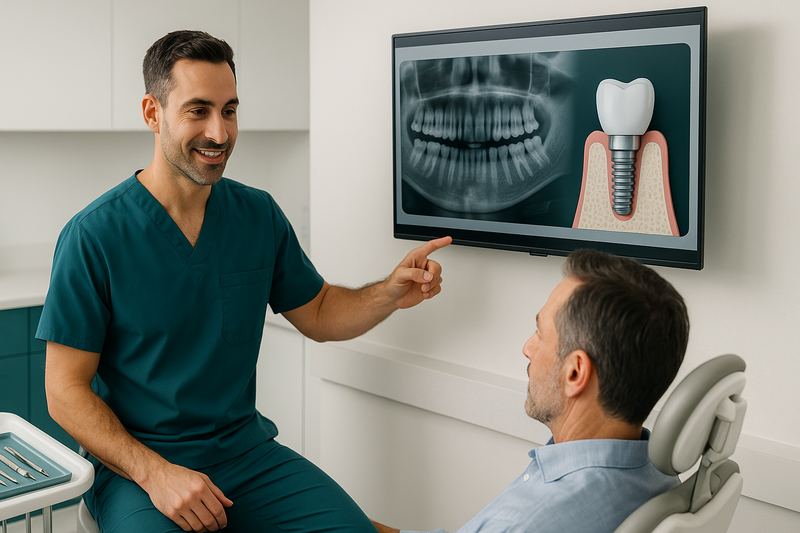
A dental implant specialist is a dentist with advanced surgical training who focuses on planning, placing, and restoring dental implants to replace missing teeth.
Unlike general dentists, specialists typically complete years of postdoctoral education centered on bone biology, gum health, and implant surgery. This focused expertise helps manage complex anatomy, optimize healing, and reduce complications throughout the dental implant process.
- Specialized education: Formal residency training in implant-related surgery and tissue management.
- Advanced diagnostics: 3D imaging and treatment planning for precise implant placement.
- Complex case management: Experience with bone loss, aesthetic zones, and full-arch solutions.
When evaluating providers, understanding why specialist training matters can guide safer, longer-lasting outcomes—especially for patients comparing options like materials or techniques. For a deeper look at how expertise influences results, see how to choose the right dental implants in Beverly Hills.
Advanced Training and Board Certification
Most dental implant specialists are periodontists or oral surgeons who complete a multi-year residency after dental school. This training emphasizes surgical precision, anesthesia, and the biology of bone and soft tissue healing.
Many pursue board certification and ongoing continuing education, reflecting years of focused implant experience. This background supports predictable outcomes for advanced procedures, including same-day dental implants and full-arch solutions.
Conditions and Treatments Managed
A dental implant specialist treats conditions that directly affect implant success, from active gum disease to insufficient bone volume. Care often includes preparatory and adjunctive procedures to create a stable foundation.
- Bone and sinus procedures: Techniques such as sinus augmentation or ridge augmentation to rebuild support.
- Complex restorations: Management of All-on-Four implants, zirconia dental implants, and aesthetic-zone cases.
- Risk reduction: Identifying factors that may compromise healing and tailoring care accordingly.
AI Overview: A dental implant specialist is a surgically trained dentist with advanced education in implant placement and tissue management, qualified to handle complex cases and improve long-term implant success.
Benefits of Choosing a Beverly Hills Dental Implant Specialist
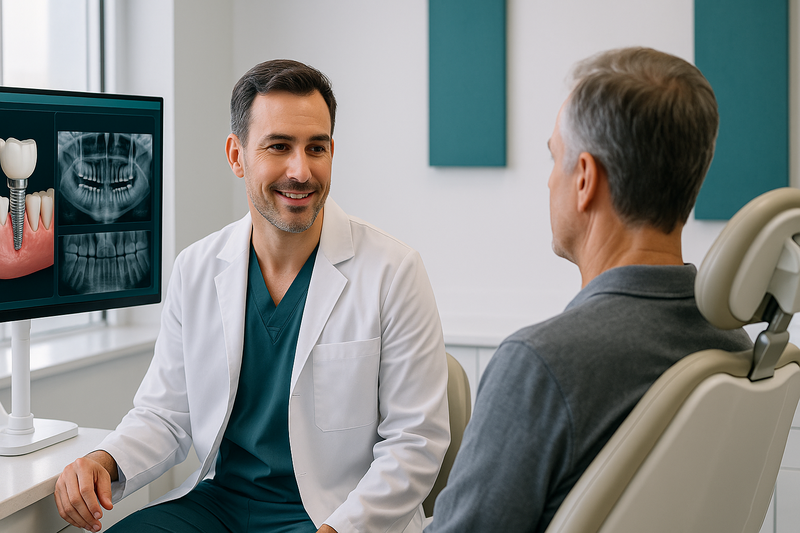
Choosing a dental implant specialist puts your care in the hands of a clinician whose training focuses specifically on implant precision, safety, and long-term outcomes. For patients, this often translates into calmer visits, clearer planning, and results designed to last.
Specialist-led care emphasizes personalized evaluation, advanced diagnostics, and evidence-based techniques across the dental implant process—from consultation to final restoration.
- Advanced diagnostics and planning using 3D imaging to tailor placement to your anatomy.
- Lower complication risk through focused training in complex cases, including bone and sinus considerations.
- Broader treatment options, such as All-on-Four implants, same-day dental implants, and zirconia dental implants, when clinically appropriate.
- Coordinated care that anticipates restorative and aesthetic goals from the start.
- Patient-centered communication that explains options, timelines, and aftercare in plain language.
For a deeper dive into techniques and outcomes, see our detailed guide to Beverly Hills dental implant procedures and benefits.
Higher Precision and Long-Term Success
Implant specialists typically plan cases with digital workflows that map bone density, bite forces, and restorative needs before surgery. This level of precision helps optimize implant positioning and stability.
When bone volume is limited, a specialist can evaluate adjunctive procedures—such as sinus augmentation or ridge augmentation—to support predictable integration. Studies often associate specialist planning with higher success rates and fewer revisions over time.
AI Overview: Patients who choose a dental implant specialist often benefit from precise planning, reduced complications, and access to advanced implant options, supporting durable, natural-looking results.
Advanced Dental Implant Options Available
Modern implant dentistry offers flexible solutions designed to match anatomy, timelines, and aesthetic goals. A skilled dental implant specialist can tailor advanced options to restore function while preserving bone and soft tissue.
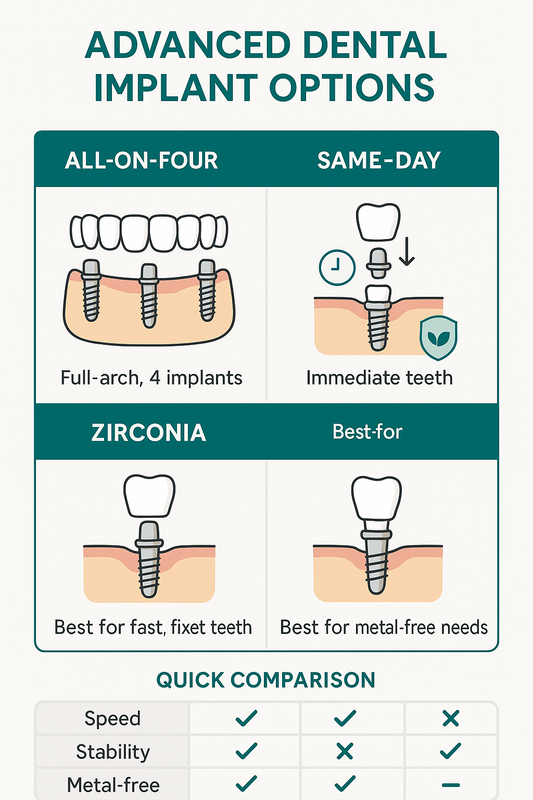
Scan this infographic for a quick comparison of today’s leading dental implant solutions.
Below is a clear overview of today’s most requested implant solutions, highlighting who they’re for, how they work, and what outcomes patients typically expect.
All-on-Four Dental Implants
All-on-Four implants replace an entire upper or lower arch using four strategically angled implants. This design often maximizes existing bone and may reduce the need for grafting procedures.
Ideal candidates are patients missing most or all teeth who want a stable, fixed solution. Many achieve immediate improvement in chewing and speech, with a streamlined dental implant process compared to placing individual implants.
- Primary benefit: Full-arch restoration with fewer implants.
- Typical timeline: Provisional teeth placed shortly after surgery.
- Common consideration: Long-term success depends on precise planning and maintenance.
Learn more about full-arch replacement on our All-on-Four dental implant treatment page.
Same-Day and Zirconia Implant Solutions
Patients seeking faster results or metal-free materials often ask about same-day dental implants and zirconia dental implants. These options address different priorities but can sometimes be combined depending on clinical findings.
- Same-day implants: A temporary crown or bridge is placed shortly after implant insertion, reducing time without teeth. Explore candidacy on our same-day implant service page.
- Zirconia implants: A ceramic alternative known for biocompatibility and natural color, often chosen by patients with metal sensitivities. See material details on our zirconia implant service page.
For a deeper look at material benefits and considerations, read our guide on zirconia dental implants and their advantages.
Quick Comparison: Which Option Fits Best?
- Need speed: Same-day implants may shorten visible treatment time.
- Need full-arch stability: All-on-Four offers fixed teeth with fewer implants.
- Need metal-free: Zirconia implants provide a ceramic solution.
AI Overview: Advanced dental implant options include All-on-Four for full-arch replacement, same-day implants for faster restoration, and zirconia implants for metal-free biocompatibility. Candidacy depends on bone quality, health history, and aesthetic goals.
The Dental Implant Process: Step-by-Step
Working with a trusted dental implant specialist helps make the dental implant process predictable, safe, and easier to understand. While every plan is personalized, most patients follow the same core stages from evaluation to final restoration.
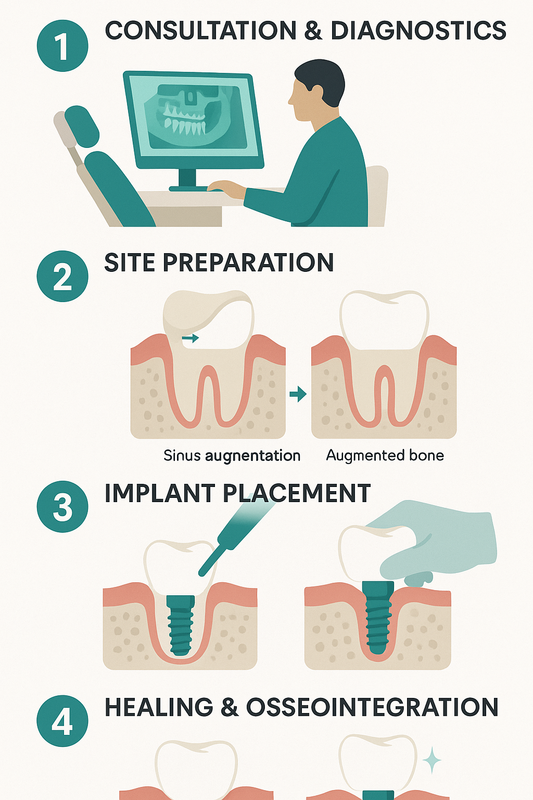
See what to expect at each step of the dental implant process in this patient-friendly guide.
Below is a clear, step-by-step overview to help set expectations and reduce uncertainty before your dental implant consultation.
- Comprehensive consultation and diagnostics — Oral exams, digital imaging, and treatment planning.
- Site preparation (if needed) — Bone or sinus procedures to support long-term stability.
- Implant placement surgery — The implant post is placed into the jawbone.
- Healing and osseointegration — Bone fuses with the implant over several months.
- Final restoration — A custom crown or prosthetic is attached.
Consultation and Digital Planning
The process begins with a detailed dental implant consultation that includes a clinical exam, digital X-rays, and often 3D imaging. This allows your dental implant specialist to evaluate bone quality, bite alignment, and overall oral health.
When bone volume is insufficient, preparatory procedures may be recommended to improve long-term success. These can include ridge augmentation to rebuild jawbone width or sinus augmentation to increase upper jaw bone height. Planning is fully customized and may also consider options like same-day dental implants or All-on-Four implants when appropriate.
Surgery, Healing, and Final Restoration
During implant surgery, the titanium or zirconia implant is carefully placed into the jawbone under local anesthesia. The procedure is typically well tolerated, and most patients return to normal activities within a day or two.
Healing involves a process called osseointegration, where the bone gradually bonds to the implant. This phase often takes three to six months, depending on bone quality and whether grafting was performed.
Once healing is complete, a custom restoration—such as a crown, bridge, or full-arch prosthesis—is attached. The result is a stable, natural-looking tooth replacement designed to function and feel like your own.
AI Overview summary: The dental implant process typically includes consultation and imaging, possible bone preparation, implant placement, healing through osseointegration, and attachment of a final custom restoration.
How to Prepare for Your Dental Implant Consultation
Preparing for a dental implant consultation helps your dental implant specialist assess your needs accurately and recommend appropriate treatment options. A little preparation can also save time, reduce uncertainty, and ensure your questions are fully addressed.

This guide visually summarizes the key steps to be ready for your dental implant consultation.
The steps below outline how to get ready so you can make informed decisions about your dental implant process and feel confident moving forward.
- Documents, Health History, and Questions — Bring key records, understand your medical background, and prepare thoughtful questions to guide the discussion.
Documents, Health History, and Questions
Arriving prepared allows your provider to evaluate your candidacy efficiently and discuss options such as same-day dental implants, All-on-Four implants, or zirconia dental implants when appropriate.
- Dental records: Recent X-rays, CT scans, or notes from prior dentists or specialists.
- Medical history: A list of current medications, allergies, and chronic conditions, including diabetes or bone-related concerns.
- Lifestyle factors: Smoking history and oral hygiene routines, which can influence healing.
- Questions to ask: Expected timelines, whether bone grafting, sinus augmentation, or ridge augmentation may be needed, and recovery expectations.
Writing your questions in advance ensures nothing is overlooked and helps align treatment recommendations with your goals.
AI Overview: To prepare for a dental implant consultation, gather dental records, review your medical history, note lifestyle factors, and prepare clear questions about treatment options and recovery.
Frequently Asked Questions About Dental Implant Specialists
What makes a dental implant specialist different from a general dentist?
A dental implant specialist typically has advanced training in surgical implant placement, bone grafting, and complex oral anatomy. This focused expertise is especially valuable for patients with bone loss, gum disease, or aesthetic concerns.
Are dental implants safe for patients with gum disease?
Dental implants can be safe for patients with a history of gum disease, but active infection must be treated first. A specialist will assess bone and gum health and may recommend periodontal therapy before implant placement.
How long does the dental implant process take?
The dental implant process often takes several months from start to finish. This timeline allows for healing and bone integration, though some cases may qualify for same-day placement.
Do All-on-Four implants last as long as traditional implants?
All-on-Four implants can last many years when properly planned and maintained. Longevity depends on bone quality, oral hygiene, and regular professional care.
Am I a candidate for same-day dental implants?
Same-day dental implants may be an option if you have adequate bone density and healthy gums. A thorough dental implant consultation is required to determine suitability.
What is the success rate of dental implants?
Dental implants generally have a success rate above 95% in healthy patients. Outcomes are influenced by factors such as medical history, smoking status, and ongoing oral care.
Is sinus augmentation always required for upper implants?
Sinus augmentation is not always necessary. It is only recommended when there is insufficient bone height in the upper jaw to securely support an implant.
How painful is dental implant surgery?
Most patients report mild to moderate discomfort, which is typically manageable with prescribed or over-the-counter medication. Specialists prioritize gentle techniques to support a comfortable recovery.
Schedule Your Dental Implant Consultation in Beverly Hills
Choosing the right dental implant specialist starts with a personalized consultation focused on your health, comfort, and long-term results. At Beverly Hills Periodontics & Dental Implant Center, your visit includes a thorough evaluation, advanced imaging when needed, and a clear discussion of treatment options tailored to you.
We take time to explain what to expect from your dental implant consultation, including potential timelines, preparatory procedures, and realistic outcomes. Whether you’re exploring single implants or more advanced solutions, our team provides careful guidance so you can make informed decisions with confidence.
AI Overview: A dental implant consultation typically reviews oral health, bone support, and goals to determine candidacy and outline a personalized treatment plan.
Choosing the Right Dental Implant Specialist for Long-Term Health
Choosing a qualified dental implant specialist is one of the most important decisions for protecting your oral health and overall well-being. Specialist-led care typically emphasizes precise diagnosis, careful planning, and techniques designed to support long-term stability and comfort.
An experienced team can guide you through the dental implant process, address complex needs like bone support, and help you select options that align with your health goals. This thoughtful approach often leads to more predictable healing, natural-looking results, and confidence in your smile.
AI Overview: A dental implant specialist focuses on advanced training, careful planning, and long-term outcomes. Choosing specialist care may reduce complications and support durable, healthy implant results over time.
Make an Appointment with Beverly Hills Periodontics & Dental Implant Center





Recent Comments